 Popular
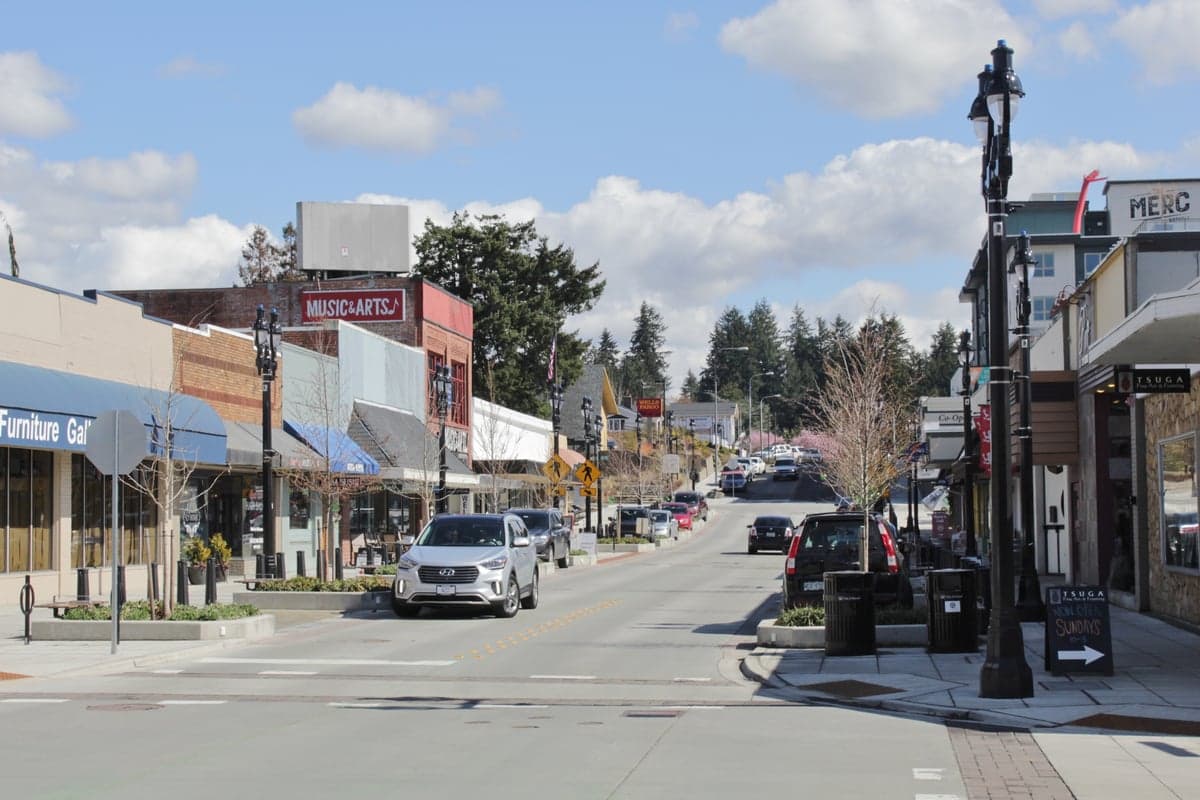
Photo: Wikipedia
Personal Sovereignty in Bothell, WA
Viable for self-reliance. Generally workable, though some barriers may limit total independence.
What does Personal Sovereignty tell us?
Personal Sovereignty measures your capacity for self-reliance and independence with minimal government friction. Higher scores mean fewer barriers between you and the way you want to live... but it assumes you have the space you need and good neighbors.
What does this tell us?
Personal Sovereignty measures your capacity for self-reliance and independence with minimal government friction. Higher scores mean fewer barriers between you and the way you want to live... but it assumes you have the space you need and good neighbors.
State Policy
Energy independence: Importer (55% of energy produced in-state)
Personal Liberty
Homesteading

Personal Liberty Analysis
For the liberty-minded individual or family evaluating Bothell, Washington, the personal sovereignty picture is a study in contrasts: the city offers a solid physical environment for self-reliance—ample rainfall, fertile soil, and a strong community ethos—but operates under a state government that has increasingly centralized authority over personal choices, from taxation to self-defense. While Bothell itself maintains a relatively low-key, suburban character that can support a prepper or survivalist lifestyle, the legal and regulatory framework of King and Snohomish counties, combined with Washington State's progressive tilt, creates headwinds for those seeking maximum autonomy. The bottom line: Bothell is a viable base for the prepared individual who is willing to navigate state-level overreach, but it is not a sanctuary for those seeking minimal government interference.
Tax burden and regulatory posture: what it means for your wallet and freedom
Washington State's lack of a personal income tax is a significant draw for those seeking to keep more of their earnings—a key component of financial sovereignty. However, this is offset by a state sales tax rate of 6.5%, which in Bothell climbs to a combined rate of roughly 10.1% when local levies are added. This hits consumption hard, especially for bulk prepping supplies, tools, and building materials. Property taxes in Bothell are moderate by regional standards, averaging around 0.9% of assessed value, but King County's periodic reassessments can create unpredictable spikes. The regulatory posture is where the friction becomes real: Washington's Growth Management Act imposes strict land-use controls, limiting how you can develop or modify your property. Permitting for a workshop, greenhouse, or even a large shed can involve months of red tape and fees. For the prepper, this means that while you can own land, the state and county retain significant say over what you do with it—a direct challenge to personal dominion.
Self-defense and gun law specifics: what you can and cannot do
Washington State has moved aggressively to restrict firearm ownership and carry rights in recent years, and Bothell residents must operate within this tightening framework. The state's I-1639 (2018) imposed enhanced background checks, a 10-day waiting period, and a minimum age of 21 for semi-automatic rifle purchases. More critically, the 2023 magazine capacity ban (HB 1240) prohibits the sale, manufacture, or import of magazines holding more than 10 rounds—though existing magazines are grandfathered if possessed before the ban. Open carry is legal without a permit, but concealed carry requires a license, and the state has a "may issue" posture that is effectively "shall issue" in practice, though local sheriffs retain some discretion. Stand-your-ground laws do not exist in Washington; a duty to retreat applies before using deadly force, unless you are in your home (the "castle doctrine" is recognized). For the survivalist, this means self-defense planning must account for legal constraints that could turn a justified defensive action into a criminal charge. Bothell's police department is professional but operates under state law, so expect no local leniency on these restrictions.
Self-reliance and homesteading viability: lot sizes, zoning, and off-grid feasibility
Bothell's residential zoning is predominantly suburban, with typical lot sizes ranging from 0.15 to 0.5 acres in older neighborhoods, though newer developments often squeeze to 0.1 acres. This limits large-scale homesteading—raising livestock like chickens is generally permitted (hens only, no roosters) on lots over 6,000 square feet, but goats, pigs, or larger animals are prohibited in most residential zones. Off-grid feasibility is low due to strict building codes and utility hookup requirements; solar panels are allowed but must be grid-tied, and rainwater collection for potable use is heavily regulated by the Washington State Department of Health. Composting toilets are not permitted as primary sanitation in most cases. For the prepper seeking true self-reliance, Bothell's zoning is a barrier—you can garden intensively, store supplies, and maintain a workshop, but you cannot disconnect from municipal water, sewer, or power without significant legal hurdles. The city's urban growth boundary also limits annexation of rural land, so finding a larger parcel within city limits is rare. Neighboring unincorporated Snohomish County offers more flexibility, but that comes with its own regulatory landscape.
Personal liberties: parental rights, medical autonomy, speech, and property
Washington State has been a leader in expanding government authority over personal medical decisions, particularly during the COVID-19 era, when vaccine mandates and mask orders were enforced broadly. Parental rights in education are under active debate: the state's "Healthy Youth Act" mandates comprehensive sex education, and school districts have broad discretion over curriculum, with limited opt-out provisions. Medical autonomy for adults is constrained by the state's single-payer healthcare push and strict licensing of alternative treatments; for example, raw milk sales are illegal, and homeopathic remedies face heavy regulation. Free speech is constitutionally protected, but Washington's malicious harassment law and hate crime statutes are aggressively enforced, creating a chilling effect on certain political or social expressions. Property rights are the weakest link: the state's eminent domain authority is broad, and the Growth Management Act allows for downzoning without compensation. For the liberty-minded individual, Bothell offers a community where you can speak your mind and raise your family, but the state government retains significant leverage over your health choices, your children's education, and the use of your land.
Overall, Bothell's personal sovereignty profile is best described as "guarded but workable" for the strategic prepper. The city's physical environment—ample water, moderate climate, and access to Pacific Northwest wilderness—supports long-term resilience, but the state-level regulatory and tax burden erodes the autonomy that many conservatives seek. Compared to areas like rural Idaho or eastern Washington, Bothell falls short on gun rights, property freedom, and medical autonomy. However, for those who must remain in the Puget Sound region for employment or family reasons, Bothell offers a better balance than Seattle proper, with a more conservative-leaning local government and a community that values preparedness. The key is to approach it as a base of operations rather than a fortress of independence—plan for state overreach, build community networks, and keep your legal compliance tight while your physical preparations remain robust.

* Values derived from national, state, county, city and local statistics and may differ in a specific area. Last updated: 2026-04-21T11:16:35.000Z
Narrative content on this page is AI-generated and may contain mistakes. Verify any details that matter before acting on them.
ReloMaps may earn a commission from affiliate links at no extra cost to you.

