 Popular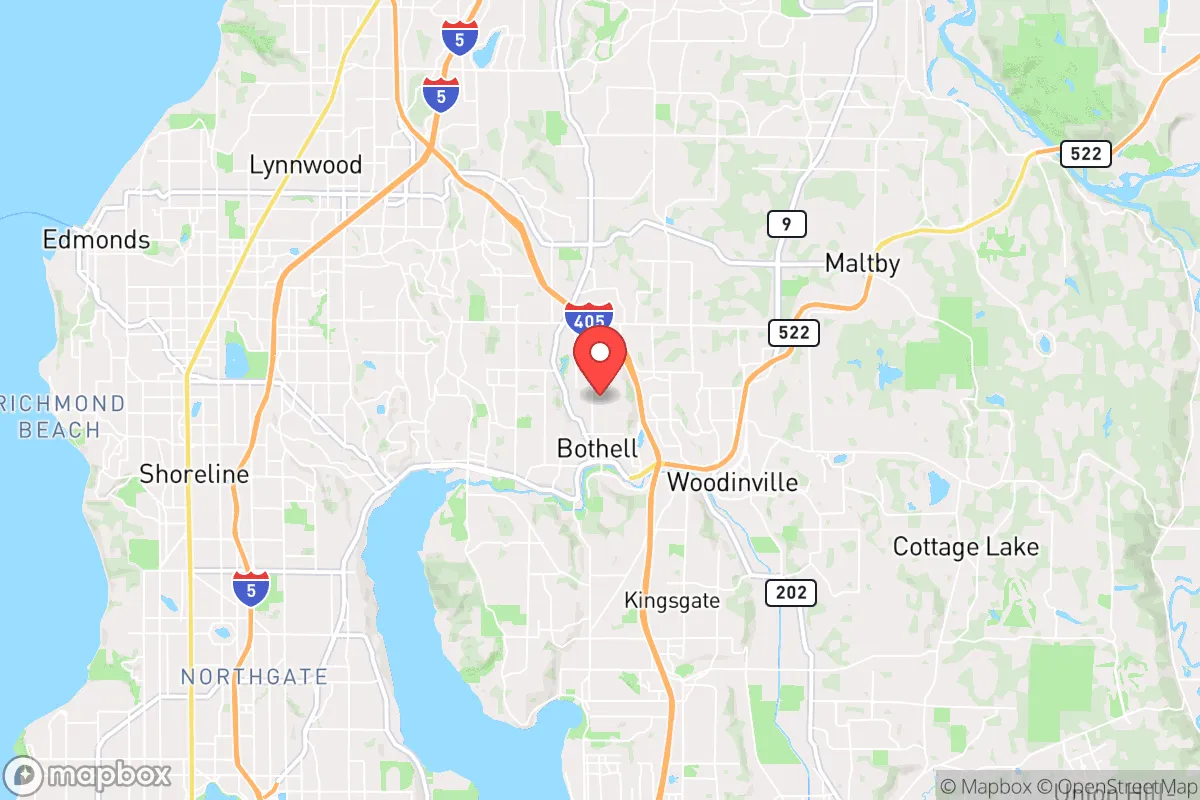
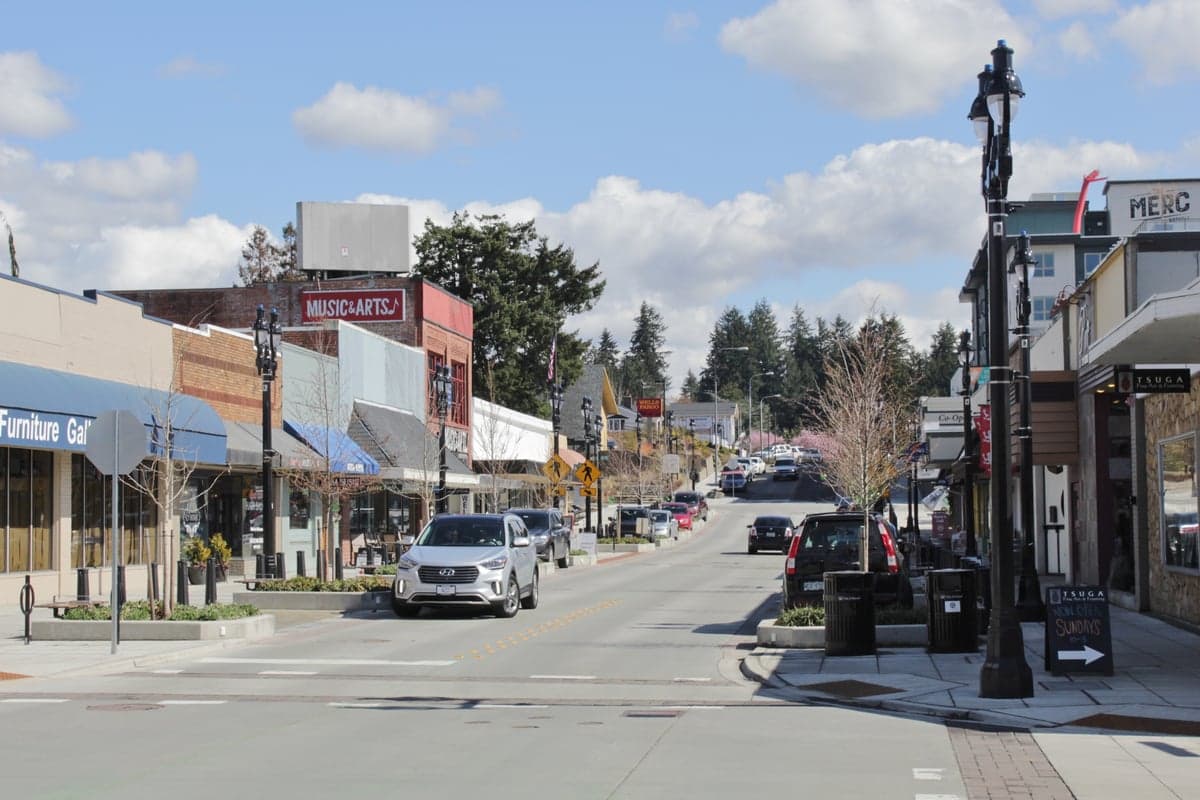
Photo: Wikipedia
Political ClimatePolitical Climate in Bothell, WA
District shown is the primary district for this city’s centroid. Cities may span multiple districts.
Local Political AnalysisPolitical Analysis of Bothell, WA
Bothell’s political climate has shifted hard and fast over the past decade, and if you’ve lived here as long as I have, you’ve felt it. The Cook Partisan Voting Index (PVI) now sits at D+15, meaning this town votes about 15 points more Democratic than the national average. That’s a stark change from the 1990s and early 2000s, when Bothell was a reliably purple, even slightly red-leaning suburb. Today, the city council and local school board are dominated by progressive voices, and the trajectory is clearly toward more government involvement in daily life—something that ought to give any freedom-minded resident pause.
How it compares
Drive ten minutes east to Woodinville or north to Mill Creek, and you’ll find a similar story—both are now solidly blue, with Woodinville’s PVI around D+12 and Mill Creek’s even higher. But head south toward Kirkland or west toward Kenmore, and the progressive tilt gets even stronger; those areas are D+20 or more. The real contrast is if you go east into Snohomish County’s rural pockets, like Maltby or Monroe, where conservative values still hold. Bothell used to feel like a middle ground between the urban-left of Seattle and the more traditional Eastside suburbs. Now, it’s basically an extension of the Seattle political machine, with the same push for higher taxes, stricter land-use regulations, and a school curriculum that often prioritizes ideology over academics.
What this means for residents
For those of us who value personal freedoms and limited government, the shift is concerning. The city has aggressively pursued a “climate action plan” that includes mandates on building materials and energy use—effectively telling homeowners and small businesses what they can and can’t do with their own property. The school board has adopted policies that emphasize equity over merit, and parents who raise concerns about curriculum content are often dismissed as out of touch. Property taxes have climbed steadily, partly due to state-level levies that Bothell’s progressive council supports. If you’re a small business owner or a family trying to keep more of what you earn, the local political climate is becoming less hospitable by the year.
On the cultural side, Bothell still has a few pockets of resistance. The annual Bothell Block Party and the farmers market draw a mix of people, but the dominant voice in local government is firmly progressive. The city’s recent push to allow “missing middle” housing—like duplexes and triplexes in single-family zones—has been framed as a way to increase affordability, but it’s really about densification and government control over neighborhood character. For longtime residents, the feeling is that Bothell is losing its identity as a place where you could live your life without constant interference from city hall. If the trend continues, the next decade will likely bring even more regulations, higher costs, and a political environment that leaves little room for dissent.

State Political ClimatePolitical Climate in Washington
State Political AnalysisPolitical Environment in the State
Washington State has shifted from a purple swing state to a solidly Democratic stronghold over the past two decades, with Democrats now holding every statewide office and commanding supermajorities in the legislature. The state hasn't voted for a Republican presidential candidate since 1984, and the 2024 election saw Kamala Harris carry it by roughly 19 points. However, that top-line number hides a deeply fractured political landscape—the liberal Puget Sound corridor (Seattle, Tacoma, Olympia) and the more moderate Spokane area drive the blue vote, while vast swaths of Eastern Washington, the Olympic Peninsula, and rural southwestern counties remain reliably red. The real story is the accelerating leftward drift: what was once a pragmatic, centrist Democratic state has become a laboratory for progressive policy, with significant implications for anyone considering a move here.
Urban vs. rural divide
Washington's political map is a textbook case of the urban-rural chasm. King County (Seattle) alone casts about 30% of the state's votes and delivers a Democratic margin of roughly 500,000 votes—enough to cancel out the entire rest of the state. The I-5 corridor from Seattle south through Tacoma and Olympia is deep blue, with Pierce and Thurston counties trending bluer each cycle. Spokane County, once a swing county, has moved left in recent years, with Spokane city proper now reliably Democratic while the surrounding rural areas remain red. The real Republican strongholds are east of the Cascades: Yakima, Benton (Tri-Cities), Franklin, and Spokane Valley are solidly red, as are most counties along the Columbia River Gorge and the Olympic Peninsula. What's striking is the suburban shift: places like Snohomish County (Everett) and Clark County (Vancouver) were competitive a decade ago but now lean clearly Democratic, driven by an influx of tech workers and remote employees from Seattle. The only reliably red suburban area left is the eastern edge of Clark County near Camas and Washougal, and parts of Spokane Valley.
Policy environment
Washington's policy environment is aggressively progressive, with a tax structure that's uniquely burdensome for high earners and business owners. The state has no income tax but makes up for it with the highest state sales tax in the nation (6.5% base, with local add-ons pushing it to 10%+ in Seattle and Tacoma), plus a new capital gains tax on profits over $250,000 that was upheld by the state Supreme Court in 2023. Property taxes are moderate but rising fast, especially in King County. The regulatory posture is among the most stringent in the country: Washington has a state-level cap-and-trade program (the Climate Commitment Act), a strict paid family leave mandate, and a minimum wage that hit $16.28 in 2024 and is indexed to inflation. Education policy is dominated by teachers' unions, with the state spending over $18,000 per student but seeing declining test scores—Seattle Public Schools have lost 20% of enrollment since 2019 as families flee to private or suburban schools. Healthcare is heavily regulated, with a state-run insurance exchange and some of the strictest abortion access laws in the nation (no parental notification requirement, no waiting period). Election laws are among the most liberal: universal mail-in voting, same-day registration, and no voter ID requirement at the polls. For a conservative-leaning family, the policy environment feels like a slow-motion expansion of government into nearly every aspect of life.
Trajectory & freedom
Washington is clearly becoming less free by any measure of personal liberty, especially for those who value gun rights, parental authority, or economic independence. The 2023 legislative session was a watershed: the state banned the sale of assault weapons (SB 5078), imposed a 10-day waiting period on all firearm purchases, and required a safety training course for buyers. Magazine capacity is capped at 10 rounds. Parental rights took a hit with the 2023 "shield law" (SB 5599) that blocks law enforcement from cooperating with out-of-state investigations into gender-affirming care for minors—meaning a parent in Idaho or Texas can't get Washington authorities to help if their child crosses state lines for treatment without consent. Medical autonomy is constrained by the state's strict vaccine mandates for healthcare workers and schoolchildren, though a 2024 bill to expand religious exemptions failed. Property rights are under pressure from the state's Growth Management Act, which limits development in rural areas and has driven housing costs through the roof—the median home price in King County is now over $800,000. On the positive side, Washington has no state income tax, no estate tax, and relatively low business taxes for small operations. But the trajectory is clear: each legislative session brings new restrictions on guns, new mandates on employers, and new limits on local control. The state's "freedom" is increasingly defined by what the government provides, not what it leaves alone.
Civil unrest & political movements
Washington has been a flashpoint for political unrest, particularly in Seattle. The 2020 CHOP/CHAZ occupation in Capitol Hill lasted nearly a month and saw multiple shootings, with the city council initially voting to defund the police by 50% (though that was later walked back). The "autonomous zone" experiment became a national symbol of progressive governance gone awry. Since then, organized activist movements have shifted to the state capitol in Olympia, where groups like Washington CAN and the Transit Riders Union push for rent control, free transit, and expanded welfare. On the right, the Washington State Republican Party has struggled to gain traction, but grassroots groups like the Washington Gun Rights Alliance and the Family Policy Institute of Washington have had some success in blocking bills. Immigration politics are a major fault line: Washington is a sanctuary state (2019's Keep Washington Working Act), and King County has a policy of not cooperating with ICE even for violent offenders. The 2023 "Washington Voting Rights Act" made it easier for minority groups to sue local governments over at-large elections, effectively forcing proportional representation in many cities. Election integrity remains a concern for conservatives: the state's universal mail-in system has no signature verification beyond a basic check, and a 2022 audit found over 1,000 ballots cast by non-citizens in King County alone (though the state dismissed it as a data error). The most visible flashpoint for a new resident would be the constant presence of homeless encampments in Seattle, Tacoma, and Olympia—the state's 2023 "right to shelter" bill was defeated, leaving cities with no legal way to clear camps.
Projection
Over the next 5-10 years, Washington will likely become even more progressive, driven by three forces: continued in-migration of tech workers from California and Oregon, the growing political power of the Asian American and Hispanic communities (both lean Democratic in this state), and the inability of rural conservatives to reverse the urban vote advantage. The state's population is projected to grow by 1.5 million by 2035, with nearly all of that growth in King, Pierce, Snohomish, and Clark counties. The Republican Party is effectively locked out of statewide power for the foreseeable future—the last Republican governor was elected in 1980, and the party hasn't held a legislative chamber since 2012. Expect more gun control (mandatory storage laws, liability insurance for owners), more climate mandates (a ban on new gas stations is being discussed), and more expansion of the welfare state (a universal basic income pilot is already in the works). The one wild card is housing: if the state's affordability crisis continues to worsen, it could drive out the very tech workers fueling the progressive agenda, potentially creating a political realignment. But for now, the trajectory is clear: Washington is becoming a one-party state with an increasingly ambitious government.
Bottom line for a conservative moving here: If you're looking for a place where your vote matters, your gun rights are respected, and your tax dollars aren't funding programs you oppose, Washington is a tough sell. The state's natural beauty and economic opportunity are real, but they come with a political price tag that's only getting steeper. You'll find like-minded communities in Spokane Valley, Yakima, or the Tri-Cities, but you'll be fighting a losing battle at the state level. If you do move, plan to engage locally—school boards, city councils, and county commissions are where conservatives can still make a difference. Just don't expect the state legislature to listen.
* Values derived from national, state, county, city and local statistics and may differ in a specific area. Last updated: 2026-04-21T11:16:35.000Z
Narrative content on this page is AI-generated and may contain mistakes. Verify any details that matter before acting on them.
ReloMaps may earn a commission from affiliate links at no extra cost to you.

