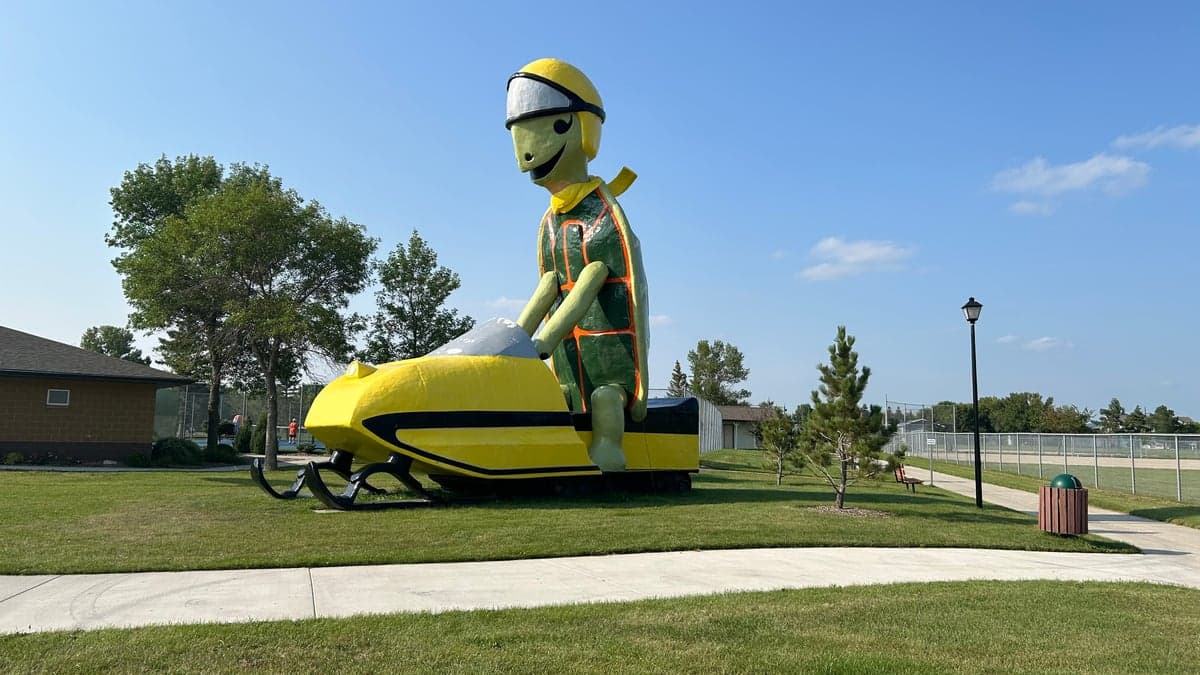
Photo: Wikipedia
Strategic Assessment of Bottineau, ND
Workable tactical position. Some exposure to population density or targets, but generally defensible in a crisis.
What does the Strategic Assessment tell us?
Our Strategic Assessment grades tactical survivability of an area. Major population centers, military targets, fallout zones, natural disasters, and border exposure all drive risk — lower exposure means a more defensible position in a crisis.
This is heavily inspired by Joel Skousen's Strategic Relocation book. Highly recommended you checkout the book ($)What does this tell us?
Our Strategic Assessment grades tactical survivability of an area. Major population centers, military targets, fallout zones, natural disasters, and border exposure all drive risk — lower exposure means a more defensible position in a crisis.
This is heavily inspired by Joel Skousen's Strategic Relocation book. Highly recommended you checkout the book ($)Strategic Pillars

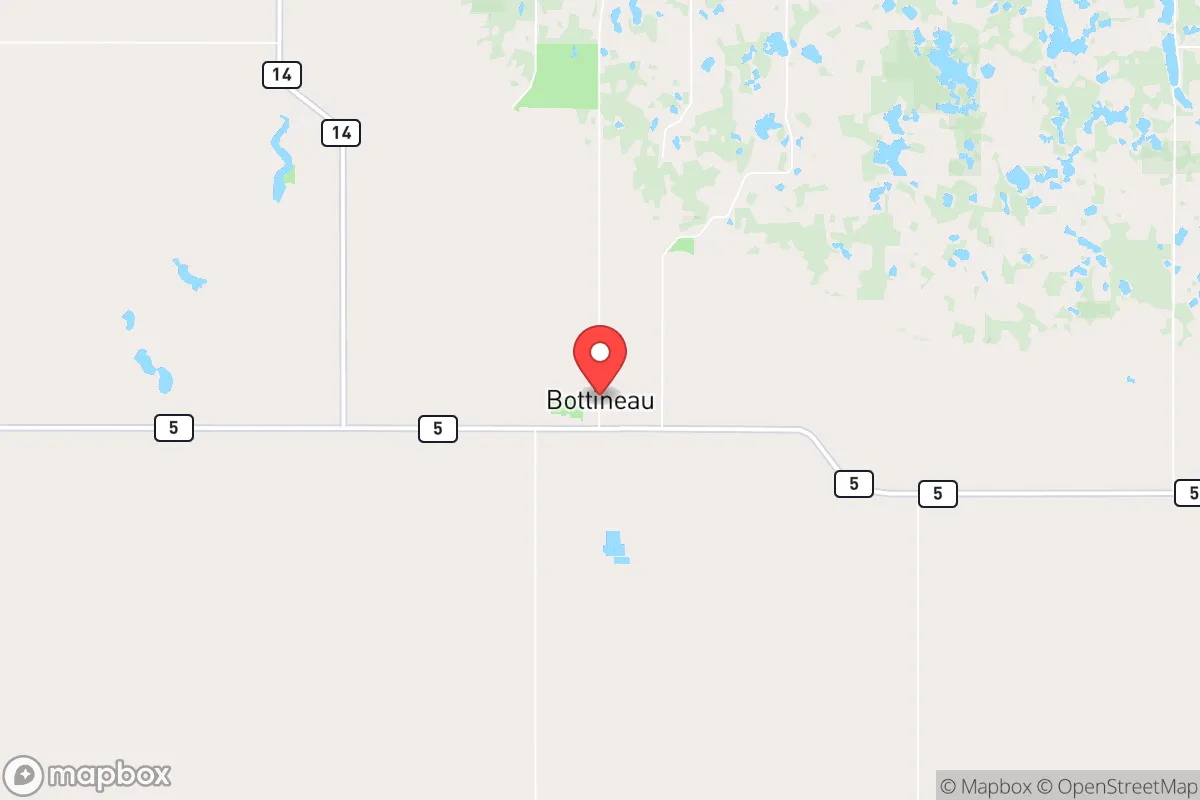
Key Distances
Regional Safe Places
Below is our recommended "safe zones" in North Dakota and the surrounding area based on our strategic heuristics. For most people, it's unrealistic to live in a “safe zone” full-time due to work, family or other personal reasons. They tend to be more rural. However, many of these areas are perfect for second homes and retreat properties that double as a vacation home or even a short-term rental.
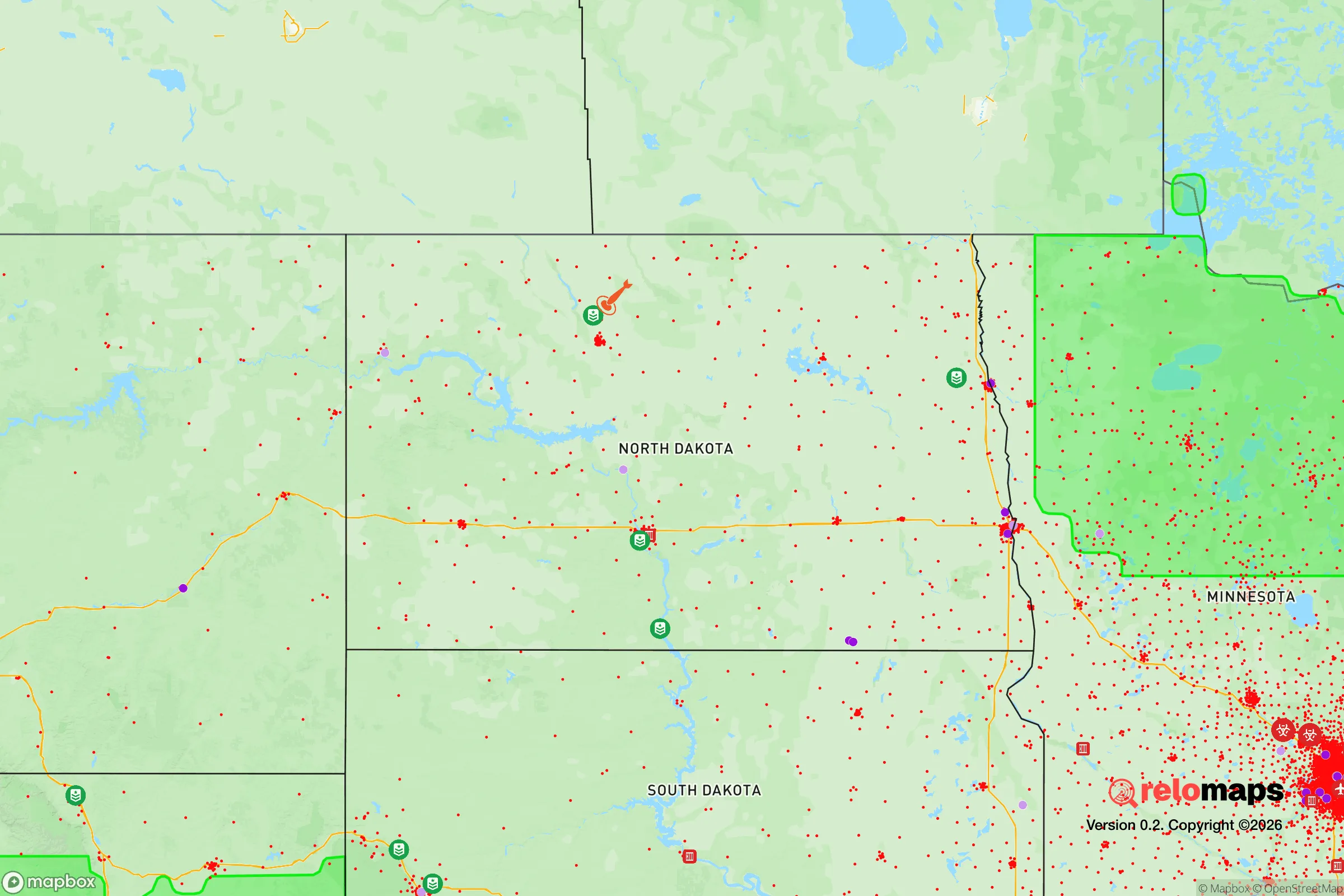
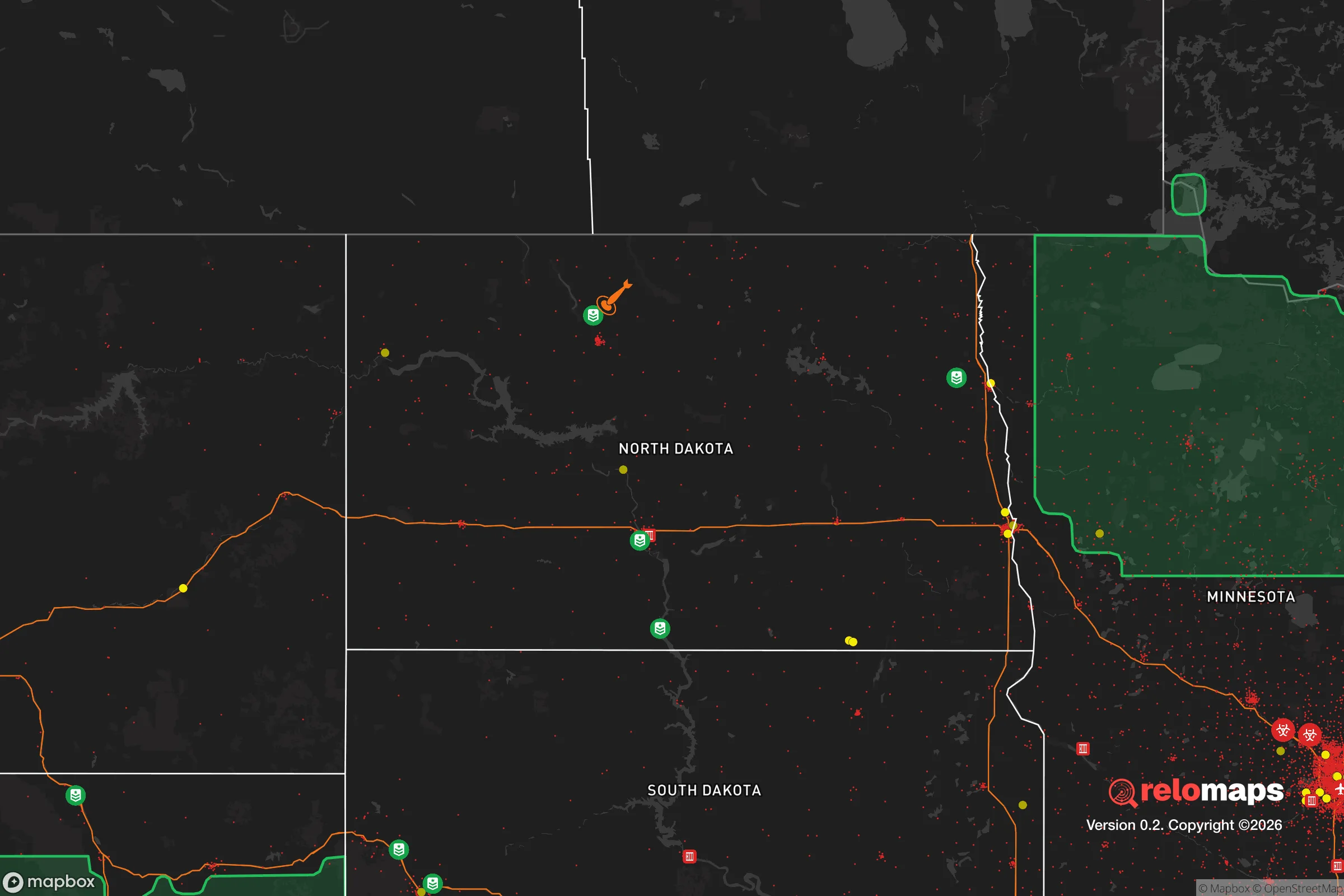


Important Note: For informational purposes only. This does not mean nothing bad ever happens in the green zones. Please use common sense. This is based on public data and modeled with AI. We tried to take a conservative approach but mistakes happen. We update this regularly as new information becomes available.
Solar Generator Recommendations
Backup power matters more here than in safer locations. We've picked three solar generators across budgets and capacity tiers — start with the budget unit if you only need a few essentials, or step up if you want to run a fridge and HVAC for days at a time.

Jackery Portable Power Station Explorer 300
Budget OptionPower on the Go: Weighing only 11 lbs, it's convenient to set up and store with book-sized foldable solar panels

BLUETTI Portable Power Station AC180
Designed for both indoor and outdoor scenarios, AC180 is highly capable as it has a robost capacity and continuous output power.

EF ECOFLOW DELTA Pro Ultra Power Station
Upgraded PickEcoFlow DELTA Pro Ultra is a whole-home energy system designed to grow with your family. Integrated with the Smart Home Panel 2, it scales to meet your evolving energy needs — keeping your home powered, intelligent, and secure through every stage of life.
We earn a commission, at no additional cost to you.
Strategic Assessment Analysis
Bottineau, North Dakota, sits as a quiet outlier in an increasingly unstable world—a place where the classic American virtues of self-reliance and community still hold weight, and where the chaos of the coasts feels like a distant rumor. Its strategic value for a relocator with a prepper mindset lies not in flashy infrastructure, but in its sheer distance from the fault lines of modern collapse: far from the crowded interstate corridors, the major population centers, and the high-value targets that would draw the worst of a national crisis. This is a town that has survived the boom-and-bust cycles of the northern plains for over a century, and its resilience is baked into the landscape and the people who choose to live here.
Geographic position and natural advantages for long-term security
Bottineau’s location is its primary strategic asset. Perched just a few miles south of the Canadian border and nestled against the Turtle Mountains, it occupies a natural redoubt that offers both physical separation and practical advantages. The Turtle Mountains provide a modest but meaningful elevation gain—roughly 1,000 feet above the surrounding prairie—offering better line-of-sight for observation and a microclimate that can moderate extreme temperatures. The area is surrounded by vast tracts of agricultural land, state forests, and wildlife management areas, meaning that a relocator has immediate access to open space for gardening, hunting, and foraging without the pressure of suburban sprawl. The nearest major city, Minot, is about 80 miles to the southwest, and the Fargo metro area is over 200 miles away. This buffer zone is critical: in a scenario involving civil unrest, supply chain breakdowns, or a mass casualty event, Bottineau’s isolation becomes a shield. The border proximity also offers a theoretical escape route or resupply corridor into Canada, though one should be aware of the legal and logistical hurdles that could arise in a crisis. The local economy has historically been tied to agriculture, healthcare, and education (through Dakota College at Bottineau), which means the community is not dependent on fragile just-in-time supply chains or volatile energy markets. The land is cheap, the water table is generally reliable, and the population density is low enough that a determined individual can secure a property with significant privacy.
Risks, exposures, and proximity to fallout-relevant landmarks
No location is a perfect fortress, and Bottineau has its share of vulnerabilities that a serious relocator must weigh. The most obvious risk is the extreme winter climate: temperatures can drop below -40°F with wind chills, and blizzards can shut down travel for days. This is not a place for the unprepared—fuel for heating, backup power, and a well-insulated shelter are non-negotiable. The area is also in a region of moderate seismic activity, though major earthquakes are rare; the bigger natural threat is tornadoes, which can sweep across the plains with little warning. From a man-made risk perspective, Bottineau is far from the obvious targets—no major military bases, no nuclear power plants, no large-scale chemical facilities within a 50-mile radius. The closest potential fallout-relevant landmark is the Minot Air Force Base, which houses nuclear-capable B-52 bombers and is roughly 80 miles away. While that distance provides a significant safety buffer in the event of a direct strike or accident, it is not zero-risk; prevailing winds from the southwest could carry fallout toward Bottineau in a worst-case scenario. The Canadian border itself is a low-risk zone for most conflict scenarios, but a major disruption at the border—such as a mass migration event or a security lockdown—could complicate movement. The town’s small population (around 2,100) means that local law enforcement and emergency services are limited; in a widespread crisis, you would be largely reliant on your own resources and your immediate neighbors. The nearest Level 1 trauma center is in Minot, which is a 90-minute drive under good conditions—a significant liability if medical evacuation becomes necessary.
Practical resilience for a relocator: food, water, energy, and defensibility
For the individual or family looking to build a sustainable, off-grid-capable lifestyle, Bottineau offers a surprisingly strong foundation. Water is the first priority, and the area sits atop the Dakota Aquifer, which provides generally good-quality groundwater at reasonable depths (typically 100-200 feet for a private well). Surface water is available from the nearby Souris River and several small lakes in the Turtle Mountains, though treatment would be necessary. The growing season is short—roughly 110 frost-free days—but the fertile glacial till soil is excellent for cold-hardy crops like potatoes, carrots, cabbage, and grains. Local farmers are accustomed to dealing with harsh conditions, and a relocator who builds relationships early can tap into a network of knowledge and barter for bulk supplies. Energy resilience is achievable: the region has decent wind resources, and solar panels can produce meaningful power even in winter if properly angled and maintained, though battery storage is essential for the long, dark months. Wood heating is the most practical backup, with ample firewood available from the state forests. Defensibility is a mixed bag. The open prairie offers long sightlines but little cover, meaning a property with a good perimeter and a clear field of fire is ideal. The Turtle Mountains provide some natural concealment and chokepoints, but the area is not rugged enough to stop a determined group. The local culture leans heavily toward self-sufficiency and firearm ownership, which is a double-edged sword: it means your neighbors are likely armed and capable, but it also means that any conflict could escalate quickly. The best strategy is to integrate quietly into the community, contribute value, and avoid drawing attention to your preparations. The town’s small size means that everyone knows everyone, and a newcomer who keeps to themselves will be viewed with suspicion—but one who shows up ready to help with a snowstorm or a barn raising will earn trust fast.
The overall strategic picture for Bottineau is one of cautious optimism for the prepared relocator. It is not a bug-out location for the weekend warrior—it is a long-term homesteading play that requires serious investment in infrastructure, skills, and community relationships. The isolation that makes it secure also makes it unforgiving: a single mistake in winter can be fatal, and the lack of nearby medical or logistical support means you must be your own first responder, mechanic, and farmer. But for those who are willing to put in the work, Bottineau offers a rare combination of low cost, low population density, abundant natural resources, and distance from the most likely flashpoints of national collapse. The conservative values that still hold sway here—personal responsibility, neighborly cooperation, and a healthy distrust of distant authority—align well with the prepper mindset. If the country continues its current trajectory toward instability, places like Bottineau will become islands of relative normalcy, where the old rules still apply and a man’s word and a well-stocked pantry are worth more than any government promise. It is not a paradise, but it is a viable redoubt—and in the world we are heading toward, that may be the best you can ask for.

* Values derived from national, state, county, city and local statistics and may differ in a specific area. Last updated: 2026-04-19T05:46:48.000Z
Narrative content on this page is AI-generated and may contain mistakes. Verify any details that matter before acting on them.
ReloMaps may earn a commission from affiliate links at no extra cost to you.

