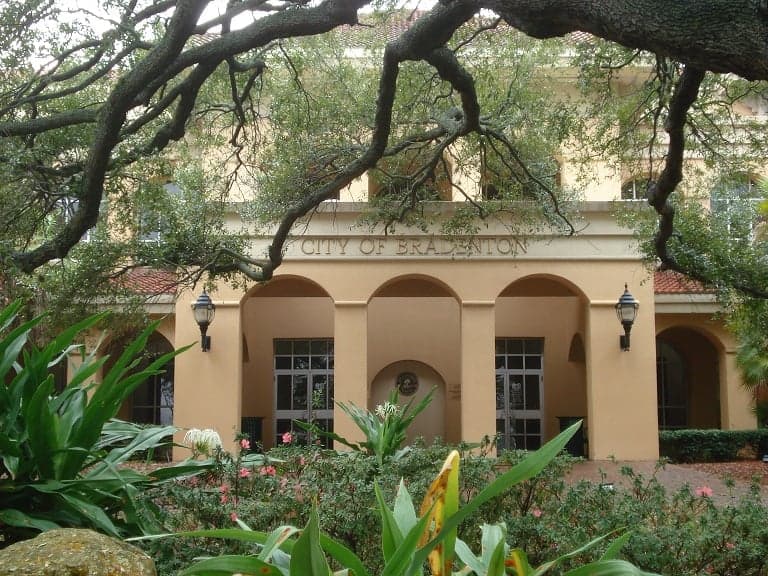
Photo: Wikipedia
Strategic Assessment of Bradenton, FL
Multiple tactical vulnerabilities. Population density, target proximity, or disaster risk are likely compounding. A retreat property and exit planning is required.
What does the Strategic Assessment tell us?
Our Strategic Assessment grades tactical survivability of an area. Major population centers, military targets, fallout zones, natural disasters, and border exposure all drive risk — lower exposure means a more defensible position in a crisis.
This is heavily inspired by Joel Skousen's Strategic Relocation book. Highly recommended you checkout the book ($)What does this tell us?
Our Strategic Assessment grades tactical survivability of an area. Major population centers, military targets, fallout zones, natural disasters, and border exposure all drive risk — lower exposure means a more defensible position in a crisis.
This is heavily inspired by Joel Skousen's Strategic Relocation book. Highly recommended you checkout the book ($)Strategic Pillars

Key Distances
Regional Safe Places
Below is our recommended "safe zones" in Florida and the surrounding area based on our strategic heuristics. For most people, it's unrealistic to live in a “safe zone” full-time due to work, family or other personal reasons. They tend to be more rural. However, many of these areas are perfect for second homes and retreat properties that double as a vacation home or even a short-term rental.

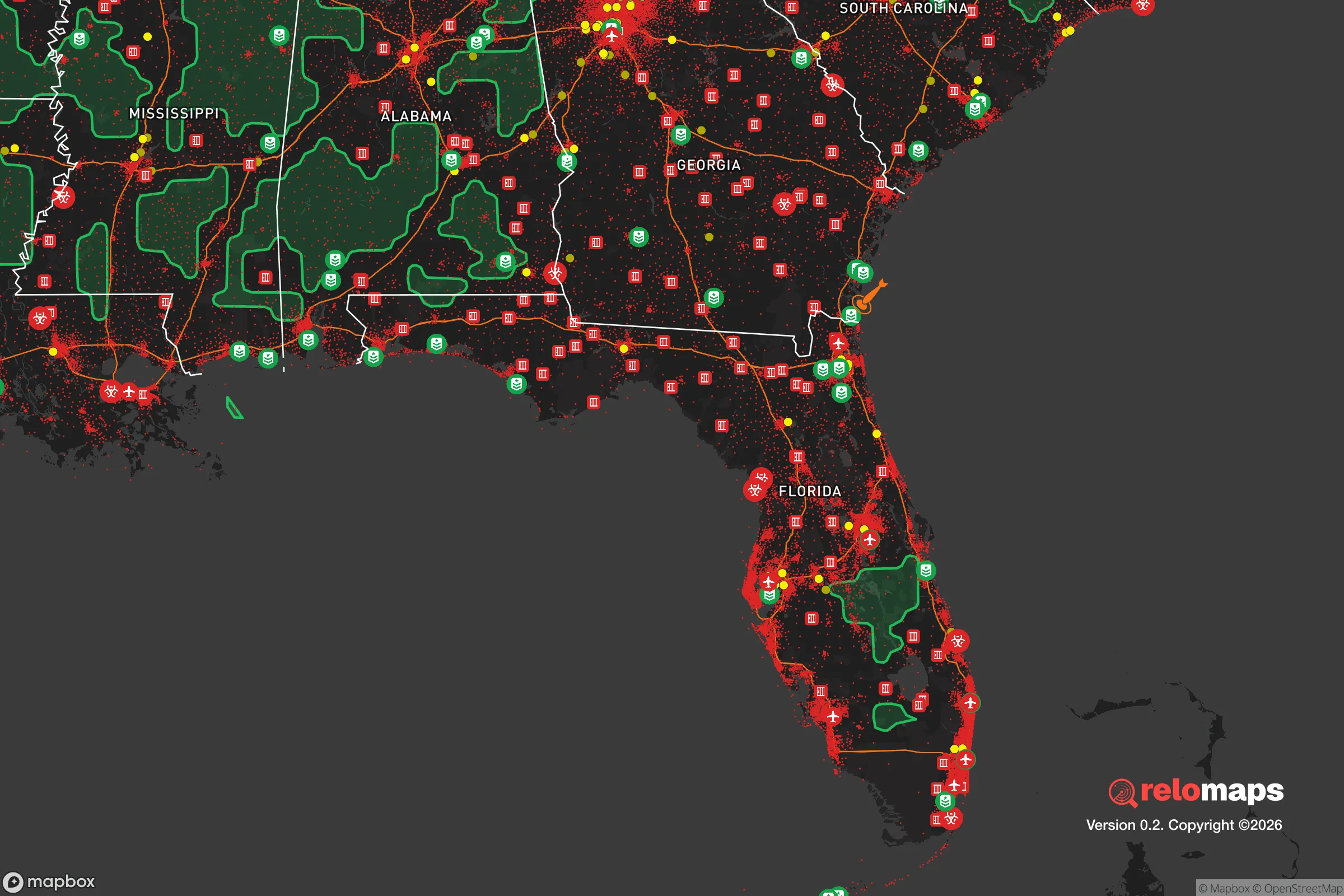


Important Note: For informational purposes only. This does not mean nothing bad ever happens in the green zones. Please use common sense. This is based on public data and modeled with AI. We tried to take a conservative approach but mistakes happen. We update this regularly as new information becomes available.
Solar Generator Recommendations
Backup power matters more here than in safer locations. We've picked three solar generators across budgets and capacity tiers — start with the budget unit if you only need a few essentials, or step up if you want to run a fridge and HVAC for days at a time.

Jackery Portable Power Station Explorer 300
Budget OptionPower on the Go: Weighing only 11 lbs, it's convenient to set up and store with book-sized foldable solar panels

BLUETTI Portable Power Station AC180
Designed for both indoor and outdoor scenarios, AC180 is highly capable as it has a robost capacity and continuous output power.

EF ECOFLOW DELTA Pro Ultra Power Station
Upgraded PickEcoFlow DELTA Pro Ultra is a whole-home energy system designed to grow with your family. Integrated with the Smart Home Panel 2, it scales to meet your evolving energy needs — keeping your home powered, intelligent, and secure through every stage of life.
We earn a commission, at no additional cost to you.
Strategic Assessment Analysis
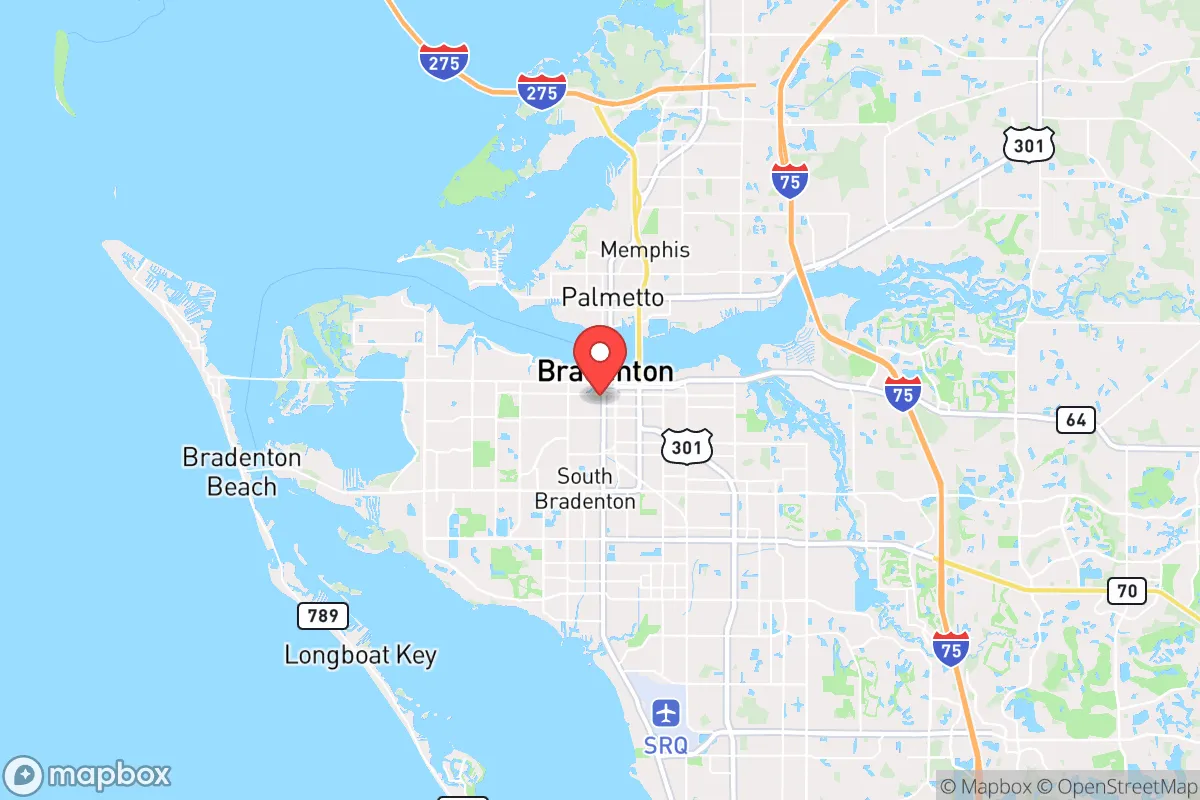
Bradenton, Florida, sits in a strategic sweet spot for those prioritizing resilience and long-term security. Tucked along the Gulf Coast in Manatee County, it offers a balance of coastal access and inland buffer, with a population around 60,000 that keeps it below the radar of major metro chaos. Its location roughly 40 miles south of Tampa and 10 miles from the mouth of Tampa Bay gives you proximity to resources without being inside the blast radius of a high-value target. For a relocator with a prepper mindset, Bradenton’s combination of moderate climate, agricultural hinterland, and relatively low density makes it a candidate worth serious consideration—provided you understand the trade-offs.
Geographic position and natural advantages for long-term security
Bradenton’s geography is its first line of defense. The city sits on the Manatee River, which flows into the Gulf of Mexico, offering both a freshwater source and a potential evacuation route by water if roads become impassable. The surrounding area is flat and subtropical, with sandy soils that support small-scale agriculture—citrus, vegetables, and even some livestock operations within a 20-minute drive. The climate is warm year-round, reducing the need for heavy heating fuel and allowing for extended growing seasons. Critically, Bradenton is far enough from Tampa (about 40 miles) to avoid the immediate fallout of a major event in that urban center, yet close enough to access its medical and supply networks during stable periods. The region’s natural barriers—the Gulf to the west, the Everglades to the south, and the relatively sparse interior of central Florida to the east—create a natural buffer zone. For a relocator, this means you’re not boxed in; you have multiple directions to move if needed, and the local terrain doesn’t funnel you into choke points. The area also benefits from the Florida Aquifer, which provides reliable groundwater, though you’ll want to test and treat it given agricultural runoff and saltwater intrusion risks near the coast.
Risks, exposures, and proximity to high-value targets
No location is perfect, and Bradenton has its share of vulnerabilities. The most obvious is hurricane risk: the Gulf Coast is a prime corridor for tropical systems, and Bradenton has been hit by major storms like Hurricane Irma (2017) and Hurricane Ian (2022, though Ian’s worst effects were farther south). Storm surge is a real concern for properties within a mile of the coast or the Manatee River; inland areas east of I-75 are safer but still face wind and flooding. Beyond weather, the proximity to Tampa Bay—home to MacDill Air Force Base, major port facilities, and a population of over 3 million—makes this region a potential secondary target in a conflict scenario. A strike on Tampa could send refugees, supply disruptions, and secondary fallout (economic and social) cascading down to Bradenton. The city itself has no major military or industrial targets, but its location on the I-75 corridor means it could become a chokepoint for evacuation or supply lines during a crisis. Additionally, the area’s reliance on tourism and seasonal residents means that during a disaster, the population can swell unpredictably, straining local resources. For a prepper, these risks mean you need to plan for self-sufficiency for at least two weeks, have a bug-out route that avoids the main highways, and consider a property with elevation and good drainage.
Practical resilience: food, water, energy, and defensibility in Bradenton
When it comes to day-to-day preparedness, Bradenton offers a mix of advantages and challenges. Food security is decent: the region has active farmers’ markets, u-pick farms, and a growing network of small-scale producers. You can source fresh produce, eggs, and even grass-fed beef within a 30-minute drive. However, the soil is sandy and requires amendment for serious gardening; raised beds with compost are the norm. Water is the bigger concern. The municipal supply comes from the Manatee River and groundwater wells, but during a prolonged power outage or contamination event, you’ll need your own source. Many homes have wells, but they require electricity to pump—so a backup generator or solar-powered pump is essential. Rainwater collection is viable given the region’s 50+ inches of annual rainfall, but you’ll need proper filtration. Energy is a bright spot: Florida has abundant solar potential, and net metering policies make rooftop solar a solid investment. Battery storage is recommended to keep critical loads running during grid failures. Defensibility is mixed. Bradenton’s suburban sprawl means most neighborhoods are open and accessible, but you can find properties on larger lots (1–5 acres) east of I-75 or in rural pockets like Parrish or Myakka City. These offer more privacy, space for gardens and livestock, and the ability to create a perimeter. The local law enforcement presence is moderate, but during a breakdown, you’ll largely be on your own. Building a community of like-minded neighbors is key—there are prepper and homesteading groups in the area, though they keep a low profile. Overall, Bradenton is not a fortress, but with deliberate planning it can be a sustainable base.
The overall strategic picture for Bradenton is one of cautious optimism for the prepared relocator. It’s not a remote bunker—it’s a working-class Gulf Coast town with real exposure to hurricanes and the ripple effects of Tampa’s vulnerabilities. But its moderate size, agricultural access, and multiple escape routes make it a more resilient choice than most Florida metros. If you’re willing to invest in off-grid infrastructure, build local relationships, and stay alert to seasonal threats, Bradenton can serve as a solid long-term hub. The key is to treat it as a base of operations, not a final redoubt—and to always have a plan B that heads east toward the interior or north along the less-populated Gulf coast. For a conservative-leaning individual or family looking to balance lifestyle with preparedness, Bradenton deserves a spot on the short list.

* Values derived from national, state, county, city and local statistics and may differ in a specific area. Last updated: 2026-05-14T13:31:05.000Z
Narrative content on this page is AI-generated and may contain mistakes. Verify any details that matter before acting on them.
ReloMaps may earn a commission from affiliate links at no extra cost to you.

