Photo: Wikipedia
Demographics of Brandon, FL
Affluence Level in Brandon, FL
A middle-class area roughly in line with national averages across income, home values, education, and employment.
People of Brandon, FL
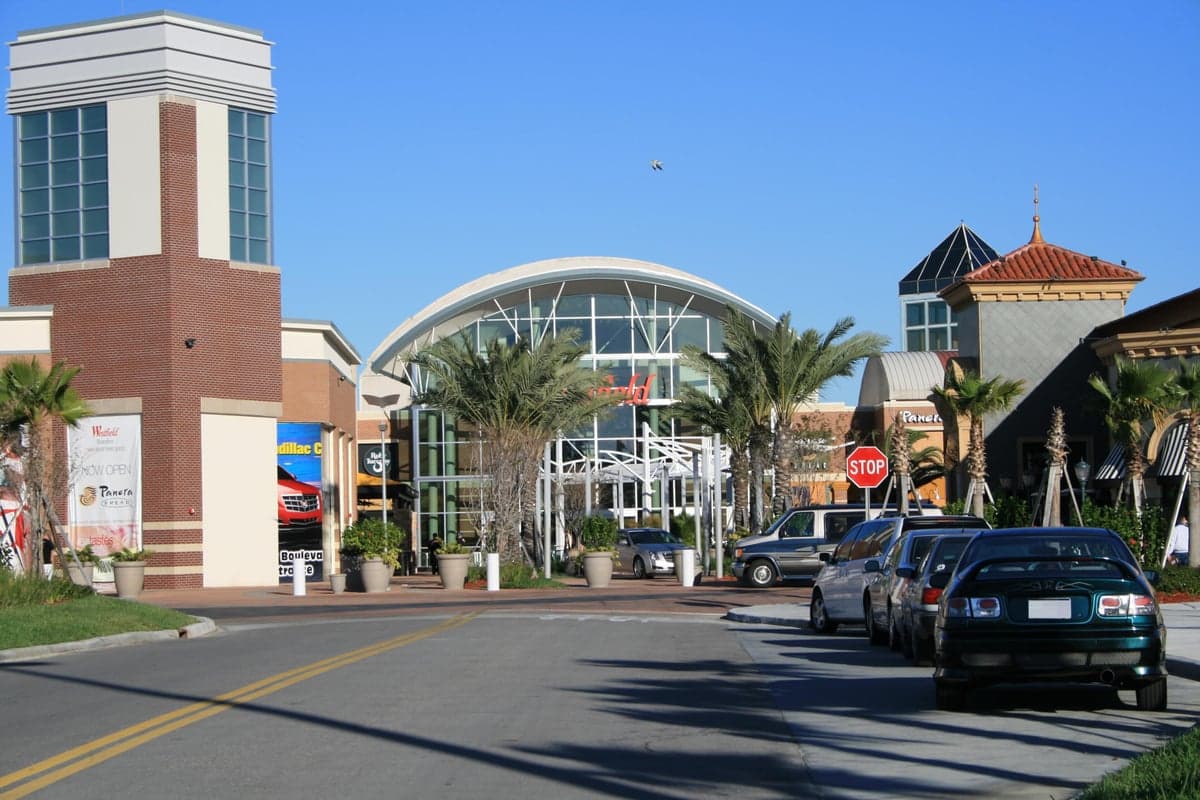
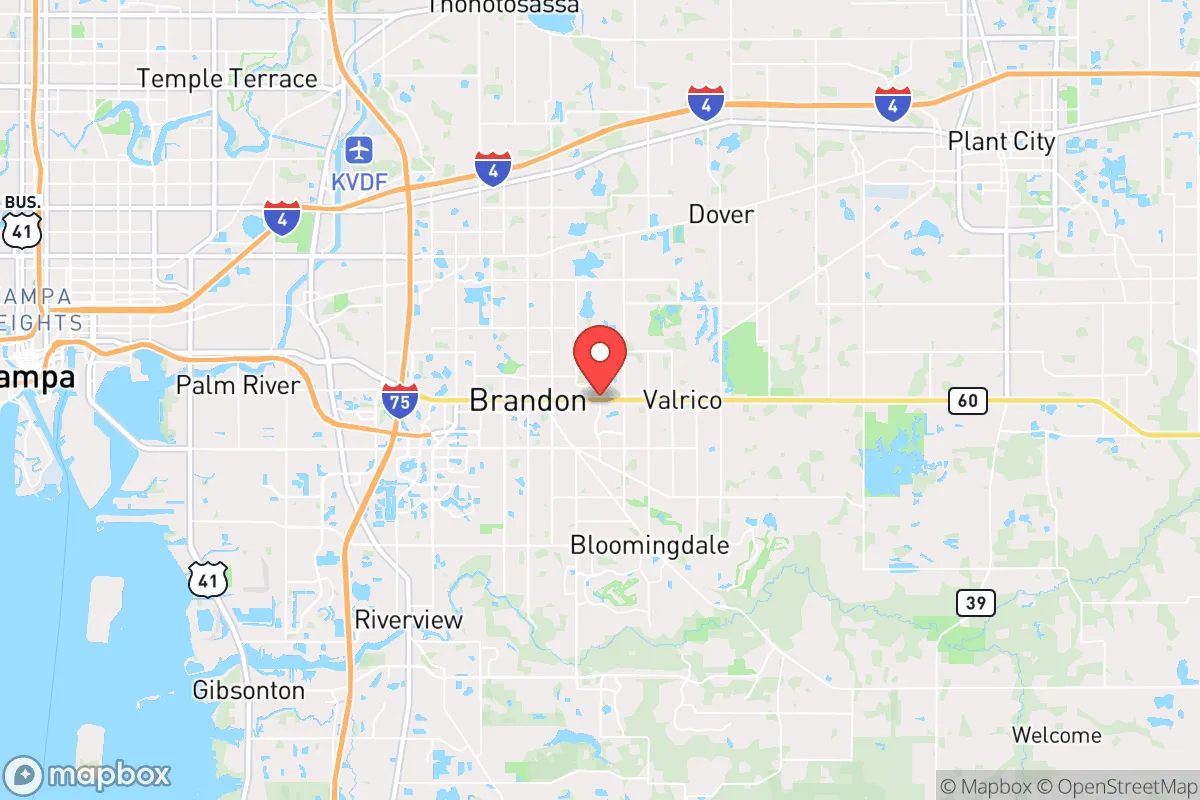
Brandon, Florida, is a densely populated unincorporated suburb of Tampa with 116,365 residents, characterized by its striking ethnic diversity and a family-oriented, middle-class character. The city’s identity is shaped by a majority-minority population where no single group holds a numerical majority, with a large Hispanic community (30.3%) and a significant Black population (16.5%) living alongside a White plurality (42.9%). Distinctive markers include a strong sense of local community centered around the Brandon Town Center mall and a housing stock dominated by single-family homes built in the 1970s–1990s, attracting both long-term Florida families and recent domestic migrants seeking affordable suburban space.
How the city was settled and grew
Brandon’s human history is almost entirely a 20th-century story. The area was sparsely populated pine flatland until the 1880s, when the South Florida Railroad laid tracks through the region, but no real settlement coalesced until the 1890s, when John Brandon, a local cattleman, donated land for a depot and a post office. The original population was a handful of Anglo-American cattle ranchers and citrus farmers, who built small homesteads in what is now the historic Brandon core around Lumsden Road and Parsons Avenue. Growth remained negligible through the 1940s—the 1950 census recorded fewer than 1,000 residents—as the area lacked industry or a major highway. The first meaningful wave arrived after World War II, when returning veterans and their families, drawn by cheap land and the promise of a rural-suburban lifestyle, built modest ranch homes in the Bloomingdale area, then a separate farming community. These early residents were overwhelmingly White and native-born, and they established the civic infrastructure—churches, a volunteer fire department, a small school—that defined Brandon through the 1960s.
Modern era (post-1965)
Brandon’s explosive growth began after the 1965 Hart-Cellar Act and, more directly, after the completion of Interstate 75 through eastern Hillsborough County in the 1970s. The interstate turned Brandon from a sleepy crossroads into a prime bedroom suburb for Tampa, and the population surged from roughly 10,000 in 1970 to over 80,000 by 2000. This wave was overwhelmingly domestic: White and Black families from the Rust Belt and the Northeast moved into sprawling subdivisions like Valencia Lakes (a gated 55+ community) and Providence Lakes, a large planned development of single-family homes built in the 1980s and 1990s. Hispanic migration accelerated in the 1990s and 2000s, driven by Puerto Ricans and Cubans relocating from the Northeast and from within Florida for construction, retail, and healthcare jobs. Today, the Hispanic population is concentrated in the Kingswood and Boyette Springs neighborhoods, where bilingual storefronts and Latin grocery stores are common. The Black population, which grew from a small historic enclave to 16.5% of the city, is most visible in the Brandon Lakes area and along the Bloomingdale Avenue corridor. East and Southeast Asian communities (1.9%) are small but established, with Vietnamese and Filipino families clustered near the Winthrop townhome developments. The Indian-subcontinent population (2.8%) is newer, arriving primarily in the 2010s for tech and medical jobs in Tampa, and is scattered across newer subdivisions like FishHawk Ranch (technically in neighboring Lithia but drawing Brandon residents). The foreign-born share (7.9%) is modest for a diverse suburb, indicating that most of Brandon’s diversity comes from second-generation and domestic migration rather than direct immigration.
The future
Brandon’s population is likely to continue diversifying slowly, but the dominant trend is homogenization by income and lifestyle rather than by race. The city is becoming more expensive: the median home price has risen above $350,000, pushing out lower-income renters and attracting higher-income families, regardless of ethnicity. Hispanic and Black populations are plateauing as a share of the total, while the White share is declining gradually—a pattern consistent with a mature suburb that has reached build-out. New construction is limited to infill townhomes and luxury apartments near the Brandon Town Center, which tend to attract young professionals and empty-nesters rather than immigrant families. The Indian-subcontinent community is the fastest-growing segment, driven by tech-sector expansion in Tampa, but it remains small in absolute terms. Brandon is not tribalizing into distinct ethnic enclaves; instead, neighborhoods like Bloomingdale and Providence Lakes are becoming more mixed as older White residents age out and are replaced by younger Hispanic and Black families. Over the next 10–20 years, Brandon will likely become a stable, majority-minority suburb with a solidly middle-class character, where ethnic diversity is the norm but economic stratification—between the gated 55+ communities and the older, less expensive subdivisions—is the real dividing line.
For someone moving in now, Brandon offers a genuinely integrated suburban environment where no single group dominates, public schools are rated average to above-average, and the cost of living remains lower than coastal Tampa or St. Petersburg. The trade-off is that the city has little historic character or walkable urban core; it is a car-dependent, strip-mall suburb that prioritizes space and affordability over charm. The population is stable, family-oriented, and increasingly diverse, making it a practical choice for conservative-leaning families who value safety, good schools, and a multiethnic community without the friction of rapid demographic change.

* Values derived from national, state, county, city and local statistics and may differ in a specific area. Last updated: 2026-05-13T16:45:04.000Z
Narrative content on this page is AI-generated and may contain mistakes. Verify any details that matter before acting on them.
ReloMaps may earn a commission from affiliate links at no extra cost to you.

