Photo: Wikipedia
Find The Best Places To Live
in St. Petersburg
PRO TIP! You can paste a Zillow or Redfin link to get info on that property.
What It's Like Living in St. Petersburg, FL
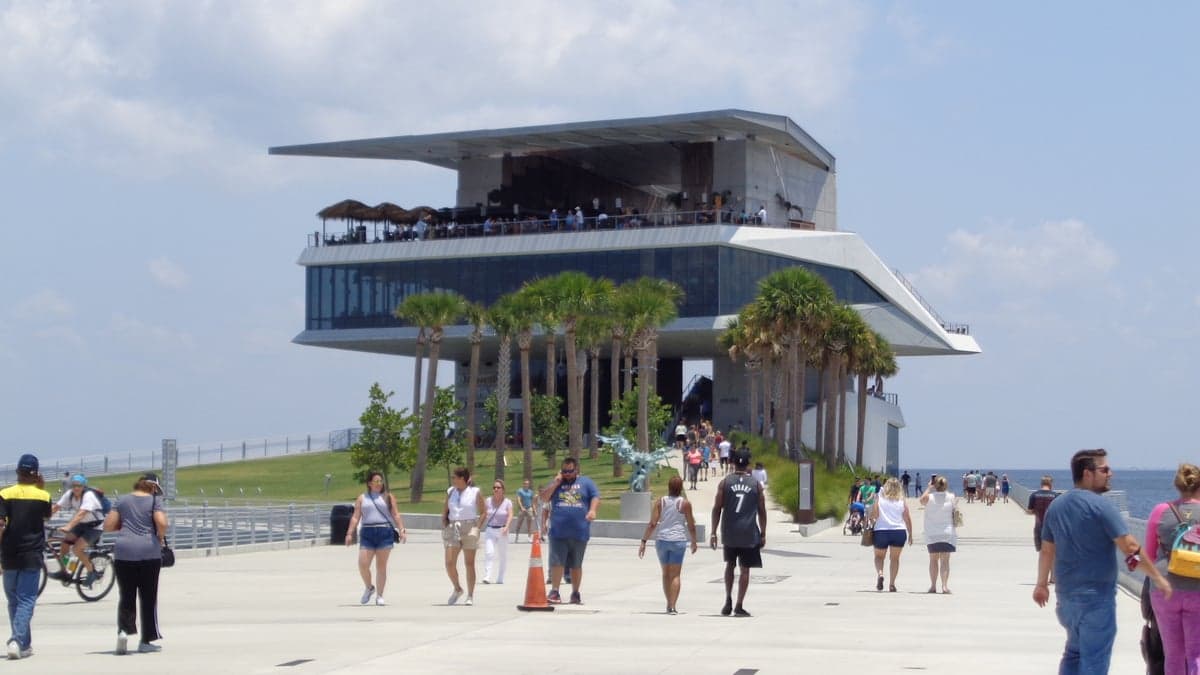
St. Petersburg feels less like a Florida beach town and more like a small city that happens to have world-class beaches a ten-minute drive away. It’s a place where the median age hovers around 43, meaning you’ll find as many empty-nesters sipping craft beer at a brewery as you will young families pushing strollers along the waterfront. The vibe is laid-back but not sleepy — there’s a quiet ambition here, a sense that people moved here on purpose, not just to retire.
Daily Rhythm: What People Actually Do
A typical Saturday in St. Pete starts with coffee at Bandit Coffee Co. or a breakfast sandwich at The Mill, then a walk or bike ride along the Pinellas Trail, which cuts straight through downtown. By mid-morning, the Saturday Morning Market on 1st Street is packed with locals buying fresh produce, local honey, and handmade soaps. Lunch might be fish tacos at Bodega on Central or a Cuban sandwich from Mazzaro’s Italian Market — the latter is a St. Pete institution where you can grab a sandwich and a bottle of wine and eat outside. Afternoons often involve the beach: Fort De Soto Park is a 20-minute drive and feels like a state park with sugar sand, while St. Pete Beach is more built up but still gorgeous. Evenings revolve around Central Avenue — breweries like 3 Daughters Brewing and Green Bench Brewing Co. are neighborhood anchors, and The Independent Bar has a rooftop that’s perfect for watching the sunset. The average commute is about 25 minutes, which feels reasonable — most people live within a 10-15 minute drive of work, and traffic only really clogs up on I-275 during snowbird season (January through March).
Sports, Festivals & the Local Identity
Sports are a bigger deal here than you might expect. The Tampa Bay Rays play at Tropicana Field in downtown St. Pete, and while the stadium is dated (and often half-empty on weeknights), the fan base is passionate and the team is consistently competitive. On game days, the Ferg’s Sports Bar across the street is packed with locals in Rays jerseys. Al Lang Stadium hosts the Tampa Bay Rowdies (USL soccer), and the atmosphere is surprisingly electric — families bring blankets and sit on the grass berm, and the crowd is loud and engaged. High school football is a big deal too; Lakewood High School and St. Petersburg High School have strong programs that draw decent crowds on Friday nights. The city’s biggest annual event is the St. Pete Grand Prix, an IndyCar race that shuts down downtown streets for a weekend in March — it’s loud, crowded, and a bit of a hassle for residents, but locals either embrace it or leave town for the weekend. Other festivals include the Mainsail Art Festival (one of the top-ranked outdoor art shows in the country) and SHINE Mural Festival, which has turned downtown into an open-air gallery with massive, colorful murals on nearly every block.
What’s There to Do: Parks, Music & Nightlife
Outdoor life is the main draw. Vinoy Park and North Shore Park are the two big waterfront green spaces, and both are packed with joggers, dog walkers, and people playing pickup volleyball. Boyd Hill Nature Preserve offers 245 acres of trails and boardwalks through wetlands — it’s a quiet escape from the city without leaving city limits. For music, Jannus Live is the go-to venue: an outdoor courtyard in downtown that books national touring acts (everything from indie rock to reggae). The State Theatre and Ringside Cafe are smaller spots for local bands and comedy. Nightlife is concentrated on Central Avenue between 1st and 4th Streets — there are rooftop bars, dive bars, and cocktail lounges within walking distance of each other. The Dali Museum is a genuine cultural gem, housing the largest collection of Dali’s work outside Spain, and the Morean Arts Center has a glass-blowing studio where you can watch artists at work.
Pros and Cons of Living Here
What longtime residents love: The weather is genuinely good — yes, it’s hot and humid from May through October, but the sea breeze keeps it bearable, and winter is spectacular (70s and sunny from November through April). The city is walkable and bikeable in a way that’s rare for Florida — downtown is compact, and the Pinellas Trail connects neighborhoods. The food scene is excellent for a city this size, with a strong mix of Cuban, seafood, and farm-to-table options. The cost of living is reasonable for the Gulf Coast: median home value is $331,500, which is high for Florida but still affordable compared to Tampa or Sarasota. The median income of $73,118 supports a comfortable middle-class lifestyle here.
What frustrates residents: The violent crime rate of 166.8 per 100,000 is below the national average, but property crime is a real issue — car break-ins and package thefts are common in certain neighborhoods (especially around downtown and the Grand Central District). Traffic on I-275 during snowbird season is genuinely annoying, and the Howard Frankland Bridge connecting St. Pete to Tampa can back up for 30 minutes on a bad day. The cost of living index is 127 (27% above the national average), driven mostly by housing and insurance — homeowners insurance and flood insurance are expensive, and they’ve been rising fast. Schools are a mixed bag: some elementary schools are excellent, but the district overall is average, and many families with means opt for private schools or move to Pinellas County’s magnet programs. The median age of 43.1 means the city skews older — if you’re in your 20s and looking for a nightlife scene, you’ll find it, but it’s not a college town.

Similar mid-size cities to St. Petersburg
* Values derived from national, state, county, city and local statistics and may differ in a specific area. Last updated: 2026-04-15T23:48:06.000Z
Narrative content on this page is AI-generated and may contain mistakes. Verify any details that matter before acting on them.
ReloMaps may earn a commission from affiliate links at no extra cost to you.

