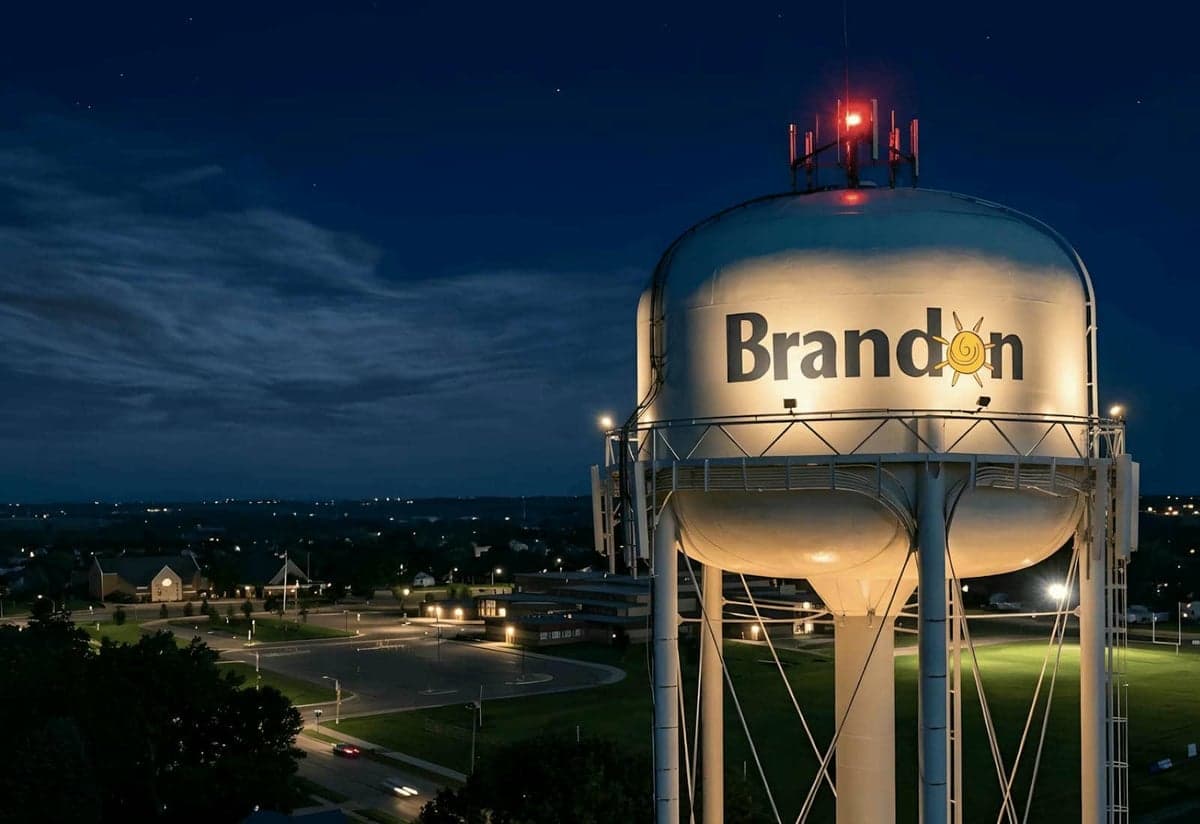
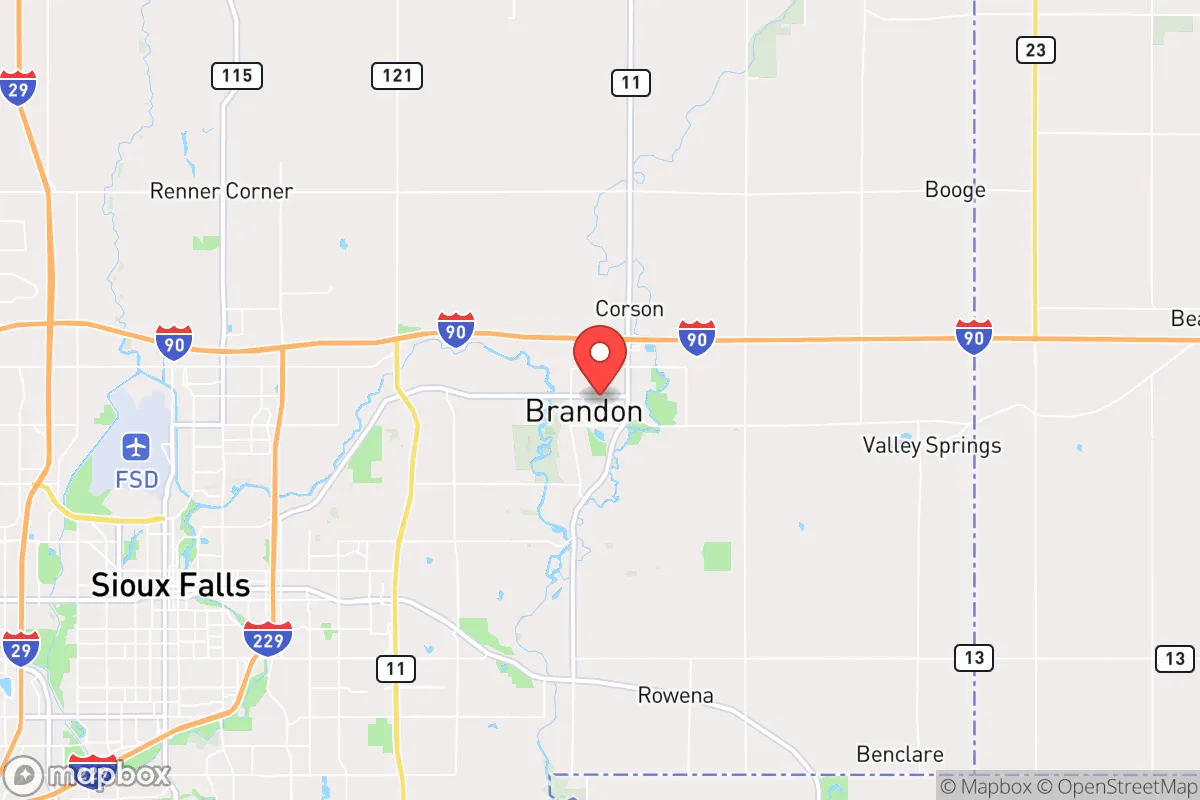
Political ClimatePolitical Climate in Brandon, SD
District shown is the primary district for this city’s centroid. Cities may span multiple districts.
Inherited from parent state — no local data available.
Local Political AnalysisPolitical Analysis of Brandon, SD
Brandon, South Dakota, is about as solidly conservative as they come, with a Cook PVI of R+15 that puts it deep in the red column. That’s not just a number on a map—it reflects the way folks around here have voted for as long as I can remember, and it’s a big reason why the area still feels like a place where common sense and personal responsibility actually matter. You won’t find the kind of progressive drift that’s creeping into places like Sioux Falls, just a few miles up the road, where city politics have started to lean a little more toward the kind of big-government thinking that rubs a lot of us the wrong way. Brandon has held the line, and for now, that’s a relief.
How it compares
Drive ten minutes north into Sioux Falls, and you’ll notice a different political vibe—not a full-on blue wave, but definitely a shift toward more urban, progressive policies, especially on things like zoning, taxes, and how much say the city has in your daily life. Brandon, by contrast, feels like a throwback to when local government kept its nose out of your business. Surrounding towns like Dell Rapids and Hartford lean conservative too, but none of them have the same R+15 muscle that Brandon does. That margin means candidates here don’t have to pander to the far-left fringe to get elected, and it shows in the kind of low-key, pro-freedom policies that keep property taxes reasonable and regulations light. If you’re worried about government overreach, this is one of the safer spots in the region.
What this means for residents
For the people who live here, that conservative tilt isn’t just about who wins elections—it’s about the day-to-day reality of not having the government breathing down your neck. You can run a small business without a mountain of red tape, send your kids to schools that still teach real history and respect for the flag, and generally live your life without some bureaucrat telling you what to do. The downside? If you’re hoping for a more progressive shift—say, more government-funded programs or tighter gun laws—you’re going to be disappointed. But for most of us, that’s a feature, not a bug. The real concern is whether Brandon can keep that identity as Sioux Falls expands and brings its urban politics with it. I’ve seen it happen in other parts of the country, and it’s a slow creep that starts with small things like zoning changes and ends with higher taxes and less freedom.
One thing that sets Brandon apart culturally is its strong sense of local independence. There’s no push for the kind of woke policies you see in bigger cities—no talk of defunding the police or imposing mask mandates that outlast the pandemic. The city council here still respects the Second Amendment, and you won’t find any silly bans on gas stoves or plastic bags. That said, keep an eye on the school board. A few years back, there was a quiet push to bring in some of that critical race theory nonsense, but the community shut it down fast. If you’re thinking of moving here, just know that the political climate is stable for now, but it takes active involvement to keep it that way. The long-term trajectory depends on whether enough of us stay engaged and keep voting for the kind of limited government that made this area a great place to raise a family in the first place.

State Political ClimatePolitical Climate in South Dakota
State Political AnalysisPolitical Environment in the State
South Dakota is one of the most reliably Republican states in the nation, with a deep-red partisan lean that has only intensified over the past two decades. The state hasn't voted for a Democratic presidential candidate since Lyndon B. Johnson in 1964, and in 2024, Donald Trump carried it by a massive 30-point margin. The dominant coalition is a blend of rural conservatives, libertarian-leaning ranchers, and a growing number of out-of-state transplants fleeing blue states. Over the last 10-20 years, the state has shifted further right, driven by an influx of new residents from California, Colorado, and Minnesota who are seeking lower taxes and fewer restrictions, while the Democratic Party has all but collapsed outside of a few tribal areas and the city of Sioux Falls.
Urban vs. rural divide
The political map of South Dakota is starkly divided between a handful of small urban centers and the vast, conservative countryside. Sioux Falls, the state's largest city, is the most politically competitive area, with Minnehaha County often voting within 5-10 points of the national average. It's a growing hub of younger professionals and some moderate Democrats, but even here, the city council and mayor's office are reliably Republican. Rapid City and Pennington County lean red but are more moderate than the surrounding ranchlands, thanks to a mix of military families from Ellsworth Air Force Base and tourism workers. The real engine of the state's conservatism is the rural expanse: counties like Harding, Perkins, and Jones routinely vote 85-90% Republican. The only blue dots on the map are the nine Native American reservations, including Pine Ridge and Rosebud, which vote overwhelmingly Democratic but have low turnout and minimal political influence at the state level. Brookings, home to South Dakota State University, is a slight purple pocket, but it's not enough to shift the statewide dynamic.
Policy environment
South Dakota's policy environment is a conservative dream, built on low taxes and minimal regulation. There is no state income tax, no corporate income tax, and no personal property tax on vehicles or business inventory. The state sales tax is 4.5%, and local options can push it to 6.5% in places like Sioux Falls. Property taxes are moderate, with a median effective rate around 1.1%, and there's a homeowner's exemption for primary residences. The regulatory posture is aggressively pro-business: no occupational licensing for dozens of trades, no state-level minimum wage above the federal $7.25, and a right-to-work law that keeps unions weak. Education policy is a mixed bag—the state has school choice via open enrollment and a small tax credit scholarship program, but no voucher system. Higher education is dominated by the public university system, with South Dakota State and the University of South Dakota in Vermillion. Healthcare is a sore spot: the state refused Medicaid expansion until 2023, and even now, rural hospital closures remain a concern. Election laws are solid: voter ID is required, no-excuse absentee voting is allowed, and the state has a clean voter roll system. There is no ballot harvesting, and early voting is limited to 46 days. The state legislature is supermajority Republican, and Governor Kristi Noem has been a national figure for conservative policy, including a 2023 ban on transgender athletes in girls' sports and a 2024 law restricting gender-affirming care for minors.
Trajectory & freedom
South Dakota is becoming more free in many respects, but there are warning signs. On the positive side, the state passed a constitutional carry law in 2019, allowing permitless concealed carry, and in 2023, it expanded stand-your-ground protections. Parental rights were strengthened with a 2022 law requiring schools to notify parents of any curriculum involving sexuality or gender identity, and a 2024 law banned the teaching of critical race theory in K-12 classrooms. Property rights are strong—there is no state-level rent control, and the state has a robust eminent domain statute that favors landowners. Medical autonomy is respected: there are no vaccine mandates for state employees or students, and the 2023 legislative session banned any future COVID-19 vaccine mandates by private employers. However, there are concerning trends. The state has a high sales tax burden that disproportionately affects low-income residents, and property taxes have risen sharply in growing areas like Harrisburg and Tea near Sioux Falls. The 2024 legislature also passed a bill allowing the state to seize property connected to "drug offenses" without a criminal conviction, which raised civil asset forfeiture concerns. On the whole, South Dakota remains a top-tier state for personal freedom, but residents should watch for creeping government overreach in taxation and property rights.
Civil unrest & political movements
South Dakota is remarkably stable compared to the rest of the country. There have been no major protests or riots in recent years, and the state's small population and rural character keep political tensions low. The most visible flashpoint is the Keystone XL pipeline controversy, which saw sporadic protests from Native American activists and environmental groups, but the pipeline was ultimately canceled in 2021. The state has no sanctuary cities—in fact, a 2023 law requires local law enforcement to cooperate with federal immigration authorities. There is a small but vocal libertarian movement, centered around the Black Hills and the Sturgis area, that pushes for even lower taxes and fewer regulations. The most significant political movement in recent years has been the influx of "freedom seekers" from blue states, particularly around Rapid City and the Black Hills, where new subdivisions are filling with families from California and Colorado. This has created some cultural friction, with longtime residents wary of rising housing costs and changing politics. Election integrity is not a major controversy here—the state uses paper ballots, has a clean voter roll, and audits elections regularly. A new resident would notice a general sense of civic peace, with political disagreements handled through local elections and town halls rather than street protests.
Projection
Over the next 5-10 years, South Dakota will likely become even more conservative as in-migration from blue states accelerates. The state's population is projected to grow by 5-10% by 2030, driven by remote workers and retirees seeking low taxes and wide-open spaces. This will shift the political center of gravity further right, as new arrivals tend to be libertarian-leaning conservatives who are fleeing high taxes and lockdowns. The biggest risk is that this growth will strain infrastructure and drive up housing costs, particularly in the Black Hills and the Sioux Falls metro area. The state's Republican supermajority is unlikely to be challenged, but internal divisions may emerge between traditional ranchers and new suburbanites over issues like land use, water rights, and school funding. The Democratic Party will continue to be a non-factor outside of tribal areas, and the state will remain a safe haven for conservative policy. A new resident moving in now should expect a decade of continued conservative governance, with the main political battles being over how to manage growth without losing the state's rural character.
For a conservative-leaning individual or family, South Dakota offers a rare combination of low taxes, strong gun rights, parental control in education, and a stable, peaceful political environment. The key trade-off is that you'll be living in a state with harsh winters, limited cultural amenities, and a growing cost of living in the most desirable areas. If you're willing to accept those realities, you'll find a state that respects your freedom and isn't likely to change anytime soon. Just be prepared for the cold—and for the fact that everyone you meet will probably agree with you politically.
* Values derived from national, state, county, city and local statistics and may differ in a specific area. Last updated: 2026-05-02T14:13:26.000Z
Narrative content on this page is AI-generated and may contain mistakes. Verify any details that matter before acting on them.
ReloMaps may earn a commission from affiliate links at no extra cost to you.

