
Photo: Wikipedia
Find The Best Places To Live
in Tea
PRO TIP! You can paste a Zillow or Redfin link to get info on that property.
What It's Like Living in Tea, SD
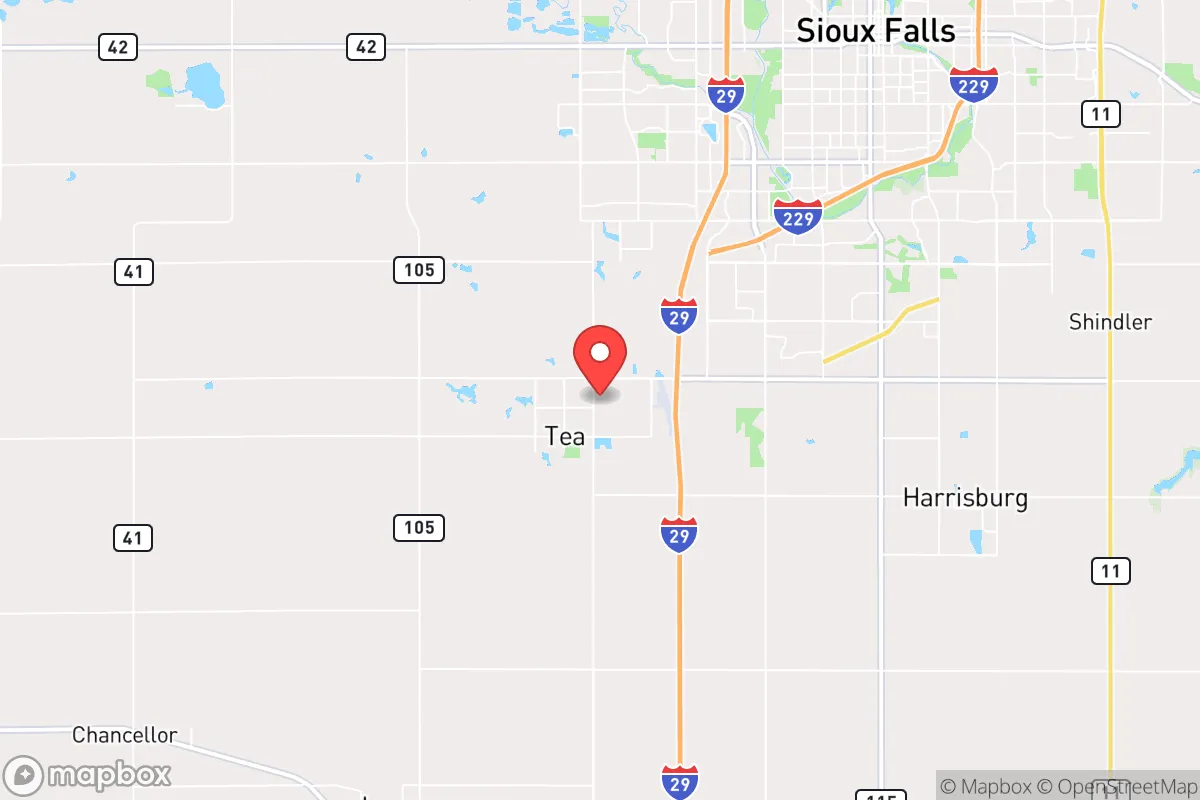
Tea, South Dakota, feels less like a suburb and more like a small town that happens to be fifteen minutes from Sioux Falls. With a population just over 6,300 and a median age under 30, it’s a place built around young families, new construction, and a pace of life that lets you breathe without cutting you off from city amenities. The vibe is practical, family-first, and quietly ambitious — the kind of town where the high school football game is the Friday night event, and the local coffee shop knows your order.
Daily Rhythm: What People Actually Do Here
A typical weekday in Tea revolves around school and work. The average commute is just over 17 minutes, which means most residents work in Sioux Falls — at Sanford Health, Citibank, or one of the many manufacturing and logistics firms along I-29 — but get home early enough to coach youth soccer or grill in the backyard. Grocery shopping happens at the local Fareway or the newer Hy-Vee in nearby Harrisburg. For a quick bite, Brew Tea Coffee House is the unofficial town square, serving as a workspace by day and a casual hangout by night. Weekends often mean a trip to Tea City Park, which has a solid playground, walking paths, and open fields for pickup games, or a short drive to the Big Sioux River for fishing and kayaking.
Sports & Community: Where the Town Comes Together
High school sports are the social backbone here. Tea Area High School Titans football and basketball games draw big crowds, especially when rival Harrisburg or Lennox comes to town. The community poured significant resources into the new high school and athletic complex, and it shows — the fields and gym are nicer than what you’d expect for a town this size. Youth sports are huge; if you have kids, you’ll spend weekends at soccer tournaments or baseball games at the local diamonds. There’s no pro team in Tea, but Sioux Falls is 15 minutes away for Canaries baseball (independent league) or Stampede hockey (USHL), both of which are popular day trips.
What’s There to Do: Entertainment, Festivals, and Hangouts
Tea doesn’t have a downtown strip or a music venue, but it has a handful of spots that define the social scene. The Dive Bar & Grill is the go-to for burgers, beer, and catching a Vikings or Twins game on TV. The annual Tea Festival in August is a genuine community event — parade, car show, live music, and a fireworks display that rivals smaller towns’ Fourth of July shows. For more variety, most people drive to Sioux Falls for concerts at the Denny Sanford Premier Center, shopping at the Empire Mall, or dinner at places like Crawford’s or Ode to Food. Outdoorsy types appreciate the Tea Bike Trail, which connects to the Sioux Falls trail system, and the nearby Newton Hills State Park (about 20 minutes south) for hiking and camping in the fall.
Pros and Cons of Living Here
Like any town, Tea has trade-offs. Here’s what longtime residents talk about:
- Pro: Strong schools and a young population. With a median age of 29.7 and a median household income of $104,643, the community is full of dual-income families who prioritize education. The schools are well-funded and the class sizes are small.
- Pro: Low crime relative to the region. The violent crime rate of 168.5 per 100,000 is below the national average, and most incidents are property-related. Residents feel safe letting kids ride bikes around the neighborhood.
- Pro: Affordable housing for a young family. The median home value of $305,300 is reasonable for the Sioux Falls metro, though prices have risen sharply since 2020. New construction is everywhere, and you can still find a 3-bedroom ranch under $350K.
- Con: Limited nightlife and dining. If you want a late-night bar scene or ethnic restaurants beyond basic American fare, you’re driving to Sioux Falls. Tea has one coffee shop, one sit-down restaurant, and a couple of fast-food chains.
- Con: Rapid growth growing pains. The population has more than doubled since 2010. Traffic on Main Avenue (the main drag) can back up during school drop-off and pickup, and the infrastructure — especially water and sewer — is playing catch-up.
- Con: Winters are real. South Dakota winters mean sub-zero stretches, snow accumulation, and occasional blizzards. The city does a decent job plowing, but if you’re not used to winter driving, it’s an adjustment.
The bottom line: Tea works best for people who want a safe, family-oriented community with good schools and a short commute, and who don’t mind trading urban variety for space and a slower pace. It’s less suited for singles seeking a vibrant nightlife or renters looking for walkable amenities. The town’s identity is still forming — it’s young, growing, and practical, with a sense that the best parts are still being built.

Similar small towns to Tea


* Values derived from national, state, county, city and local statistics and may differ in a specific area. Last updated: 2026-04-19T08:07:44.000Z
Narrative content on this page is AI-generated and may contain mistakes. Verify any details that matter before acting on them.
ReloMaps may earn a commission from affiliate links at no extra cost to you.

