Photo: Wikipedia
Demographics of Braselton, GA
Affluence Level in Braselton, GA
An upper-middle-class area. Household wealth, education levels, and homeownership run ahead of national benchmarks.
People of Braselton, GA
Braselton, Georgia, is a rapidly growing town of 14,139 residents that blends small-town Southern roots with a modern, affluent suburban character. Its population is predominantly White (77.5%), with notable Hispanic (8.4%) and Black (8.0%) communities, and a small but growing East/Southeast Asian presence (2.7%). The town’s identity is shaped by its historic core, its transformation into a master-planned community, and its recent role as a bedroom suburb for commuters to Atlanta and Gainesville.
How the city was settled and grew
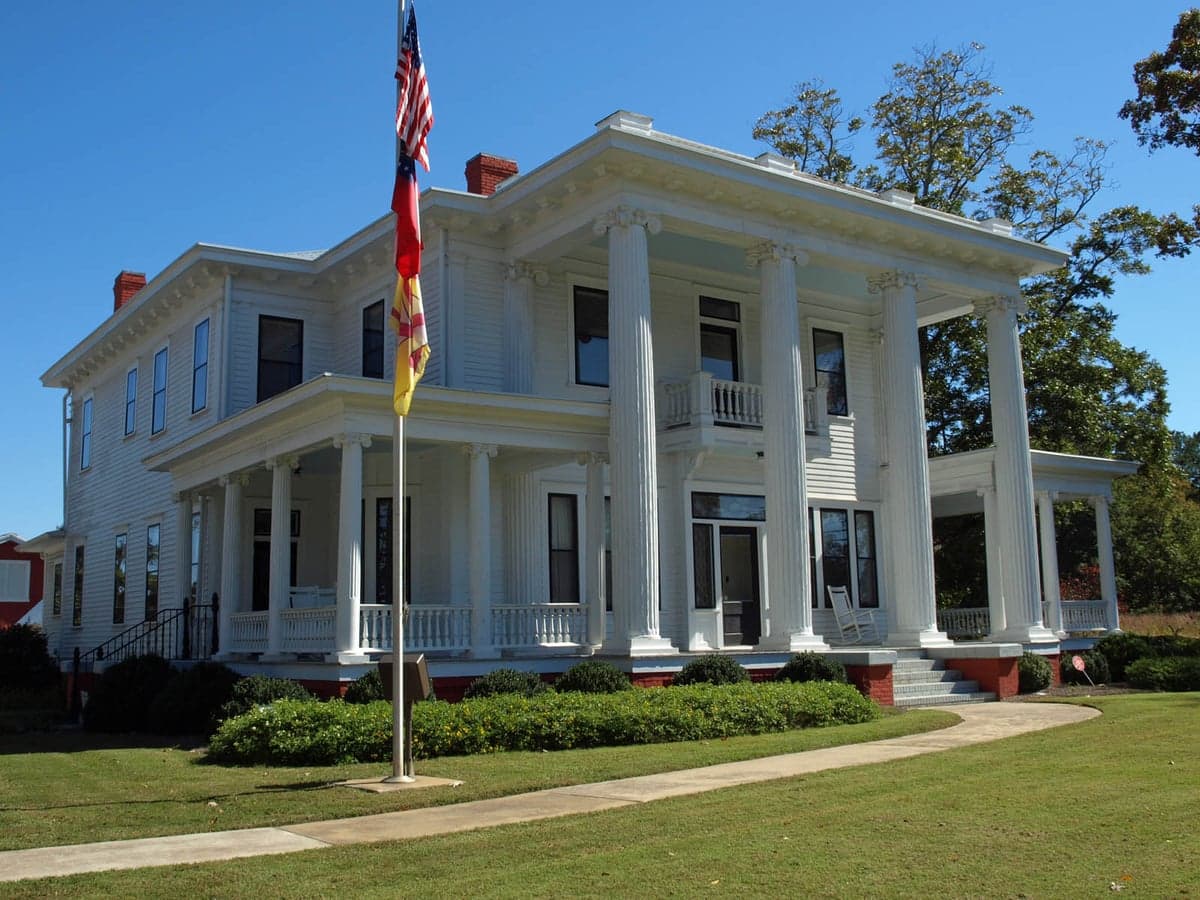
Braselton’s human history begins not with colonial settlement but with a single family in the late 19th century. The town was founded in 1884 when the Braselton family purchased 1,000 acres along the Gainesville Midland Railroad. The original population was drawn by agriculture—primarily cotton farming—and the railroad’s promise of commerce. The family built the town’s first store, and by the early 1900s, a small community of tenant farmers and merchants had formed around the depot. The historic Downtown Braselton district, with its preserved brick storefronts and the Braselton Brothers Store, was the heart of this early settlement. The population remained small and overwhelmingly White through the mid-20th century, with a handful of Black families working as sharecroppers on surrounding farms. The town’s growth was slow; by 1960, Braselton had fewer than 500 residents. The arrival of Interstate 85 in the 1970s, however, began to shift the town’s trajectory from a quiet farming hamlet to a potential commuter destination.
Modern era (post-1965)
The modern demographic transformation of Braselton began in earnest after the 1996 Atlanta Olympics, when the town’s location at the intersection of I-85 and Highway 211 made it attractive for large-scale residential development. The most significant change came with the creation of Chateau Elan, a 3,500-acre master-planned community centered on a winery and golf resort. This development, launched in the 1980s and expanded through the 2000s, drew affluent White professionals from Atlanta and the Northeast, many seeking a semi-rural lifestyle with resort amenities. Chateau Elan’s gated neighborhoods, such as the Vinings at Chateau Elan and the Legends at Chateau Elan, became the primary landing point for this wave. Concurrently, the Mulberry Park area and subdivisions like Hamilton Mill (straddling the Gwinnett County line) attracted middle-class families, including a growing number of Hispanic and Black households moving from metro Atlanta for better schools and larger lots. The Hispanic population, now 8.4%, is concentrated in the West Braselton corridor near Highway 211, where service-industry workers and construction laborers found affordable housing. The East/Southeast Asian community (2.7%) is smaller but visible in the Riverstone and Thompson Mill neighborhoods, drawn by the area’s strong school system (Braselton is served by three top-rated school districts: Jackson County, Gwinnett County, and Barrow County). The Indian-subcontinent population (0.5%) is a recent, professional cohort, often employed in healthcare and technology, and tends to settle in newer subdivisions near the Braselton Medical District.
The future
Braselton’s population is heading toward continued, managed growth, but with signs of increasing demographic segmentation rather than full homogenization. The town’s 47.8% college-educated rate and median household income well above the state average suggest that the dominant trend will remain affluent White in-migration, particularly to new master-planned communities like the Braselton Town Center development, which is adding mixed-use housing and retail. The Hispanic and Black populations are likely to grow slowly, plateauing as housing prices rise and affordable inventory shrinks. The East/Southeast Asian and Indian communities are expected to increase modestly, driven by the expansion of the Northeast Georgia Medical Center Braselton campus, which attracts medical professionals. The town is not tribalizing into stark ethnic enclaves, but distinct geographic patterns are emerging: Chateau Elan and newer luxury subdivisions remain overwhelmingly White and affluent, while the Highway 211 corridor and older neighborhoods near the historic downtown are more diverse. The next decade will likely see Braselton become more suburban and less rural, with the population reaching 18,000–20,000 by 2035, but retaining its character as a predominantly White, family-oriented community with a small but stable minority presence.
For someone moving in now, Braselton offers a safe, high-amenity environment with strong schools and a conservative-leaning political culture. The town is becoming more diverse slowly, but the dominant experience remains that of an affluent, White-majority suburb where newcomers are expected to integrate into existing community structures rather than form separate ethnic enclaves. The key decision for a prospective resident is choosing between the resort lifestyle of Chateau Elan, the family-oriented subdivisions of Mulberry Park, or the walkable historic core—each offers a different slice of Braselton’s evolving demographic reality.

* Values derived from national, state, county, city and local statistics and may differ in a specific area. Last updated: 2026-04-23T05:27:03.000Z
Narrative content on this page is AI-generated and may contain mistakes. Verify any details that matter before acting on them.
ReloMaps may earn a commission from affiliate links at no extra cost to you.

