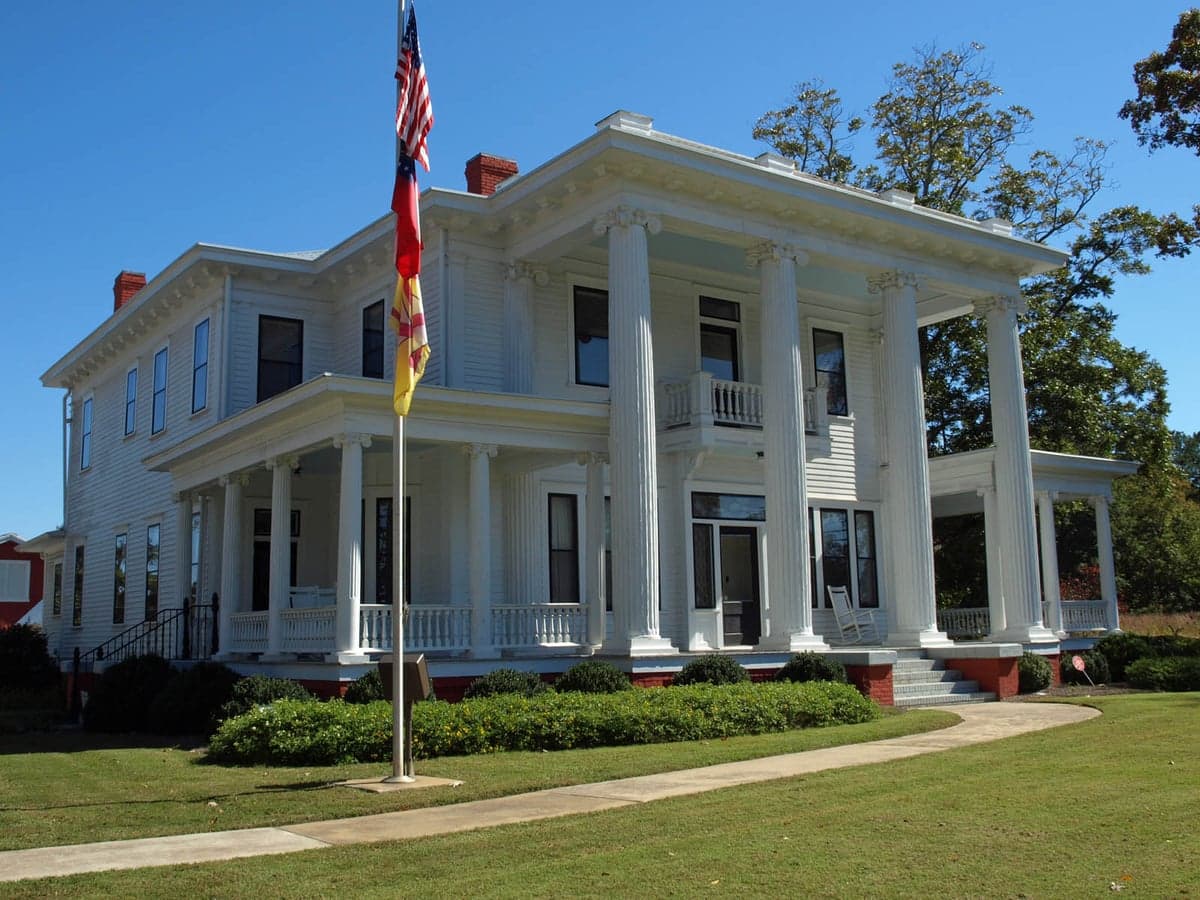
Photo: Wikipedia
Political ClimatePolitical Climate in Braselton, GA
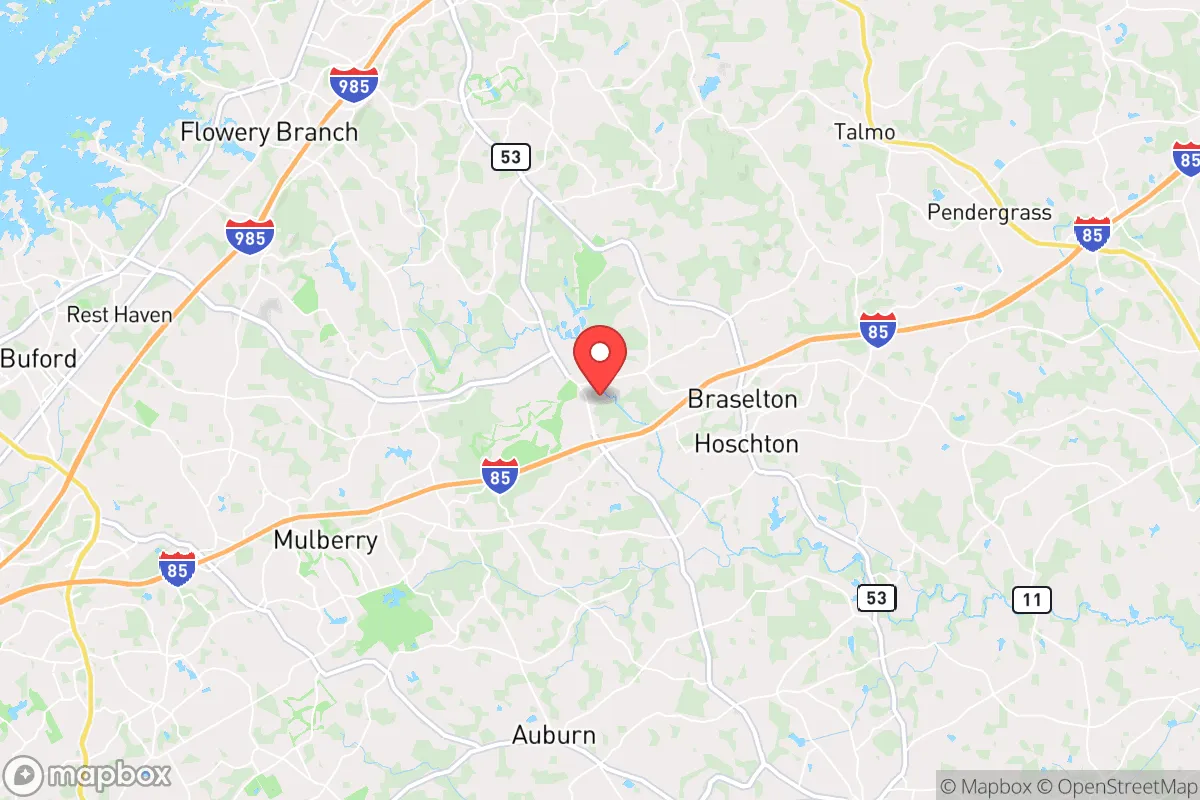
District shown is the primary district for this city’s centroid. Cities may span multiple districts.
Local Political AnalysisPolitical Analysis of Braselton, GA
Braselton leans solidly conservative, with a Cook Partisan Voting Index of R+11 that places it firmly in the Republican column, and that's been the case for as long as I can remember. The town sits right on the Jackson, Barrow, Gwinnett, and Hall county lines, and while those counties have drifted in different directions over the last decade, Braselton itself has held steady. You won't find much of the progressive shift that's crept into parts of Gwinnett or even Athens to the east; this area still values personal responsibility, low taxes, and a government that stays out of your business. The trajectory here is one of cautious growth, with new folks moving in from all over, but the local culture has a way of pulling people toward common-sense conservatism rather than the other way around.
How it compares
Drive ten miles south into Lawrenceville or Suwanee, and you'll feel the difference almost immediately—those areas have seen a noticeable tilt toward progressive policies, with higher taxes and more regulations creeping in. Braselton, by contrast, feels like a holdout for traditional values. Neighboring Winder to the west is also conservative, but it's more rural and less developed, while Braselton has managed to keep its small-town character even as new subdivisions and shopping centers have popped up. The contrast with Athens, just 25 miles east, is stark: Athens is a liberal college town where government overreach into personal freedoms is more accepted, from zoning restrictions to local ordinances that can feel intrusive. Braselton's R+11 rating isn't just a number—it reflects a community that consistently votes for limited government and individual liberty, and that's not changing anytime soon.
What this means for residents
For anyone living here, the political climate translates into a few concrete realities. First, property taxes are kept in check because local officials are generally wary of big spending projects that would require hikes. Second, you won't see the kind of overreaching public health mandates or business closures that plagued other parts of the state during the pandemic—Braselton's leaders trusted residents to make their own decisions. Third, the school board and city council elections tend to be low-drama affairs, with candidates who focus on practical issues like road maintenance and public safety rather than pushing social agendas. If you're worried about government creeping into your daily life—telling you what to do with your property, your business, or your family—Braselton is a breath of fresh air compared to the Atlanta suburbs that have embraced more progressive governance.
That said, there are a couple of cultural distinctions worth noting. Braselton has a strong sense of community that's rooted in local events like the annual Braselton Heritage Festival and the town's historic downtown, which feels more like a Norman Rockwell painting than a modern strip mall. You'll also find a healthy skepticism of regional planning authorities that try to impose uniform rules across county lines—residents here prefer local control, plain and simple. The long-term outlook is good, but I'd keep an eye on any push for "regional cooperation" that could dilute Braselton's independence. If the progressive wave that's hit Gwinnett ever tries to cross into Jackson or Hall counties, you'll see a fight, and that's exactly how it should be.

State Political ClimatePolitical Climate in Georgia
State Political AnalysisPolitical Environment in the State
Georgia has shifted from a reliably Republican stronghold to a true battleground state over the past two decades, with its 2020 presidential vote flipping blue for the first time since 1992 by a razor-thin margin of just 0.2%. The state’s political landscape is now defined by a tug-of-war between a rapidly growing, diverse metro Atlanta coalition and a deeply conservative, rural and exurban base that still holds significant legislative power. For a conservative considering relocation, Georgia offers low taxes and business-friendly policies, but the cultural and political trajectory in the core metro areas is undeniably trending left, making your choice of county and city critical.
Urban vs. rural divide
The political map of Georgia is a study in stark contrasts. Metro Atlanta, home to nearly 60% of the state’s population, is the engine of Democratic growth. The city of Atlanta itself, along with inner-ring suburbs like Decatur and Sandy Springs, are solidly blue, driven by a coalition of African American voters, young professionals, and transplants from other states. The key counties that flipped the state in 2020 were Cobb, Gwinnett, and Henry — once Republican suburbs that have become increasingly diverse and Democratic. Meanwhile, the rest of the state remains deeply red. Rural south Georgia, from Albany to Valdosta, and the northern mountain counties like Fannin and Union vote Republican by margins of 70% or more. The exurban “donut” counties around Atlanta — Cherokee, Forsyth, Paulding, and Coweta — are still reliably conservative, but they are absorbing the spillover from the blue metro, and their margins are slowly shrinking. The 2022 Senate race saw Herschel Walker win 95 of Georgia’s 159 counties, but he still lost statewide because the metro Atlanta counties turned out at higher rates.
Policy environment
Georgia’s state-level policy is a mixed bag for conservatives. On the plus side, the state has a flat income tax rate of 5.49% (down from 6% in 2022, with a scheduled phase-down to 4.99% by 2029), and no estate or inheritance tax. The regulatory environment is generally business-friendly, with a right-to-work law and a low corporate tax rate. On education, the state has a robust charter school system and a school choice program (the Georgia Special Needs Scholarship and the newer Georgia Promise Scholarship Act of 2024), though it lacks a universal voucher program. However, the state’s election laws have been a flashpoint. The Election Integrity Act of 2021 (SB 202) tightened voter ID requirements for absentee ballots, limited drop boxes, and restricted third-party ballot collection — measures conservatives see as necessary safeguards but that have drawn intense national criticism. On healthcare, Georgia did not expand Medicaid under the Affordable Care Act, but it launched a limited “Georgia Pathways” work requirement program in 2023, which has seen very low enrollment. The state also has a near-total abortion ban (HB 481) from 2019, which prohibits the procedure after a fetal heartbeat is detected (around six weeks), with narrow exceptions.
Trajectory & freedom
Georgia’s trajectory on personal freedom is a tale of two trends. On the positive side for conservatives, the state has expanded gun rights significantly. In 2022, Georgia became a permitless carry state (HB 218), allowing law-abiding citizens to carry a concealed firearm without a license. The state also has strong parental rights laws, including a 2022 law (SB 377) that allows parents to challenge school library materials they deem “obscene” or “harmful to minors.” However, the state’s freedom is being eroded by the cultural and political influence of metro Atlanta. The 2020 election results, followed by the 2021 passage of SB 202, sparked a massive backlash from corporate giants like Major League Baseball, which moved the 2021 All-Star Game out of Atlanta. This pressure has made state lawmakers more cautious about further election integrity measures. On medical autonomy, Georgia’s strict abortion ban has held up in court, but it faces ongoing legal challenges. The state also legalized medical cannabis in 2015 (HB 1), but the program is limited to low-THC oil and has been slow to implement, with only a handful of dispensaries open as of 2025. The overall trend is that while the state legislature remains conservative, the cultural center of gravity in Atlanta is pulling the state toward a more progressive, corporate-friendly posture.
Civil unrest & political movements
Georgia has been a focal point for political activism on both sides. The 2020 election cycle saw massive protests in Atlanta, including the “Stop the Steal” rallies and counter-protests from groups like Black Lives Matter. The 2021 passage of SB 202 led to a sustained campaign of corporate pressure and boycotts, with companies like Delta Air Lines and Coca-Cola — both headquartered in Atlanta — initially opposing the law before walking back their criticism. Immigration politics are also a live wire. Georgia has a strict immigration enforcement law (HB 87, 2011) that allows police to check immigration status during lawful stops, but it has been partially blocked by courts. The state is not a sanctuary state, but the city of Atlanta and some metro counties have adopted “welcoming” policies that limit cooperation with federal immigration authorities. Election integrity remains a deeply divisive issue. The 2020 election in Georgia was subject to multiple audits and recounts, and while no widespread fraud was found, many conservatives remain skeptical of the state’s voting system, particularly the use of Dominion voting machines. The 2022 midterms saw high turnout but no major disruptions, though the state’s new election board, appointed by the legislature in 2024, has been pushing for more stringent ballot-handling rules.
Projection
Over the next 5-10 years, Georgia is likely to become a more competitive and polarized state. The demographic trends are clear: metro Atlanta is growing faster than the rest of the state, and the new arrivals are disproportionately young, diverse, and left-leaning. The 2020 and 2022 elections suggest that Georgia is now a true toss-up at the presidential and Senate levels, and that is unlikely to change. However, the state legislature is gerrymandered to favor Republicans, and the rural and exurban counties will continue to hold outsized power in the statehouse. The key battleground will be the suburban counties of Cobb, Gwinnett, and Henry, which are likely to become more Democratic over time, while the exurban counties like Forsyth and Cherokee may hold the line. For a conservative moving in now, the practical reality is that you can find a very red community in the exurbs or rural areas, but you will be living in a state where statewide elections are genuinely competitive and the cultural winds are shifting. The state’s low taxes and business climate are likely to remain intact, but expect continued fights over election laws, education curriculum, and abortion policy.
For a new resident, the bottom line is that Georgia offers a relatively low-tax, business-friendly environment with strong gun rights and school choice options, but you need to choose your location carefully. If you want a reliably conservative community, look at the exurban counties like Cherokee, Forsyth, or Paulding, or the smaller cities like Augusta, Macon, or Savannah’s suburbs. Avoid the core metro Atlanta counties of Fulton, DeKalb, Cobb, and Gwinnett if you want to avoid the cultural and political shift. The state is not Texas or Florida in terms of conservative dominance, but it is still a far better option than most blue states for a family seeking freedom and opportunity. Just be prepared for a political environment that will remain contentious and closely watched for the foreseeable future.
* Values derived from national, state, county, city and local statistics and may differ in a specific area. Last updated: 2026-04-23T05:27:03.000Z
Narrative content on this page is AI-generated and may contain mistakes. Verify any details that matter before acting on them.
ReloMaps may earn a commission from affiliate links at no extra cost to you.

