Political ClimatePolitical Climate in Bridgeport, WV
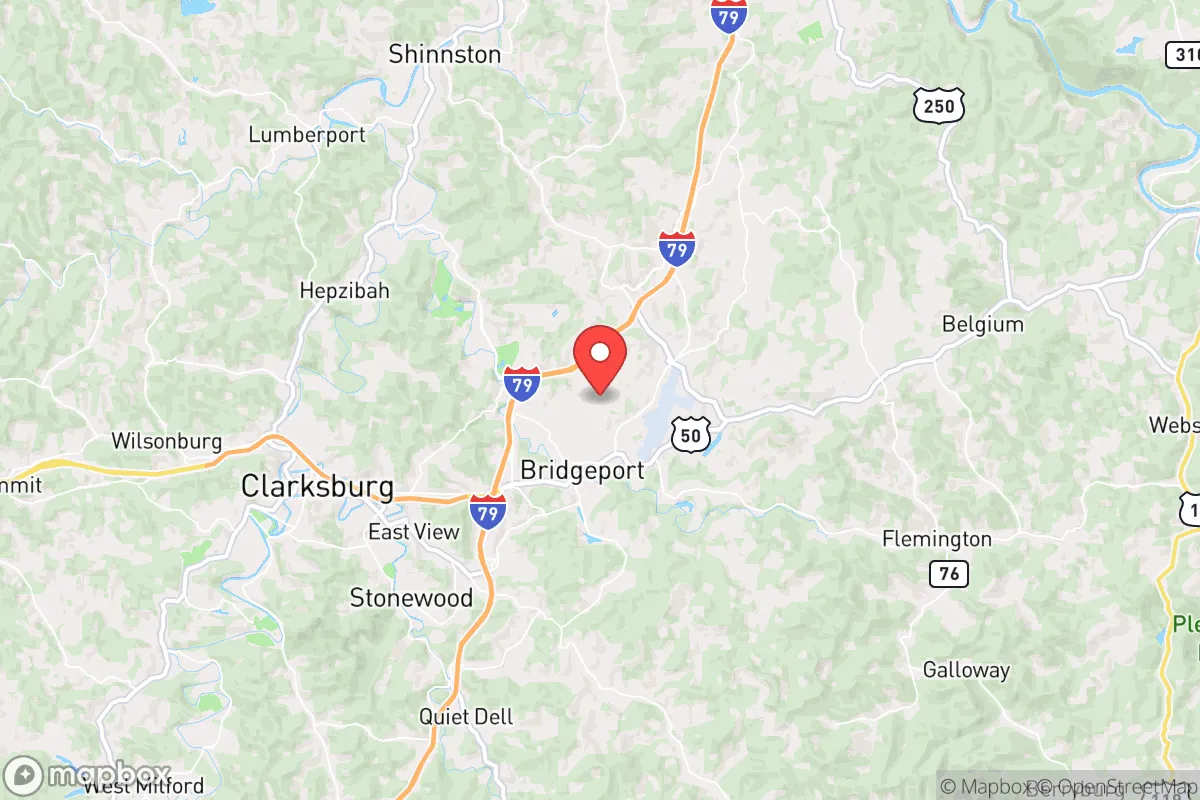
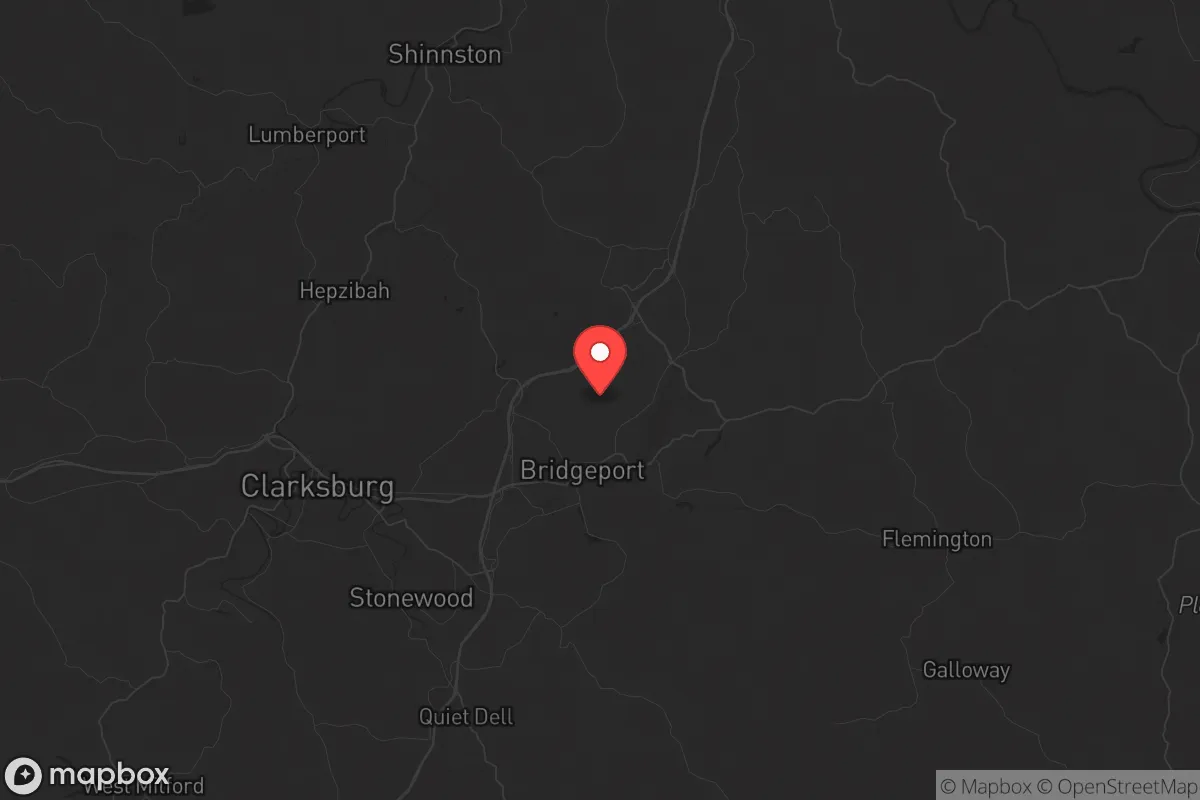
District shown is the primary district for this city’s centroid. Cities may span multiple districts.
Local Political AnalysisPolitical Analysis of Bridgeport, WV
Bridgeport, West Virginia, is about as solidly conservative as it gets, with a Cook PVI of R+20 that tells you everything you need to know about the local political DNA. This isn't a place that's drifted left over the years—it's held firm, and if anything, the surrounding Harrison County has only gotten redder as folks have watched progressive policies play out in places like Morgantown or Charleston and decided they want no part of that. The local elections here are usually decided in the Republican primary, and the general election is more of a formality. You won't find much hand-wringing over "bipartisanship" because the community largely agrees on the fundamentals: limited government, personal responsibility, and keeping the state's business out of your backyard.
How it compares
Drive 20 minutes south to Clarksburg, and you'll see a slightly different picture—still conservative, but with a bit more union influence and a few more Democratic holdouts from the old coal-and-glass days. Head an hour north to Morgantown, home of West Virginia University, and you're in a completely different world: a blue island where progressive activism, mask mandates, and DEI initiatives have taken root in city government and campus life. Bridgeport, by contrast, has resisted that kind of cultural shift. The city council and school board here have consistently pushed back against state-level overreach, whether it was COVID restrictions or attempts to centralize control over local land use. The contrast is stark: in Bridgeport, the assumption is that the people closest to a problem should solve it, not some bureaucrat in Charleston or Washington.
What this means for residents
For someone living here, the political climate translates into a pretty straightforward daily reality. You're not going to see your property taxes jacked up for pet projects, your Second Amendment rights aren't under constant siege at the local level, and the school system isn't being used as a laboratory for social experiments. The local government tends to stay out of your way—roads get plowed, permits get processed, and that's about it. There's a healthy skepticism of any new regulation or tax hike, and the community has a long memory for politicians who overpromise and underdeliver. That said, the long-term concern is that as the state's population continues to shrink and younger people move to cities like Charlotte or Nashville, the political pressure to "modernize" or "diversify" the local economy could invite outside influence that doesn't respect the values that built this place.
One cultural distinction worth noting: Bridgeport has a strong independent streak that predates the current political alignment. The city was founded by people who didn't want to be told what to do, and that attitude still runs deep. You see it in the way the local chamber of commerce operates—pro-business, low-regulation, and fiercely protective of the town's character. There's no appetite for things like sanctuary city policies, radical zoning changes, or any of the progressive experiments that have soured so many other small cities. The trajectory here is steady: stay the course, keep taxes low, and let people live their lives without government interference. If that sounds like a dying breed in America, well, that's exactly why Bridgeport is worth paying attention to.

State Political ClimatePolitical Climate in West Virginia
State Political AnalysisPolitical Environment in the State
West Virginia has long been one of the most reliably Republican states in the nation, but that wasn’t always the case. As recently as the 1990s, it was a Democratic stronghold at the state and local level, voting for Bill Clinton twice. The shift has been dramatic and decisive: since 2000, the state has moved from a toss-up to a solidly red +39-point margin for Donald Trump in 2024. The dominant coalition today is a mix of rural, working-class voters, coal and natural gas workers, and evangelical Christians, all united by a deep skepticism of federal overreach and a fierce defense of Second Amendment rights. The trajectory over the last 20 years has been a steady march rightward, accelerated by the national Democratic Party’s embrace of climate regulations that hit the state’s energy economy hard.
Urban vs. rural divide
The political map of West Virginia is starkly divided between a handful of small, isolated urban centers and the vast, deeply red rural expanse. The state’s largest city, Charleston, and its surrounding Kanawha County are the only real blue-leaning area, but even that is fading fast. In 2024, Kanawha County voted for Trump by a 12-point margin, down from a 20-point margin in 2020. Morgantown, home to West Virginia University, is the other notable exception—a college town that trends more libertarian-leaning than hard-left, but still votes Democratic in presidential races. The real action is in the rural counties. Mingo County, Logan County, and McDowell County in the southern coalfields routinely deliver 80%+ margins for Republicans. These areas are the backbone of the state’s conservative identity, driven by gun culture, opposition to environmental regulations, and a strong sense of local autonomy. The eastern panhandle, including Martinsburg and Berkeley County, has seen an influx of former Washington D.C. area residents, which has slightly moderated the politics there—but it’s still solidly red, just with a more suburban, fiscal-conservative flavor.
Policy environment
West Virginia’s policy environment is aggressively pro-business and pro-liberty, at least on paper. The state has no personal income tax on most wages—a major draw for conservatives fleeing high-tax states. The corporate net income tax is a flat 6.5%, and there’s no estate or inheritance tax. The regulatory posture is among the most business-friendly in the country, with a right-to-work law in place and a tort reform system that caps non-economic damages. On education, the state passed a robust school choice law in 2021, creating the West Virginia Hope Scholarship, which allows parents to use public funds for private school tuition, homeschooling, or tutoring. This was a huge win for parental rights. Healthcare is a mixed bag: the state expanded Medicaid under Obamacare, which many conservatives opposed, but there’s no state-level individual mandate. Election laws are solid—voter ID is required, and the state has a clean voter roll maintenance process. The legislature is currently controlled by a supermajority of Republicans, and Governor Jim Justice, a Republican, has signed most conservative bills that land on his desk.
Trajectory & freedom
The trajectory in West Virginia is toward more freedom, but it’s not without its bumps. The state has been a national leader on Second Amendment rights, passing constitutional carry in 2016—no permit needed to carry a concealed firearm. In 2023, the legislature passed a bill prohibiting state enforcement of any federal gun laws deemed unconstitutional, a direct challenge to federal overreach. On parental rights, the 2021 Hope Scholarship was a landmark, but it’s been under constant legal attack from teachers’ unions. The state also passed a law in 2023 banning transgender procedures for minors, a clear win for medical autonomy and parental rights. Property rights are strong, with no state-level property tax on personal property like cars or boats. The biggest concern for freedom-minded folks is the state’s heavy reliance on federal funding—about 40% of the state budget comes from Washington. That creates a vulnerability: if federal strings tighten, the state could be forced into compliance on issues like environmental mandates or social policies. So far, the legislature has pushed back, but it’s a long-term risk.
Civil unrest & political movements
West Virginia is not a hotbed of civil unrest, but it has a proud history of political activism. The 2018 teachers’ strike shut down schools across the state for two weeks, a rare moment of left-leaning labor activism that actually won concessions on pay and benefits. On the right, the state has seen a strong Second Amendment sanctuary movement, with over 40 counties passing resolutions vowing not to enforce federal gun laws. Immigration politics are almost non-existent here—the state has one of the smallest foreign-born populations in the country, so there’s no visible sanctuary city debate. Election integrity is a live issue: after 2020, the legislature tightened absentee ballot rules and banned ballot harvesting. There’s no serious secession talk, but there is a strong “state sovereignty” rhetoric, especially around energy policy. The most visible flashpoint for a new resident would be the constant tension between the coal industry and environmental activists, but that’s mostly a background hum in the rural areas.
Projection
Over the next 5-10 years, West Virginia is likely to become even more conservative, but with a twist. The in-migration pattern is small but notable: retirees and remote workers from blue states are moving to the eastern panhandle and the Greenbrier Valley, drawn by low taxes and mountain scenery. These newcomers tend to be fiscally conservative but socially moderate, which could soften the state’s hardline edge on issues like marijuana legalization (still illegal) or alcohol sales (still heavily regulated). The bigger demographic shift is the continued exodus of young people from the rural counties, which will make the remaining population older, whiter, and even more conservative. The state’s energy economy is in long-term decline, but the natural gas boom in the northern part of the state is a bright spot. Expect the legislature to double down on school choice, gun rights, and tax cuts. The biggest wildcard is federal funding—if Washington cuts or conditions it, the state could face a fiscal crisis that forces painful choices. For now, the trend is clear: West Virginia is doubling down on red-state identity.
For a conservative moving here, the bottom line is this: you’ll find a state that largely shares your values on guns, taxes, education, and local control. The pace of life is slower, the people are genuine, and the government mostly stays out of your way. The trade-offs are real—limited job opportunities outside of energy and healthcare, a struggling infrastructure in rural areas, and a heavy reliance on federal money that creates long-term risk. But if you want a place where your rights are respected and your neighbors think like you do, West Virginia is one of the last strongholds. Just be prepared for the winters and the fact that the nearest Costco might be two hours away.
* Values derived from national, state, county, city and local statistics and may differ in a specific area. Last updated: 2026-04-23T05:32:26.000Z
Narrative content on this page is AI-generated and may contain mistakes. Verify any details that matter before acting on them.
ReloMaps may earn a commission from affiliate links at no extra cost to you.

