Strategic Assessment of Bridgeport, WV
Meaningful friction. Expect exposure to either population pressure, blast zones, or natural disaster risk. Consider buying a retreat property.
What does the Strategic Assessment tell us?
Our Strategic Assessment grades tactical survivability of an area. Major population centers, military targets, fallout zones, natural disasters, and border exposure all drive risk — lower exposure means a more defensible position in a crisis.
This is heavily inspired by Joel Skousen's Strategic Relocation book. Highly recommended you checkout the book ($)What does this tell us?
Our Strategic Assessment grades tactical survivability of an area. Major population centers, military targets, fallout zones, natural disasters, and border exposure all drive risk — lower exposure means a more defensible position in a crisis.
This is heavily inspired by Joel Skousen's Strategic Relocation book. Highly recommended you checkout the book ($)Strategic Pillars

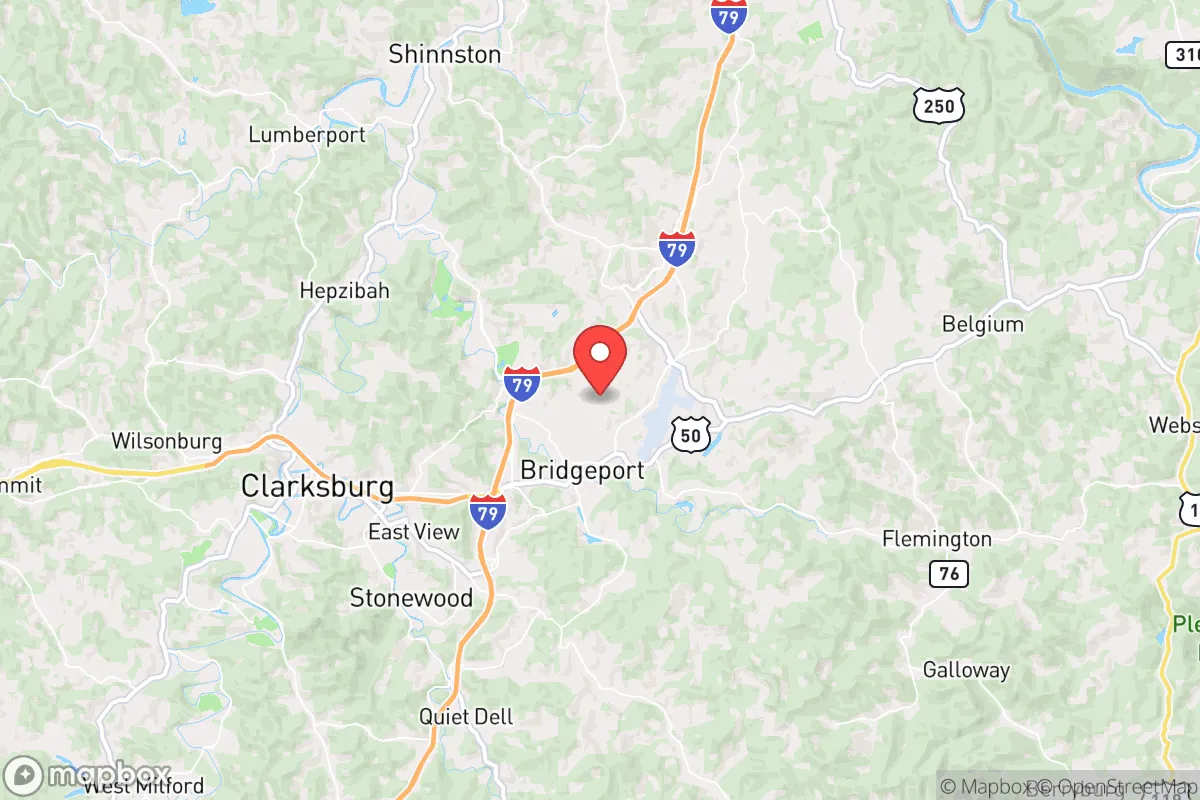
Key Distances
Regional Safe Places
Below is our recommended "safe zones" in West Virginia and the surrounding area based on our strategic heuristics. For most people, it's unrealistic to live in a “safe zone” full-time due to work, family or other personal reasons. They tend to be more rural. However, many of these areas are perfect for second homes and retreat properties that double as a vacation home or even a short-term rental.
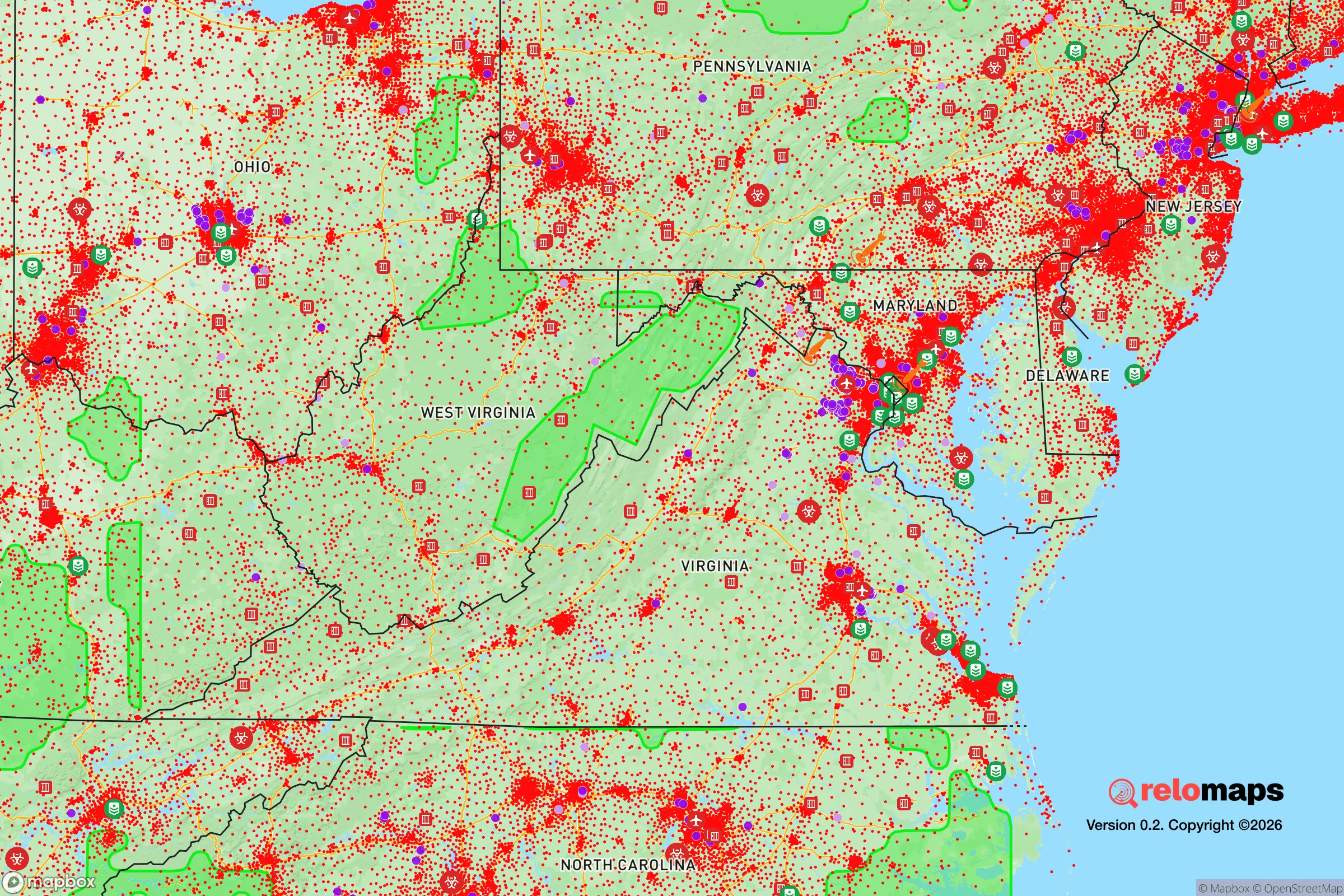
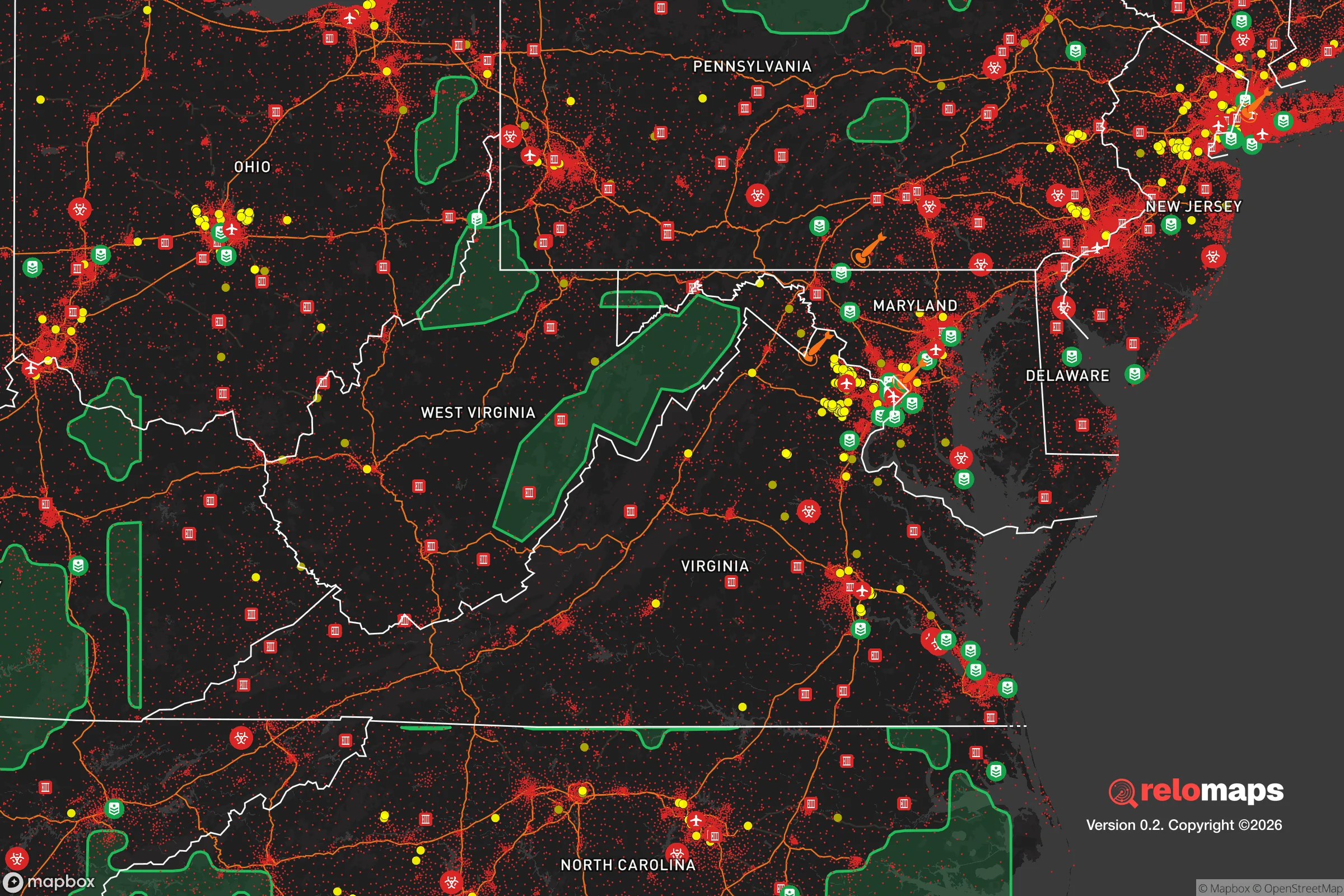


Important Note: For informational purposes only. This does not mean nothing bad ever happens in the green zones. Please use common sense. This is based on public data and modeled with AI. We tried to take a conservative approach but mistakes happen. We update this regularly as new information becomes available.
Solar Generator Recommendations
Backup power matters more here than in safer locations. We've picked three solar generators across budgets and capacity tiers — start with the budget unit if you only need a few essentials, or step up if you want to run a fridge and HVAC for days at a time.

Jackery Portable Power Station Explorer 300
Budget OptionPower on the Go: Weighing only 11 lbs, it's convenient to set up and store with book-sized foldable solar panels

BLUETTI Portable Power Station AC180
Designed for both indoor and outdoor scenarios, AC180 is highly capable as it has a robost capacity and continuous output power.

EF ECOFLOW DELTA Pro Ultra Power Station
Upgraded PickEcoFlow DELTA Pro Ultra is a whole-home energy system designed to grow with your family. Integrated with the Smart Home Panel 2, it scales to meet your evolving energy needs — keeping your home powered, intelligent, and secure through every stage of life.
We earn a commission, at no additional cost to you.
Strategic Assessment Analysis
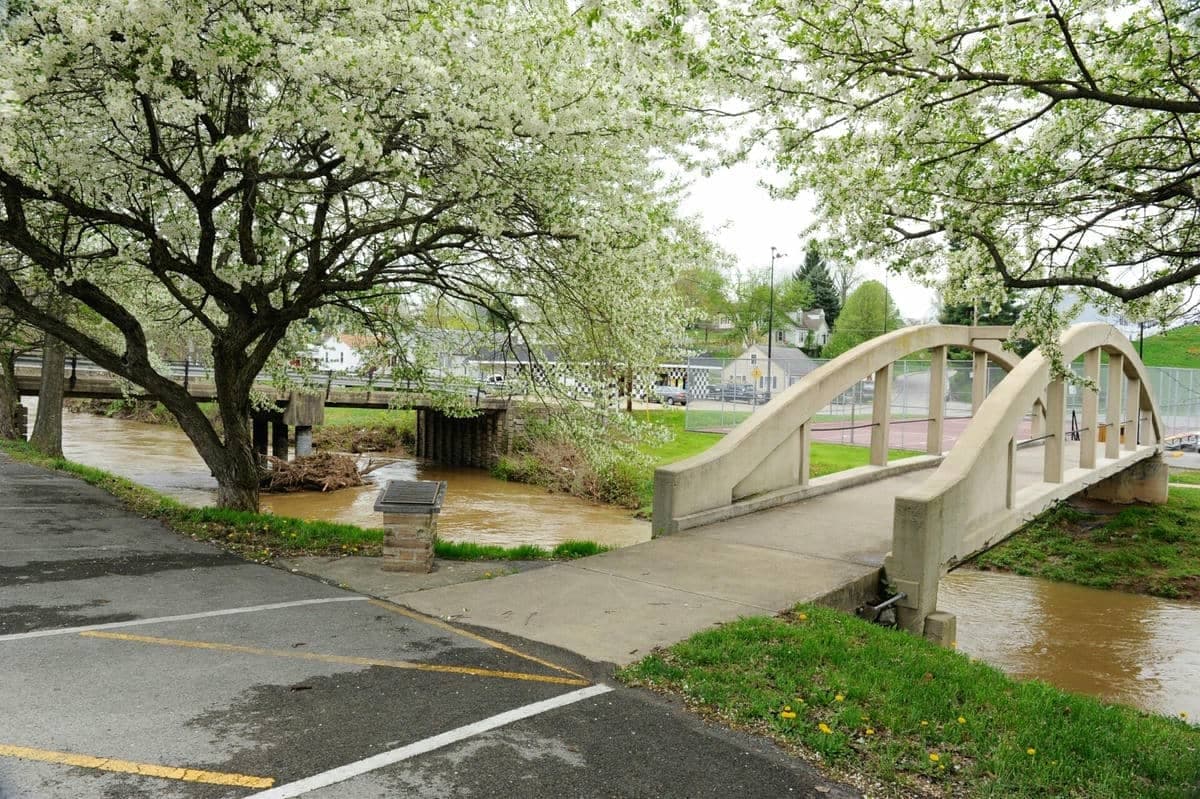
Bridgeport, West Virginia, sits in a geographic sweet spot that offers genuine strategic depth for those thinking seriously about long-term resilience. Nestled in the North Central Highlands of the state, it’s far enough from the major Eastern Seaboard population centers to avoid the immediate blast zones and fallout patterns of a nuclear exchange, yet close enough to access critical infrastructure and supply chains. The area’s elevation, rugged terrain, and relatively low population density give it a natural buffer against the cascading failures that would ripple out from a major crisis—whether that’s a grid-down event, civil unrest, or a pandemic. For a relocator with a prepper mindset, Bridgeport isn’t a bunker; it’s a base of operations with real advantages that don’t require living off-grid in a remote hollow.
Geographic position and natural buffers against national disruption
Bridgeport’s location at the intersection of I-79 and US-50 is a double-edged sword, but for the prepared, it’s a net positive. The interstate provides a reliable evacuation route north to Pennsylvania or south to Charleston, while US-50 cuts east-west through the mountains. The surrounding terrain—steep hills, dense hardwood forests, and narrow valleys—acts as a natural chokepoint. Any large-scale movement of people or vehicles through the region would be funneled through a handful of passes and bridges, making it easier to monitor or control access if needed. The area sits in the Appalachian Plateau, which means elevations between 1,000 and 1,500 feet, offering good line-of-sight for communications and observation. The local water table is robust, with the West Fork River running through town and numerous small creeks and springs in the surrounding countryside. For a relocator, this means you’re not dependent on a single municipal water source—there are multiple options for catchment and well drilling within a short drive. The climate is temperate, with cold winters that discourage transient populations and hot summers that support gardening. The growing season is about 150 days, enough for a solid vegetable harvest if you’re planning a food plot.
Risks, exposures, and proximity to fallout-relevant landmarks
No location is risk-free, and Bridgeport has its share of vulnerabilities that a strategic relocator must account for. The most obvious is its proximity to Clarksburg, just 10 miles south, which is home to the FBI’s Criminal Justice Information Services (CJIS) division—a high-value target in any asymmetric conflict or cyberattack scenario. While the facility itself is hardened, the surrounding infrastructure (power substations, fiber lines, road networks) could be disrupted in a targeted event. Additionally, Bridgeport is about 90 miles from the Pittsburgh metro area, which includes multiple chemical plants, refineries, and the Beaver Valley Nuclear Power Station. In a major disaster, fallout or hazardous material plumes could drift into the region depending on wind patterns. The area also sits within the Marcellus Shale gas field, meaning there are numerous natural gas wells, pipelines, and compressor stations within a 30-mile radius. A pipeline rupture or well blowout could create localized hazards, though these are generally manageable with proper planning. On the plus side, Bridgeport is far from any major military bases, nuclear weapons storage sites, or large-scale industrial targets that would attract a first strike. The nearest major military installation is the West Virginia Air National Guard’s 167th Airlift Wing in Martinsburg, about 120 miles east—well outside the danger zone for most scenarios.
Practical resilience for a relocator: food, water, energy, and defensibility
For someone serious about self-sufficiency, Bridgeport offers a workable mix of suburban convenience and rural access. The local food scene is anchored by the Bridgeport Farmers Market (seasonal) and a handful of grocery stores, but the real value is in the surrounding farmland. Within a 20-minute drive, you can find small farms selling pasture-raised meat, eggs, and produce directly. The Harrison County Extension Office runs workshops on canning, seed saving, and livestock management—resources that are invaluable for building long-term food security. Water is the bigger concern. The municipal supply comes from the West Fork River, treated at the Bridgeport Water Treatment Plant. In a grid-down scenario, that plant would lose power and pressure within hours. A prepper should plan for at least two weeks of stored water per person (14 gallons minimum) and have a backup filtration system like a Berkey or Sawyer for creek water. The area’s energy grid is served by Mon Power (FirstEnergy), which has a mixed reliability record—winter ice storms can knock out power for days. Solar is viable here, with an average of 4.5 peak sun hours per day, but you’ll need battery storage to handle the cloudy stretches. Wood heat is a strong option; the surrounding national forests (Monongahela National Forest is about 45 minutes east) offer ample firewood, though you’ll need a permit for cutting. Defensibility is decent but not fortress-level. The town itself is spread out, with single-family homes on large lots in neighborhoods like Meadowbrook and Sunrise. A property with a long driveway, tree cover, and a basement or root cellar would provide good concealment and protection. The local law enforcement presence is solid—the Bridgeport Police Department is well-funded and responsive—but in a widespread crisis, you’d be relying on yourself and your neighbors.
The overall strategic picture for Bridgeport is one of moderate resilience with manageable trade-offs. It’s not a remote survivalist retreat, but it’s also not a vulnerable suburb of a major target. The key advantage is the combination of elevation, water access, and agricultural potential within a short radius of a functional small city. The main drawbacks are the proximity to Clarksburg’s FBI facility and the natural gas infrastructure, both of which introduce low-probability but high-consequence risks. For a conservative-minded relocator who wants to stay connected to modern amenities while building a buffer against national instability, Bridgeport is a solid choice—provided you invest in water storage, backup power, and a good relationship with your neighbors. The area’s culture is generally self-reliant and community-oriented, which aligns well with a prepper mindset. If you’re looking for a place to ride out the storm without disappearing into the wilderness, this is worth a serious look.

* Values derived from national, state, county, city and local statistics and may differ in a specific area. Last updated: 2026-04-23T05:32:26.000Z
Narrative content on this page is AI-generated and may contain mistakes. Verify any details that matter before acting on them.
ReloMaps may earn a commission from affiliate links at no extra cost to you.

