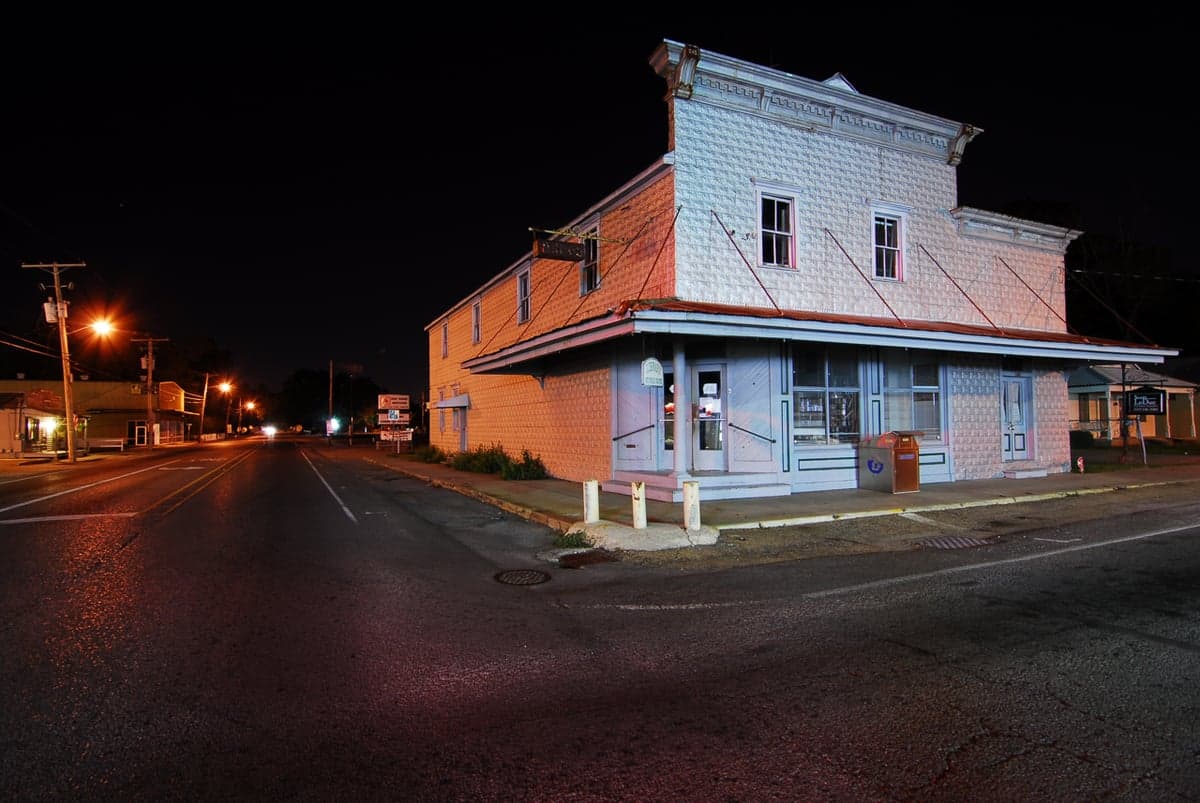
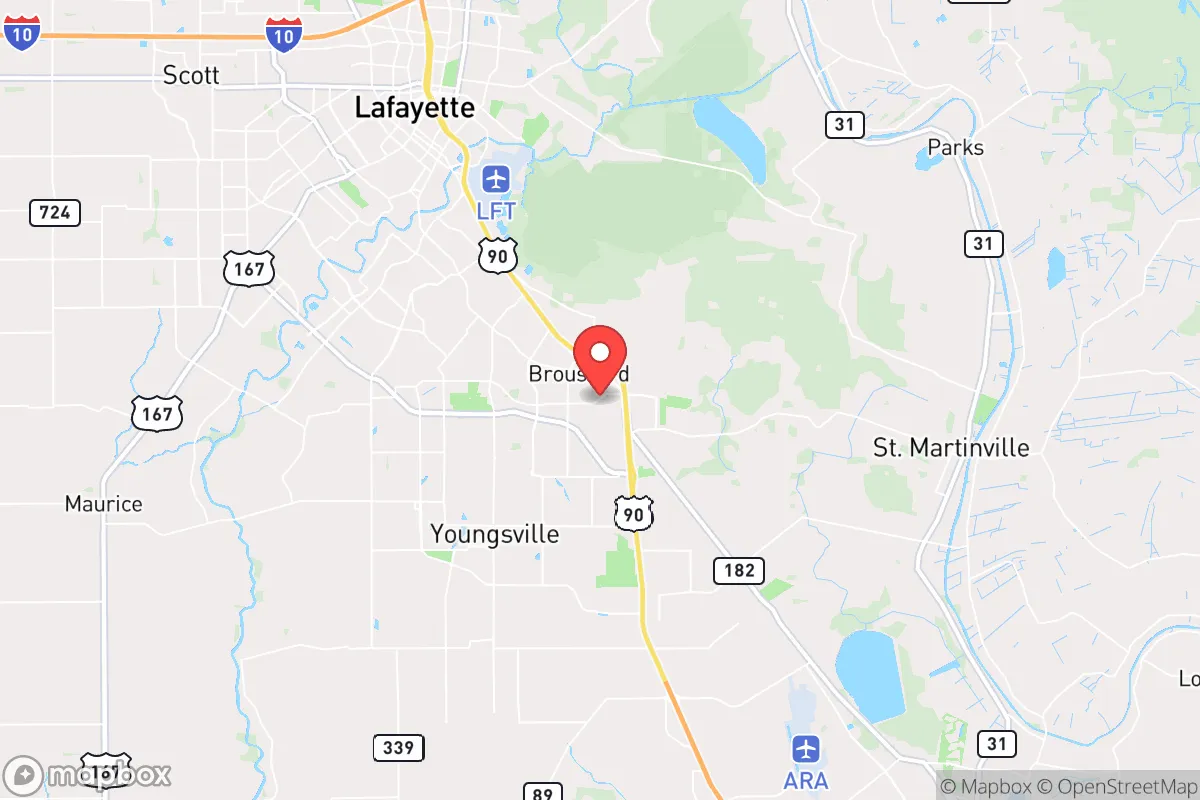
Photo: Wikipedia
Quality of Life in Broussard, LA
A high quality of life with strong walkability, manageable living costs, healthy neighborhood signals, and solid amenity access.
What does Quality of Life tell us?
Quality of Life blends cost of living, nearby amenities, socioeconomic signals, and neighborhood character. City-level scores represent the whole municipality; individual neighborhoods can differ.
What does this tell us?
Quality of Life blends cost of living, nearby amenities, socioeconomic signals, and neighborhood character. City-level scores represent the whole municipality; individual neighborhoods can differ.
Cost of Living
7% below national average
The Real Cost of Living in Broussard, LA for 2026
| Tier | Individual | Family (4) |
|---|---|---|
| Survival | $16k | $29k |
| Comfortable | $58k | $86k |
| Luxury | $159k+ | $247k+ |
| Elite (Top 5%) | $187k+ | $291k+ |
136%
The Area Signal
A metric tracking the socioeconomic signals of the area.
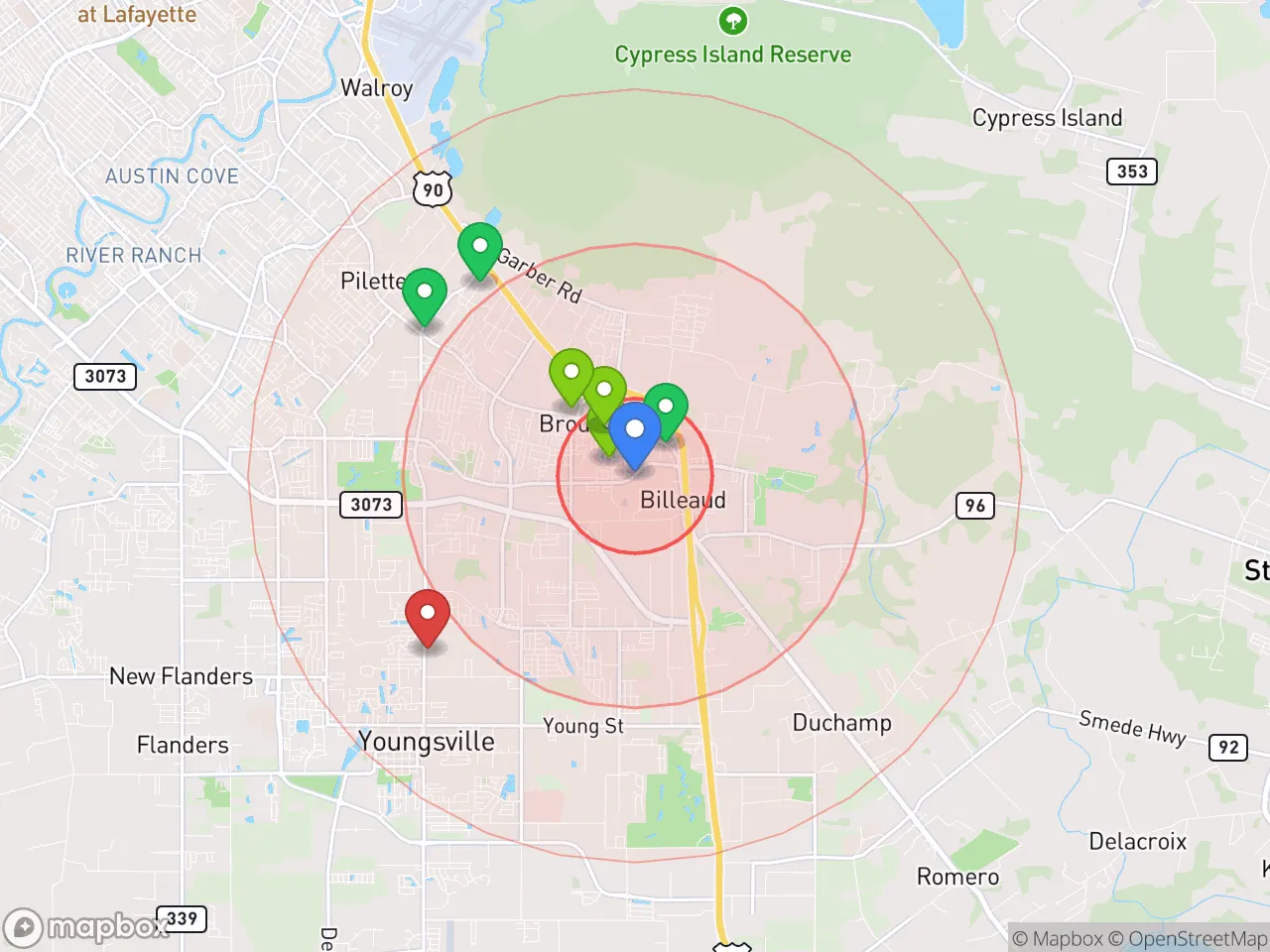
Hobbies
Explore the areaGroceries
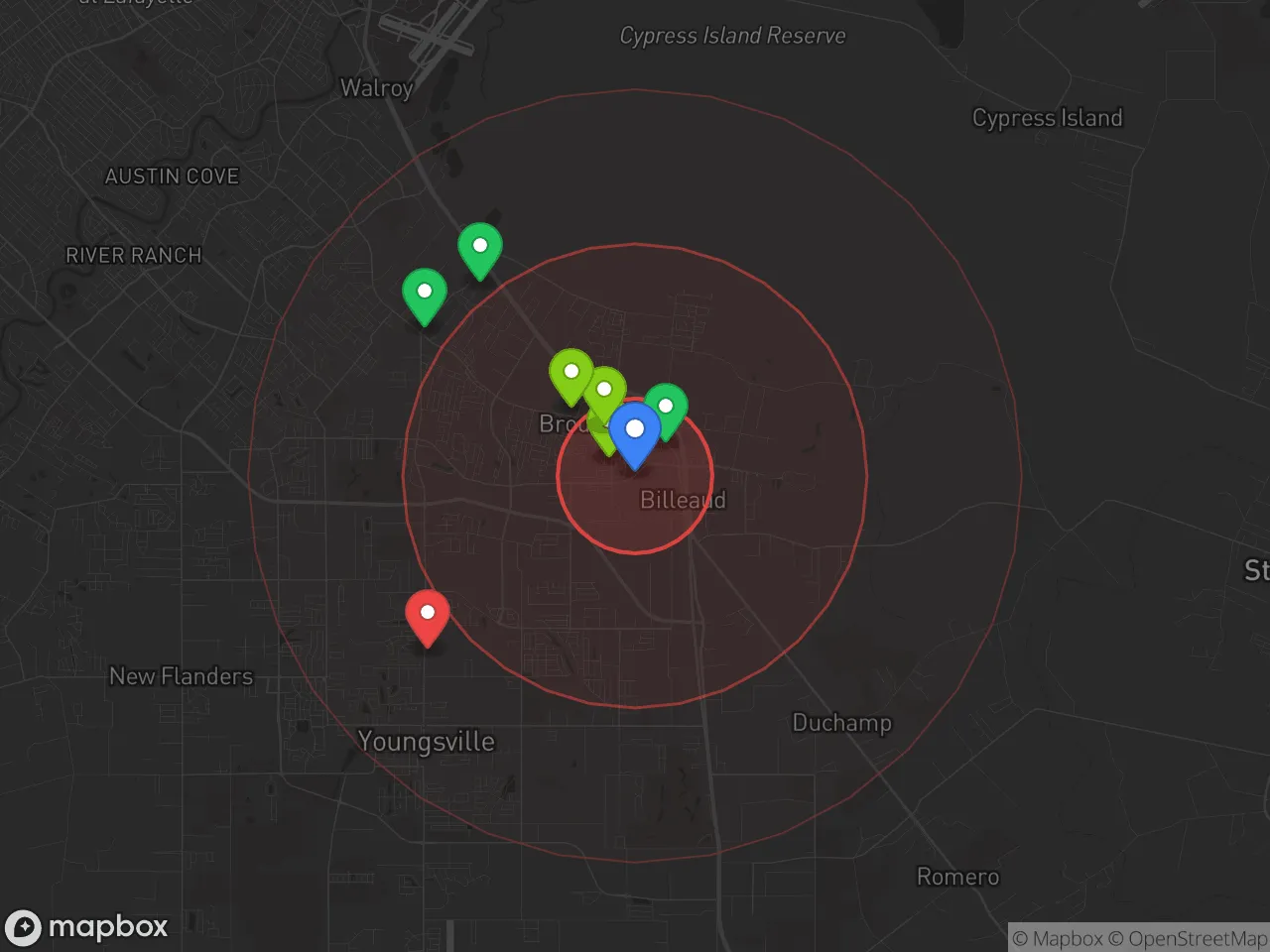
8 within 10 miles
Gas
20 within 10 miles
Hospital
20 within 20 miles
Airport
IAH — George Bush Intercontinental
Post Office
USPS — Youngsville, LA
Critical Amenities
Quality-of-Life Analysis
Broussard, Louisiana, presents a distinctive quality-of-life profile as one of the most affluent and fastest-growing suburbs in the Lafayette metropolitan area. With a cost-of-living index of 93—7% below the national average—the city attracts a mix of young professionals, established families, and oil-and-gas industry workers seeking a balance of suburban safety and economic opportunity. The median household income in Broussard consistently exceeds both state and national medians, reinforcing its reputation as a place where upwardly mobile residents can achieve a comfortable standard of living without the premium price tag of larger Southern cities.
How housing costs and affordability compare to Lafayette and Baton Rouge
Broussard’s housing market reflects its desirability while remaining accessible relative to regional peers. The median home value sits at $301,000, notably higher than Lafayette’s median of roughly $215,000 but still well below Baton Rouge’s $240,000–$260,000 range when adjusted for comparable square footage. Renters find a more pronounced bargain: the median rent of $982 is about 15% lower than the national median and undercuts Lafayette’s average rent by roughly $100 per month. This rental affordability, combined with a median commute of just 21.4 minutes, makes Broussard especially attractive for workers employed in Lafayette’s energy, healthcare, and education sectors who want a shorter drive than suburban commuters in nearby Youngsville or Carencro. Property taxes in Lafayette Parish are moderate, and Louisiana’s homestead exemption further reduces the annual tax burden for owner-occupants, keeping total monthly housing costs competitive even as home values appreciate.
Schools, parks, and the daily rhythm of life in Broussard
Daily life in Broussard centers on a small-town pace with convenient access to Lafayette’s urban amenities. The city is served by the Lafayette Parish School System, with Broussard Middle School and Green T. Lindon Elementary consistently rated above state averages in standardized testing. For private options, St. Cecilia Catholic School in Broussard offers a faith-based curriculum through eighth grade. Outdoor recreation is anchored by Broussard Sports Complex, a 40-acre facility with baseball fields, walking trails, and a splash pad that draws families from across the parish. The city’s annual Broussard Community Festival in October and the weekly Broussard Farmers Market (March–November) provide regular community gathering points. Dining leans toward local Cajun and Creole staples—Bon Temps Grill and Fezzo’s Seafood are neighborhood fixtures—while grocery and retail needs are met by a mix of national chains and local shops along Highway 90. The absence of heavy traffic congestion, even during peak hours, reinforces the relaxed daily rhythm that residents cite as a primary reason for moving here.
Broussard is best suited for families and professionals who prioritize suburban safety, good schools, and a short commute over the nightlife and cultural density of a large city. The city’s rapid growth—its population has nearly doubled since 2010—means new subdivisions and commercial developments are ongoing, which appeals to buyers seeking newer construction but may deter those who prefer a fully established, historic downtown. Retirees on fixed incomes will find the low cost of living and flat terrain appealing, though the humid subtropical climate and hurricane risk are factors to weigh. For anyone working in Lafayette’s energy corridor or at the University of Louisiana at Lafayette, Broussard offers a rare combination of affordability, convenience, and community cohesion that is increasingly hard to find in the broader Acadiana region.

Crime in Broussard, LA
Lower crime rates than 77% of comparable U.S. locations.
Violent CrimeViolent Crime Analysis
Property CrimeProperty Crime Analysis
Crime Analysis
Broussard, Louisiana, reports a violent crime rate of 202.7 incidents per 100,000 residents and a property crime rate of 1,817.6 per 100,000, placing it in a middle tier for safety among Lafayette Parish communities. While these figures are not the highest in the region, they reflect real risks that prospective residents should weigh carefully, particularly given the broader criminal justice environment in Louisiana’s larger metro areas. The city’s proximity to Lafayette, a metro area where progressive district attorneys and judges have at times prioritized leniency and diversion programs over strict enforcement, introduces a systemic concern: such policies can reduce the deterrent effect of prosecution, potentially allowing repeat offenders to remain on the street and increasing victimization risks for law-abiding residents.
Crime in context
Broussard’s violent crime rate of 202.7 per 100,000 is roughly 40% lower than the Louisiana state average of approximately 340 per 100,000 but remains about 40% higher than the national median of roughly 145 per 100,000. Property crime in Broussard, at 1,817.6 per 100,000, is nearly 20% above the national average of about 1,500 per 100,000, though it aligns closely with the statewide figure. The most common property offenses are theft and burglary, with vehicle break-ins reported frequently in commercial and apartment parking lots. Aggravated assault accounts for the majority of violent incidents; homicides are rare but not unheard of. The city benefits from its own police department, but its small size means it relies on the Lafayette Parish Sheriff’s Office for backup and jail capacity—a system that, like the metro area’s courts, may be influenced by progressive policies that prioritize rehabilitation over incarceration, potentially reducing accountability for property and violent offenders.
What residents experience
Residents of Broussard describe a community where most crime is opportunistic rather than organized, but where progressive judicial trends in the surrounding parish create a palpable sense of unease. Neighbors report that known offenders, particularly those arrested for theft or drug possession, are often released quickly on low bail or through pretrial diversion programs, leading to repeat incidents in the same neighborhoods. The city’s growth—new subdivisions and retail centers—has not been matched by a proportional increase in police staffing, meaning response times can lag during peak hours. Local crime watch groups are active, especially in subdivisions like Woodlake and Sugar Mill Pond, but residents in older parts of town near Highway 90 note that property crime is a persistent nuisance, with packages stolen from porches and unlocked cars rifled through overnight. The perception of leniency in the justice system amplifies frustration: victims often feel that reporting a crime leads to little consequence for the offender, undermining trust in the system’s ability to protect the public.
Neighborhood-level variation in Broussard is significant. The newer, gated communities and higher-value subdivisions along the Ambassador Caffery corridor experience very low violent crime but still see occasional property thefts. In contrast, areas near the intersection of Highway 90 and Morgan Road, which include older apartment complexes and mobile home parks, report higher incidences of both property and violent crime, including drug-related disturbances. The city’s overall safety profile is thus uneven: a resident’s daily experience depends heavily on their specific street and the effectiveness of local neighborhood watch efforts. For those considering a move, a thorough review of block-level crime maps and conversations with current residents in the target subdivision are strongly advised, as the metro area’s progressive justice policies mean that even a low-crime block can be affected by offenders cycling through from nearby higher-crime zones.
* Values derived from national, state, county, city and local statistics and may differ in a specific area. Last updated: 2026-04-23T04:54:31.000Z
Narrative content on this page is AI-generated and may contain mistakes. Verify any details that matter before acting on them.
ReloMaps may earn a commission from affiliate links at no extra cost to you.

