Photo: Wikipedia
Strategic Assessment of Brunswick, MD
Meaningful friction. Expect exposure to either population pressure, blast zones, or natural disaster risk. Consider buying a retreat property.
What does the Strategic Assessment tell us?
Our Strategic Assessment grades tactical survivability of an area. Major population centers, military targets, fallout zones, natural disasters, and border exposure all drive risk — lower exposure means a more defensible position in a crisis.
This is heavily inspired by Joel Skousen's Strategic Relocation book. Highly recommended you checkout the book ($)What does this tell us?
Our Strategic Assessment grades tactical survivability of an area. Major population centers, military targets, fallout zones, natural disasters, and border exposure all drive risk — lower exposure means a more defensible position in a crisis.
This is heavily inspired by Joel Skousen's Strategic Relocation book. Highly recommended you checkout the book ($)Strategic Pillars

Key Distances
Regional Safe Places
Below is our recommended "safe zones" in Maryland and the surrounding area based on our strategic heuristics. For most people, it's unrealistic to live in a “safe zone” full-time due to work, family or other personal reasons. They tend to be more rural. However, many of these areas are perfect for second homes and retreat properties that double as a vacation home or even a short-term rental.
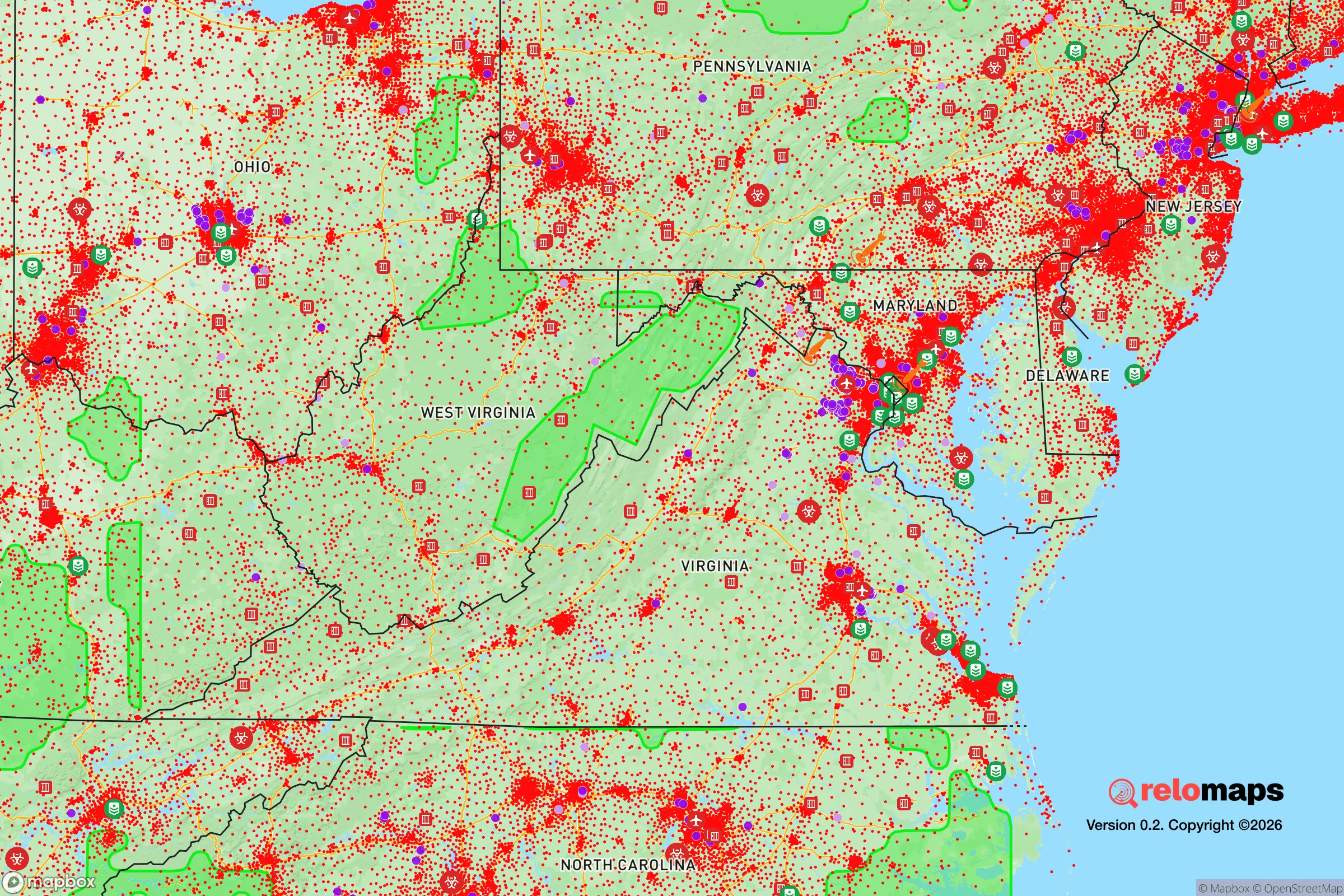
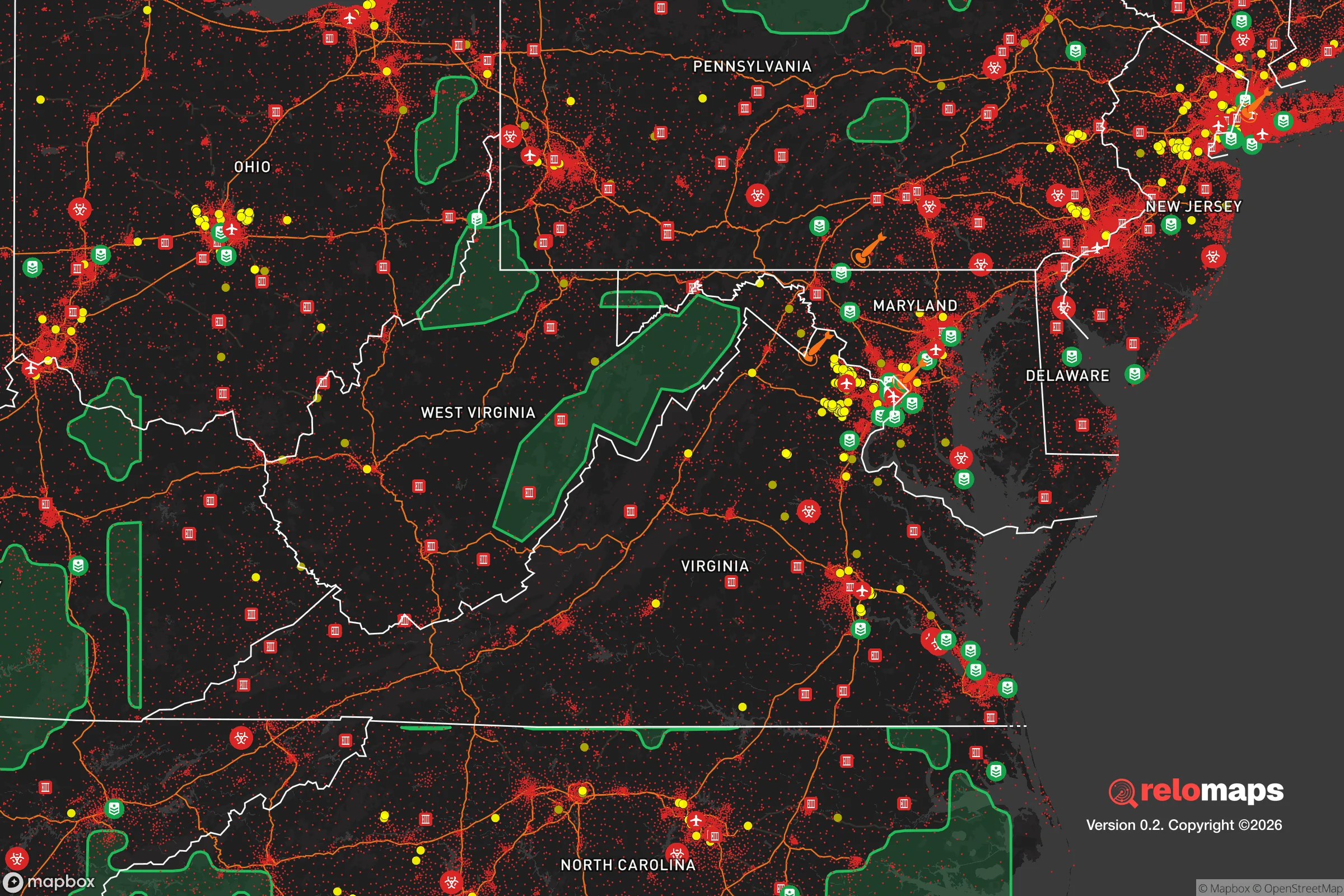


Important Note: For informational purposes only. This does not mean nothing bad ever happens in the green zones. Please use common sense. This is based on public data and modeled with AI. We tried to take a conservative approach but mistakes happen. We update this regularly as new information becomes available.
Solar Generator Recommendations
Backup power matters more here than in safer locations. We've picked three solar generators across budgets and capacity tiers — start with the budget unit if you only need a few essentials, or step up if you want to run a fridge and HVAC for days at a time.

Jackery Portable Power Station Explorer 300
Budget OptionPower on the Go: Weighing only 11 lbs, it's convenient to set up and store with book-sized foldable solar panels

BLUETTI Portable Power Station AC180
Designed for both indoor and outdoor scenarios, AC180 is highly capable as it has a robost capacity and continuous output power.

EF ECOFLOW DELTA Pro Ultra Power Station
Upgraded PickEcoFlow DELTA Pro Ultra is a whole-home energy system designed to grow with your family. Integrated with the Smart Home Panel 2, it scales to meet your evolving energy needs — keeping your home powered, intelligent, and secure through every stage of life.
We earn a commission, at no additional cost to you.
Strategic Assessment Analysis
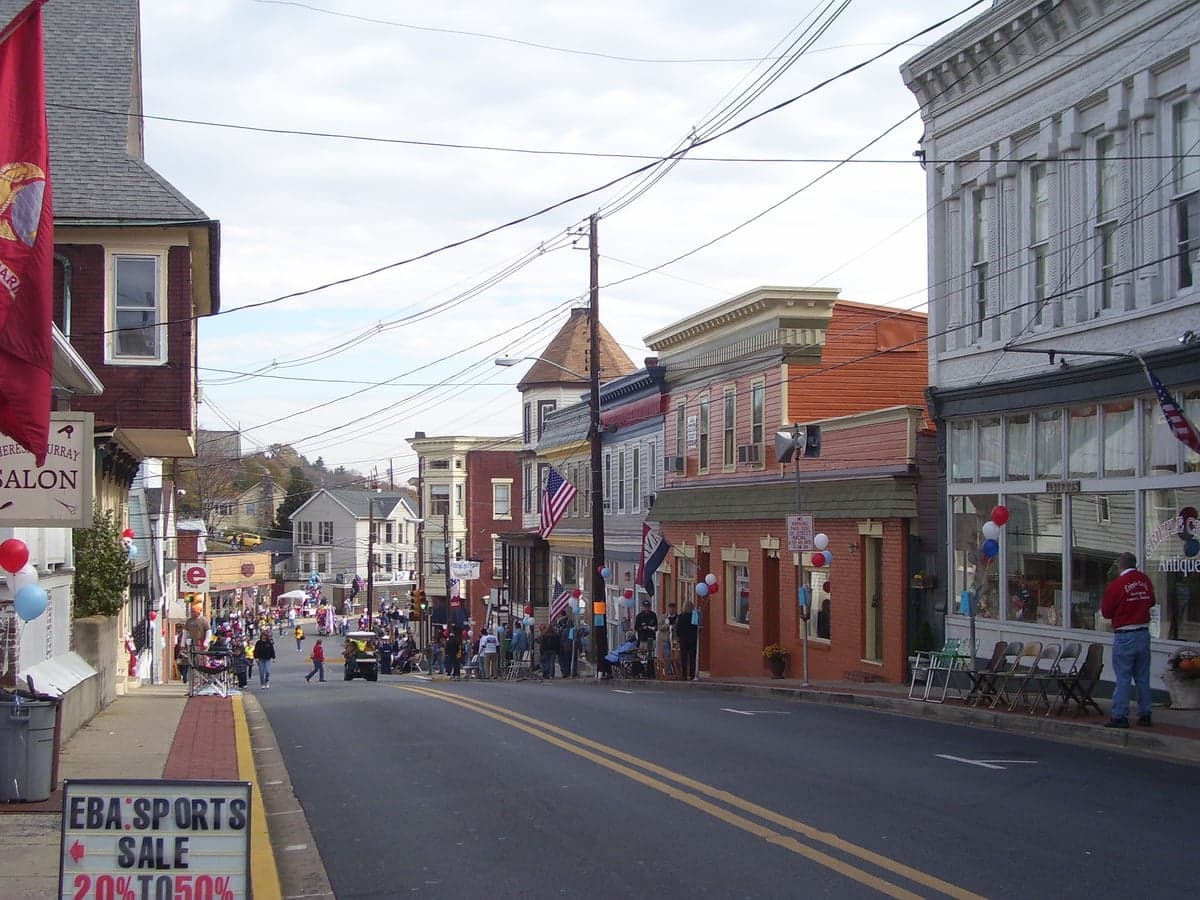
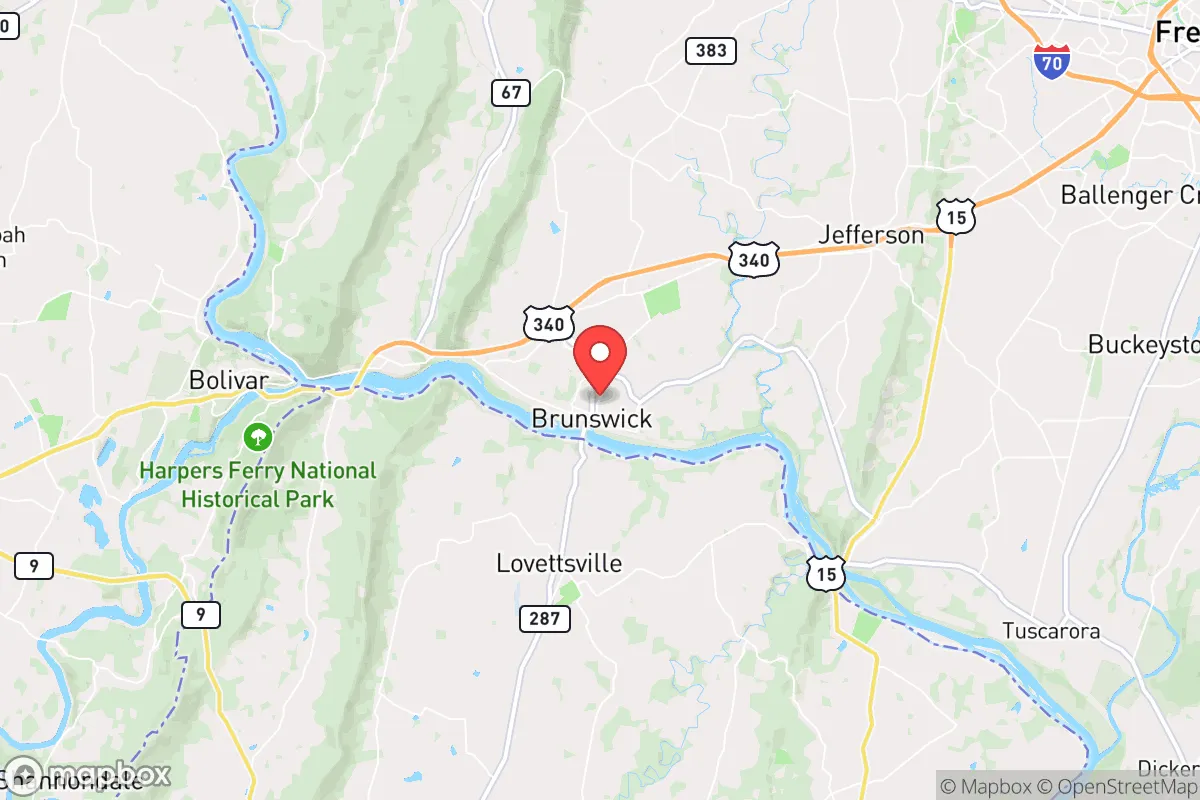
Brunswick, Maryland, sits in a narrow corridor of strategic advantage that most preppers overlook, but its position along the Potomac River and the MARC train line gives it a unique blend of access and isolation. This small town of roughly 6,000 people is tucked into the western edge of Frederick County, about 15 miles from the West Virginia border and 20 miles from Harpers Ferry, placing it within a 60- to 90-minute drive of the Washington, D.C., metro area. For a relocator with a survivalist mindset, that proximity to the capital is a double-edged sword — it offers supply access and intelligence flow, but it also puts you squarely in the fallout zone of any major event targeting federal infrastructure. The town’s resilience comes from its position as a choke point between the urbanized I-270 corridor and the more sparsely populated Appalachian foothills, giving you a viable retreat path if things go sideways.
Geographic position and natural advantages for long-term survival
Brunswick’s geography is its strongest card. The town sits on the north bank of the Potomac River, with the C&O Canal National Historical Park running right through it, providing a natural water source and a green corridor that can serve as a movement route or foraging zone. To the west, the Blue Ridge Mountains rise within 10 miles, offering elevation, cover, and a buffer against the sprawl of the D.C. suburbs. The surrounding terrain is a mix of rolling hills, hardwood forests, and agricultural land — Frederick County is still one of Maryland’s top farming counties, with over 1,200 farms producing corn, soybeans, and livestock. That means local food production is a real possibility, not just a theoretical. The Potomac itself is a reliable water source, though you’ll need to treat it, and the area’s limestone geology supports decent groundwater wells in many rural parcels. For a prepper, the natural advantages here are solid: defensible terrain, water access, and a climate that supports four-season gardening without the extremes of the Deep South or the northern freeze.
Risks, exposures, and proximity to fallout-relevant landmarks
The biggest liability for Brunswick is its proximity to high-value targets. The town is 50 miles from the White House, 45 miles from the Pentagon, and within 30 miles of Fort Detrick in Frederick — a major biodefense lab that has been a subject of controversy for decades. Any coordinated attack on federal infrastructure, whether from state actors or domestic threats, would likely hit these points first. Brunswick sits in the blast and fallout shadow of those targets, especially if a nuclear or radiological dispersal device is used. The prevailing winds in this region blow from the west and southwest, meaning fallout from a D.C.-area detonation would push toward the Chesapeake Bay, but Brunswick is close enough that you’d still be in the moderate contamination zone depending on yield. Additionally, the town is directly adjacent to the Potomac River, which is a primary water source for millions downstream — a chemical or biological attack upstream could compromise the river for weeks. The MARC train line and CSX rail corridor that run through town are also potential targets for sabotage or disruption, as they carry both commuters and hazardous materials. If you’re looking for a location that’s completely off the grid and away from all risk, Brunswick isn’t it. But if you want a position that gives you early warning and a viable escape route, the trade-offs are manageable.
Practical resilience for a relocator: food, water, energy, and defensibility
For day-to-day survival prep, Brunswick offers a mixed bag. The town itself has a small downtown with a grocery store, a hardware store, and a few restaurants, but it’s not a self-sufficient hub — you’ll need to drive 10 miles to Frederick for big-box stores like Walmart, Lowe’s, and Costco. That means stockpiling is essential, and you’ll want to build a pantry that can last 90 days minimum, because supply chains into this area can be disrupted by a single bridge closure or rail accident. Water is less of a concern: the Potomac is right there, and the town’s municipal water comes from the river, but you’ll want a backup well or a high-capacity filtration system like a Berkey or a reverse osmosis setup for when the grid goes down. Energy resilience is decent but not great. The area is served by Potomac Edison, and power outages are common during winter storms and summer thunderstorms — expect at least a few multi-day outages per year. Solar is viable here, with about 200 sunny days annually, but you’ll need battery storage because net metering is less reliable in a grid-down scenario. Defensibility is where Brunswick shines relative to the suburbs. The town is compact, with a few main roads in and out — Route 340 to the east and west, and Route 79 to the north. That makes it easier to monitor and control access points, especially if you’re part of a neighborhood watch or a mutual assistance group. The surrounding hills provide natural observation points, and the C&O Canal towpath offers a discreet route for movement or resupply that’s off the main roads. For a single individual or a family, the key is to buy property outside the town limits — look at the rural parcels along Mountain Road or in the Jefferson area — where you can have acreage, a well, and a septic system without relying on municipal infrastructure.
The overall strategic picture for Brunswick is one of calculated risk. It’s not a bug-out location in the wilderness — it’s a forward operating base with good lines of communication and a solid retreat path into the Appalachians. If you’re a conservative-minded relocator who wants to stay close enough to the D.C. area to monitor events and maintain professional ties, but far enough to have a fighting chance when the system cracks, Brunswick is a legitimate option. The town’s small size, working-class character, and historical independence mean you’re less likely to encounter the kind of progressive governance that can hamper preparedness efforts in larger Maryland suburbs. Just be clear-eyed about the risks: you’re in the shadow of the beast, and when it falls, you’ll have a front-row seat. Plan accordingly, build your network, and treat the Potomac as both a lifeline and a liability. If you do that, Brunswick can be a solid anchor point for a decade of uncertainty.

* Values derived from national, state, county, city and local statistics and may differ in a specific area. Last updated: 2026-04-22T02:14:24.000Z
Narrative content on this page is AI-generated and may contain mistakes. Verify any details that matter before acting on them.
ReloMaps may earn a commission from affiliate links at no extra cost to you.

