Photo: Wikipedia
Political ClimatePolitical Climate in Brunswick, MD
District shown is the primary district for this city’s centroid. Cities may span multiple districts.
Local Political AnalysisPolitical Analysis of Brunswick, MD
Brunswick, Maryland, sits in a tricky spot politically. On paper, the Cook PVI of D+3 tells you the district leans slightly Democratic, but that number doesn't capture the real tension on the ground. This town has deep roots in blue-collar work and a strong sense of personal independence, and for a long time, that meant a live-and-let-live attitude. But over the last five or six years, you've seen a real shift as more folks from the D.C. suburbs move in, bringing a more progressive, government-knows-best mindset with them. The local elections are getting tighter, and the old-school, mind-your-own-business vibe is starting to feel like it's under siege.
How it compares
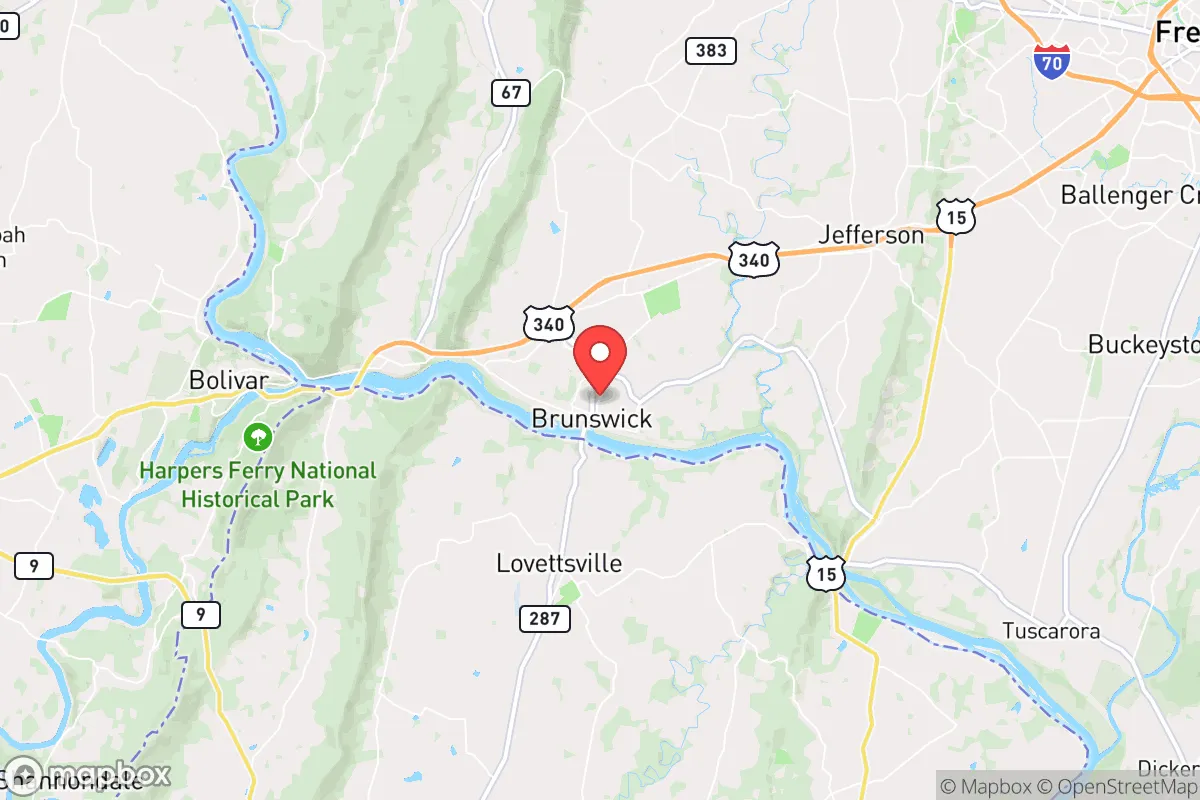
Drive ten minutes west to Harpers Ferry, West Virginia, and you're in a completely different world—solidly red, with a fierce distrust of any government overreach. Head east toward Frederick city, and you hit a much more progressive, urban-leaning crowd that's all in on the latest social and environmental mandates. Brunswick is caught right in the middle. We're the buffer zone. The county commissioners in Frederick County have been pushing zoning changes and density increases that feel like they're designed to pack more people in and dilute the local character. Meanwhile, the state legislature in Annapolis keeps floating bills on everything from energy standards to school curriculum that would have been laughed out of the room here a decade ago. It's a constant tug-of-war between the folks who want to keep Brunswick a quiet, self-reliant river town and the newcomers who see it as just another bedroom community to be managed from above.
What this means for residents
For anyone who values personal freedom, the writing is on the wall. The biggest red flag right now is the push for more county-level land use controls that could tell you what you can do with your own property. There's also a growing movement to bring in higher impact fees on new construction, which sounds good on the surface but just makes it harder for local families to build or buy. And don't get me started on the school board—there's a quiet but steady effort to shift from teaching kids how to think to teaching them what to think, with more emphasis on social-emotional learning and less on the basics. If you're the type who believes your rights end where your neighbor's nose begins, you're going to find yourself voting against more and more ballot measures every cycle just to hold the line.
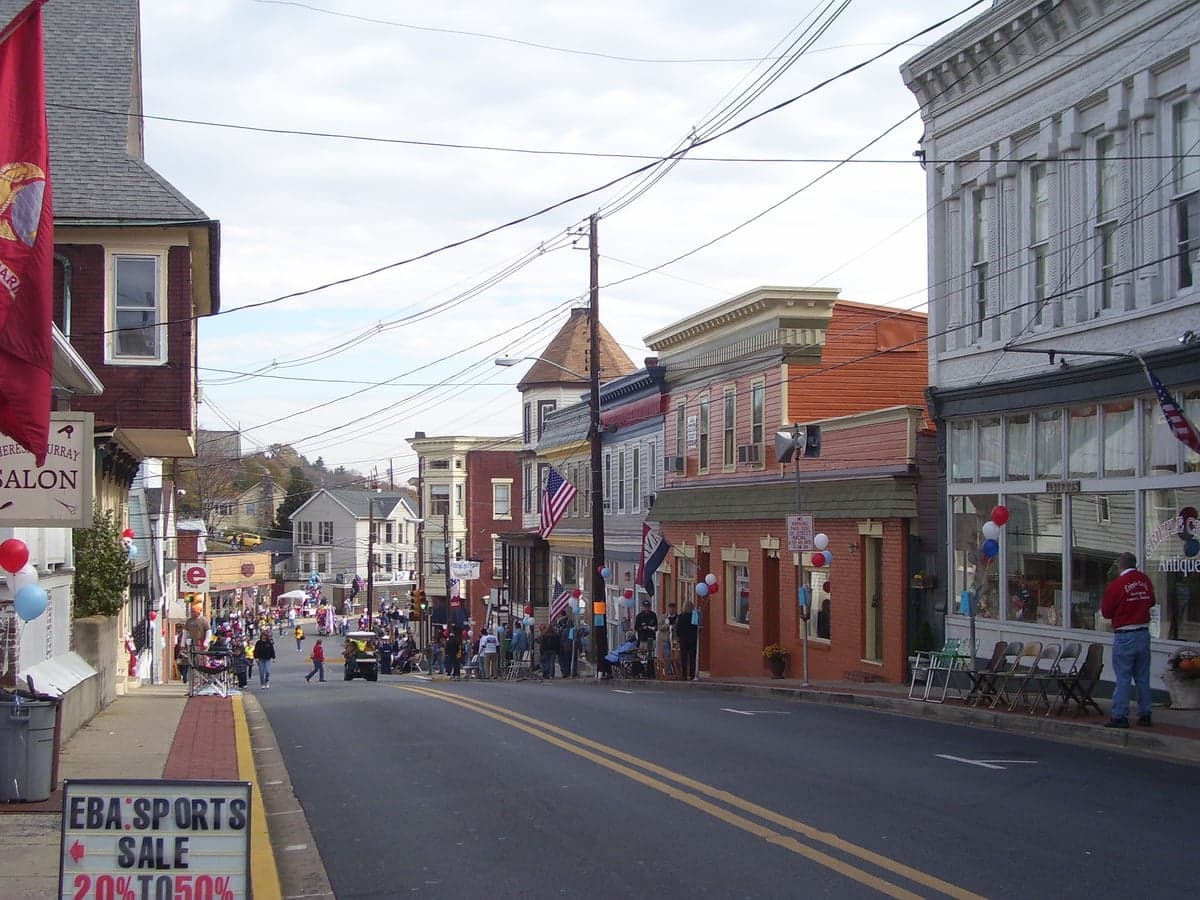
On the cultural side, Brunswick still has a strong volunteer fire department and a community that rallies for its own, not because the government tells it to, but because that's how it's always been done. The annual Brunswick Railroad Days festival is a perfect example—no county funding, no bureaucracy, just neighbors putting on a good time. But the long-term trend is concerning. As the district gets bluer, expect more pressure to conform to state-level mandates on everything from energy efficiency to "equity" initiatives. The old Brunswick—the one where you could fix your own truck in the driveway without a permit and your kids learned the three R's without a political lecture—is still here, but it's fighting for air. If you're thinking of moving here, come for the low cost of living and the Potomac views, but keep an eye on the ballot box. That's where the real fight for this town's soul is happening.

State Political ClimatePolitical Climate in Maryland
State Political AnalysisPolitical Environment in the State
Maryland has long been a deep blue state, but the reality on the ground is far more divided than the statewide numbers suggest. Since the early 2000s, the Democratic coalition has solidified its grip, with the party holding every statewide office and commanding supermajorities in the General Assembly. However, this dominance is almost entirely powered by the Washington, D.C. suburbs and Baltimore City, while the rest of the state—particularly the Eastern Shore, Western Maryland, and the rural southern counties—votes reliably Republican. The 10-20 year trajectory shows a slow but steady hardening of this geographic split, with the urban core becoming more progressive and the rural areas becoming more conservative, creating a state that feels like two different countries under one governor.
Urban vs. rural divide
The political map of Maryland is a textbook case of the urban-rural chasm. Montgomery County and Prince George’s County, both suburbs of Washington, D.C., alone account for nearly 40% of the state’s vote, and they deliver margins of 70-80% for Democrats. Baltimore City adds another deep-blue anchor, while Howard County and Anne Arundel County (home to Annapolis) lean blue but with more competitive pockets. Meanwhile, the entire western panhandle—Garrett County, Allegany County (Cumberland), and Washington County (Hagerstown)—votes Republican by 30-40 point margins. The Eastern Shore, including Worcester County (Ocean City) and Queen Anne’s County, is similarly red. The only real swing territory is Frederick County, which has been trending blue as D.C. exurbs expand, but still hosts a strong conservative base. This divide means that a conservative moving to Maryland will have vastly different experiences depending on whether they settle in Frederick or Oakland.
Policy environment
Maryland’s policy environment is a mixed bag for conservatives, but the trend is unmistakably progressive. The state has a progressive income tax structure with rates up to 5.75%, plus local “piggyback” taxes that can push the effective rate over 8% in Baltimore City and Montgomery County. Property taxes are high, especially in the D.C. suburbs, and the state’s estate tax kicks in at $5 million, far lower than the federal exemption. On education, Maryland spends heavily—over $17,000 per student—but parental rights have been a flashpoint. In 2023, the legislature passed the Trans Health Equity Act, which mandates Medicaid coverage for gender transition procedures for minors, overriding parental consent in some interpretations. The state also has some of the nation’s strictest gun laws, including a 2013 Firearm Safety Act that bans many semi-automatic rifles and requires a license to purchase a handgun. Election laws are fully blue: no-excuse mail-in voting, same-day registration, and automatic voter registration are all in place. For a conservative, the policy environment feels like a slow but steady expansion of government control over personal decisions.
Trajectory & freedom
Maryland is becoming less free by any objective measure, particularly for conservatives who value gun rights, parental authority, and economic liberty. The 2023 legislative session was a watershed: the Gun Safety Act banned firearms in most public places, including parks and libraries, and required a permit to carry in any sensitive area. The Child Interrogation Protection Act limited police questioning of minors, but was paired with the Trans Health Equity Act, which many conservatives see as a direct assault on parental rights. On the economic front, the state’s paid family leave program, set to launch in 2025, imposes a new payroll tax on employers and employees. Meanwhile, the Digital Advertising Gross Revenues Tax (the first of its kind in the nation) targets big tech but has been tied up in court. Property rights took a hit with the Renters’ Rights and Stabilization Act in 2024, which limits rent increases and gives tenants more leverage in eviction proceedings. The trajectory is clear: more regulation, higher taxes, and less individual autonomy.
Civil unrest & political movements
Maryland has seen its share of political flashpoints. The 2015 Baltimore riots following the death of Freddie Gray were a national story, exposing deep racial and economic divides. Since then, the Black Lives Matter movement has remained active, particularly in Baltimore and Prince George’s County. On the right, the Maryland Shall Issue gun rights group has been a persistent legal force, successfully challenging some aspects of the state’s gun laws in court. Immigration politics are a live wire: Maryland is a sanctuary state under a 2021 executive order by Governor Larry Hogan (a Republican), which limits cooperation between state police and federal immigration authorities. This has led to tension in counties like Harford and Carroll, where local sheriffs have pushed back. Election integrity has been a recurring concern for conservatives, especially after the 2020 election saw widespread mail-in voting and no voter ID requirement. The state’s Voter Registration and Election Laws were further loosened in 2022, allowing same-day registration and automatic registration at the DMV. For a new resident, these issues are not abstract—they play out in local news and community meetings regularly.
Projection
Over the next 5-10 years, Maryland will likely become more progressive as the D.C. suburbs continue to expand outward. Frederick County is the bellwether: once a conservative stronghold, it now votes blue in presidential elections, and its county council has flipped to Democratic control. The same trend is creeping into Carroll County and Harford County, though more slowly. Meanwhile, the rural areas are aging and losing population, which weakens their political influence. The state’s demographic future is driven by in-migration from the D.C. metro area, which brings younger, more diverse, and more liberal residents. The Republican Party in Maryland is increasingly confined to the panhandle and the Shore, and its statewide candidates struggle to break 40%. For a conservative moving in now, expect to see continued expansion of gun control, higher taxes, and more progressive education and healthcare policies. The only wildcard is a potential federal shift—if the Supreme Court or Congress reasserts limits on state power, Maryland’s progressive agenda could be checked.
Bottom line for a new resident: If you’re a conservative considering Maryland, your quality of life will depend heavily on where you land. The rural counties—Garrett, Allegany, Washington, and the Eastern Shore—offer a more traditional, lower-tax, and gun-friendly environment, but you’ll be fighting an uphill battle in state politics. The suburbs of D.C. and Baltimore offer jobs and amenities but come with high taxes, strict regulations, and a culture that is increasingly hostile to conservative values. Maryland is not a state where you can ignore politics—it will affect your daily life, from your taxes to your ability to carry a firearm to how your children are educated. If you value personal freedom and limited government, you’ll need to be strategic about your location and prepared to engage in the political fight.
* Values derived from national, state, county, city and local statistics and may differ in a specific area. Last updated: 2026-04-22T02:14:24.000Z
Narrative content on this page is AI-generated and may contain mistakes. Verify any details that matter before acting on them.
ReloMaps may earn a commission from affiliate links at no extra cost to you.

