Photo: Wikipedia
Demographics of Bullhead City, AZ
Affluence Level in Bullhead City, AZ
A below-average socioeconomic profile. Incomes, home values, and educational attainment trail the U.S., with higher poverty and unemployment.
People of Bullhead City, AZ
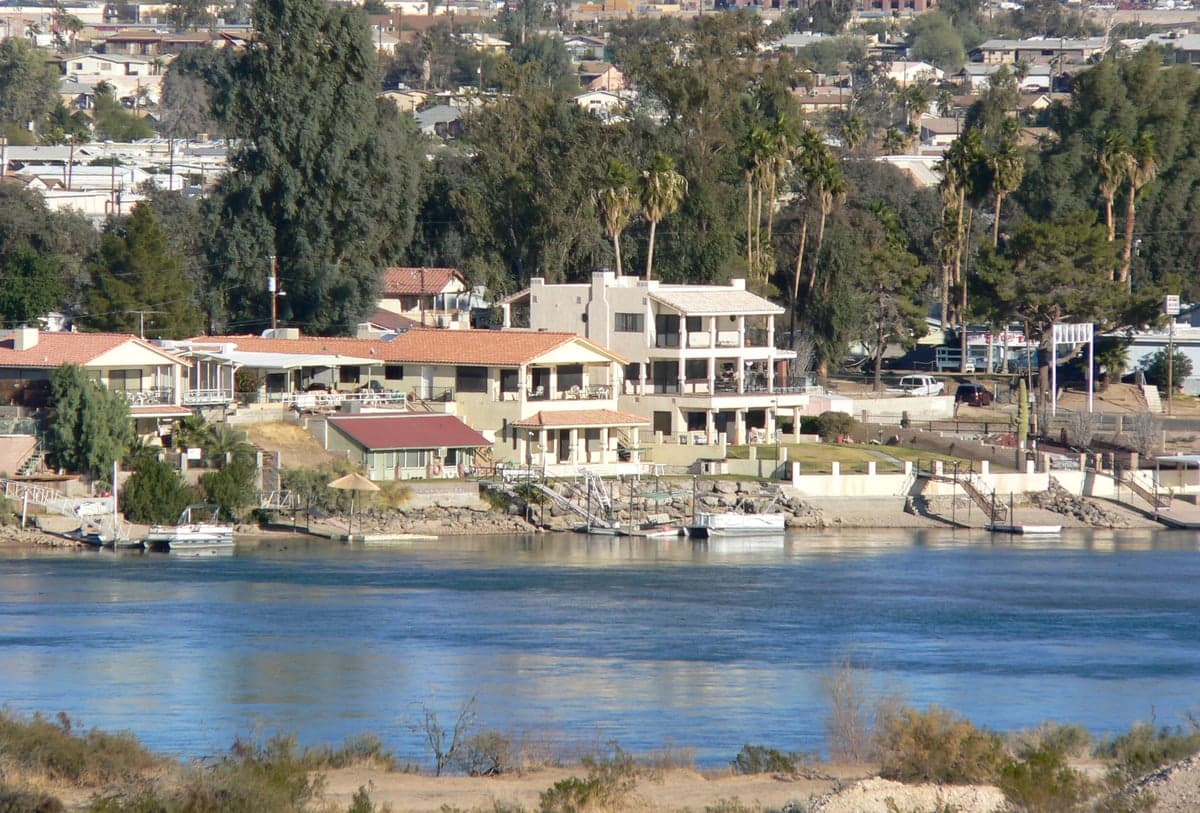
The people of Bullhead City, Arizona, today number roughly 42,000, forming a predominantly white (70.0%) and Hispanic (20.3%) community with a notably low foreign-born share of just 3.7%. The city’s character is defined by its role as a Colorado River recreation and retirement hub, a blue-collar service economy, and a strikingly low college-attainment rate of 14.6%. Residents are concentrated in distinct neighborhoods that trace their origins to the city’s three founding waves: dam builders, casino workers, and retirees seeking affordable riverfront living.
How the city was settled and grew
Bullhead City is a post-1900 creation, with no colonial or pioneer-era settlement. Its human history begins in the 1940s with the construction of Davis Dam, which created Lake Mohave and drew a workforce of laborers, engineers, and their families. These original residents—overwhelmingly white and from the Southwest—built the first permanent homes in what is now Davis Camp, a neighborhood along the river that still contains some of the city’s oldest housing stock. The dam’s completion in 1953 left a small, isolated community of a few hundred people, mostly employed by the Bureau of Reclamation or in basic retail serving the dam workers. Through the 1960s, the population stagnated at under 1,000, with no significant growth until the next catalyst arrived.
Modern era (post-1965)
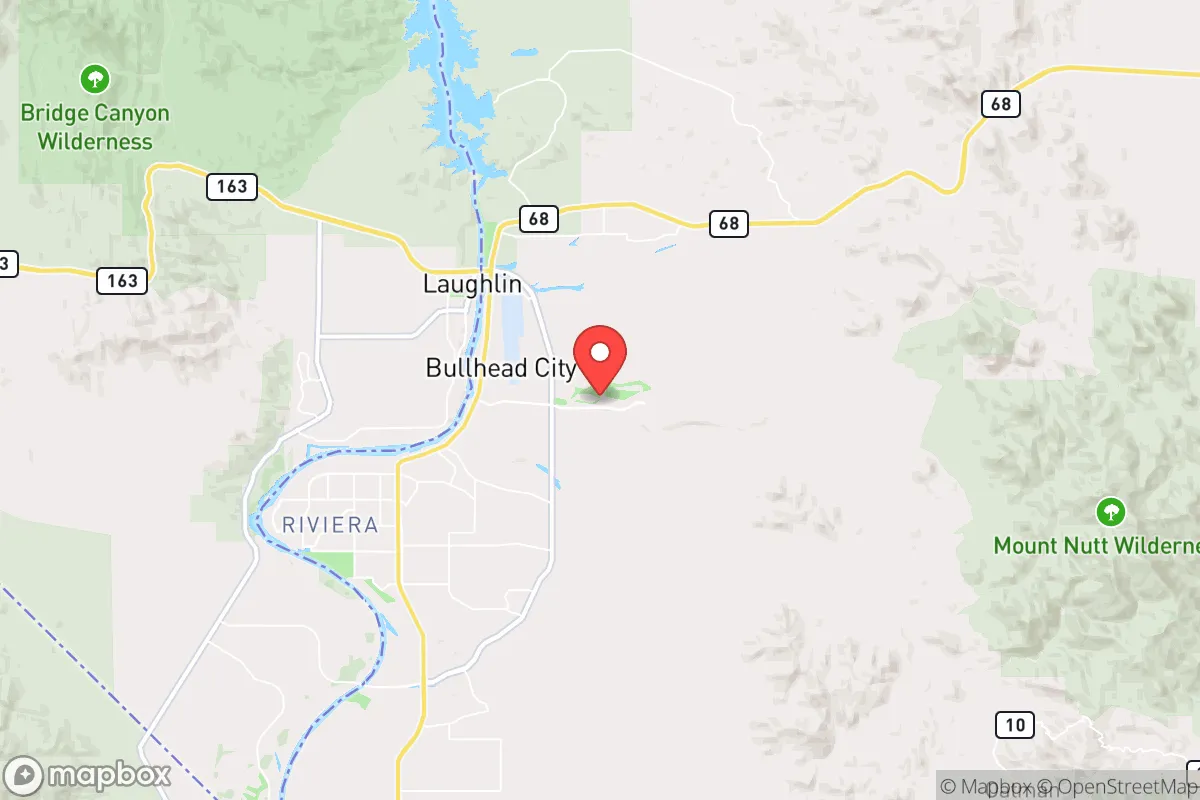
The modern demographic shape of Bullhead City was forged after 1965 by two distinct waves. The first was the legalization of casino gambling in Laughlin, Nevada, directly across the Colorado River, in the 1980s. This created a surge in demand for service workers—hotel staff, dealers, restaurant workers—who could live affordably in Arizona and commute across the river. These workers, a mix of white and Hispanic families, settled in the Riviera and Pueblo del Rio neighborhoods, which today have the highest Hispanic concentrations in the city (roughly 35-40% in those census tracts). The second wave was domestic in-migration of retirees and second-home buyers from California and the Pacific Northwest, drawn by lower housing costs and the Colorado River lifestyle. These newcomers, almost entirely white and often with higher incomes, clustered in the Sunrise Vista and Fort Mojave Mesa areas, which feature newer subdivisions and golf-course communities. The city’s foreign-born population remains tiny (3.7%), with the largest immigrant group being Hispanic (primarily Mexican nationals working in hospitality and construction). East/Southeast Asian residents (1.2%) are concentrated in small numbers in the Riviera area, while the Indian-subcontinent population (0.4%) is scattered and does not form a distinct enclave. The Black population (2.4%) is dispersed across the city, with no single neighborhood majority.
The future
Bullhead City’s population is trending toward modest growth, projected to reach roughly 48,000 by 2035, driven primarily by continued domestic in-migration of retirees and remote workers from California. The Hispanic share is slowly rising—up from 16% in 2010 to 20.3% in 2024—as younger families replace aging white retirees in the Riviera and Pueblo del Rio neighborhoods. The white share is declining proportionally but remains the dominant group, especially in the newer subdivisions of Sunrise Vista and Fort Mojave Mesa, which are becoming more age-segregated (retiree-heavy) rather than ethnically diverse. The foreign-born share is likely to remain low (under 5%) because the city lacks the industrial or agricultural base that attracts large immigrant populations. No significant growth is expected from East/Southeast Asian or Indian communities, as the city offers few professional jobs that draw those groups. The city is not tribalizing into distinct ethnic enclaves; rather, it is slowly homogenizing along age and income lines, with retirees in the north and working-class families in the south.
For someone moving in now, Bullhead City is becoming a more Hispanic, younger, and service-oriented community in its southern neighborhoods, while remaining a predominantly white, retiree-dominated city in its northern subdivisions. The low college-attainment rate (14.6%) reflects an economy built on hospitality, construction, and retail—not knowledge industries. New residents should expect a place where demographic change is gradual, not disruptive, and where the defining divide is less racial than it is generational and economic.

* Values derived from national, state, county, city and local statistics and may differ in a specific area. Last updated: 2026-04-19T05:35:24.000Z
Narrative content on this page is AI-generated and may contain mistakes. Verify any details that matter before acting on them.
ReloMaps may earn a commission from affiliate links at no extra cost to you.

