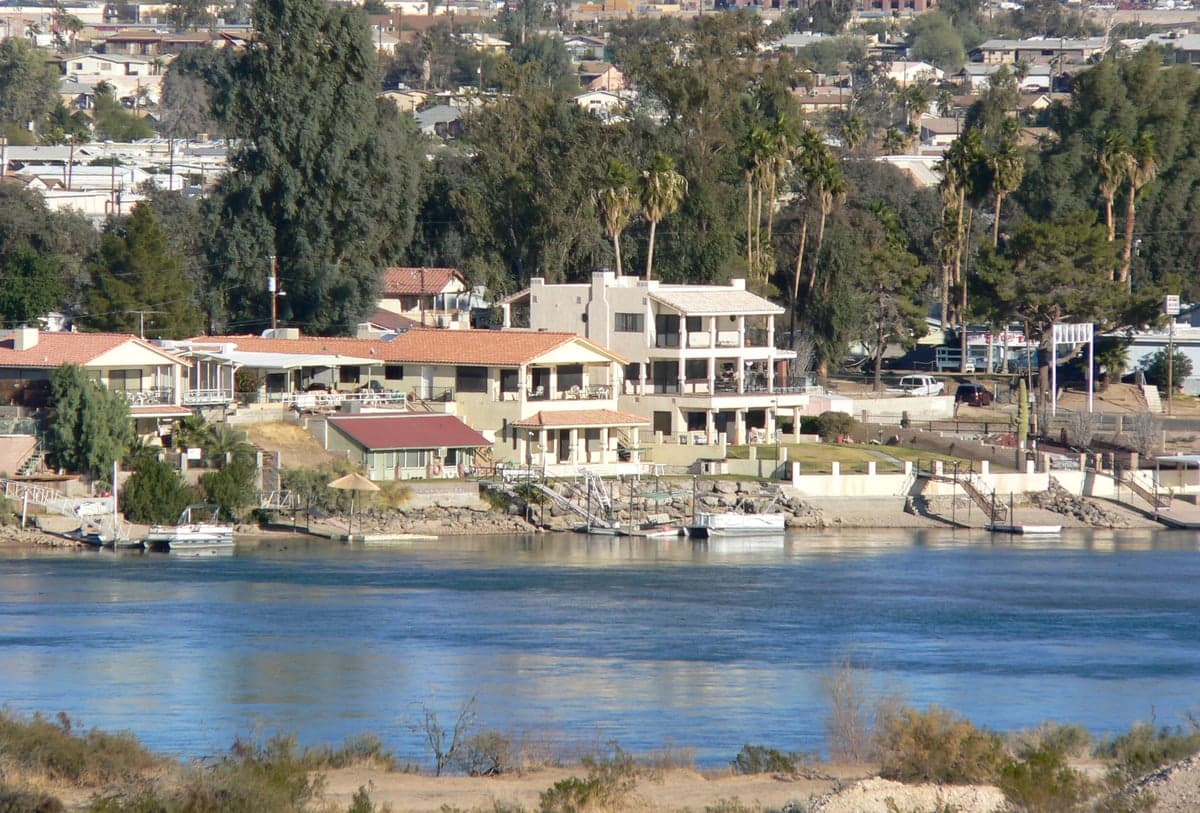
Photo: Wikipedia
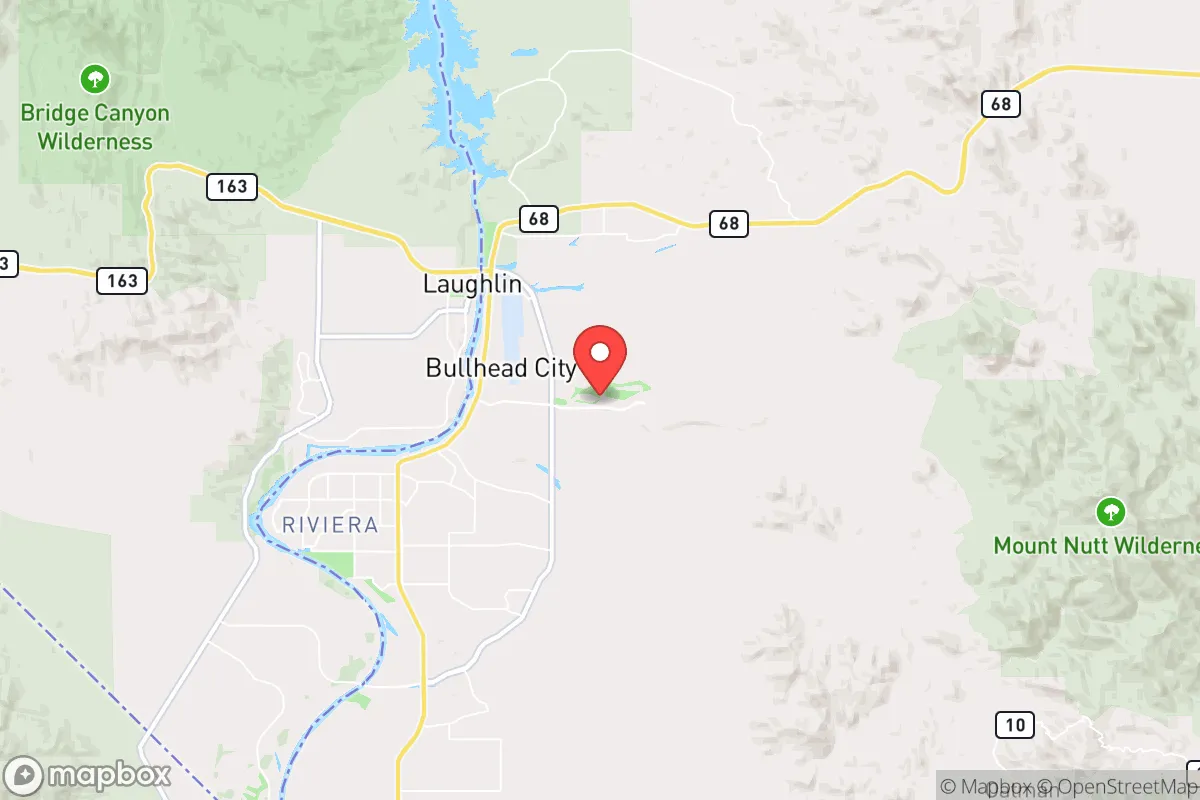
Strategic Assessment of Bullhead City, AZ
Meaningful friction. Expect exposure to either population pressure, blast zones, or natural disaster risk. Consider buying a retreat property.
What does the Strategic Assessment tell us?
Our Strategic Assessment grades tactical survivability of an area. Major population centers, military targets, fallout zones, natural disasters, and border exposure all drive risk — lower exposure means a more defensible position in a crisis.
This is heavily inspired by Joel Skousen's Strategic Relocation book. Highly recommended you checkout the book ($)What does this tell us?
Our Strategic Assessment grades tactical survivability of an area. Major population centers, military targets, fallout zones, natural disasters, and border exposure all drive risk — lower exposure means a more defensible position in a crisis.
This is heavily inspired by Joel Skousen's Strategic Relocation book. Highly recommended you checkout the book ($)Strategic Pillars

Key Distances
Regional Safe Places
Below is our recommended "safe zones" in Arizona and the surrounding area based on our strategic heuristics. For most people, it's unrealistic to live in a “safe zone” full-time due to work, family or other personal reasons. They tend to be more rural. However, many of these areas are perfect for second homes and retreat properties that double as a vacation home or even a short-term rental.
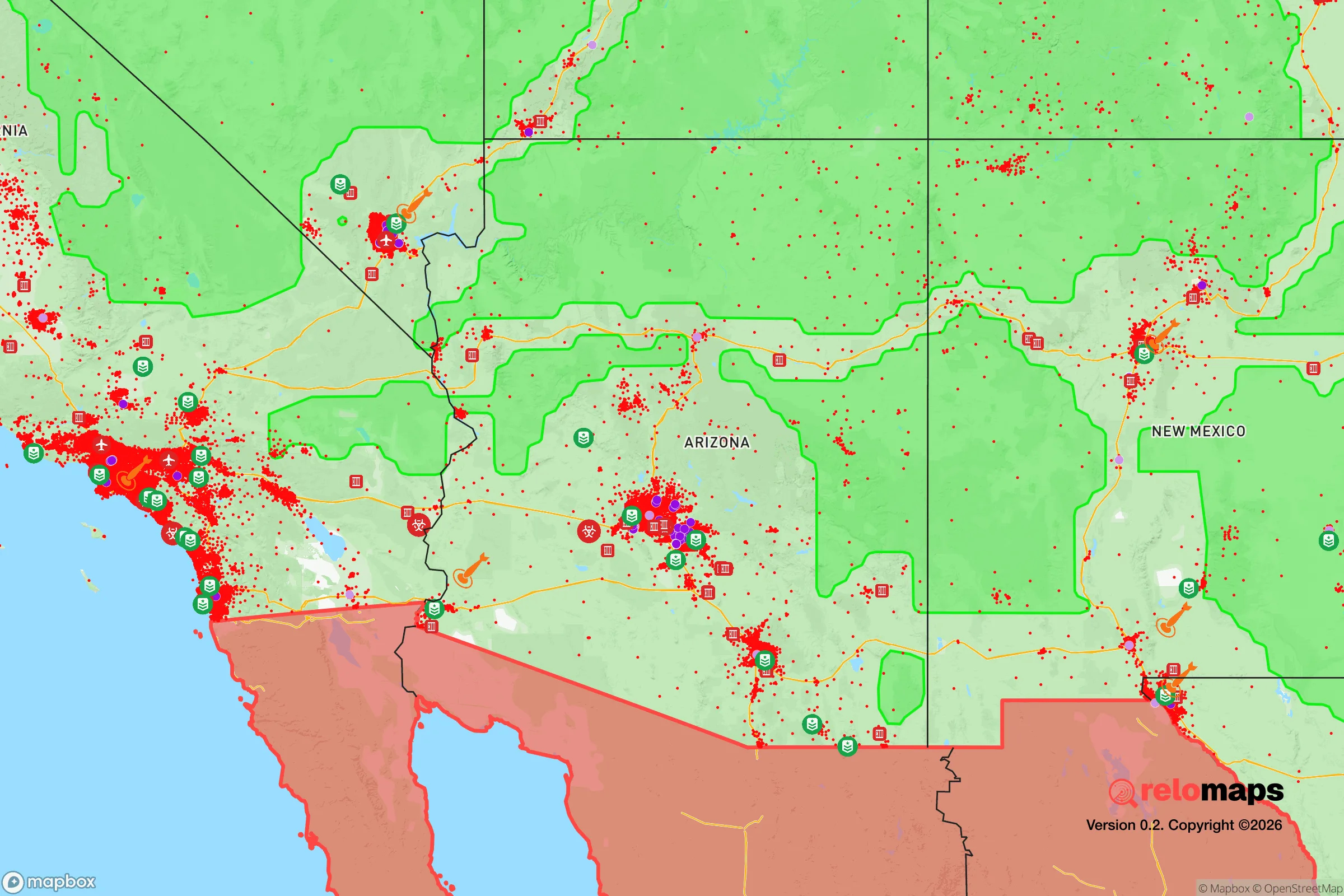
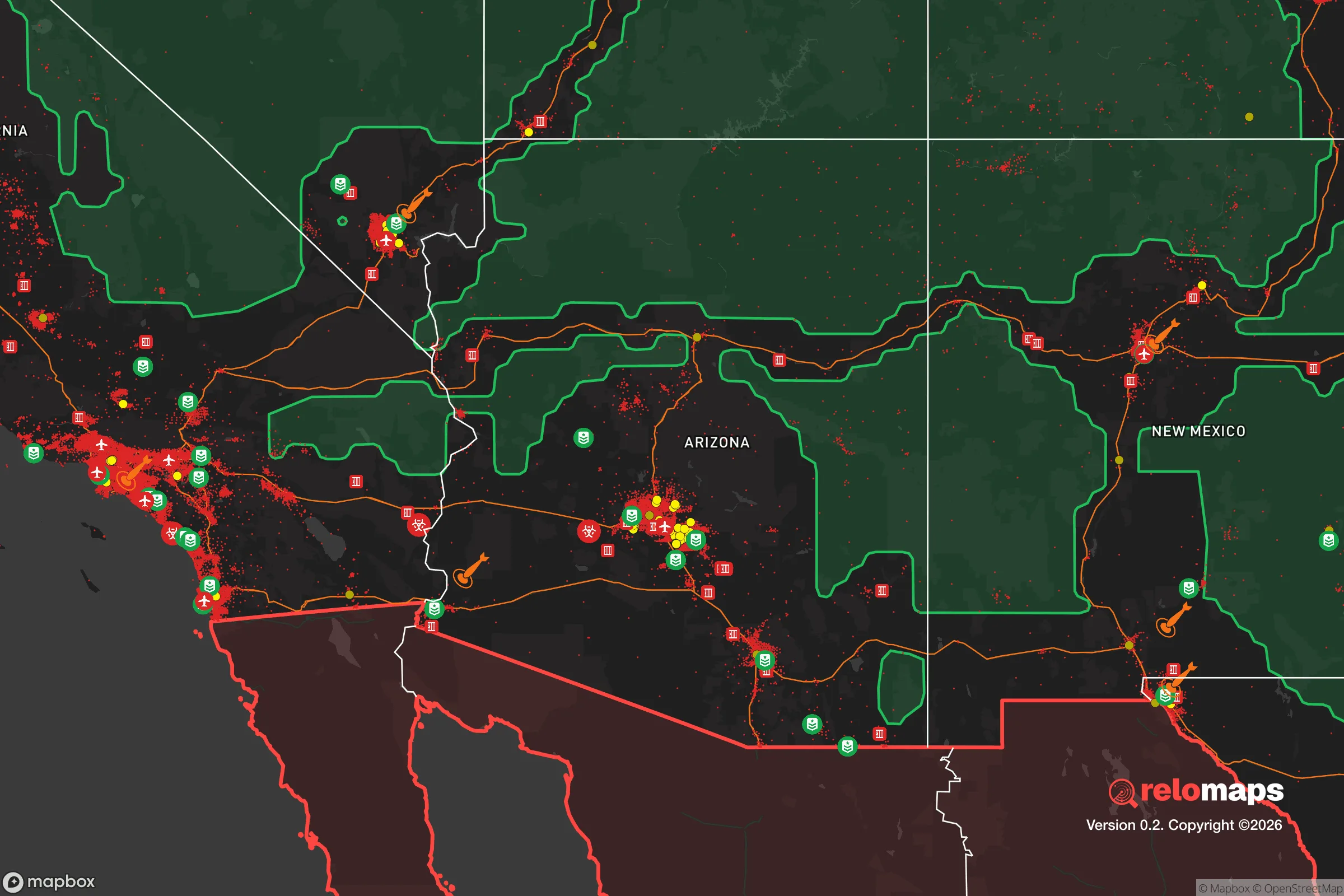


Important Note: For informational purposes only. This does not mean nothing bad ever happens in the green zones. Please use common sense. This is based on public data and modeled with AI. We tried to take a conservative approach but mistakes happen. We update this regularly as new information becomes available.
Solar Generator Recommendations
Backup power matters more here than in safer locations. We've picked three solar generators across budgets and capacity tiers — start with the budget unit if you only need a few essentials, or step up if you want to run a fridge and HVAC for days at a time.

Jackery Portable Power Station Explorer 300
Budget OptionPower on the Go: Weighing only 11 lbs, it's convenient to set up and store with book-sized foldable solar panels

BLUETTI Portable Power Station AC180
Designed for both indoor and outdoor scenarios, AC180 is highly capable as it has a robost capacity and continuous output power.

EF ECOFLOW DELTA Pro Ultra Power Station
Upgraded PickEcoFlow DELTA Pro Ultra is a whole-home energy system designed to grow with your family. Integrated with the Smart Home Panel 2, it scales to meet your evolving energy needs — keeping your home powered, intelligent, and secure through every stage of life.
We earn a commission, at no additional cost to you.
Strategic Assessment Analysis
Bullhead City, Arizona, offers a strategic relocation option for those prioritizing resilience, due to its position along the Colorado River and its distance from major metropolitan centers. The city sits in a geographically isolated pocket of Mohave County, roughly 100 miles from Las Vegas and 200 miles from Phoenix, which reduces exposure to the cascading effects of urban unrest, mass casualty events, or infrastructure collapse in those larger hubs. Its location near the California and Nevada borders provides access to multiple state jurisdictions, a factor that can be leveraged for supply chain redundancy and escape route planning. For a conservative-leaning prepper, Bullhead City’s combination of natural water access, low population density, and relative remoteness makes it a candidate worth serious consideration.
Geographic position and natural advantages for long-term survival
The Colorado River is the single most critical natural asset for Bullhead City, providing a reliable surface water source in an otherwise arid region. Unlike many desert towns that depend entirely on groundwater or distant aqueducts, Bullhead City draws directly from the river, which is managed under the Colorado River Compact—a legal framework that has held for nearly a century. This water access supports local agriculture, livestock, and personal gardens, which are essential for food security during supply chain disruptions. The surrounding topography includes the Black Mountains to the east and the Dead Mountains to the west, creating natural chokepoints that limit vehicular access and make the area more defensible. The city’s elevation of roughly 540 feet keeps winters mild, reducing heating fuel demands, while summer heat (often exceeding 110°F) acts as a natural barrier to unprepared populations. The proximity to Lake Mohave and the Havasu National Wildlife Refuge also offers fishing, hunting, and foraging opportunities for those with the skills to exploit them.
Risks, exposures, and proximity to fallout-relevant landmarks
Bullhead City is not without strategic vulnerabilities. The most significant risk is its proximity to the Hoover Dam (about 75 miles upstream) and the Davis Dam (just 10 miles north of the city). Both are critical infrastructure targets for sabotage or attack, and a catastrophic failure at either could cause downstream flooding or disrupt power and water delivery across the Southwest. The city itself sits below the Davis Dam, so a breach would directly threaten low-lying areas along the river. Additionally, Bullhead City is within 100 miles of the Nevada National Security Site (formerly the Nevada Test Site), where historical nuclear testing occurred and where some residual contamination exists. While not an active fallout zone, this proximity raises questions about long-term environmental health and potential future risks. The nearby Laughlin/Bullhead City International Airport could become a target during civil unrest, as it handles regional air traffic and could be used for military or emergency logistics. The city’s reliance on Interstate 40 and U.S. Route 95 for resupply means that a major disruption on either highway—whether from earthquake, protest, or accident—could isolate the area for days. Finally, the region’s extreme summer heat poses a health risk for those without adequate cooling or water storage, and the area is prone to flash flooding during monsoon season, which can wash out roads and damage property.
Practical resilience for a relocator: food, water, energy, and defensibility
For a relocator focused on self-sufficiency, Bullhead City offers a mixed but workable picture. Water is the strongest asset: residents can legally draw from the Colorado River with a permit, and many properties have private wells or access to irrigation canals. Rainwater harvesting is feasible during the monsoon months (July–September), though annual precipitation is only about 5 inches. Food production is possible with desert-adapted crops like dates, pomegranates, and beans, and the river supports small-scale aquaculture. Local farmers’ markets and the Bullhead City Farmers Market provide some fresh produce, but the area is not a major agricultural hub, so stockpiling non-perishables is advisable. Energy resilience is moderate: the city is served by the Hoover Dam’s hydroelectric power, which is relatively stable, but a grid failure would leave most residents without electricity. Solar panels are a strong investment here, given the 300+ sunny days per year, and battery storage can provide backup for critical loads. Natural gas is available in developed areas, but propane tanks are common for off-grid setups. Defensibility is a key advantage: the city’s layout along the river means only a few bridges and roads connect it to the outside world, making it easier to monitor and control access. The surrounding desert provides limited cover for approaching threats, and the local population (roughly 40,000) is small enough that community organization is feasible. However, the city’s proximity to Laughlin, Nevada—a casino town with transient visitors—introduces a potential source of instability during a crisis, as tourists and gamblers may become stranded or desperate.
The overall strategic picture for Bullhead City is one of cautious optimism for the prepared relocator. Its water access, geographic isolation, and low population density provide a solid foundation for long-term survival, while its vulnerabilities—dam proximity, extreme heat, and reliance on a few transportation corridors—demand proactive mitigation. For a conservative-leaning individual or family seeking a location that balances remoteness with access to essential resources, Bullhead City ranks favorably compared to other desert towns like Lake Havasu City or Kingman, which have similar risks but less direct water access. The key is to arrive with a plan: secure a property with river access or a well, invest in solar and battery storage, build a food stockpile, and establish relationships with like-minded neighbors. In a world where urban centers are increasingly fragile, Bullhead City offers a defensible, resource-rich outpost—but only for those who treat it as a base to be hardened, not a paradise to be enjoyed.

* Values derived from national, state, county, city and local statistics and may differ in a specific area. Last updated: 2026-04-19T05:35:24.000Z
Narrative content on this page is AI-generated and may contain mistakes. Verify any details that matter before acting on them.
ReloMaps may earn a commission from affiliate links at no extra cost to you.

