Photo: Wikipedia
Personal Sovereignty in Burkittsville, MD
Viable for self-reliance. Generally workable, though some barriers may limit total independence.
What does Personal Sovereignty tell us?
Personal Sovereignty measures your capacity for self-reliance and independence with minimal government friction. Higher scores mean fewer barriers between you and the way you want to live... but it assumes you have the space you need and good neighbors.
What does this tell us?
Personal Sovereignty measures your capacity for self-reliance and independence with minimal government friction. Higher scores mean fewer barriers between you and the way you want to live... but it assumes you have the space you need and good neighbors.
State Policy
Energy independence: Importer (8% of energy produced in-state)
Personal Liberty
Homesteading

Personal Liberty Analysis
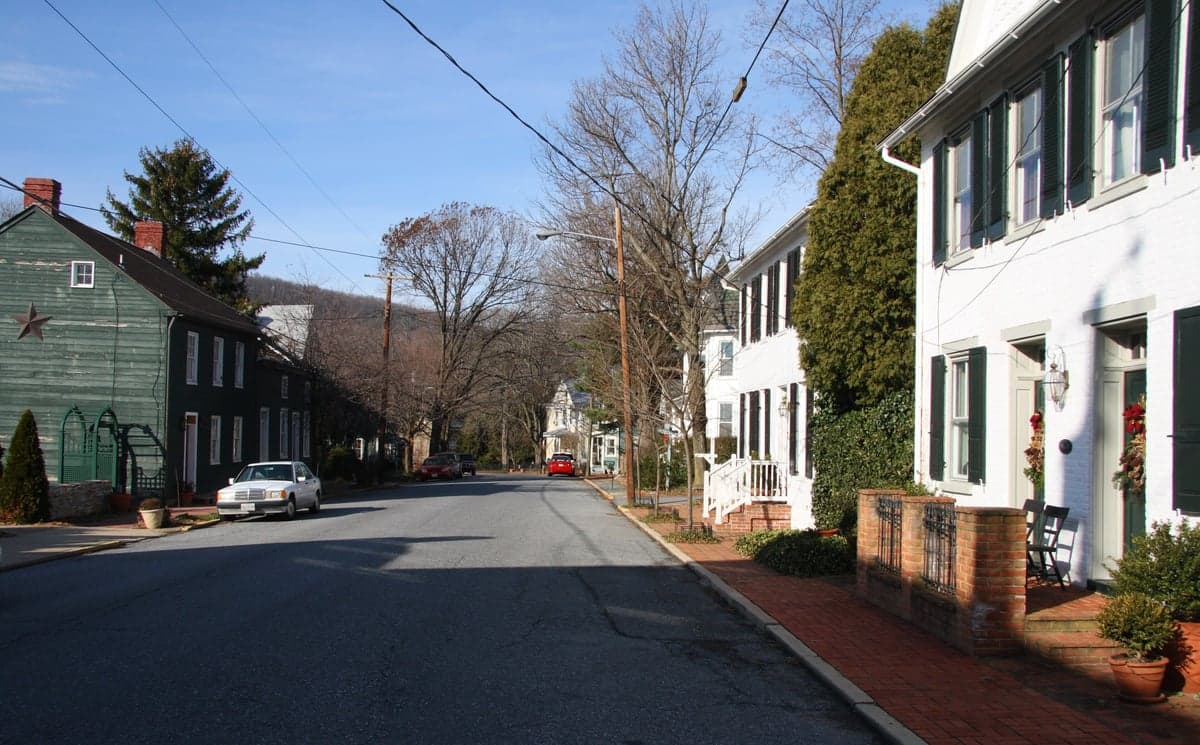
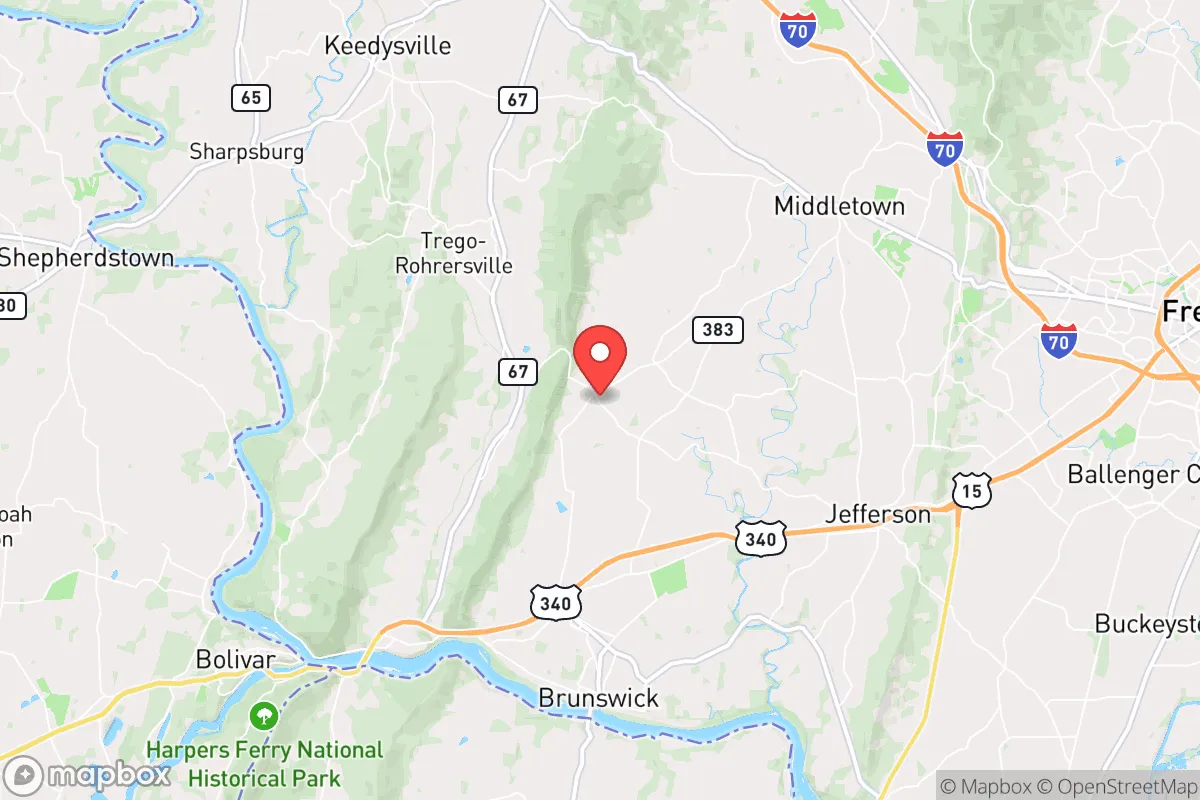
Burkittsville, Maryland, offers a personal sovereignty environment that is heavily shaped by state-level policies, with local conditions providing a mixed picture for those prioritizing autonomy and self-reliance. As a small town in Frederick County, its residents operate under Maryland's relatively high tax burden and regulatory density, but the rural character and lower population density create pockets of practical freedom that are less available in the state's urban centers. For a relocation-minded individual or family weighing independence, the key question is whether the trade-offs of state-level control are offset by the community's scale and local governance culture.
Tax burden and regulatory posture in Frederick County
Maryland ranks among the highest-tax states in the nation, and Burkittsville residents feel this directly. The state's income tax ranges from 2% to 5.75%, and Frederick County adds a local income tax of 2.96%, bringing the combined top marginal rate to roughly 8.71% — a significant bite for higher earners. Property taxes are moderate by regional standards: Frederick County levies a rate of approximately $1.06 per $100 of assessed value, with Burkittsville's town tax adding a small increment. For a $350,000 home, annual property taxes land around $3,800. Sales tax is a flat 6%, with no local add-ons. The regulatory posture is state-heavy: Maryland has strict environmental regulations, particularly around the Chesapeake Bay watershed, which affects land use and construction. Permitting for new structures or major renovations in Burkittsville requires county approval, and the process is more involved than in less-regulated states like West Virginia or Virginia. However, the town itself has a light touch — there is no local zoning overlay beyond basic county codes, meaning fewer bureaucratic hurdles for small-scale projects compared to incorporated cities. For a reader comparing tax burdens, Burkittsville sits in the upper tier nationally, but the trade-off is access to Maryland's infrastructure and services, which some families value.
Self-defense and gun law specifics in Maryland
Maryland's gun laws are among the most restrictive in the country, and Burkittsville residents must navigate a complex regulatory framework. The state requires a Handgun Qualification License (HQL) to purchase a handgun, which involves fingerprinting, a background check, and an approved training course. Long guns (rifles and shotguns) require a 7-day waiting period and a background check for all purchases, including private sales. Maryland also maintains a ban on "assault weapons" as defined by state law, which includes many popular semi-automatic rifles like the AR-15. Magazine capacity is limited to 10 rounds. For concealed carry, Maryland is a "may issue" state, but following the 2022 Supreme Court decision in NYSRPA v. Bruen, the state has moved toward a "shall issue" framework. However, the application process remains onerous: applicants must complete a 16-hour training course, submit references, and undergo a thorough background check. As of 2025, Frederick County's sheriff has been relatively accommodating in issuing permits, but the state's Attorney General continues to push for stricter interpretation. Stand Your Ground laws do not exist in Maryland; the state imposes a "duty to retreat" in public spaces before using deadly force, unless the individual is in their home (the Castle Doctrine applies). For a self-defense-minded individual, Burkittsville offers the practical advantage of low crime rates — the town's violent crime rate is near zero — but the legal environment for firearm ownership is adversarial. Anyone moving from a more permissive state should budget for the time and cost of compliance, which can exceed $300 and several weeks for the HQL and carry permit process.
Self-reliance and homesteading viability: lot sizes, zoning, and off-grid feasibility
Burkittsville's rural zoning and available land make it a viable location for homesteading and self-reliance projects, though with constraints. The town itself is small, with most residential lots under an acre, but the surrounding unincorporated areas of Frederick County offer agricultural zoning (AR-1 and AR-2) that permits lots as small as 1 to 2 acres for residential use, with larger parcels common. Chicken keeping and small livestock (goats, sheep) are generally allowed on properties of 2 acres or more without special permits, though pigs and larger animals may require a county agricultural exemption. Gardening and food preservation face no local restrictions. Off-grid living is legally challenging: Maryland requires connection to the electrical grid for new construction in most areas, and standalone solar systems without grid backup are difficult to permit. However, grid-tied solar with net metering is permitted and incentivized through state tax credits. Rainwater collection is legal for non-potable uses (irrigation, livestock) but potable rainwater systems require a permit and are rare. Composting toilets and greywater systems are allowed under the state's alternative onsite sewage system regulations, but the permitting process is rigorous and expensive — expect $5,000–$10,000 for design and approval. Well water and septic systems are standard for rural properties outside town limits, which is a major plus for self-reliance. The county's soil quality is generally good for gardening, with a growing season of roughly 170 days. For a family serious about food production and reduced reliance on utilities, Burkittsville's outskirts offer real potential, but the upfront regulatory costs for alternative systems are higher than in less-regulated states like West Virginia or Pennsylvania.
Personal liberties: parental rights, medical autonomy, speech, and property
Maryland's legal environment for personal liberties is mixed, with strong protections for some rights and significant restrictions on others. Parental rights in education are a hot-button issue: Maryland law requires school districts to adopt policies on parental involvement, but the state also mandates LGBTQ-inclusive curriculum and health education that some parents find objectionable. Frederick County Public Schools has a policy allowing parents to opt their children out of specific lessons, but the process requires active notification each year. Medical autonomy is constrained: Maryland has strict vaccine mandates for school attendance (though medical and religious exemptions are available), and the state's health department maintains broad authority over public health measures. Telehealth and direct-primary-care arrangements are legal and growing. Property rights are relatively strong for existing homeowners, but new development faces significant hurdles. The state's Critical Area Law restricts development within 1,000 feet of tidal waters (not directly applicable to Burkittsville, which is inland), and the county's Adequate Public Facilities Ordinance can delay new construction if schools or roads are at capacity. Speech and assembly rights are protected under the First Amendment, and Maryland has no unique restrictions beyond federal norms. However, the state's hate crime laws are broad, and local law enforcement has been proactive in enforcing them. For a reader prioritizing personal autonomy, the key takeaway is that Burkittsville offers a quieter, less intrusive local environment than urban Maryland, but state-level policies on health, education, and property use impose a heavier hand than in many Southern or Midwestern states.
Overall, Burkittsville's personal sovereignty profile is one of constrained independence: the state's tax and regulatory apparatus is substantial, but the town's rural character and low population density provide practical breathing room for self-reliant living. Compared to nearby areas like Harpers Ferry, West Virginia (lower taxes, looser gun laws, easier off-grid permitting), Burkittsville is less friendly to the hardcore libertarian or homesteader. But for a family that values Maryland's infrastructure, schools, and proximity to DC while still wanting a small-town, low-crime environment with room for a garden and a workshop, it represents a reasonable middle ground. The trade-off is clear: you gain community stability and access to services, but you surrender some degree of regulatory freedom. For the relocation-minded reader, the decision hinges on whether the state-level constraints are acceptable in exchange for the local quality of life.

* Values derived from national, state, county, city and local statistics and may differ in a specific area. Last updated: 2026-08-11T03:13:33.000Z
Narrative content on this page is AI-generated and may contain mistakes. Verify any details that matter before acting on them.
ReloMaps may earn a commission from affiliate links at no extra cost to you.

