Photo: Wikipedia
Political ClimatePolitical Climate in Burkittsville, MD
District shown is the primary district for this city’s centroid. Cities may span multiple districts.
Local Political AnalysisPolitical Analysis of Burkittsville, MD
Burkittsville, Maryland, sits in a political sweet spot that’s noticeably more moderate than the state as a whole. While Maryland carries a Cook PVI of D+17—a deep blue stronghold—Burkittsville’s own PVI is D+3, meaning it leans Democratic but by a much narrower margin. This isn’t a fluke of recent data; the town has long been a quiet outlier, blending rural Frederick County conservatism with the progressive pull of the D.C. exurbs. Over the past decade, the trajectory has been a slow drift leftward, but it’s a crawl, not a sprint—newcomers from Montgomery County have nudged the needle, but longtime families and farmland still anchor the right.
How it compares
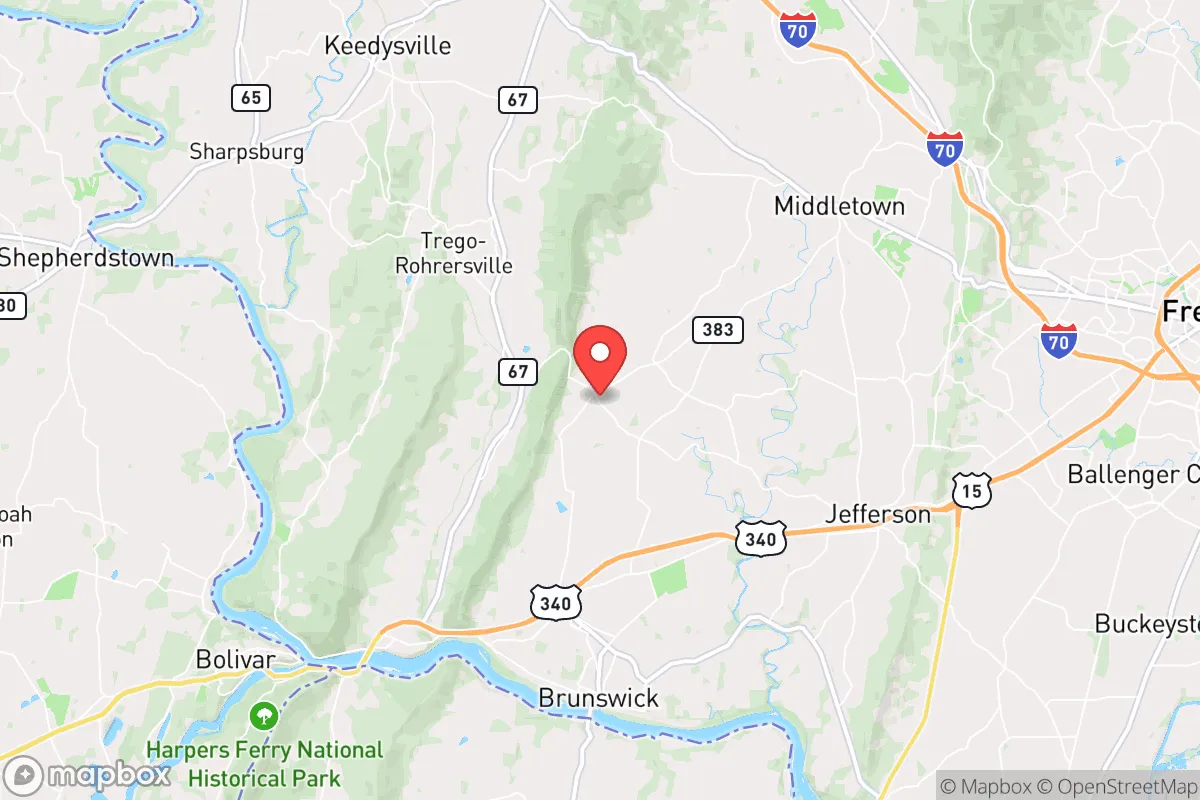
The gap between Burkittsville’s D+3 and Maryland’s D+17 is stark in practice. Drive 15 minutes east to Frederick city, and you’ll find a reliably blue hub with a Cook PVI around D+10, fueled by young professionals and government workers. Head west into Washington County, and towns like Boonsboro or Sharpsburg lean red by similar margins. Burkittsville sits in the middle—a kind of political buffer zone. In the 2024 presidential race, Frederick County overall voted about 55% Democratic, but Burkittsville’s precinct likely split closer to 52-48, reflecting its rural character and independent streak. Statewide, Maryland’s D+17 is driven by the Baltimore-Washington corridor; Burkittsville’s D+3 is a reminder that the state’s interior is far more purple than its coastal reputation suggests.
What this means for residents
For conservative residents, Burkittsville isn’t hostile territory. You’ll find neighbors who share your views on Second Amendment rights and local land-use issues, and the county commission often leans center-right. But you won’t see the same cultural dominance you’d get in, say, Hagerstown—local school board races and zoning debates are genuinely competitive. For liberal residents, the town offers a quieter, more affordable alternative to the D.C. suburbs, but you’ll need to drive to Frederick for a progressive social scene or activist network. In practice, the D+3 lean means most elections are decided by a few hundred votes, so every local race feels consequential. Neither side can take the town for granted, which keeps civic engagement higher than in deep-blue or deep-red areas.
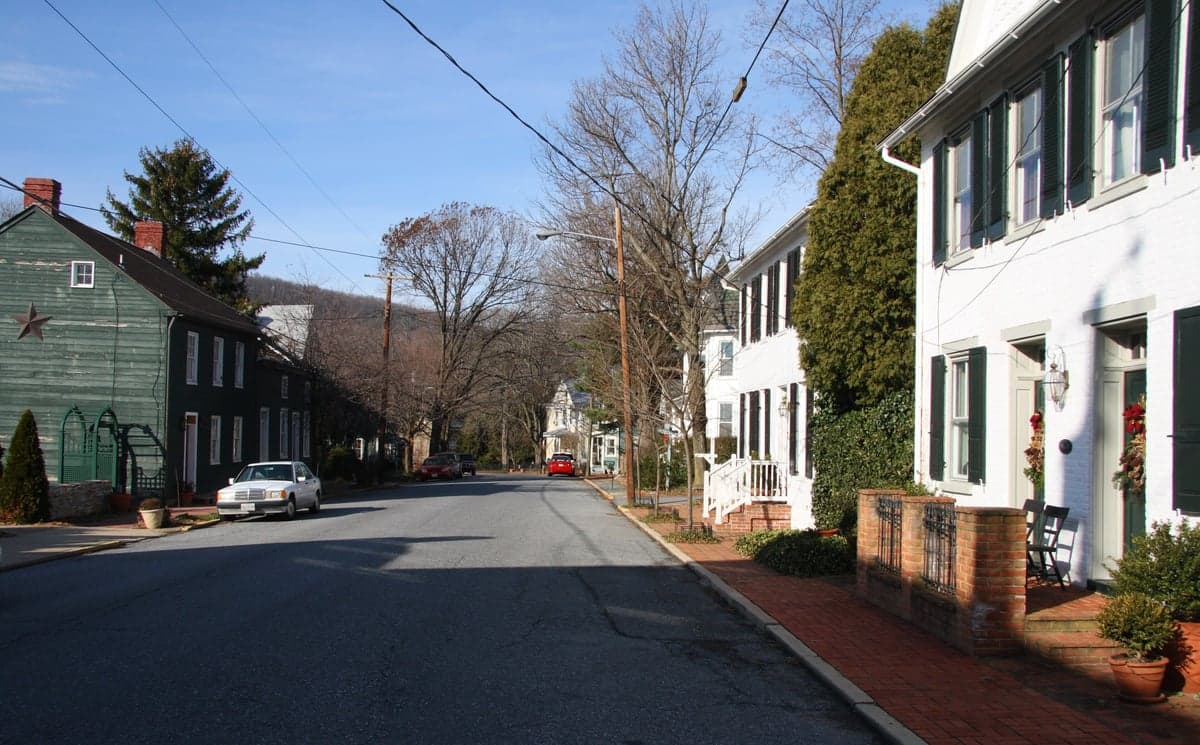
Culturally, Burkittsville retains a distinct identity that sets it apart from Maryland’s urban centers. The town’s historic district and annual events like the Burkittsville Heritage Day lean into small-town tradition, not coastal cosmopolitanism. Policy-wise, you’ll see a pragmatic mix: the county has resisted some of the state’s more aggressive housing mandates, but it’s also adopted renewable energy incentives that appeal to both environmentalists and farmers looking to lease land for solar. The real distinction is pace—change comes slowly here, mediated by a community that values deliberation over ideology. For a newcomer, the takeaway is simple: Burkittsville is Maryland’s quiet middle ground, where a D+3 label means you’ll hear both sides at the general store, and neither will shout you down.

State Political ClimatePolitical Climate in Maryland
State Political AnalysisPolitical Environment in the State
Maryland is a solidly Democratic state with a Cook PVI of D+17, meaning it votes about 17 points more Democratic than the national average in presidential elections. Over the past 10-20 years, the state has shifted further left, driven by explosive growth in the Washington, D.C. suburbs and a steady exodus of conservative-leaning voters from rural areas. While Republicans haven’t won a statewide race since Bob Ehrlich’s 2002 gubernatorial victory, the state’s political reality is far more nuanced than the raw numbers suggest — a deep urban-rural chasm, a powerful suburban machine, and a surprisingly resilient conservative minority in the western and eastern reaches.
Urban vs. rural divide
The political map of Maryland is a tale of two states. The Democratic stronghold is the Washington, D.C. suburban crescent — Montgomery County, Prince George’s County, and increasingly Howard County — which together cast about 40% of the state’s vote and deliver margins of 70-80% for Democrats. Baltimore City is another deep-blue anchor, though its population has shrunk by roughly 7% since 2010, slightly reducing its electoral weight. The rest of the state is a patchwork: Anne Arundel County (home to Annapolis) is a classic swing county that has trended blue in recent cycles, while Baltimore County is a purple battleground where suburban moderates and blue-collar voters often split tickets. The rural eastern shore — Worcester County (Ocean City), Talbot County, and Caroline County — votes reliably Republican, as does western Maryland’s Garrett County and Allegany County (Cumberland). In 2024, these rural counties gave Trump margins of 30-40 points, but their combined population is too small to offset the suburban blue wave. The divide is stark: a resident of Frederick (a fast-growing exurb that is trending purple-to-blue) lives in a different political universe than someone in Hagerstown, where conservative values still dominate local politics.
Policy environment
Maryland’s policy environment is shaped by a Democratic supermajority in the General Assembly and a governor’s mansion that has been held by Democrats since 2007 (with the exception of Larry Hogan’s two terms, 2015-2023). The state has a progressive income tax structure with rates from 2% to 5.75%, plus local piggyback taxes that can push the top combined rate above 9% in places like Montgomery County. Property taxes are moderate but vary wildly by jurisdiction — Baltimore City’s rate is over 2%, while rural counties like Garrett are under 1%. Sales tax is 6%, with no tax on groceries or prescription drugs. Education policy is heavily centralized: the Blueprint for Maryland’s Future, passed in 2021, pours billions into K-12 funding but also mandates statewide curriculum standards and teacher salary floors. Healthcare is dominated by the state’s all-payer hospital rate-setting system, which keeps costs relatively low but limits provider competition. Election laws are among the most liberal in the country: no-excuse mail-in voting, same-day registration, and automatic voter registration at the DMV. Gun laws are strict — a “good and substantial reason” requirement for concealed carry was struck down after Bruen, but the state quickly passed a new law requiring 16 hours of training and a live-fire qualification. The regulatory posture is generally business-friendly in the tech and biotech sectors (thanks to proximity to D.C. and NIH), but burdensome for small businesses in construction, manufacturing, and agriculture.
Recent policy direction
The last five years have seen Maryland accelerate leftward on nearly every front. In 2023, the legislature passed the Trans Health Equity Act, requiring Medicaid to cover gender-affirming care for minors, and the Abortion Care Access Act, which expanded the pool of providers who can perform abortions and created a $3.5 million fund to train them. On gun policy, the Gun Safety Act of 2023 banned firearms in a wide range of “sensitive places” (including hospitals, parks, and public transit) and required a state police-issued permit for any purchase — a law currently being challenged in federal court. Parental rights have become a flashpoint: in 2024, the state passed a law requiring school districts to adopt policies that “affirm” a student’s gender identity without parental notification, sparking fierce opposition from conservative groups. On property rights, the state’s Renters’ Rights Act (2024) capped security deposits at one month’s rent and gave tenants the right to organize, while a 2023 law banned source-of-income discrimination in housing. Voting access expanded further with the Voter Empowerment Act (2024), which mandated drop boxes in every county and allowed 16- and 17-year-olds to preregister. On the tax front, the Digital Advertising Tax (passed 2021, upheld 2024) imposes a 2.5-10% tax on gross revenues from digital ads, targeting Big Tech. For a conservative relocator, the bottom line is clear: the state is actively expanding government’s role in healthcare, education, and housing, while tightening gun laws and limiting local control over schools.
Civil unrest & political movements
Maryland has a long history of political activism, but the flashpoints have shifted. The 2020 George Floyd protests in Baltimore and D.C. suburbs were large and occasionally violent, with property damage in downtown Baltimore and Silver Spring. Since then, the left has organized around abortion access (the “Bans Off Our Bodies” rallies in Annapolis) and climate policy (the “Stop the Pipelines” movement targeting the Potomac River crossing). On the right, the Maryland Republican Party has been fractured between the Hogan moderate wing and a Trump-aligned faction that gained strength after 2020. The “Parents’ Rights” movement has been particularly active in Frederick County and Harford County, where school board meetings have drawn hundreds of protesters over LGBTQ curriculum and mask mandates. Immigration politics are a quieter issue: Maryland is a sanctuary state (2019’s Trust Act limits local law enforcement cooperation with ICE), but the impact is felt most in Prince George’s County and Montgomery County, where immigrant communities are large and visible. Election integrity controversies have been minimal compared to swing states — Maryland’s mail-in voting system ran smoothly in 2020 and 2024, though conservative activists have raised concerns about the state’s automatic voter registration system. A new resident would notice the political energy is concentrated in the suburbs: yard signs for local school board races are common, and the divide between “Hogan Republicans” and “Trump Republicans” is a frequent topic of conversation in coffee shops from Annapolis to Easton.
Projection
Over the next 5-10 years, Maryland will likely become even more Democratic, driven by two forces: the continued growth of the D.C. suburbs (Montgomery County alone is projected to add 100,000 residents by 2035) and the aging-out of the state’s conservative rural population. The Republican Party’s only path to statewide relevance is to nominate a moderate like Larry Hogan again — but even Hogan won by only 12 points in 2018, and the state’s demographic trends are working against the GOP. The rural counties will continue to vote red, but their share of the vote will shrink. The wild card is the exurban frontier: Frederick County and Carroll County are growing fast with a mix of D.C. commuters and remote workers, and their political lean will determine whether Maryland becomes a D+20 state or stabilizes around D+15. For a conservative moving in now, the realistic expectation is a state where your vote in statewide races will be in the minority, but where local control in counties like Garrett, Allegany, and Worcester remains strong. The state’s policy direction — higher taxes, tighter gun laws, expanded government healthcare — is unlikely to reverse, but the pace of change may slow if the legislature faces a fiscal crunch (the Blueprint for Maryland’s Future is projected to cost $4 billion annually by 2030).
For a new resident, the practical takeaway is this: Maryland offers a high quality of life with excellent schools, world-class healthcare, and proximity to D.C., but it comes with a progressive policy package that is unlikely to change. If you value low taxes, loose gun laws, and local control over education, you’ll find yourself at odds with the state government — but you’ll also find like-minded communities in the rural counties and exurbs. If you’re comfortable with a blue state that has a strong moderate streak (thanks to the Hogan legacy and the influence of federal workers), Maryland is a stable, well-run place to live. Just know that the political winds are blowing in one direction, and they’re not shifting back anytime soon.
* Values derived from national, state, county, city and local statistics and may differ in a specific area. Last updated: 2026-08-11T03:13:33.000Z
Narrative content on this page is AI-generated and may contain mistakes. Verify any details that matter before acting on them.
ReloMaps may earn a commission from affiliate links at no extra cost to you.

