Demographics of Butte Silver Bow, MT
Affluence Level in Butte Silver Bow, MT
A middle-class area roughly in line with national averages across income, home values, education, and employment.
People of Butte Silver Bow, MT
The people of Butte Silver Bow, Montana, are overwhelmingly white and native-born, with a population of 660 that has remained remarkably homogeneous. The city’s identity is rooted in its hardscrabble mining heritage, with a tight-knit, working-class character that prizes self-reliance and community loyalty. Today, it is a place where nearly 96% of residents are white, and the foreign-born population sits at 0.0%, making it one of the most ethnically uniform communities in the state.
How the city was settled and grew
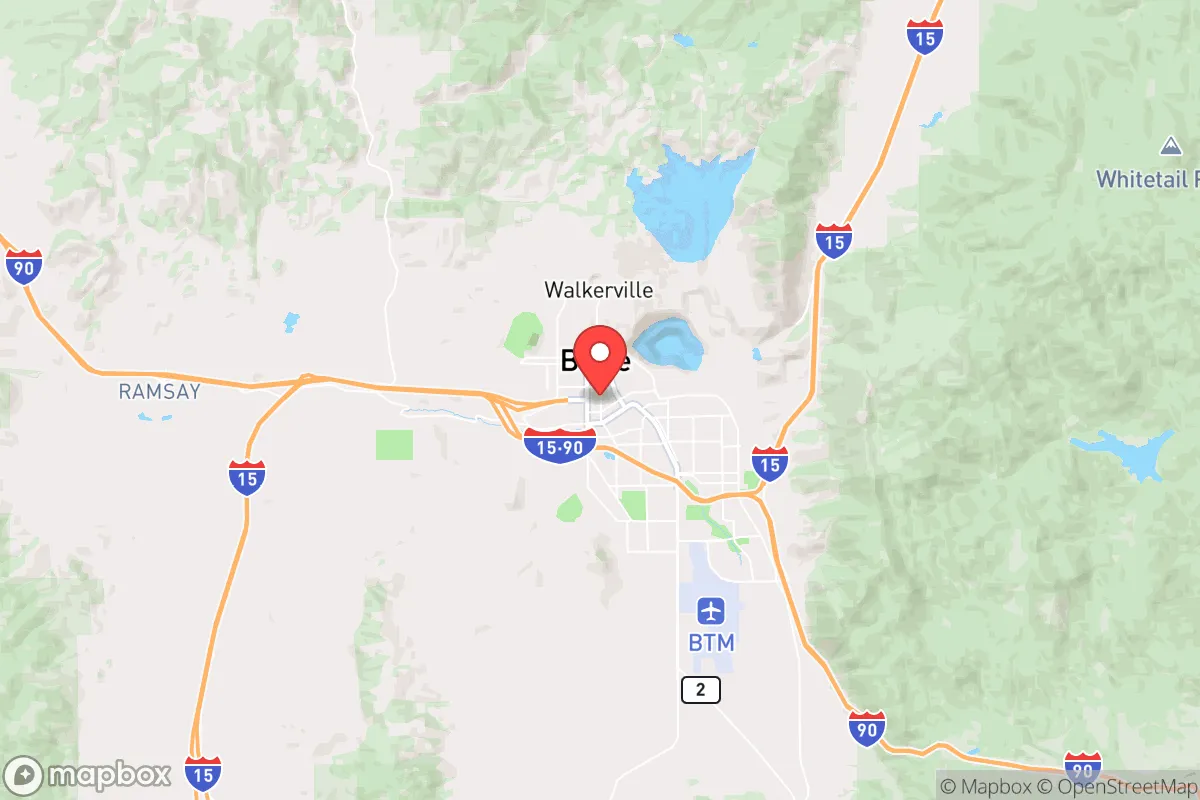
Butte Silver Bow’s population history is defined by a single industry: mining. The city exploded in the late 19th century as the "Richest Hill on Earth," drawing waves of European immigrants—Irish, Cornish, Italian, and Slavic workers—who built the underground copper mines that fueled the nation’s electrification. These groups settled in distinct neighborhoods that still carry their names. Walkerville, perched on the hill north of downtown, was the stronghold of Irish miners and their families. McQueen, to the east, became a working-class enclave for Cornish and Italian laborers. The original Chinese community, though small, was concentrated in Chinatown, a now-vanished district near the present-day Uptown area. By the early 20th century, Butte was a booming, polyglot city of over 60,000, but the decline of underground mining after World War II triggered a long, steady population loss. The 1950s and 1960s saw the closure of many shafts, and the city’s population fell by more than half as families left for jobs elsewhere.
Modern era (post-1965)
After the 1965 Hart-Cellar Act, Butte Silver Bow saw virtually no new immigration. The foreign-born population has remained at 0.0% for decades, a stark contrast to national trends. Domestic in-migration has been minimal, with most new residents coming from other parts of Montana or the rural West. The city’s racial composition has stayed static: 95.8% white, with a tiny Hispanic population (0.9%) and no Black, East/Southeast Asian, or Indian subcontinent residents recorded. Suburbanization never took hold in the traditional sense; instead, the population concentrated in the surviving historic districts. Uptown Butte, the historic commercial core, retains a dense, walkable layout but has seen significant depopulation, with many buildings vacant. Centerville, a once-bustling working-class neighborhood near the mines, now has a sparse, aging population. The only area with modest growth is the Flat, the lower-elevation residential district south of Uptown, where newer single-family homes have attracted a few families seeking affordable housing. The college-educated share is 26.8%, slightly below the national average, reflecting the area’s blue-collar roots and limited white-collar job base.
The future
The population of Butte Silver Bow is heading toward further contraction and homogenization. The city’s population has fallen from a peak of over 60,000 to just 660 today, and the trend shows no sign of reversing. The remaining residents are disproportionately older, with a median age well above the national average. Young people continue to leave for larger cities with more job opportunities, and the lack of immigration means no demographic replenishment. The city is not tribalizing into distinct enclaves—it is simply shrinking, with the few remaining families concentrated in Uptown and the Flat. There is no growing immigrant community to speak of; the foreign-born population is zero, and the tiny Hispanic share (0.9%) is stable but not expanding. Over the next 10–20 years, Butte Silver Bow will likely become even smaller and older, with the population increasingly concentrated in the most intact historic districts. The city’s future depends on whether it can attract remote workers or retirees drawn to its low cost of living and dramatic mountain scenery, but the demographic momentum is strongly toward continued decline.
For someone moving in now, Butte Silver Bow offers a deeply authentic, quiet, and affordable place to live, but it is not a community experiencing growth or diversification. It is a place where the past looms large, and the population is aging in place. New residents will find a welcoming but insular community, where the mining heritage is a source of pride and the pace of life is slow. The bottom line: Butte Silver Bow is a relic of the industrial West, becoming more homogeneous and older with each passing year, and it is best suited for those seeking solitude, history, and a low cost of living rather than economic opportunity or demographic change.

* Values derived from national, state, county, city and local statistics and may differ in a specific area. Last updated: 2026-04-30T03:01:58.000Z
Narrative content on this page is AI-generated and may contain mistakes. Verify any details that matter before acting on them.
ReloMaps may earn a commission from affiliate links at no extra cost to you.

