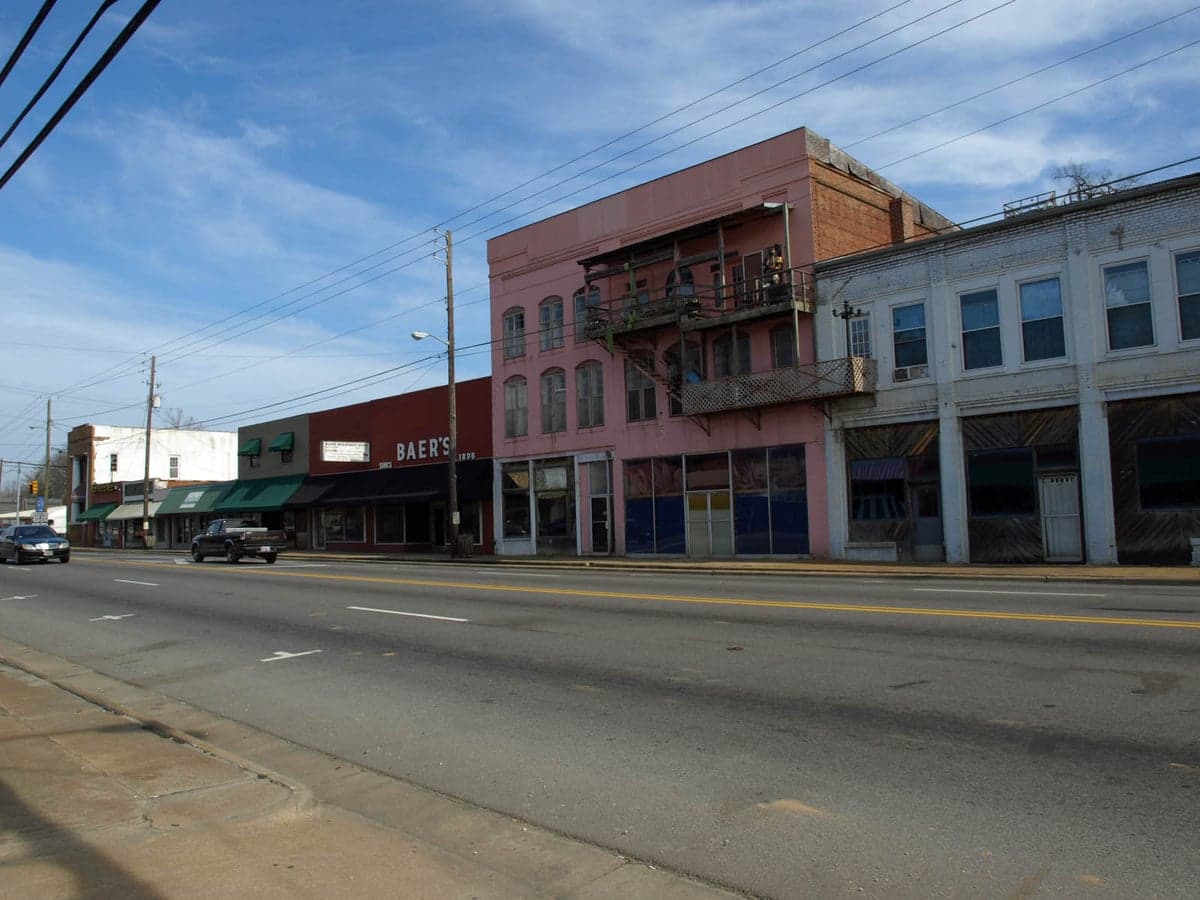
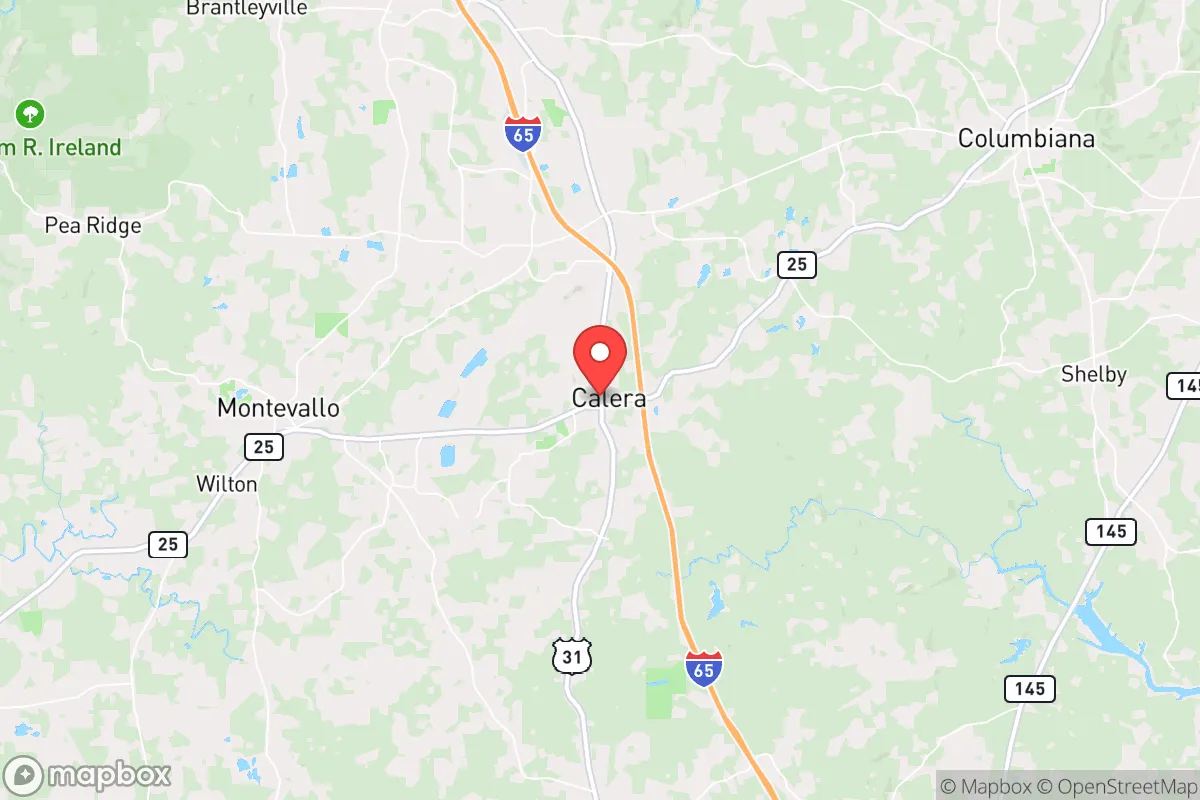
Photo: Wikipedia
Quality of Life in Calera, AL
A high quality of life with strong walkability, manageable living costs, healthy neighborhood signals, and solid amenity access.
What does Quality of Life tell us?
Quality of Life blends cost of living, nearby amenities, socioeconomic signals, and neighborhood character. City-level scores represent the whole municipality; individual neighborhoods can differ.
What does this tell us?
Quality of Life blends cost of living, nearby amenities, socioeconomic signals, and neighborhood character. City-level scores represent the whole municipality; individual neighborhoods can differ.
Cost of Living
8% above national average
The Real Cost of Living in Calera, AL for 2026
| Tier | Individual | Family (4) |
|---|---|---|
| Survival | $24k | $45k |
| Comfortable | $42k | $61k |
| Luxury | $104k+ | $161k+ |
| Elite (Top 5%) | $122k+ | $190k+ |
135%
The Area Signal
A metric tracking the socioeconomic signals of the area.


Hobbies
Explore the areaGroceries
2 within 10 miles
Gas
0 within 10 miles
Hospital
3 within 20 miles
Airport
ATL — Hartsfield–Jackson Atlanta International
Post Office
USPS — Hoover, AL
Critical Amenities
Quality-of-Life Analysis
Calera, Alabama, presents a quality-of-life profile that blends suburban comfort with small-town affordability, attracting a mix of young families, commuters, and retirees seeking more space for their money. With a cost-of-living index of 108 (8% above the U.S. average), the city sits slightly above the national baseline but remains significantly cheaper than Birmingham’s closer-in suburbs like Hoover or Vestavia Hills. The typical resident is a working professional or tradesperson who values a slower pace, newer housing stock, and access to Interstate 65 for regional employment.
How housing costs and affordability compare to nearby cities
Calera’s housing market offers a clear value proposition relative to metro Birmingham. The median home value of $214,200 is roughly 15% lower than the Birmingham metro median of about $252,000, and it undercuts Hoover’s median by nearly 40%. Median rent sits at $1,505, which is competitive for a three-bedroom home in a growing suburb, though it has risen about 18% since 2020 as new apartment complexes fill with inbound residents. Property taxes in Shelby County are low—around 0.4% of assessed value—keeping monthly carrying costs manageable. However, the trade-off is a longer average commute of 33.6 minutes, as many residents drive north to jobs in Birmingham (roughly 30 miles) or south to Montgomery (about 60 miles). For buyers, the sweet spot is the newer subdivisions off County Road 87 and Highway 31, where homes under $250,000 are still common, while older neighborhoods near downtown Calera offer fixer-uppers in the $180,000 range.
Schools, shopping, and the daily rhythm of life in Calera
Daily life in Calera revolves around a handful of practical anchors. The Shelby County School system serves the city, with Calera Elementary and Calera Middle School both rated above average on state assessments, while Calera High School offers dual-enrollment pathways with Jefferson State Community College. For errands and dining, the main commercial corridor along Highway 31 features a Walmart Supercenter, a Publix, and local chains like Los Tres Amigos and The Brick Oven. Recreation centers on Oliver Park, which has walking trails, baseball fields, and a splash pad, plus the nearby Shelby County Lake for fishing and kayaking. The city’s growth has brought a steady stream of chain retailers and fast-casual restaurants, but residents still drive 15 minutes north to Alabaster for the nearest Target or movie theater. The overall rhythm is quiet and car-dependent—most errands require a drive, and sidewalks are sparse outside the downtown core. Community events like the Calera Christmas Parade and the weekly farmers market (May–October) provide the main social touchpoints.
Calera is best suited for people who prioritize affordable homeownership and a low-key lifestyle over urban amenities or walkability. Commuters willing to trade 30–40 minutes in the car for a newer house under $225,000 will find the math favorable. Families with school-age children benefit from solid public schools and a safe environment—the city’s violent crime rate is roughly half the national average. Retirees on fixed incomes should note that while housing is cheap, the lack of a major hospital within 10 miles (the nearest is in Alabaster) and limited public transit may be drawbacks. Overall, Calera delivers a straightforward suburban bargain: lower costs than Birmingham’s core suburbs, decent schools, and a growing retail base, all at the price of a long commute and a car-centric daily routine.

Crime in Calera, AL
Lower crime rates than 75% of comparable U.S. locations.
Violent CrimeViolent Crime Analysis
Property CrimeProperty Crime Analysis
Crime Analysis
Calera, Alabama, presents a mixed safety profile that falls between the national average for violent crime and significantly above it for property crime. With a violent crime rate of 262.6 per 100,000 residents, the city is slightly safer than the U.S. average of roughly 380 per 100,000, but its property crime rate of 1,260.5 per 100,000 is notably higher than the national figure of about 1,954 per 100,000. As a growing suburb in the Birmingham-Hoover metropolitan area, Calera’s crime dynamics are shaped by its proximity to a larger urban center and the broader judicial environment of Shelby County.
Crime in context
Calera’s violent crime rate is about 31% lower than the national average, with incidents of murder, rape, robbery, and aggravated assault occurring at a frequency that places it among safer small cities in Alabama. However, property crime—including burglary, theft, and motor vehicle theft—is a more pressing concern. The city’s rate of 1,260.5 per 100,000 is roughly 35% lower than the national average but still represents a tangible risk for residents. For comparison, the statewide property crime rate in Alabama is approximately 2,300 per 100,000, meaning Calera fares better than many other communities in the state. The presence of major retail corridors like Interstate 65 and the Colonial Promenade shopping center contributes to higher theft and shoplifting rates, a common pattern in suburban commercial hubs.
What residents experience
Daily life in Calera for most residents involves a low likelihood of violent victimization, but property crime is a routine concern. The city’s police department reports that theft from vehicles and residential burglaries are the most common offenses, often concentrated near apartment complexes and areas with easy highway access. Residents typically take standard precautions: locking doors, using outdoor lighting, and avoiding leaving valuables in cars. The broader judicial context of Shelby County is relevant here. While the county has historically maintained a conservative-leaning judiciary, the influence of progressive prosecutorial policies from the larger Birmingham metro area—where some district attorneys have adopted reform-minded approaches—can affect recidivism and sentencing outcomes. Such policies, while sympathetic to offenders, may lead to more criminals returning to the streets, potentially increasing property crime in suburban spillover zones like Calera. Residents should be aware that the city’s safety is not isolated from these regional trends.
Neighborhood-level variation in Calera is notable. Newer subdivisions on the city’s north and west sides, such as those near Highway 31, report lower crime rates due to higher home values and stronger neighborhood watch programs. Older areas closer to the downtown core and the I-65 interchange see more property crime incidents. The city’s rapid growth—population nearly doubled between 2010 and 2020—has strained infrastructure and policing resources, though the Calera Police Department has expanded accordingly. For prospective residents, consulting local crime maps and speaking with neighbors in specific subdivisions provides the clearest picture of block-by-block safety.
* Values derived from national, state, county, city and local statistics and may differ in a specific area. Last updated: 2026-04-19T18:45:38.000Z
Narrative content on this page is AI-generated and may contain mistakes. Verify any details that matter before acting on them.
ReloMaps may earn a commission from affiliate links at no extra cost to you.

