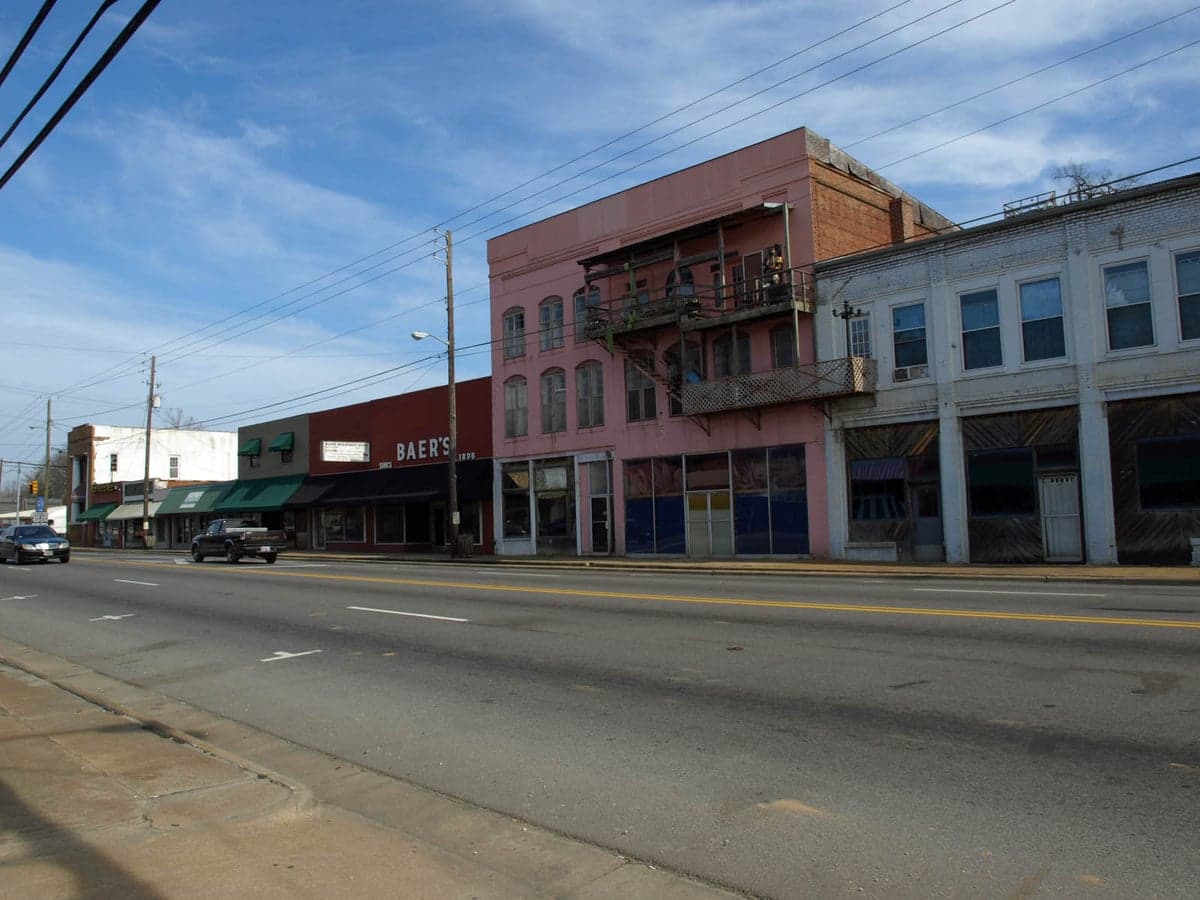
Photo: Wikipedia
Political ClimatePolitical Climate in Calera, AL
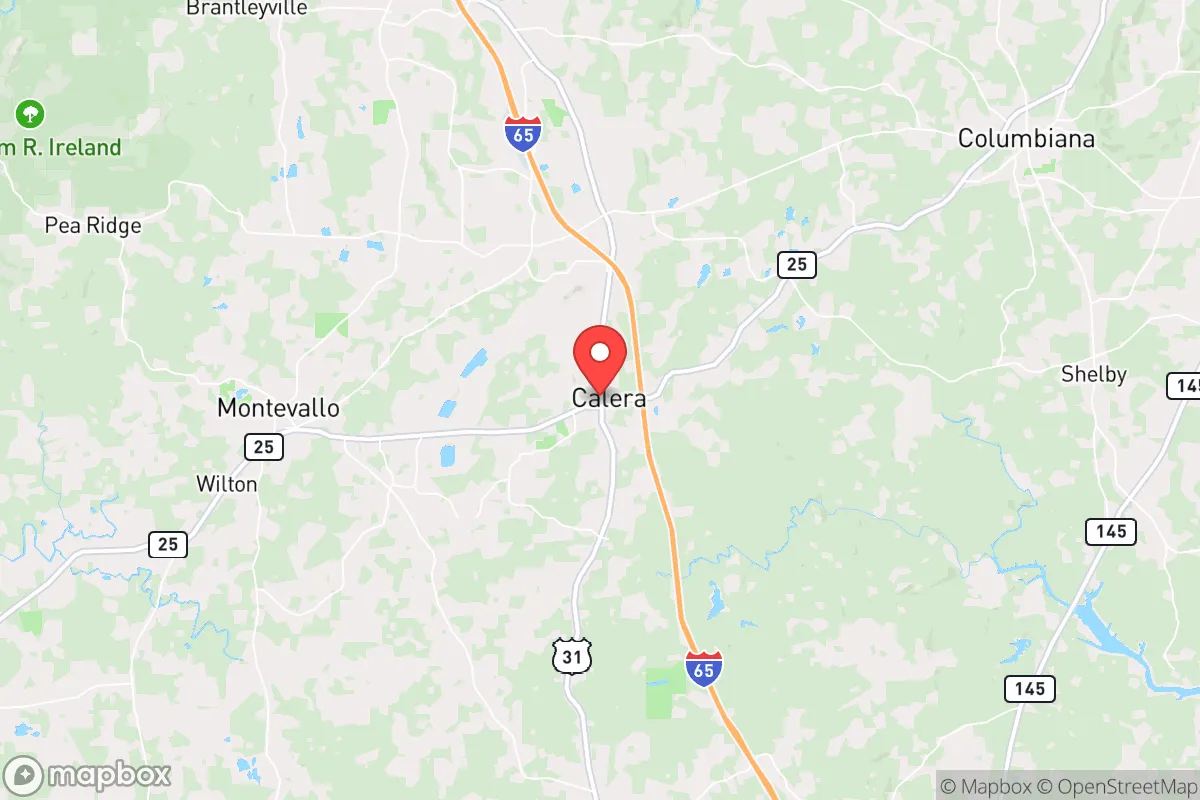
District shown is the primary district for this city’s centroid. Cities may span multiple districts.
Local Political AnalysisPolitical Analysis of Calera, AL
Calera, Alabama, sits smack in the middle of Shelby County, and politically, it’s about as solidly conservative as you’ll find in the state. The Cook PVI clocks the area at R+20, which means Republicans have a 20-point advantage over the national average in presidential elections. That’s not just a number—it’s a reflection of a community that’s held the line on traditional values for decades. You don’t see wild swings here; the voting patterns are steady, with a strong preference for limited government, lower taxes, and a hands-off approach to personal freedoms. If you’re looking for a place where the political winds don’t shift with every national trend, Calera’s your spot.
How it compares
Drive 20 minutes north to Birmingham, and you’re in a different world—Jefferson County leans blue, with a Cook PVI of D+13. That’s a 33-point swing from Calera. Even closer, Alabaster and Pelham, just up I-65, are still conservative but have seen a slow creep of progressive influence, especially in local school board races and zoning debates. Calera, though, has resisted that drift. The city council and mayor’s office have stayed reliably Republican, and you won’t find much appetite for the kind of government overreach that’s popping up in larger metros. Surrounding Shelby County as a whole voted +24 R in the 2024 presidential race, so Calera’s right in the pocket of that sentiment. The contrast with Birmingham is stark—it’s not just a political difference; it’s a cultural one. Down here, folks still believe the government should stay out of your business, whether it’s your healthcare choices, your kids’ education, or how you run your small business.
What this means for residents
For the people living here, the political climate translates into a daily life that feels free from a lot of the bureaucratic nonsense you hear about elsewhere. Property taxes are low—Shelby County’s millage rate is around 0.45%, one of the lowest in the state—and there’s no city income tax. The local government focuses on basic services: roads, public safety, and schools, without trying to micromanage how you live. You won’t see mask mandates or business shutdowns like in more progressive areas; during the pandemic, Calera’s leadership took a light-touch approach, trusting residents to make their own decisions. That’s a big deal for anyone who values personal responsibility over government directives. The downside? If you’re hoping for rapid social change or progressive policies, you’ll be disappointed. The community is stable, but that stability comes from a shared belief that the government’s role should be limited. Any shift toward progressive ideology—like diversity, equity, and inclusion mandates in schools or new zoning laws that restrict property rights—would be met with serious pushback from the majority of voters.
Culturally, Calera still feels like small-town Alabama, but with a growing edge. The population has doubled since 2010, hitting around 16,000, and that’s brought some tension. Newcomers from Birmingham or out of state sometimes bring different political expectations, but the old guard holds firm. You’ll see it in the local churches, the gun shows at the civic center, and the way the city council handles development—pro-business, pro-property rights, and wary of any federal or state overreach. The long-term outlook? As long as Shelby County keeps voting red, Calera will stay a refuge for folks who want to live their lives without the government breathing down their necks. But keep an eye on the school board races—that’s where the next fight over personal freedoms will likely play out.

State Political ClimatePolitical Climate in Alabama
State Political AnalysisPolitical Environment in the State
Alabama is a deeply conservative state, with Republicans holding every statewide elected office and supermajorities in both legislative chambers. The state has not voted for a Democratic presidential candidate since 1976, and Donald Trump carried it by over 25 points in both 2020 and 2024. Over the last 20 years, the shift has been a steady march rightward, driven by the realignment of rural white voters and the collapse of the old "Yellow Dog" Democrat tradition in the Black Belt and northern hill counties. Today, the political climate is defined by a solid Republican dominance, but with significant internal fractures between the old-guard business establishment and a more populist, liberty-minded wing.
Urban vs. rural divide
The political map of Alabama is starkly divided. The major metros—Birmingham, Montgomery, and Huntsville—are the only blue dots in a sea of red. Jefferson County (Birmingham) and Montgomery County reliably vote Democratic, driven by large African American populations and a growing professional class. Huntsville, despite its heavy defense and aerospace industry, has trended more purple in recent cycles, with Madison County flipping to Trump in 2020 after voting for Romney in 2012. The real engine of Republican power is the sprawling rural and suburban landscape: the Wiregrass in the southeast, the Tennessee Valley counties like Lauderdale and Limestone, and the booming coastal region around Baldwin County (Fairhope, Daphne, Gulf Shores). Baldwin County is now the fastest-growing county in the state and votes Republican by margins exceeding 70%. The Black Belt, stretching from Selma to Greene County, remains overwhelmingly Democratic and African American, but its population is shrinking, further diluting its electoral influence.
Policy environment
Alabama’s policy environment is among the most conservative in the nation. The state has no state-level property tax (only county and local), and the combined state and local tax burden is one of the lowest in the country. There is no state income tax on Social Security benefits, and the state is phasing out its corporate income tax. The regulatory posture is aggressively pro-business, with right-to-work laws and minimal zoning restrictions outside of major cities. Education policy is a mixed bag: the state has a robust school choice program through the Alabama Accountability Act, which provides tax credits for private school tuition, and a new Education Savings Account (ESA) program passed in 2024 that gives families roughly $7,000 per child for educational expenses. However, public school funding remains low, and teacher shortages are chronic in rural areas. Healthcare is a flashpoint: Alabama did not expand Medicaid under the Affordable Care Act, leaving roughly 300,000 low-income adults in a coverage gap. Election laws are strict—voter ID is required, absentee voting is limited, and the state has no early voting (though a 2024 law expanded in-person absentee options). The state also passed a 2023 law banning the use of private money for election administration, a direct response to 2020 controversies.
Trajectory & freedom
On the freedom front, Alabama has been moving in a decidedly liberty-expanding direction over the last five years, but with some notable caveats. The state enacted constitutional carry (permitless carry of a concealed firearm) in 2022, making it the 22nd state to do so. In 2023, the legislature passed the "Alabama Parental Rights Protection Act," which requires schools to notify parents of any changes to a student’s mental, emotional, or physical health and prohibits classroom instruction on sexual orientation or gender identity in grades K-5. The state also passed a near-total abortion ban in 2019, which took effect after Dobbs, with no exceptions for rape or incest. Medical freedom took a hit during COVID: Governor Kay Ivey imposed mask mandates and business closures, but the legislature pushed back with a 2021 law prohibiting vaccine mandates by state and local governments. Property rights are strong—Alabama is a "Dillon's Rule" state, meaning local governments have only the powers explicitly granted by the state, which limits zoning overreach. However, the state’s heavy reliance on sales tax (including on groceries) is a regressive burden that many liberty-minded residents find concerning.
Civil unrest & political movements
Alabama has seen relatively little civil unrest compared to other states, but there are active political movements on both sides. The left is most visible in Birmingham and Montgomery, where Black Lives Matter protests occurred in 2020, and where groups like the Alabama Poor People’s Campaign push for Medicaid expansion and criminal justice reform. On the right, the most organized movement is the "Alabama Freedom Caucus," a group of roughly 15 state legislators who have blocked budget deals and pushed for deeper tax cuts, school choice, and anti-ESG legislation. Immigration politics are less heated than in border states, but a 2024 law (HB 123) requires local law enforcement to cooperate with ICE and penalizes "sanctuary" policies—though no Alabama city has formally adopted one. Election integrity remains a live issue: the 2022 and 2024 cycles saw no major scandals, but the state’s Secretary of State, Wes Allen, has aggressively purged voter rolls and pushed for paper ballot audits. The most visible flashpoint for a new resident would be the ongoing debate over gambling—the state has no lottery, no casinos, and no sports betting, despite repeated legislative attempts to legalize them. This creates a thriving illegal gambling market and a constant source of political tension between the Baptist moral conservatives and the more libertine populists.
Projection
Over the next 5-10 years, Alabama is likely to become even more conservative, but with a populist flavor that may surprise some. The in-migration from blue states is real—Auburn and Madison (a Huntsville suburb) are growing fast, and many newcomers are fleeing high taxes and crime in California and Illinois. These migrants tend to be conservative-leaning but may push for more moderate policies on education and healthcare. The demographic shift is also notable: the white population is aging and shrinking, while the Hispanic population is growing rapidly, especially in the poultry-processing towns of Cullman and Russellville. This could create a more diverse electorate over time, but for now, those Hispanic communities are largely conservative and Catholic. The biggest wildcard is the state’s dependence on federal funding—Alabama receives roughly $1.60 back from the federal government for every dollar paid in taxes, so any major federal spending cuts could devastate rural hospitals and infrastructure. Expect continued fights over school choice expansion, further tax cuts (especially on groceries), and a push to legalize gambling as a revenue source. The freedom trajectory will likely continue expanding on gun rights and parental rights, but medical freedom and property rights may face new challenges from corporate interests and federal mandates.
For a new resident, the bottom line is this: Alabama offers a low-tax, low-regulation environment with strong protections for gun rights and parental authority. You will find a deeply conservative culture in most places, but the urban islands of Birmingham and Montgomery are blue and growing bluer. If you value limited government and personal liberty, the rural and suburban areas—especially Baldwin County, Madison County, and the Tennessee Valley—are where you want to be. Just be prepared for a state that is still wrestling with its own contradictions: low taxes but poor public services, strong religious conservatism but a thriving gambling underground, and a fierce independence that sometimes clashes with its heavy reliance on Washington. It’s a place where you can live largely as you see fit, but you’ll need to bring your own infrastructure in many ways.
* Values derived from national, state, county, city and local statistics and may differ in a specific area. Last updated: 2026-04-19T18:45:38.000Z
Narrative content on this page is AI-generated and may contain mistakes. Verify any details that matter before acting on them.
ReloMaps may earn a commission from affiliate links at no extra cost to you.

