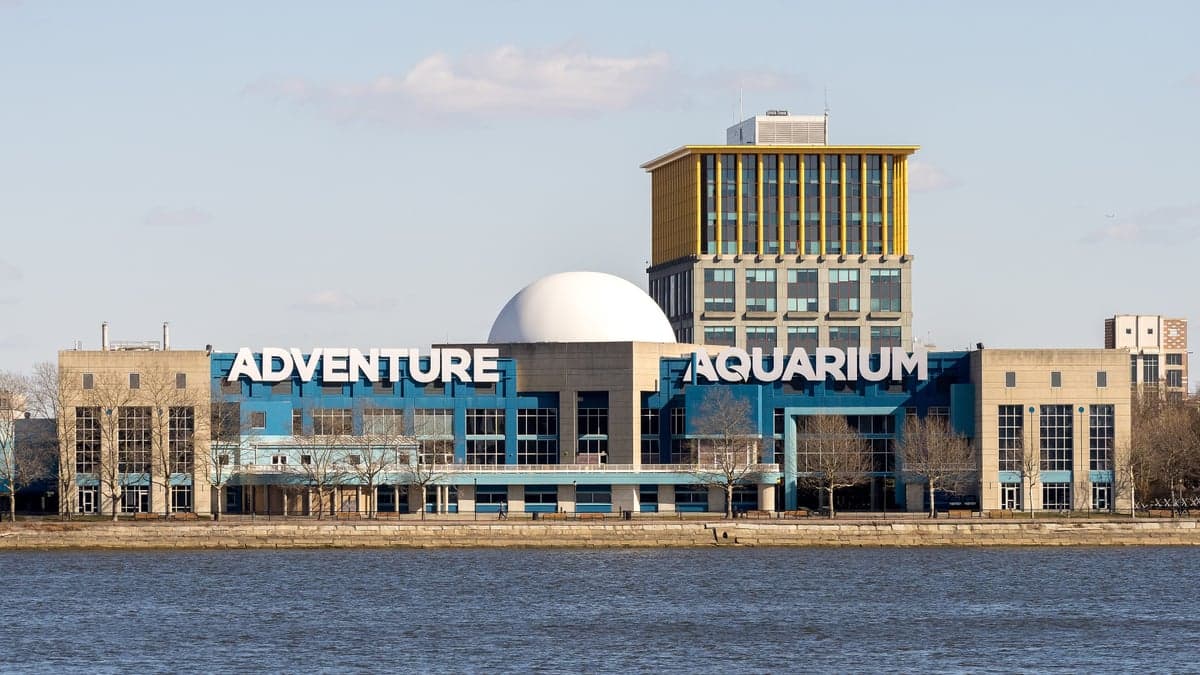
Photo: Wikipedia
Personal Sovereignty in Camden, NJ
Viable for self-reliance. Generally workable, though some barriers may limit total independence.
What does Personal Sovereignty tell us?
Personal Sovereignty measures your capacity for self-reliance and independence with minimal government friction. Higher scores mean fewer barriers between you and the way you want to live... but it assumes you have the space you need and good neighbors.
What does this tell us?
Personal Sovereignty measures your capacity for self-reliance and independence with minimal government friction. Higher scores mean fewer barriers between you and the way you want to live... but it assumes you have the space you need and good neighbors.
State Policy
Energy independence: Importer (8% of energy produced in-state)
Personal Liberty
Homesteading

Personal Liberty Analysis
Camden, New Jersey, presents a uniquely challenging environment for personal sovereignty, where state-level overreach and municipal dysfunction create a landscape that demands constant vigilance from anyone valuing autonomy. For the survivalist or prepper, this city is less a sanctuary and more a stress test—a place where your ability to live free is constantly checked by aggressive taxation, restrictive gun laws, and a local government that has historically prioritized control over liberty. While the cost of living may appear low on paper, the hidden costs in lost freedoms and bureaucratic friction are substantial, making Camden a location best approached with eyes wide open and a clear exit strategy.
Tax burden and regulatory posture: the cost of living under a heavy hand
New Jersey’s reputation as one of the most heavily taxed states in the nation is fully earned, and Camden sits at the epicenter of that burden. Property taxes in Camden County are among the highest in the country, often exceeding 3% of assessed home value annually, which can cripple a fixed-income prepper or a family trying to build self-sufficient wealth. The state’s income tax is progressive and steep, topping out at 10.75% for high earners, and sales tax adds another 6.625% to nearly every purchase. For someone seeking to minimize government dependency and maximize personal savings, this is a hostile fiscal environment. Regulatory posture is equally aggressive: New Jersey’s building codes, environmental regulations, and business licensing requirements are notoriously complex and expensive, making it difficult to legally modify a property for off-grid systems like rainwater collection or solar panels without navigating a maze of permits. The state’s strong-armed approach to land use and zoning means that even minor improvements can trigger costly compliance battles, effectively punishing self-reliance before it begins.
Self-defense and gun law specifics: navigating a restrictive regime
For the prepper or conservative concerned with self-defense, Camden is a legal minefield. New Jersey’s gun laws are among the strictest in the nation, requiring a Firearms Purchaser Identification Card (FPID) for long guns and a separate permit for each handgun purchase, with a 30-day waiting period between handgun transactions. Concealed carry was effectively impossible for most residents until the 2022 Supreme Court decision in NYSRPA v. Bruen, which forced the state to adopt a “shall issue” standard—but even then, New Jersey’s application process remains burdensome, requiring references, a mental health check, and a demonstrated “justifiable need” that is still interpreted narrowly by local authorities. Magazine capacity is capped at 10 rounds, and “assault weapons” bans cover many common rifles and shotguns, limiting the tools available for home defense or long-term survival scenarios. The city itself has a high violent crime rate, which ironically makes the need for self-defense more acute while the legal framework makes it harder to exercise that right. For anyone serious about personal sovereignty, this is a dealbreaker: the state has effectively outsourced your safety to a police force that is often overwhelmed and underfunded.
Self-reliance and homesteading viability: lot sizes, zoning, and off-grid feasibility
Camden’s dense urban layout and restrictive zoning make traditional homesteading nearly impossible. The typical residential lot is small—often less than 2,500 square feet—with little room for gardens, livestock, or water storage. Zoning laws are hostile to agricultural uses: keeping chickens, goats, or bees requires special permits that are rarely granted, and even a backyard vegetable garden can run afoul of property maintenance codes if it’s not kept in a “neat” appearance. Off-grid feasibility is even more limited. New Jersey’s building codes require grid-tied electrical systems for any habitable structure, making solar panels with battery backup a legal gray area unless you’re willing to pay for a licensed electrician and a permit. Rainwater collection is technically allowed but heavily regulated, with restrictions on storage volume and use. For the prepper seeking true self-reliance, Camden offers no viable path—you’re tied to municipal water, power, and waste systems, which are vulnerable to disruption. The surrounding suburbs and rural areas of South Jersey offer more room to maneuver, but within Camden city limits, you’re essentially a tenant of the state.
Personal liberties: parental rights, medical autonomy, speech, and property
On paper, New Jersey protects certain personal liberties, but in practice, the state’s progressive governance often overrides individual choice. Parental rights are under constant pressure: the state has mandatory vaccination laws for school attendance, and recent legislation has expanded the ability of minors to consent to certain medical treatments without parental knowledge, including mental health care and reproductive services. Medical autonomy is similarly constrained—New Jersey’s health department has broad authority to mandate treatments during public health emergencies, and the state’s COVID-era policies demonstrated a willingness to enforce lockdowns and vaccine mandates with little regard for individual exemptions. Free speech is protected by the First Amendment, but local ordinances in Camden have been used to restrict public assembly and protest, particularly around government buildings. Property rights are the weakest link: New Jersey’s eminent domain laws are expansive, and Camden has a history of using them to seize private land for redevelopment projects, often with minimal compensation. For the conservative seeking to raise a family with traditional values, the state’s education system—which includes mandatory LGBTQ-inclusive curriculum and sex education—may feel like an intrusion into parental authority. Overall, personal liberties in Camden are conditional, subject to the whims of a state government that views individual sovereignty as secondary to collective goals.
In the broader context of the United States, Camden ranks near the bottom for personal sovereignty. Compared to states like Texas, Florida, or New Hampshire, where tax burdens are lower, gun laws are more permissive, and zoning is more flexible, Camden represents a high-control environment that is fundamentally at odds with a survivalist or prepper mindset. The city’s low property prices might tempt those on a tight budget, but the hidden costs—in lost freedoms, legal friction, and regulatory risk—far outweigh any financial savings. For the strategic relocation researcher, Camden is a cautionary tale: a place where the state’s reach extends into every corner of daily life, leaving little room for the self-reliant individual to operate. If your priority is autonomy, look elsewhere—this is not a place to build a future, but a place to escape from.

* Values derived from national, state, county, city and local statistics and may differ in a specific area. Last updated: 2026-04-29T21:12:32.000Z
Narrative content on this page is AI-generated and may contain mistakes. Verify any details that matter before acting on them.
ReloMaps may earn a commission from affiliate links at no extra cost to you.

