
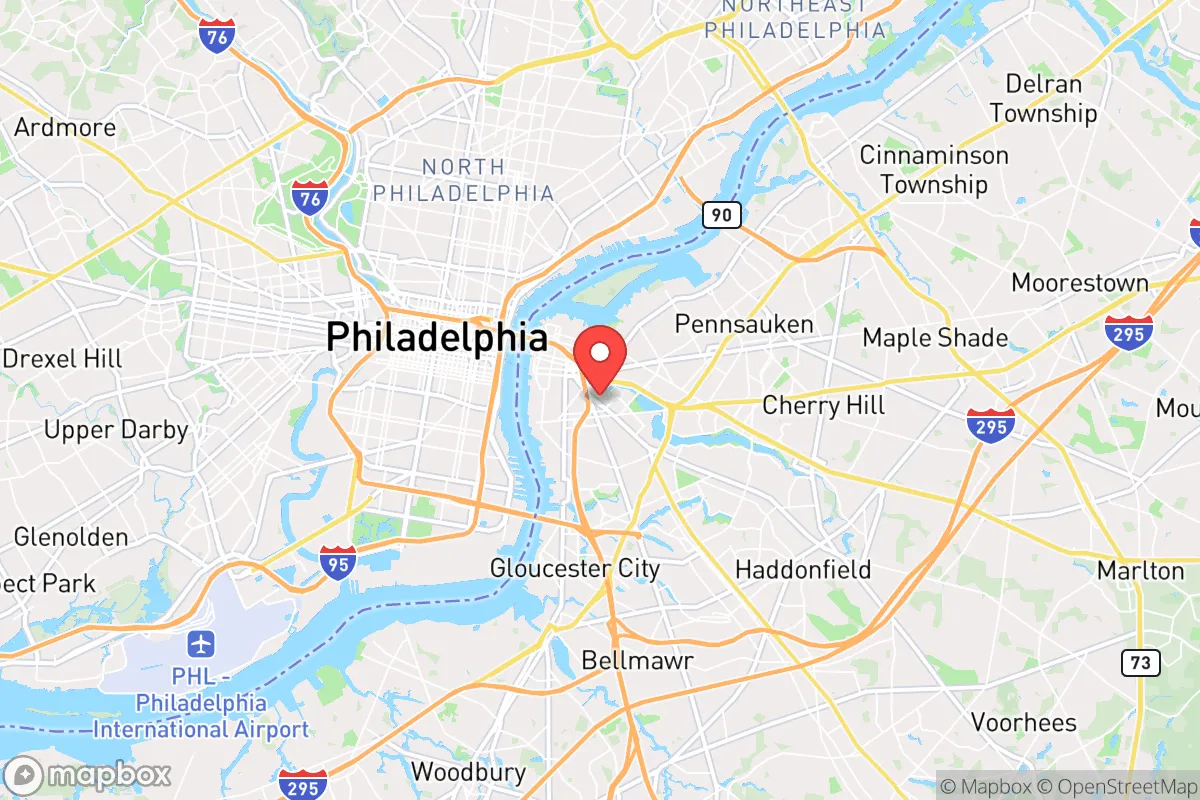
Photo: Wikipedia
Quality of Life in Camden, NJ
Above-average quality of iife. The area offers a reasonable cost of living, decent mobility, and a mix of neighborhood amenities.
What does Quality of Life tell us?
Quality of Life blends cost of living, nearby amenities, socioeconomic signals, and neighborhood character. City-level scores represent the whole municipality; individual neighborhoods can differ.
What does this tell us?
Quality of Life blends cost of living, nearby amenities, socioeconomic signals, and neighborhood character. City-level scores represent the whole municipality; individual neighborhoods can differ.
Cost of Living
26% below national average
The Real Cost of Living in Camden, NJ for 2026
| Tier | Individual | Family (4) |
|---|---|---|
| Survival | $18k | $35k |
| Comfortable | $29k | $42k |
| Luxury | $73k+ | $113k+ |
| Elite (Top 5%) | $93k+ | $144k+ |
96%
The Area Signal
A metric tracking the socioeconomic signals of the area.
Hobbies
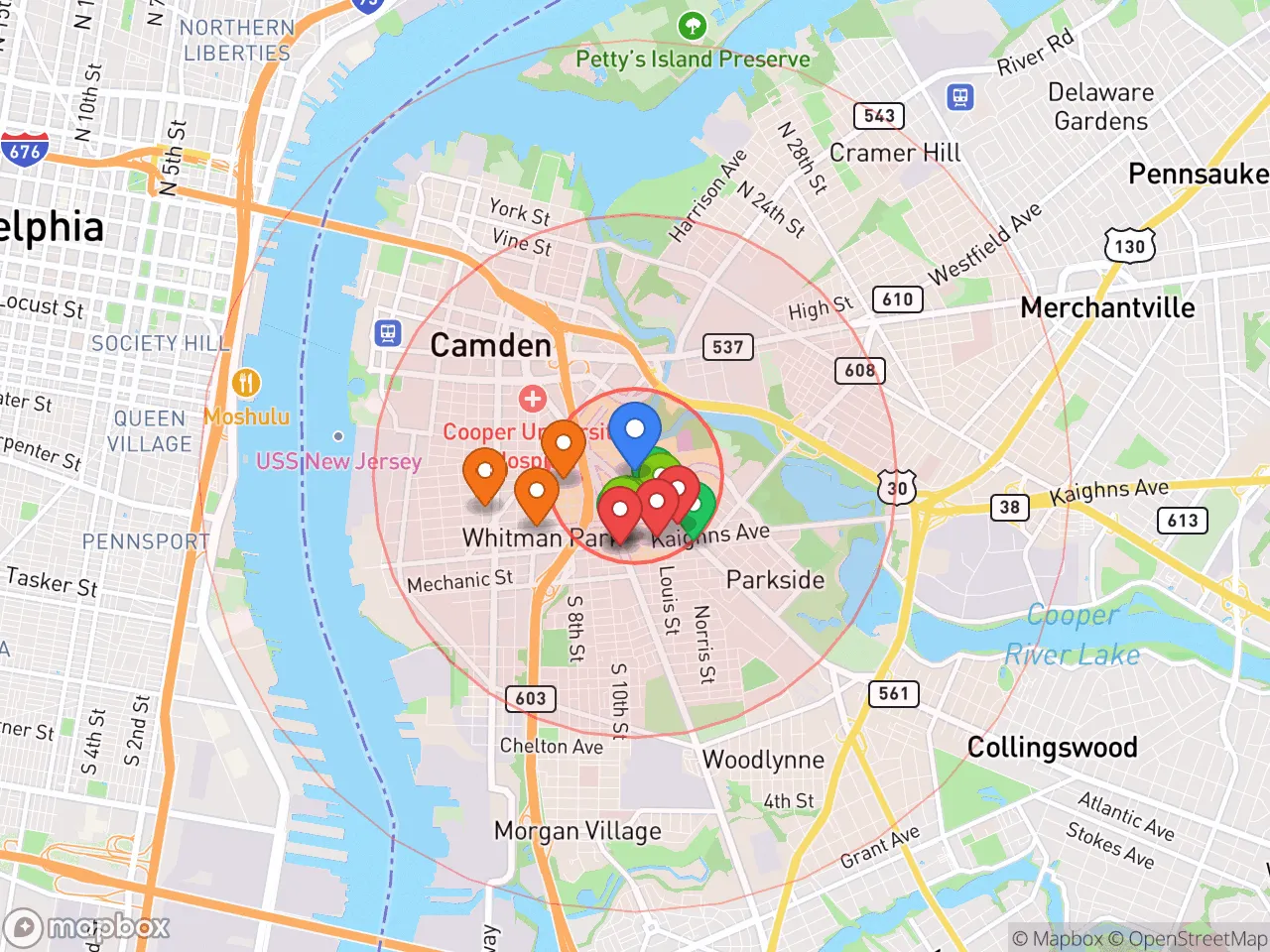
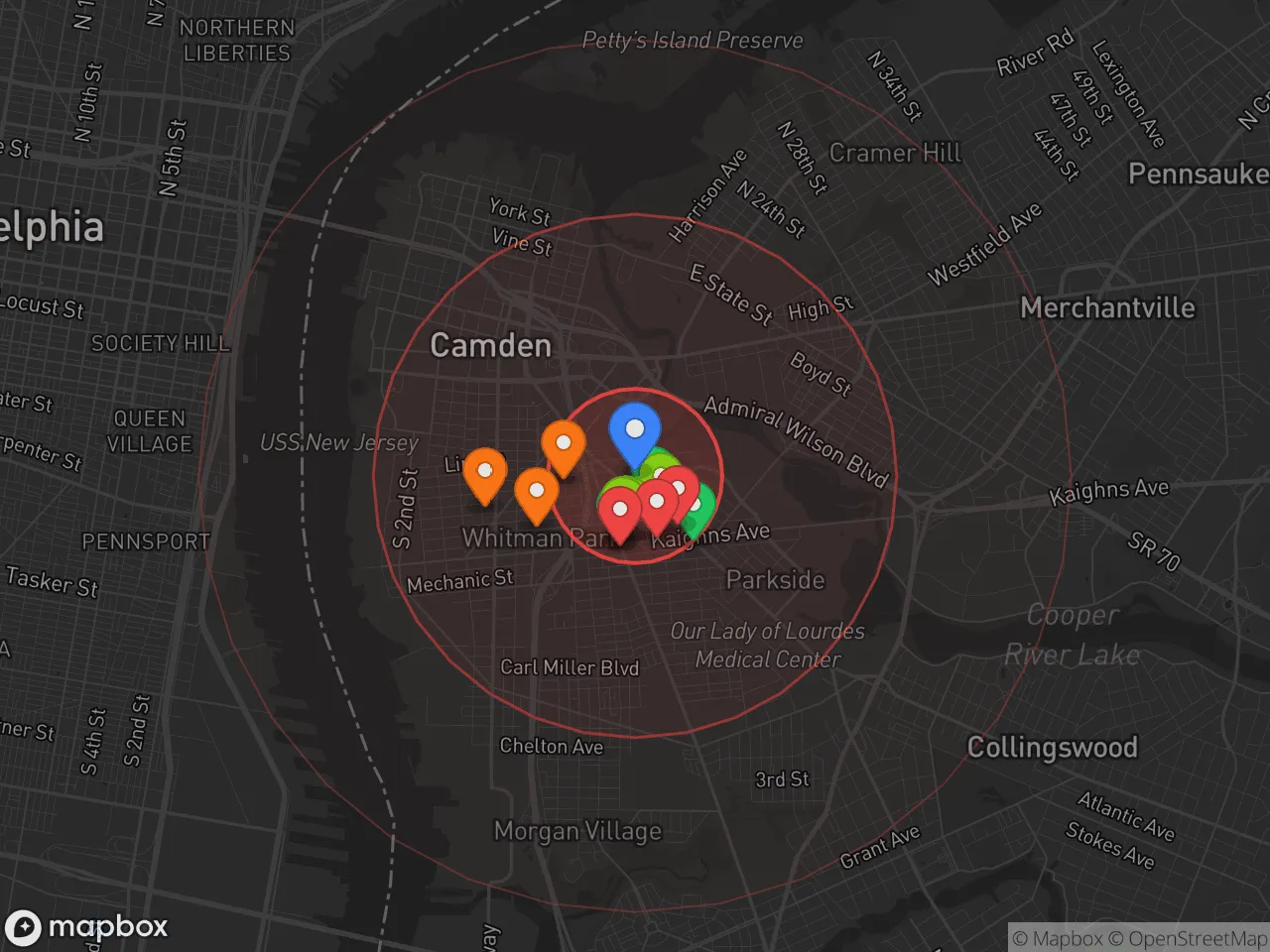
Explore the areaGroceries
6 within 10 miles
Gas
20 within 10 miles
Hospital
20 within 20 miles
Airport
PHL — Philadelphia International
Post Office
USPS — Camden, NJ
Critical Amenities
Quality-of-Life Analysis
Camden, New Jersey, presents a distinct quality-of-life profile defined by deep affordability and urban challenges, standing in stark contrast to its wealthier Philadelphia suburbs. With a cost of living index of 74—26 percent below the national average—the city attracts a population that is predominantly lower-income and rent-burdened, alongside a small but growing cohort of artists and urban pioneers drawn to its industrial waterfront and proximity to Center City Philadelphia. The median household income hovers around $27,000, reflecting a community where economic opportunity remains the central quality-of-life concern.
Cost of living, housing affordability, and how Camden compares to nearby areas
Camden is one of the most affordable housing markets in the Delaware Valley, with a median home value of just $100,400—roughly one-fifth the median in suburban Cherry Hill ($500,000+) and less than half the Philadelphia citywide median. Median rent sits at $1,157, which is notably lower than the Philadelphia metro average of $1,500, though it still consumes over 50 percent of the typical Camden household’s income. The average commute of 25.1 minutes is shorter than the regional average of 33 minutes, thanks to the PATCO Speedline providing a direct 10-minute ride to Center City Philadelphia. However, property taxes in Camden County are among New Jersey’s highest (around 3.5 percent of assessed value), which can offset some of the home-price advantage for buyers. Compared to nearby Collingswood or Haddonfield, Camden offers dramatically lower entry costs but far fewer retail amenities and higher crime rates, making it a trade-off between affordability and perceived safety.
Daily life, schools, and community amenities in Camden
Daily life in Camden is shaped by its status as a post-industrial city undergoing uneven revitalization. The Camden Waterfront—home to the Adventure Aquarium, BB&T Pavilion concert venue, and the Battleship New Jersey—provides major regional attractions, but these draw visitors rather than serving as neighborhood anchors. The Camden City School District has a graduation rate of approximately 70 percent, below the New Jersey average of 91 percent, though charter schools like LEAP Academy and Uncommon Schools have shown stronger outcomes. Grocery access is limited, with only a few full-service supermarkets (e.g., ShopRite on Admiral Wilson Boulevard) serving a city of 70,000, creating a food desert in many neighborhoods. Public safety remains the dominant daily concern: Camden’s violent crime rate, while down 50 percent from its 2012 peak, still ranks among the highest in the nation. The city’s 24/7 police foot-patrol model and county-run force have been credited with the decline, but residents still report high rates of property crime and open-air drug activity.
Who thrives in Camden? The city best suits individuals and families who prioritize extreme affordability and urban transit access over suburban amenities and low crime. It works well for commuters working in Philadelphia who want to avoid Pennsylvania city wage taxes (Camden residents pay no Philadelphia wage tax), for artists and makers seeking cheap studio space in the Cooper Street Gateway area, and for families who can navigate the school-choice landscape to access charter or magnet programs. It is a poor fit for those seeking top-tier public schools, low-crime neighborhoods, or a robust retail and dining scene within walking distance. Camden remains a city of stark contrasts—where a $100,000 home sits blocks from a world-class aquarium, and where revitalization projects coexist with entrenched poverty.

Crime in Camden, NJ
Generally safer than 73% of comparable U.S. locations.
Violent CrimeViolent Crime Analysis
Property CrimeProperty Crime Analysis
Crime Analysis
Camden, New Jersey, presents a complex safety picture that has improved markedly from its historically high crime rates, yet remains a high-risk urban environment. The city’s reported violent crime rate of 198.1 per 100,000 residents and property crime rate of 379.6 per 100,000 are significantly lower than in past decades, but these figures mask deep-seated challenges tied to the region’s progressive criminal justice policies. For prospective residents, understanding the interplay between these statistics and the local legal climate is essential for an accurate assessment of personal safety.
Crime in context
Camden’s violent crime rate of 198.1 per 100,000 is roughly half the national average for cities of its size, a dramatic drop from the 2012 peak when the city was among the most dangerous in America. Property crime at 379.6 per 100,000 is also below the national median. However, these numbers must be weighed against the broader Camden County and New Jersey averages, where the state’s overall violent crime rate is about 200 per 100,000. The improvement is largely attributed to a county-wide police merger and community policing, but the city remains an outlier in a state where progressive prosecutors and judges in nearby urban centers like Philadelphia and Trenton have been criticized for lenient sentencing and bail reform. New Jersey’s 2017 bail reform law, which eliminated cash bail for most non-violent offenses, has been linked to higher recidivism rates and a perception that offenders face few consequences, directly impacting Camden’s public safety.
What residents experience
Daily life in Camden involves navigating a city where property crime—including theft, burglary, and motor vehicle theft—is the most common threat, concentrated in commercial corridors and near transit hubs. Violent incidents, though less frequent, are often drug-related or tied to gang activity in specific neighborhoods. Residents report that police response times have improved since the county takeover, but trust in the justice system is eroded by the knowledge that many arrested individuals are quickly released under progressive policies. The Camden County Prosecutor’s Office has faced scrutiny for declining to prosecute certain low-level offenses, a practice that critics argue emboldens criminals and undermines deterrence. For families, this means constant vigilance: locking cars, avoiding certain blocks after dark, and relying on neighborhood watch groups rather than systemic protection.
Neighborhood-level variation is stark. Waterfront South and parts of East Camden experience the highest violent crime rates, while areas near Rutgers University–Camden and the Cooper Street corridor are relatively safer due to heavy police presence and institutional investment. The Cramer Hill and Fairview neighborhoods see moderate property crime but lower violence. Prospective residents should consult block-level crime maps and visit at different times of day, as safety can change dramatically within a few blocks. The city’s ongoing revitalization, including new housing and the Camden Waterfront development, has not yet fully reversed the legacy of disinvestment, and the progressive legal environment remains a significant concern for those prioritizing personal security.
* Values derived from national, state, county, city and local statistics and may differ in a specific area. Last updated: 2026-04-29T21:12:32.000Z
Narrative content on this page is AI-generated and may contain mistakes. Verify any details that matter before acting on them.
ReloMaps may earn a commission from affiliate links at no extra cost to you.

