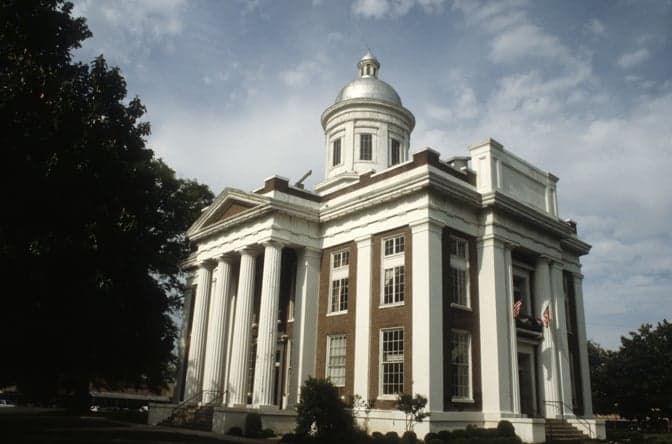
Photo: Wikipedia
Political ClimatePolitical Climate in Canton, MS
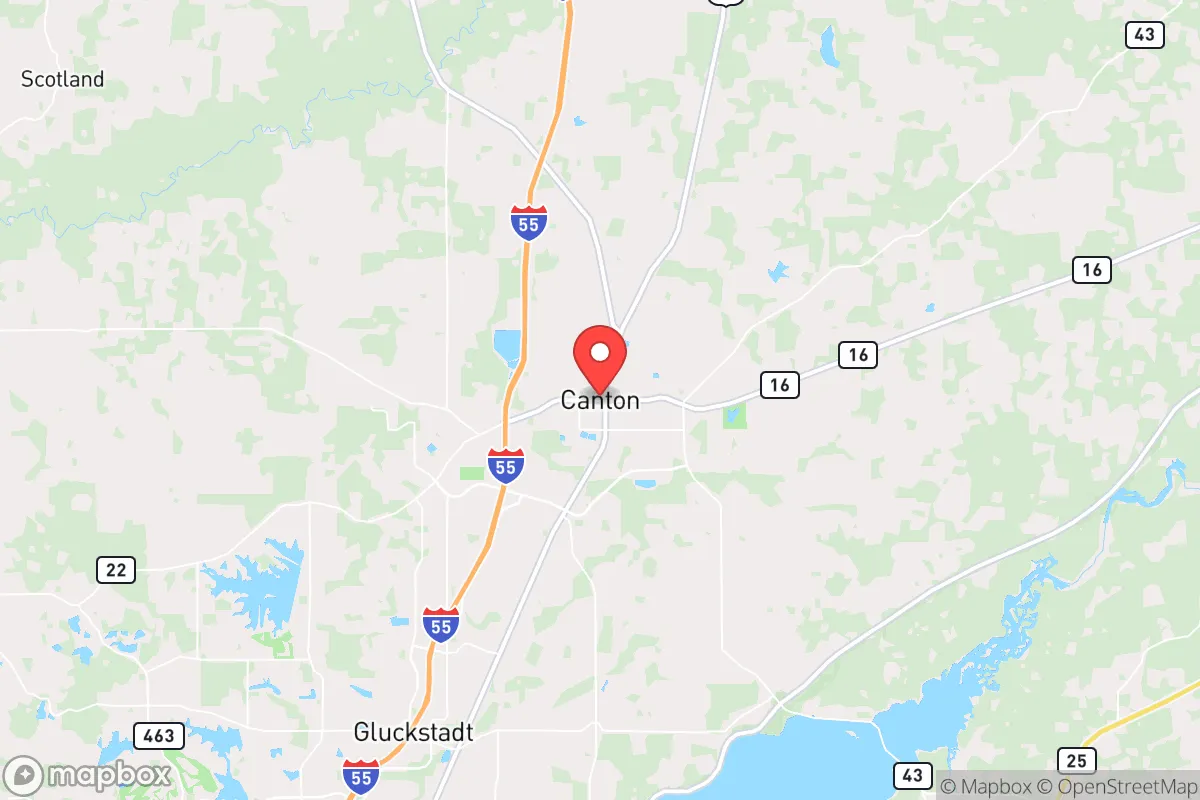
District shown is the primary district for this city’s centroid. Cities may span multiple districts.
Local Political AnalysisPolitical Analysis of Canton, MS
Canton, Mississippi, sits in Madison County, and if you’ve been around here long enough, you know the political landscape has shifted under our feet. The Cook PVI rating of D+11 tells you the official story—this area leans heavily Democratic on paper—but the real picture is more complicated, especially if you’ve watched the last few election cycles. Canton itself, as the county seat, has long been a Democratic stronghold, but the surrounding rural parts of Madison County and towns like Ridgeland and Madison to the south are reliably conservative. That split means you get a real tug-of-war over local policy, and lately, the progressive influence from Jackson, just 15 miles west, has been creeping in. It’s not the same place it was twenty years ago, and for those of us who value personal freedoms and limited government, that’s a growing concern.
How it compares
Drive ten minutes south to Madison, and you’re in a completely different political world—solidly Republican, with lower taxes and a school system that draws families from all over. Ridgeland is similar, with a pro-business vibe and a city council that pushes back on state-level mandates. Canton, by contrast, has seen its local government align more with the progressive policies coming out of Jackson: higher property tax proposals, more zoning restrictions, and a general willingness to accept federal funding with strings attached. The contrast is stark. While Madison County as a whole voted for Trump in 2020 by a comfortable margin, Canton’s precincts went heavily for Biden. That divide means residents here deal with a city council that sometimes feels out of step with the values of folks who just want to be left alone to run their businesses and raise their kids without government getting in the way.
What this means for residents
For someone living in Canton, the practical effect of this political climate shows up in your wallet and your daily life. You’ll see more local ordinances aimed at “equity” and “inclusion” that sound good on paper but often translate to new fees, permitting delays, or mandates on small businesses. The school board has faced pressure to adopt curriculum changes that prioritize social activism over core academics, and there’s been a steady push for higher minimum wages locally, which can squeeze the small shops and restaurants that are the backbone of this community. If you value the Second Amendment or want to keep your property taxes low, you’ll find yourself watching the city council meetings more closely than you’d like. The trajectory feels like a slow drift toward the kind of overreach you see in larger cities, and it’s happening one ordinance at a time.
One thing that still sets Canton apart is its strong sense of local identity—the annual Canton Flea Market, the historic square, the family-owned diners that have been here for decades. But the political winds are shifting, and the next few years will tell us whether this town holds onto its independent, live-and-let-live character or gets pulled further into the progressive orbit of Jackson. For now, if you’re thinking of moving here, just know that the local politics are a mixed bag: you’ll find plenty of neighbors who share your values, but you’ll also need to stay engaged to keep the government from creeping too far into your life.

State Political ClimatePolitical Climate in Mississippi
State Political AnalysisPolitical Environment in the State
Mississippi is one of the most reliably conservative states in the nation, with a Republican lean that has only deepened over the past two decades. The state has not voted for a Democratic presidential candidate since 1976, and in 2024, Donald Trump carried it by roughly 17 points. The dominant coalition is a mix of rural white evangelicals, suburban families in the Jackson metro exurbs, and Gulf Coast retirees, all of whom have shifted rightward since the early 2000s. The Democratic stronghold is almost entirely confined to the majority-Black Mississippi Delta and a few urban pockets like Jackson and the college town of Oxford, but those areas have lost population and political clout relative to the growing, red-leaning suburbs and coastal counties.
Urban vs. rural divide
The political map of Mississippi is starkly divided between a handful of blue urban islands and a vast red rural and suburban sea. Jackson, the state capital and largest city, is overwhelmingly Democratic and majority-Black, but its population has shrunk by roughly 20% since 2000, and its political influence has waned as the surrounding Madison County suburbs—places like Ridgeland and Madison—have become some of the most reliably Republican areas in the state. On the Gulf Coast, Biloxi and Gulfport lean Republican but are more moderate, while Ocean Springs has become a conservative stronghold. The Mississippi Delta counties—like Bolivar and Sunflower—vote heavily Democratic, but they are among the poorest and fastest-shrinking regions in the country. Meanwhile, the northeastern corner around Tupelo and Starkville (home to Mississippi State University) has trended redder as younger, conservative-leaning families move in for jobs in manufacturing and healthcare. The Hattiesburg area, anchored by the University of Southern Mississippi, is a purple-ish pocket that has shifted right in recent cycles, driven by growth in the defense and logistics sectors.
Policy environment
Mississippi’s policy environment is among the most conservative in the country, with a strong emphasis on limited government and traditional values. The state has no state income tax on wages—a flat 4% rate was phased down from 5% in 2022, and further cuts are likely—and property taxes are among the lowest in the nation, with no state-level property tax at all. The regulatory posture is business-friendly, with a right-to-work law and minimal zoning restrictions outside of a few municipalities. On education, Mississippi has expanded school choice through the Mississippi Education Scholarship Account (ESA) program, which allows parents to use state funds for private school tuition, tutoring, or homeschooling expenses. The state also passed a parental rights bill in 2023 that requires schools to notify parents before any medical or mental health services are provided to minors. Healthcare policy is limited: Mississippi did not expand Medicaid under the Affordable Care Act, and the state has some of the strictest abortion laws in the nation, with a near-total ban in effect since the Dobbs decision. Election laws are secure—voter ID is required, and the state has no no-excuse absentee voting or same-day registration. For a conservative family, this is a state where government stays out of your wallet, your child’s education, and your personal decisions, for better or worse.
Trajectory & freedom
Mississippi has been moving in a decidedly more free direction over the past five years, especially on issues of personal liberty and economic freedom. In 2023, the legislature passed a constitutional carry law, allowing any adult who can legally possess a firearm to carry it openly or concealed without a permit—a major expansion of Second Amendment rights. The same year, the state enacted a medical freedom bill that prohibits employers and government entities from mandating COVID-19 vaccines as a condition of employment or service. On property rights, Mississippi has a strong Stand Your Ground law and has resisted any form of rent control or land-use overreach from the state level. However, there are areas of concern: the state’s eminent domain powers have been used aggressively for economic development projects, particularly along the Gulf Coast and in the Golden Triangle region (Columbus, Starkville, West Point), where local governments have seized private land for industrial parks. Additionally, the state’s alcoholic beverage control (ABC) laws remain restrictive—you can’t buy liquor on Sundays in most counties, and some dry counties still exist, though they are fading. Overall, the trend is toward more personal freedom, but the pace is slower than in states like Texas or Florida.
Civil unrest & political movements
Mississippi has seen relatively little civil unrest compared to other states, but there are notable flashpoints. The Jackson water crisis in 2022-2023, where the capital city’s water system failed for months, sparked protests and political battles over state vs. local control. The state legislature ultimately passed a law creating a new regional water authority that effectively stripped Jackson’s city government of control over its own water system—a move that was praised by conservatives as necessary but criticized by progressives as a power grab. On the right, the Mississippi Freedom Caucus has become a vocal force in the legislature, pushing for further tax cuts, school choice expansion, and restrictions on transgender athletes and medical procedures for minors. Immigration politics are less heated than in border states, but the legislature passed a law in 2024 requiring all state and local law enforcement to cooperate with federal immigration authorities, with no sanctuary city policies allowed. Election integrity has been a minor issue—the state’s voter ID law has been in place since 2014, and there have been no major controversies, though some rural counties have faced scrutiny over polling place closures. A new resident would notice that political activism is mostly low-key, with the exception of the occasional rally at the state capitol in Jackson or a school board meeting in a growing suburb like Olive Branch or Southaven in DeSoto County.
Projection
Over the next 5-10 years, Mississippi is likely to become even more conservative, driven by two key trends: population loss in the Democratic-leaning Delta and growth in the Republican-leaning suburbs and Gulf Coast. The state’s total population has been flat to slightly declining since 2020, but the composition is shifting. DeSoto County, just south of Memphis, is the fastest-growing county in the state and is overwhelmingly Republican. The Gulf Coast counties of Harrison and Jackson are also growing, attracting retirees and remote workers from higher-tax states. Meanwhile, the Delta continues to hemorrhage residents, and Jackson’s population decline shows no signs of stopping. This demographic shift will likely lead to further Republican supermajorities in the legislature, more tax cuts, and continued expansion of school choice and gun rights. The wild card is the state’s Medicaid expansion debate—if the state eventually expands coverage (which some business groups are pushing for), it could bring in federal dollars and shift the healthcare landscape, but it would also require a political compromise that many conservatives oppose. For a new resident, expect a state that is stable, predictable, and increasingly aligned with traditional conservative values, but with a slower pace of change than you’d find in a high-growth Sun Belt state.
For a conservative individual or family considering a move, Mississippi offers a low-tax, low-regulation environment with strong protections for gun rights, parental authority, and religious liberty. The trade-offs are a slower economy, limited healthcare access in rural areas, and a public school system that, while improving, still lags behind national averages. If you value personal freedom and a community where your neighbors share your values, Mississippi is a solid bet—just be prepared for the humidity and the fact that you’ll have to drive to Memphis or New Orleans for a major airport or a truly diverse restaurant scene.
* Values derived from national, state, county, city and local statistics and may differ in a specific area. Last updated: 2026-04-19T14:33:11.000Z
Narrative content on this page is AI-generated and may contain mistakes. Verify any details that matter before acting on them.
ReloMaps may earn a commission from affiliate links at no extra cost to you.

