Photo: Wikipedia
Political ClimatePolitical Climate in Carlsbad, NM
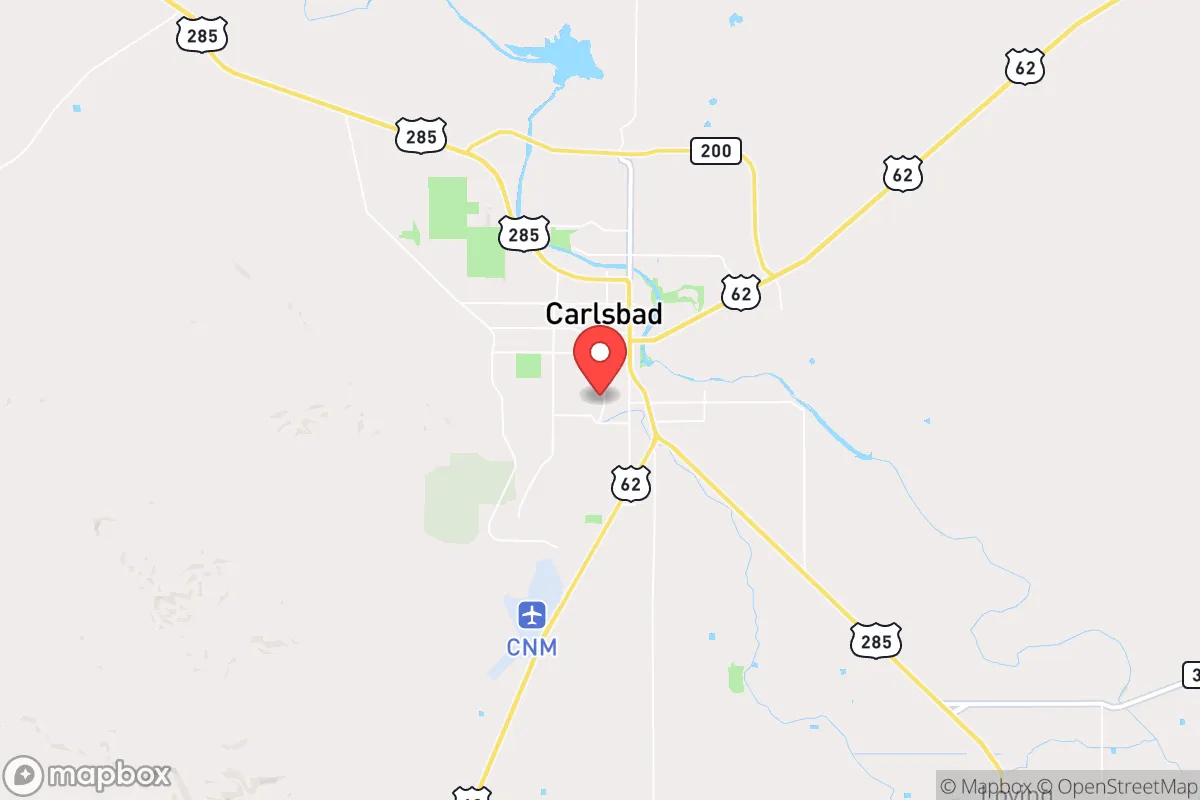
District shown is the primary district for this city’s centroid. Cities may span multiple districts.
Local Political AnalysisPolitical Analysis of Carlsbad, NM
Carlsbad has long been a solidly conservative community, and while the Cook PVI rating of EVEN might suggest a toss-up, that label doesn't capture the local reality. The truth is, this area has historically leaned Republican, and the "EVEN" rating is more a reflection of the national political climate than of Carlsbad itself. You'll find a deep-rooted respect for personal liberty, limited government, and traditional values here, though there are some subtle shifts happening that long-time residents are keeping a close eye on.
How it compares
When you look at the surrounding areas, the contrast is pretty stark. Drive an hour south to Hobbs, and you'll find a similar conservative vibe, but with a stronger oil-and-gas influence that keeps things even more libertarian-leaning. Head west to Alamogordo, and you'll see a more mixed bag, with a military base presence that brings in folks from all over the country, diluting the local culture a bit. The real eye-opener is when you compare Carlsbad to places like Santa Fe or Albuquerque. Those cities have embraced progressive policies—higher taxes, more regulations, and a general attitude that the government knows best. Carlsbad, by contrast, has largely resisted that trend. We value our Second Amendment rights, we don't want overreaching zoning laws telling us what we can do with our property, and we prefer local control over our schools and businesses. The "EVEN" PVI might make it look like we're on a knife's edge, but the local elections and community sentiment still lean heavily toward conservative candidates and ideas.
What this means for residents
For the people who live here, this political climate means a lot of freedom in day-to-day life. You won't find the kind of government overreach that's become common in blue states—no heavy-handed mandates on how you run your small business, no restrictive gun laws, and no nonsense about what you can or can't say. Property taxes are reasonable, and the local government generally stays out of your way. That said, there's a growing concern among folks I've talked to that the national "EVEN" rating could attract outside money and influence. We've seen it happen in other small towns: progressive groups pour cash into local races, trying to flip the school board or city council, and suddenly you've got critical race theory in the classroom or zoning changes that hurt property rights. So far, Carlsbad has held the line, but it's something to watch. The community is tight-knit, and most people know their neighbors, which makes it harder for outside agitators to get a foothold.
Cultural and policy distinctions
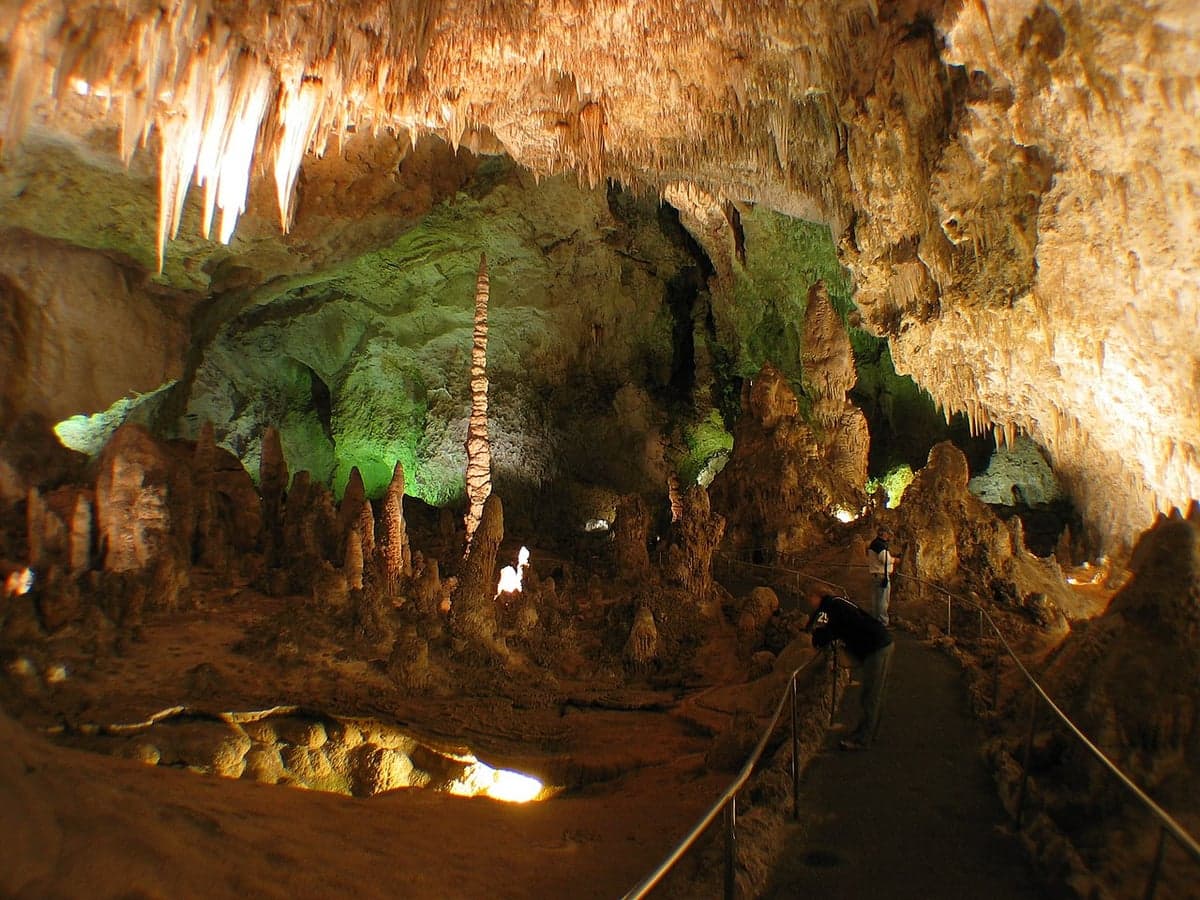
One thing that sets Carlsbad apart is the strong sense of self-reliance. This isn't a place where people look to the government for handouts or solutions. The local economy is driven by potash mining, oil and gas, and tourism from the Caverns, and those industries attract folks who value hard work and personal responsibility. You'll see that reflected in local policies—low business taxes, minimal red tape for new construction, and a general attitude of "live and let live" as long as you're not hurting anyone. There's also a strong religious undercurrent here, with many churches actively involved in community life, which reinforces traditional values. The biggest worry for long-time residents is that as Carlsbad grows—and it is growing, thanks to the energy sector—we might import the same problems that have plagued other parts of New Mexico. For now, though, it's still a place where you can raise a family without worrying about the government meddling in your affairs, and that's something worth holding onto.

State Political ClimatePolitical Climate in New Mexico
State Political AnalysisPolitical Environment in the State
New Mexico has been a reliably blue state in presidential elections for two decades, voting Democratic by margins of 10 to 11 points in 2020 and 2024, but the picture is far more complicated than a simple partisan label. The state’s political engine is driven by a coalition of urban progressives in Albuquerque and Santa Fe, combined with a large Hispanic and Native American voting bloc that has historically leaned Democratic but is showing cracks. Over the last 10-20 years, the state has shifted leftward on social and environmental policy, but a growing conservative backlash in the eastern and southern plains, plus a wave of new residents from Texas and Colorado, is beginning to reshape the map. If you’re a conservative looking at New Mexico, you need to understand that the state is a tale of two very different worlds, and your experience will depend heavily on which county you choose to call home.
Urban vs. rural divide
The political map of New Mexico is a textbook case of the urban-rural chasm. Bernalillo County (Albuquerque) alone accounts for roughly a third of the state’s population and delivers a massive Democratic margin—Biden won it by 18 points in 2020. Santa Fe County is even bluer, with a 40-point Democratic lean, fueled by a dense concentration of government workers, artists, and out-of-state transplants. On the flip side, the eastern plains—Lea County (Hobbs), Roosevelt County (Portales), and Curry County (Clovis)—are deep red, voting Republican by 30 to 40 points. These are oil, gas, and agriculture communities where conservative values are the norm. The real battleground is in the southern tier: Doña Ana County (Las Cruces) is a purple bellwether that went for Biden by just 6 points in 2024, while Otero County (Alamogordo) and Chaves County (Roswell) are reliably red. The rural-urban split is so stark that a conservative moving to Hobbs will feel like they’re in a different country from someone in Santa Fe.
Policy environment
New Mexico’s policy environment is a mixed bag that leans progressive at the state level, but with some surprising pockets of restraint. The state has a progressive income tax with rates from 1.7% to 5.9%, and a gross receipts tax (GRT) that can hit 8-9% in some cities—a hidden burden on businesses and consumers. Property taxes are relatively low, capped at 3% annual increases, which is a plus for homeowners. On education, the state has poured money into early childhood programs and universal free school meals, but test scores remain near the bottom nationally, and school choice is limited compared to Texas or Arizona. Healthcare is dominated by the state’s Medicaid expansion, covering nearly half the population, which keeps costs high for private insurers. Election laws are moderately restrictive: no voter ID requirement beyond a signature match, same-day registration is allowed, and mail-in voting is widely used. For a conservative, the lack of voter ID and the heavy reliance on mail ballots are legitimate concerns about election integrity.
Trajectory & freedom
Over the last five years, New Mexico has moved in a direction that should give freedom-minded residents pause. In 2021, the legislature passed the Energy Transition Act, mandating a 100% carbon-free electricity grid by 2045, which has driven up utility costs and threatened the state’s oil and gas industry—the lifeblood of the eastern counties. On gun rights, the state enacted a red flag law in 2020 and a ban on carrying firearms at polling places and government buildings in 2023, which Second Amendment advocates see as incremental erosion. Parental rights took a hit with the 2023 HB 7, which removed the requirement for schools to notify parents of a child’s gender identity changes—a flashpoint for conservative families. Medical autonomy is limited; the state has no religious exemption for vaccine mandates, and COVID-era restrictions were among the longest-lasting in the region. Property rights are under pressure from the state’s Oil and Gas Act updates, which impose stricter bonding requirements on drillers, effectively squeezing small operators. The overall trajectory is toward more regulation and less personal freedom, especially for those in the energy and education sectors.
Civil unrest & political movements
New Mexico has seen its share of political flashpoints. In 2020, Albuquerque and Santa Fe experienced weeks of protests following George Floyd’s death, with some property damage and clashes between left-wing activists and counter-protesters. The state’s sanctuary policies are a major issue: the 2019 law prohibiting state and local law enforcement from cooperating with federal immigration authorities has made New Mexico a magnet for border crossers, and the southern counties like Doña Ana and Luna (Deming) have seen increased strain on public services. On the right, the New Mexico Civil Guard and other militia groups have been active in border areas, conducting their own patrols and occasionally clashing with federal agents. Election integrity remains a hot topic: the 2020 and 2022 cycles saw allegations of ballot harvesting in Native American communities, and the state’s lack of voter ID has fueled distrust. A new resident will notice the political tension most acutely in the border region and in the polarized media landscape—local news is heavily tilted toward the progressive narrative out of Santa Fe.
Projection
Looking ahead 5-10 years, New Mexico is likely to become more polarized, not less. The demographic trends favor the urban centers: Albuquerque and Santa Fe are growing slowly but steadily, while rural counties like Lea and Curry are losing population as oil and gas jobs become more automated. In-migration from blue states like California and Colorado is accelerating, particularly in the Santa Fe area, which will push the state further left on social and environmental issues. However, the eastern plains and southern tier are seeing an influx of conservative refugees from Texas and California, drawn by lower property taxes and a slower pace of life. The net effect is that the state will remain blue at the presidential level, but the margin could shrink to 5-7 points by 2032. For a conservative moving in now, expect to see more progressive legislation on energy, education, and gun control, but also a growing conservative counter-movement in the rural counties. The state’s fiscal health is a wild card: heavy reliance on oil and gas revenue means a downturn could trigger a budget crisis, leading to tax hikes or service cuts.
For a conservative considering New Mexico, the bottom line is this: choose your county carefully. If you want a conservative community with low taxes and a strong energy economy, look at Hobbs, Roswell, or Clovis. If you value outdoor recreation and a moderate climate but can tolerate a purple political environment, Las Cruces is a decent bet. Avoid Santa Fe and central Albuquerque unless you’re prepared for progressive policies and high taxes. The state’s trajectory is concerning for personal freedom, but the rural areas still offer a quality of life that’s hard to beat—if you’re willing to fight for it.
* Values derived from national, state, county, city and local statistics and may differ in a specific area. Last updated: 2026-04-24T19:34:25.000Z
Narrative content on this page is AI-generated and may contain mistakes. Verify any details that matter before acting on them.
ReloMaps may earn a commission from affiliate links at no extra cost to you.

