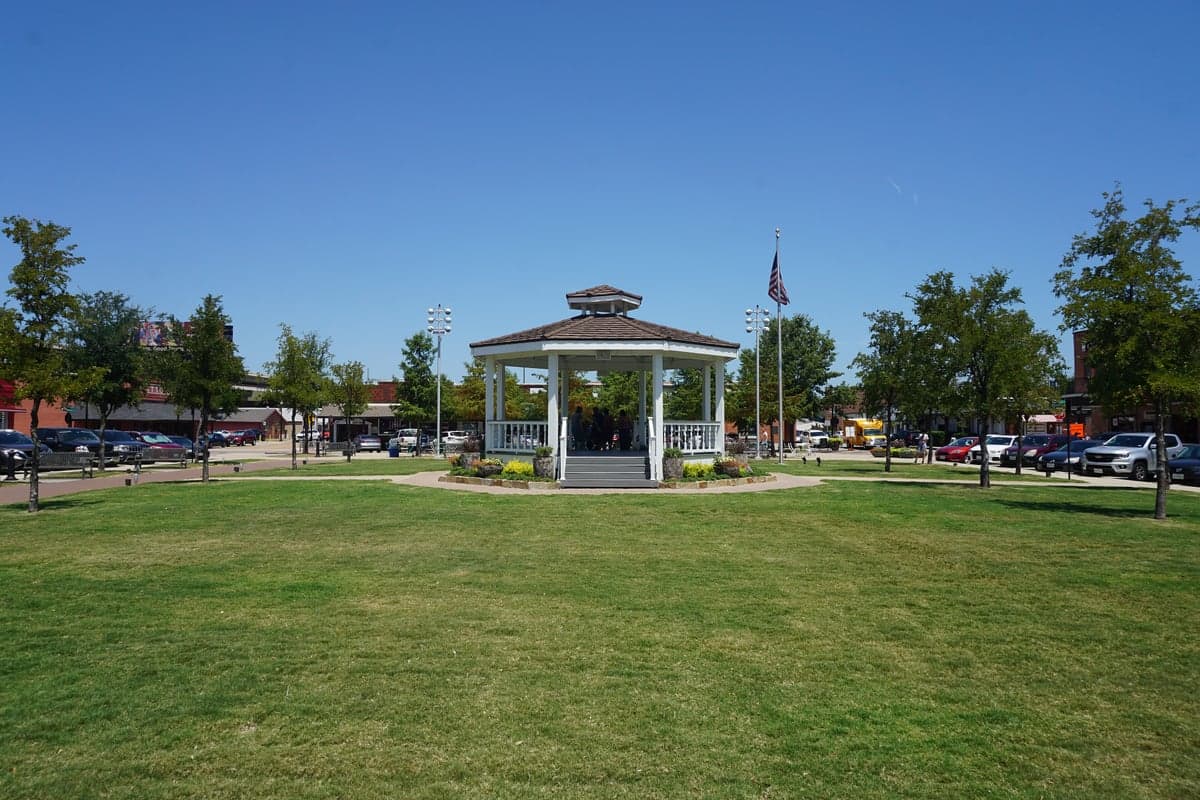
Photo: Wikipedia
Strategic Assessment of Carrollton, TX
Multiple tactical vulnerabilities. Population density, target proximity, or disaster risk are likely compounding. A retreat property and exit planning is required.
What does the Strategic Assessment tell us?
Our Strategic Assessment grades tactical survivability of an area. Major population centers, military targets, fallout zones, natural disasters, and border exposure all drive risk — lower exposure means a more defensible position in a crisis.
This is heavily inspired by Joel Skousen's Strategic Relocation book. Highly recommended you checkout the book ($)What does this tell us?
Our Strategic Assessment grades tactical survivability of an area. Major population centers, military targets, fallout zones, natural disasters, and border exposure all drive risk — lower exposure means a more defensible position in a crisis.
This is heavily inspired by Joel Skousen's Strategic Relocation book. Highly recommended you checkout the book ($)Strategic Pillars

Key Distances
Regional Safe Places
Below is our recommended "safe zones" in Texas and the surrounding area based on our strategic heuristics. For most people, it's unrealistic to live in a “safe zone” full-time due to work, family or other personal reasons. They tend to be more rural. However, many of these areas are perfect for second homes and retreat properties that double as a vacation home or even a short-term rental.

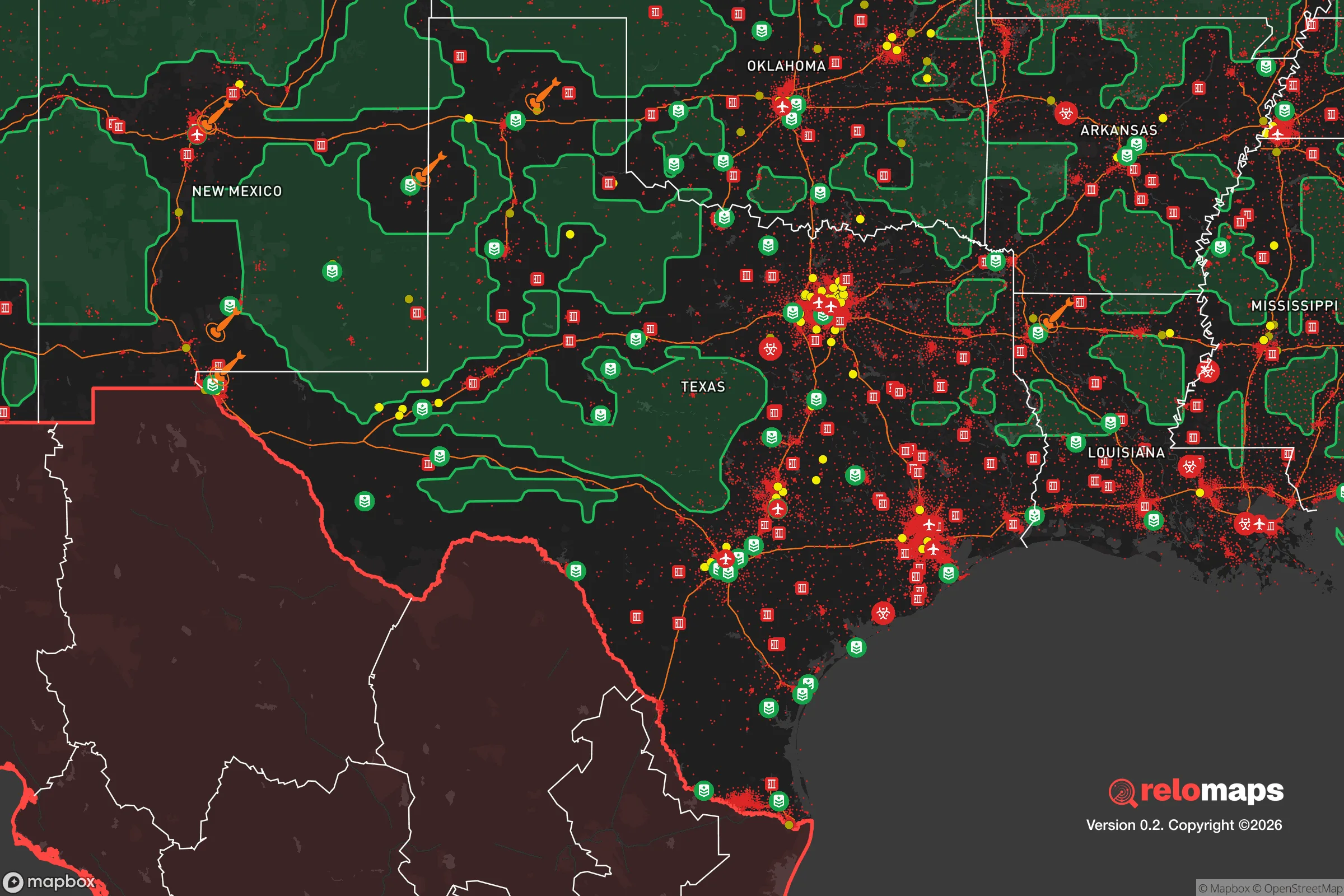


Important Note: For informational purposes only. This does not mean nothing bad ever happens in the green zones. Please use common sense. This is based on public data and modeled with AI. We tried to take a conservative approach but mistakes happen. We update this regularly as new information becomes available.
Solar Generator Recommendations
Backup power matters more here than in safer locations. We've picked three solar generators across budgets and capacity tiers — start with the budget unit if you only need a few essentials, or step up if you want to run a fridge and HVAC for days at a time.

Jackery Portable Power Station Explorer 300
Budget OptionPower on the Go: Weighing only 11 lbs, it's convenient to set up and store with book-sized foldable solar panels

BLUETTI Portable Power Station AC180
Designed for both indoor and outdoor scenarios, AC180 is highly capable as it has a robost capacity and continuous output power.

EF ECOFLOW DELTA Pro Ultra Power Station
Upgraded PickEcoFlow DELTA Pro Ultra is a whole-home energy system designed to grow with your family. Integrated with the Smart Home Panel 2, it scales to meet your evolving energy needs — keeping your home powered, intelligent, and secure through every stage of life.
We earn a commission, at no additional cost to you.
Strategic Assessment Analysis
Carrollton, Texas, sits in a precarious but potentially workable position for the conservative prepper or survivalist. Its location within the Dallas-Fort Worth metroplex offers economic resilience and access to resources, but that same proximity to a major urban center introduces significant vulnerabilities in a crisis scenario. For the relocator thinking in terms of bug-in versus bug-out, supply chain continuity, and exposure to civil unrest, Carrollton presents a mixed bag—strong on day-to-day stability, weak on strategic depth if the grid goes down or the cities burn.
Geographic position and natural advantages for long-term stability
Carrollton’s geographic strength is its position along the Trinity River corridor and its access to the region’s major transportation arteries—Interstates 35E and 635, plus the President George Bush Turnpike. This gives a relocator multiple egress routes in the event of a localized disaster, though those same roads become choke points during mass evacuations. The area sits on the Blackland Prairie, which historically supported agriculture, but modern development has paved over most of that potential. The climate is a double-edged sword: hot summers and occasional drought stress water supplies, but the region avoids the worst of hurricane landfalls, earthquakes, and wildfires that plague other parts of Texas. Tornado risk is real but statistically low for direct hits. For a prepper, the flat terrain offers limited natural defensibility—no hills, no forests to hide in—but the suburban grid layout does provide some neighborhood-level chokepoints if you know your streets. The real advantage here is economic: Carrollton has a diversified job base (tech, logistics, healthcare) that makes it less likely to collapse in a slow-burn crisis compared to a single-industry town.
Risks, exposures, and proximity to fallout-relevant landmarks
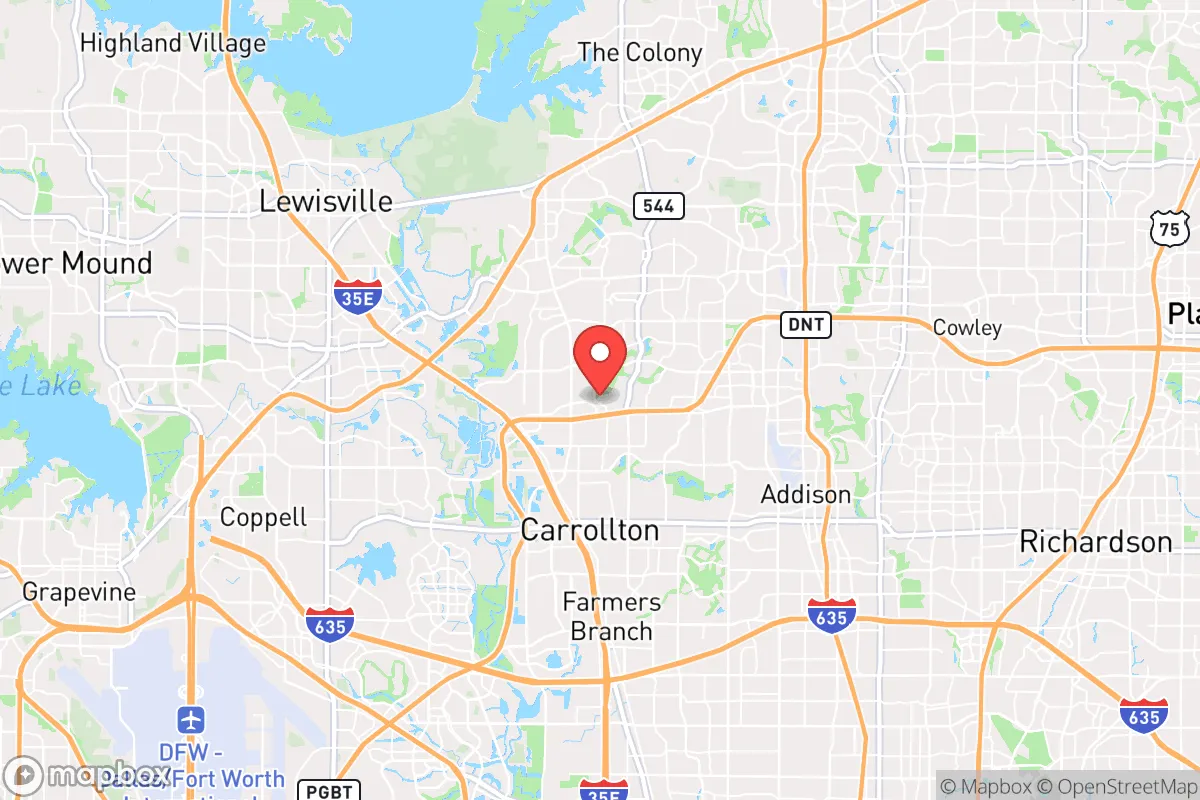
The biggest liability for Carrollton in a strategic relocation analysis is its proximity to Dallas and Fort Worth—both high-value targets for civil unrest, mass casualty events, or even state-level collapse scenarios. Carrollton is roughly 15 miles from downtown Dallas and 30 miles from Fort Worth. In a widespread power outage, food shortage, or civil breakdown, the urban core’s population (over 7 million in the metroplex) would push outward into suburbs like Carrollton. The city itself has a population of about 140,000, which is dense enough that a single mass casualty event (e.g., a chemical spill on I-35E or a coordinated attack on a shopping center) could overwhelm local hospitals. DFW International Airport, 12 miles south, is a potential target for terrorism or a disease vector. There are no nuclear power plants within 50 miles, but the region has several chemical plants and rail lines carrying hazardous materials. The Trinity River floodplain is a natural risk—Carrollton has experienced significant flooding in 2015 and 2019, and FEMA flood maps show several neighborhoods in the 100-year zone. For the prepper, the key takeaway is that Carrollton is not a retreat; it’s a forward operating base that requires constant awareness of the urban pressure cooker to the south.
Practical resilience for a relocator: food, water, energy, and defensibility
Water is the first concern. Carrollton gets its municipal supply from the Elm Fork of the Trinity River and area reservoirs like Lewisville Lake. In a prolonged grid-down scenario, municipal pumps fail, and the city’s water towers hold only a few days’ supply. A prepper here needs a private well or a serious rainwater catchment system—but most suburban lots are too small for the latter, and well permits are restricted in many neighborhoods. The city’s water utility has backup generators, but those are for critical infrastructure only. Food resilience is weak: Carrollton has a handful of grocery stores, but supply chains are just-in-time, meaning shelves empty within 48 hours of a panic event. Community gardens exist but are not production-scale. For energy, the Texas grid (ERCOT) is notoriously fragile—winter storms in 2021 proved that. Solar with battery backup is viable here (average 200+ sunny days per year), but HOAs in many Carrollton neighborhoods restrict panel placement. Natural gas is widely available for heating and cooking, but pipelines are vulnerable to sabotage or pressure loss. Defensibility is the hardest sell. Carrollton is a typical suburban grid of cul-de-sacs and arterials—easy to navigate for a determined mob, hard to secure for a small group. The best bet is a home on a corner lot with good sightlines, or a property backing onto a greenbelt or creek that limits approach vectors. Neighborhood watch programs exist but are not hardened. For the single individual or family, the practical play is to treat Carrollton as a bug-in location for short-term crises (up to two weeks) and have a secondary bug-out location in rural Texas (e.g., East Texas piney woods or the Hill Country) for longer collapses.
The overall strategic picture for the conservative relocator
Carrollton is not a prepper’s paradise, but it’s not a death trap either. For the conservative relocator who values economic opportunity and community stability but is willing to invest in layered preparedness, it offers a viable middle ground. The city’s police and fire services are well-funded and professional, which matters in the early stages of a crisis before things go completely sideways. The school system (Carrollton-Farmers Branch ISD) is solid, and the local government is generally business-friendly and low-tax—a plus for those who want to avoid the progressive policies of Dallas proper. The fatal flaw is the lack of geographic buffer. If you’re looking for a place to ride out a long-term societal unraveling, you need acreage, a well, and distance from population centers. Carrollton gives you none of that. But if you’re a working professional or a parent who can’t abandon the job market, and you’re willing to stockpile, harden your home, and maintain a bug-out plan, it’s a defensible choice. The bottom line: Carrollton works as a base of operations in a slow-burn crisis, but it’s a bad place to be when the sirens go off in Dallas. Know your exits, know your neighbors, and keep the tank full.

* Values derived from national, state, county, city and local statistics and may differ in a specific area. Last updated: 2026-04-22T01:57:23.000Z
Narrative content on this page is AI-generated and may contain mistakes. Verify any details that matter before acting on them.
ReloMaps may earn a commission from affiliate links at no extra cost to you.

