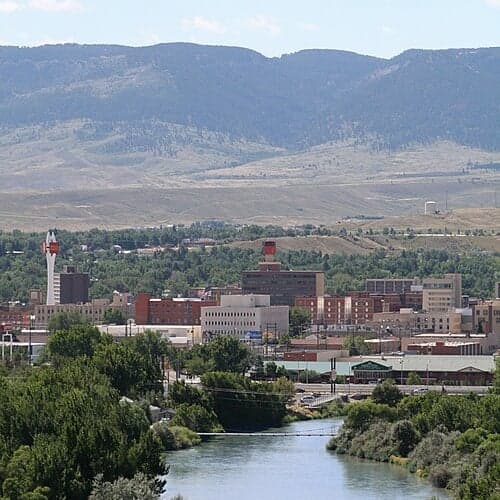
Photo: Wikipedia
Strategic Assessment of Casper, WY
Workable tactical position. Some exposure to population density or targets, but generally defensible in a crisis.
What does the Strategic Assessment tell us?
Our Strategic Assessment grades tactical survivability of an area. Major population centers, military targets, fallout zones, natural disasters, and border exposure all drive risk — lower exposure means a more defensible position in a crisis.
This is heavily inspired by Joel Skousen's Strategic Relocation book. Highly recommended you checkout the book ($)What does this tell us?
Our Strategic Assessment grades tactical survivability of an area. Major population centers, military targets, fallout zones, natural disasters, and border exposure all drive risk — lower exposure means a more defensible position in a crisis.
This is heavily inspired by Joel Skousen's Strategic Relocation book. Highly recommended you checkout the book ($)Strategic Pillars

Key Distances
Regional Safe Places
Below is our recommended "safe zones" in Wyoming and the surrounding area based on our strategic heuristics. For most people, it's unrealistic to live in a “safe zone” full-time due to work, family or other personal reasons. They tend to be more rural. However, many of these areas are perfect for second homes and retreat properties that double as a vacation home or even a short-term rental.
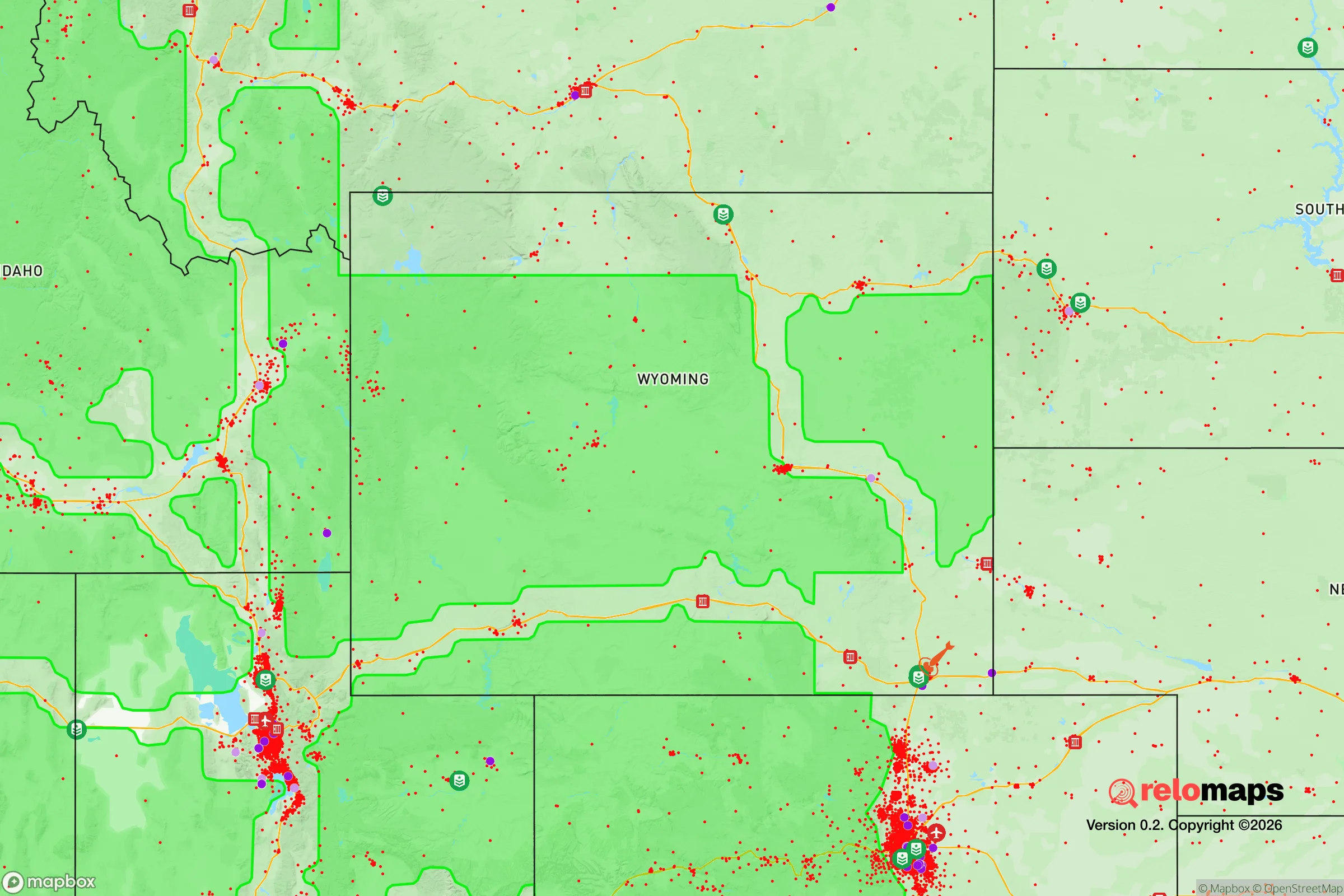
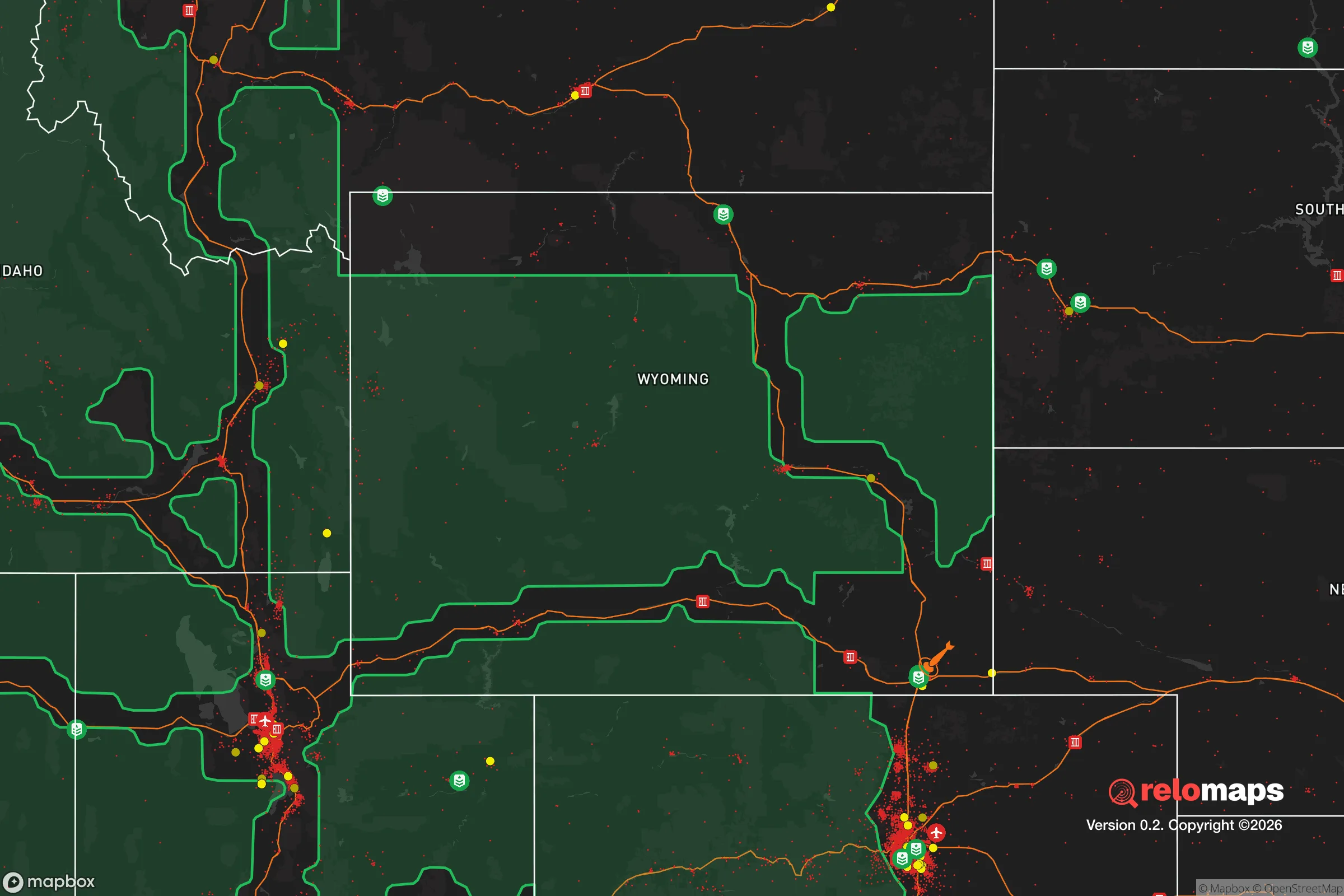


Important Note: For informational purposes only. This does not mean nothing bad ever happens in the green zones. Please use common sense. This is based on public data and modeled with AI. We tried to take a conservative approach but mistakes happen. We update this regularly as new information becomes available.
Solar Generator Recommendations
Backup power matters more here than in safer locations. We've picked three solar generators across budgets and capacity tiers — start with the budget unit if you only need a few essentials, or step up if you want to run a fridge and HVAC for days at a time.

Jackery Portable Power Station Explorer 300
Budget OptionPower on the Go: Weighing only 11 lbs, it's convenient to set up and store with book-sized foldable solar panels

BLUETTI Portable Power Station AC180
Designed for both indoor and outdoor scenarios, AC180 is highly capable as it has a robost capacity and continuous output power.

EF ECOFLOW DELTA Pro Ultra Power Station
Upgraded PickEcoFlow DELTA Pro Ultra is a whole-home energy system designed to grow with your family. Integrated with the Smart Home Panel 2, it scales to meet your evolving energy needs — keeping your home powered, intelligent, and secure through every stage of life.
We earn a commission, at no additional cost to you.
Strategic Assessment Analysis
Casper, Wyoming, sits in a geographic sweet spot that makes it a serious contender for anyone thinking long-term about resilience and relocation. It’s the largest city in the central part of the state, but with a metro population hovering around 60,000, it’s small enough to avoid the chaos of a major urban center while still offering real infrastructure—a regional hospital, an airport, and a working energy sector. The city’s position along the North Platte River and at the base of the Laramie Range gives it natural defensive depth, and its distance from the coastal population hubs means you’re far from the immediate fallout of any major disruption. For a conservative-leaning relocator who’s watching the country’s trajectory with concern, Casper offers a rare combination of isolation, resources, and community that’s hard to find elsewhere in the lower 48.
Geographic position and natural advantages for long-term security
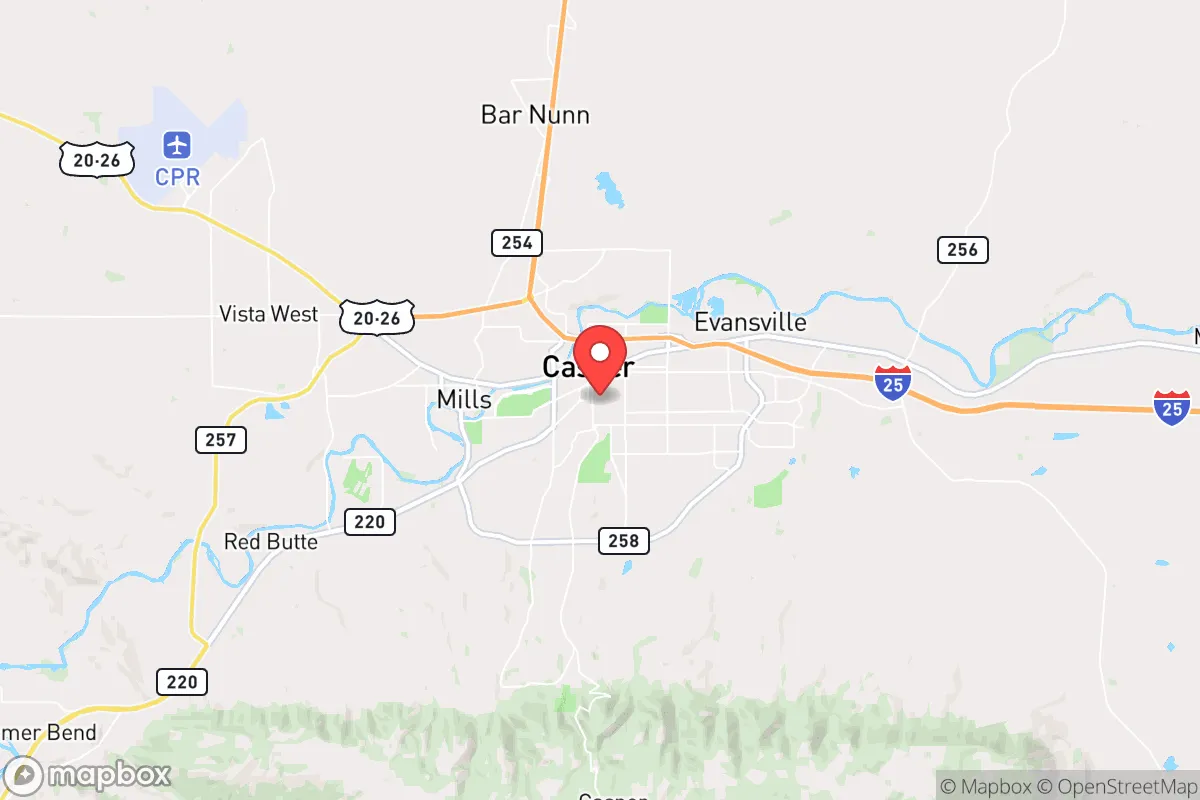
Casper’s location is its strongest card. It’s roughly 150 miles from Denver and 200 miles from Salt Lake City—close enough to access those metros for specialized supplies or medical care in normal times, but far enough that you won’t be caught in the spillover of a city-wide collapse. The surrounding terrain is a mix of high plains and foothills, with the Casper Mountain range rising directly south of town. That mountain provides a natural barrier and a high-ground retreat option if things go sideways. The North Platte River runs through the city, offering a reliable surface water source, and the area sits atop the massive Ogallala Aquifer, meaning groundwater is plentiful if you know how to access it. The climate is semi-arid, with cold winters and dry summers, which reduces the risk of flooding or hurricane damage—common threats that plague coastal and riverine relocation spots. For someone thinking in terms of decades, not just next year, Casper’s geography gives you a defensible position with room to maneuver.
Risks, exposures, and proximity to fallout-relevant landmarks
No place is perfect, and Casper has its own set of exposures. The biggest concern is the city’s proximity to the Trans-Alaska Pipeline System’s southern terminus and the numerous oil and gas fields in the Powder River Basin. While these are economic assets, they also make Casper a potential target for any coordinated attack on energy infrastructure. The city is also within 100 miles of the Wyoming Interstate 80 corridor, a major east-west supply route that could become a chokepoint or target during a national crisis. On the natural disaster front, the area sees occasional wildfires, especially on Casper Mountain, and the winter blizzards can be severe enough to cut off roads for days. There are no nuclear power plants within a 200-mile radius, which is a plus, but the nearby F.E. Warren Air Force Base in Cheyenne (about 180 miles south) hosts intercontinental ballistic missiles—meaning that region could be a primary target in a major conflict. For the prepper mindset, the key takeaway is that Casper is not a zero-risk zone, but its risks are manageable with planning. The lack of a dense urban core, major military bases, or coastal exposure puts it in a far better position than 90% of U.S. cities.
Practical resilience for a relocator: food, water, energy, and defensibility
For someone actually moving here, the practical resilience factors are where Casper shines. Water is the first concern, and Casper has it in spades. The North Platte River runs year-round, and the city’s municipal water system draws from both surface and groundwater sources. For off-grid setups, well drilling is common in the surrounding county, and the water table is accessible at reasonable depths. Food security is solid for a high-plains town. The growing season is short—about 100 to 120 frost-free days—but the soil in the river valley is fertile enough for gardens, and there’s a strong local ranching culture. You can source beef, lamb, and bison directly from producers within a 30-mile radius. The local farmers’ market and a handful of co-ops mean you’re not dependent on a single grocery chain. Energy is where Casper really stands out. Wyoming is the nation’s largest net energy exporter, and Natrona County sits on top of significant coal, oil, and natural gas reserves. The city has its own coal-fired power plant and a growing solar presence. For a relocator, this means grid power is more reliable than in most states, and off-grid solar or wind setups are viable given the area’s 300+ days of sunshine per year and consistent wind. Defensibility is good but not fortress-level. The city is laid out along the river valley, with the mountain to the south and open plains to the north and east. That makes it hard to approach unseen, but also means you’d need to secure a perimeter if things got really bad. The local population is heavily armed—Wyoming has some of the most permissive gun laws in the country, with no state-level permit required for concealed carry—and the culture is self-reliant. That’s a double-edged sword: it means you’re surrounded by people who can defend themselves, but also that you need to be part of that community, not an outsider who shows up unprepared.
The overall strategic picture for Casper is one of calculated trade-offs. It’s not a bug-out bunker in the middle of nowhere—it’s a functioning small city with real infrastructure, a working economy, and a population that largely shares the values of self-sufficiency and personal responsibility. The downsides are real: harsh winters, wildfire risk, and the fact that you’re still within striking distance of national energy infrastructure. But for a relocator who’s serious about being prepared for civic unrest, economic collapse, or mass casualty events, Casper offers a base that’s far more resilient than the suburbs of Denver or the coasts. You can live a normal life here—work a job, send kids to school, go to the hardware store—while also knowing that if the lights go out in the rest of the country, you’re in one of the few places that can keep them on. That’s the kind of strategic depth that’s hard to find, and it’s why Casper deserves a serious look from anyone thinking about where to plant roots for the long haul.

* Values derived from national, state, county, city and local statistics and may differ in a specific area. Last updated: 2026-10-10T16:27:04.000Z
Narrative content on this page is AI-generated and may contain mistakes. Verify any details that matter before acting on them.
ReloMaps may earn a commission from affiliate links at no extra cost to you.

