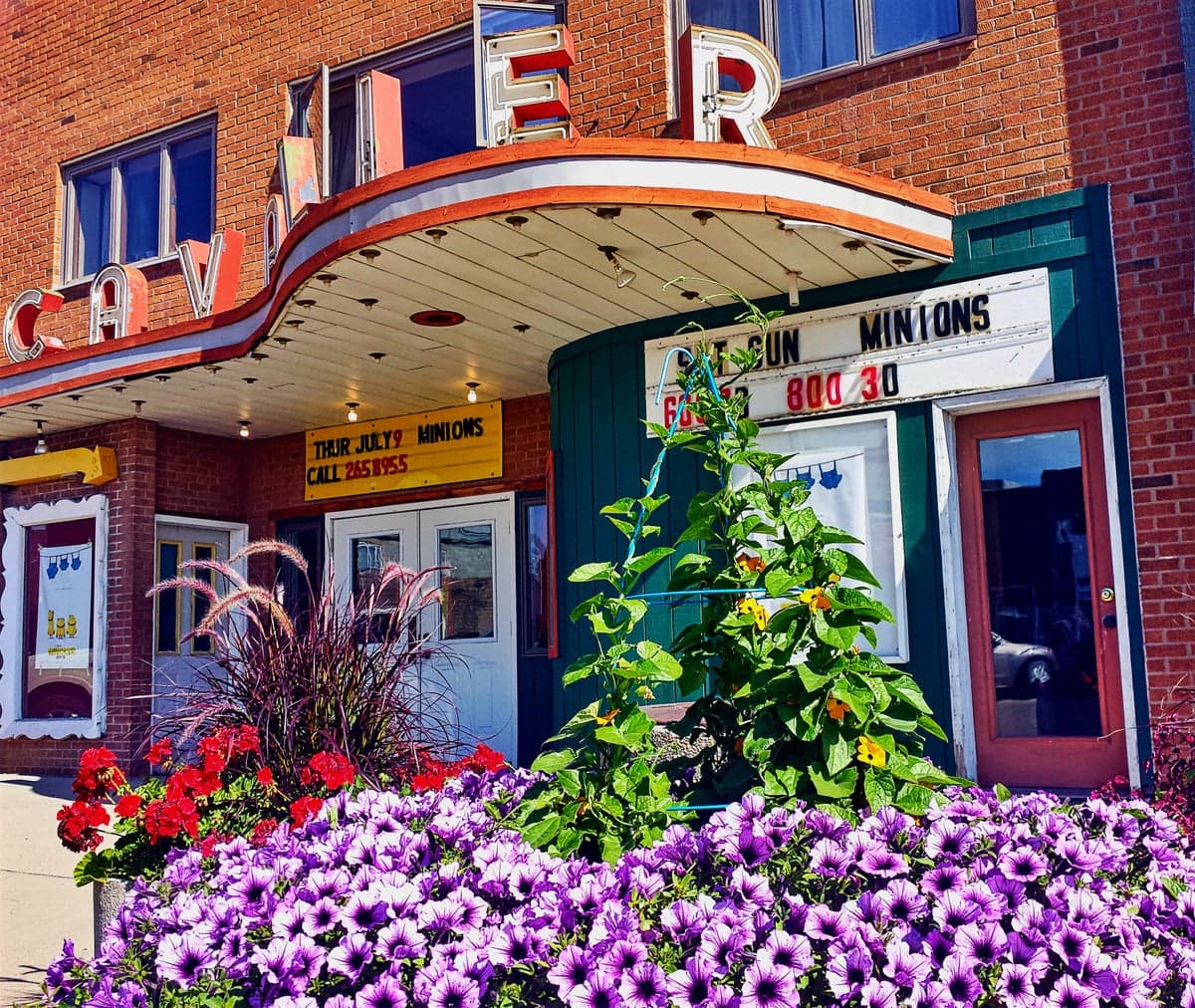
Photo: Wikipedia
Strategic Assessment of Cavalier, ND
Workable tactical position. Some exposure to population density or targets, but generally defensible in a crisis.
What does the Strategic Assessment tell us?
Our Strategic Assessment grades tactical survivability of an area. Major population centers, military targets, fallout zones, natural disasters, and border exposure all drive risk — lower exposure means a more defensible position in a crisis.
This is heavily inspired by Joel Skousen's Strategic Relocation book. Highly recommended you checkout the book ($)What does this tell us?
Our Strategic Assessment grades tactical survivability of an area. Major population centers, military targets, fallout zones, natural disasters, and border exposure all drive risk — lower exposure means a more defensible position in a crisis.
This is heavily inspired by Joel Skousen's Strategic Relocation book. Highly recommended you checkout the book ($)Strategic Pillars

Key Distances
Regional Safe Places
Below is our recommended "safe zones" in North Dakota and the surrounding area based on our strategic heuristics. For most people, it's unrealistic to live in a “safe zone” full-time due to work, family or other personal reasons. They tend to be more rural. However, many of these areas are perfect for second homes and retreat properties that double as a vacation home or even a short-term rental.
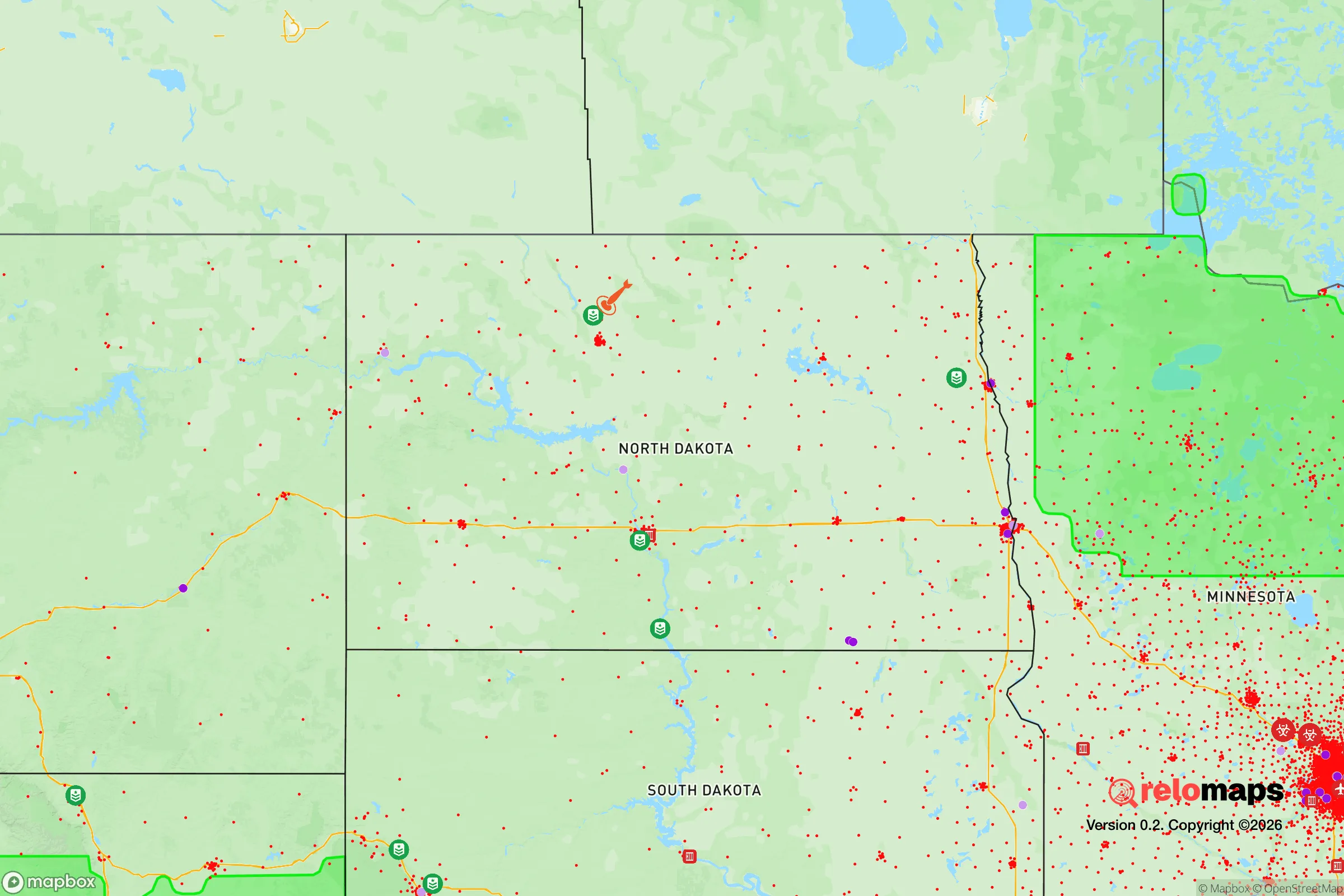
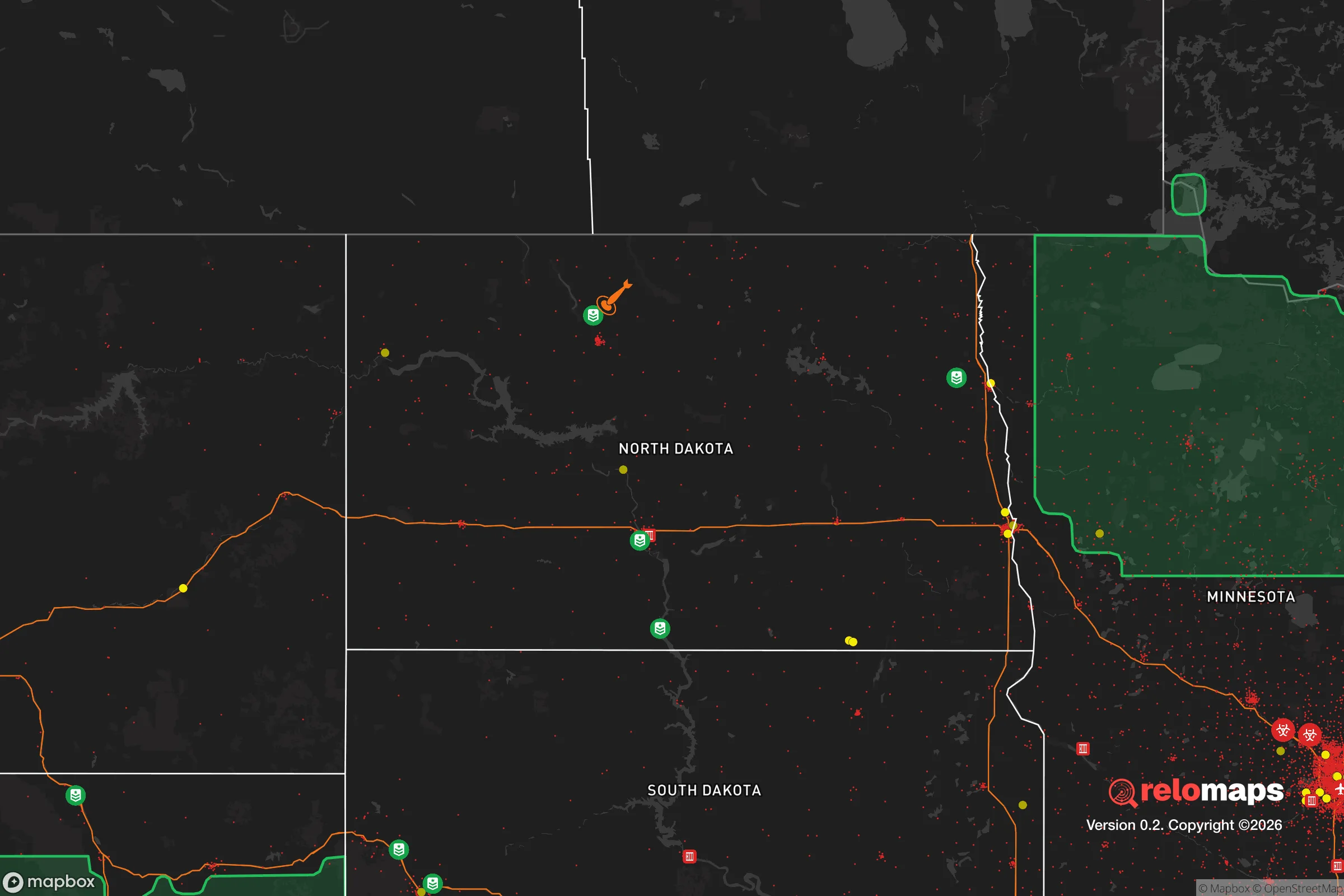


Important Note: For informational purposes only. This does not mean nothing bad ever happens in the green zones. Please use common sense. This is based on public data and modeled with AI. We tried to take a conservative approach but mistakes happen. We update this regularly as new information becomes available.
Solar Generator Recommendations
Backup power matters more here than in safer locations. We've picked three solar generators across budgets and capacity tiers — start with the budget unit if you only need a few essentials, or step up if you want to run a fridge and HVAC for days at a time.

Jackery Portable Power Station Explorer 300
Budget OptionPower on the Go: Weighing only 11 lbs, it's convenient to set up and store with book-sized foldable solar panels

BLUETTI Portable Power Station AC180
Designed for both indoor and outdoor scenarios, AC180 is highly capable as it has a robost capacity and continuous output power.

EF ECOFLOW DELTA Pro Ultra Power Station
Upgraded PickEcoFlow DELTA Pro Ultra is a whole-home energy system designed to grow with your family. Integrated with the Smart Home Panel 2, it scales to meet your evolving energy needs — keeping your home powered, intelligent, and secure through every stage of life.
We earn a commission, at no additional cost to you.
Strategic Assessment Analysis
Cavalier, North Dakota, offers a strategic relocation option for those prioritizing resilience, self-sufficiency, and distance from major population centers. Situated in the far northeastern corner of the state, just a few miles from the Canadian border, this small town of roughly 1,200 people sits in a region that is both geographically isolated and logistically connected. Its location provides a buffer from the cascading effects of urban unrest, supply chain disruptions, and mass casualty events that could plague larger cities, while still maintaining access to essential infrastructure. For a conservative-leaning individual or family looking to weather potential societal instability, Cavalier presents a low-profile, defensible, and resource-rich environment that merits serious consideration.
Geographic position and natural advantages for long-term security
Cavalier’s primary strategic asset is its location. It sits in Pembina County, roughly 20 miles south of the Canadian border and about 80 miles north of Grand Forks, the nearest city of any size. This places it well outside the blast radius and fallout zones of any major U.S. metropolitan area, while also being far from known strategic targets like missile silos, military bases, or major transportation hubs. The surrounding landscape is flat, agricultural land, which offers clear sightlines and limited cover for any unwanted approach. The area is sparsely populated, with a population density of about 5 people per square mile, meaning you’re not dealing with neighbors in close quarters. The Red River Valley provides fertile soil, making small-scale agriculture or gardening a viable long-term food strategy. Winters are harsh, with average lows around -5°F in January, but that same climate acts as a natural deterrent to unprepared outsiders and limits the spread of many pathogens. The Pembina River and numerous smaller creeks offer surface water sources, and the region’s aquifer is generally reliable for well water. For a relocator, this is a place where you can quietly establish a homestead without drawing attention, with enough natural resources to sustain a family through a prolonged disruption.
Risks, exposures, and proximity to fallout-relevant landmarks
No location is without risk, and Cavalier has its own set of exposures that a prepper must account for. The most significant is its proximity to the Canadian border. While this offers a potential escape route or trade corridor, it also means you’re near a national boundary that could become a point of tension during a crisis. The Pembina–Emerson port of entry is a major crossing for commercial traffic, which could become a chokepoint or target during civil unrest. Additionally, the town is about 100 miles from the Grand Forks Air Force Base, home to the 319th Reconnaissance Wing and a potential target in a conflict scenario. While that distance provides a buffer, prevailing winds from the west could carry fallout from a strike on that base toward Cavalier, depending on the season. The region also has a history of severe weather, including blizzards, ice storms, and occasional tornadoes, which can disrupt power and transportation for days. Flooding is a concern in the Red River Valley, though Cavalier sits on slightly higher ground than communities further south. On the plus side, there are no nuclear power plants within 200 miles, no major chemical facilities, and no large-scale industrial targets. The nearest major city, Winnipeg, is about 90 miles north in Canada, but its population of 750,000 is far enough away that a mass evacuation from there would likely not reach Cavalier. For a relocator, the key takeaway is that Cavalier’s risks are manageable with proper preparation—stockpiling supplies for winter storms, having a water filtration system for potential flooding, and maintaining a vehicle capable of navigating snow-covered roads.
Practical resilience for a relocator: food, water, energy, and defensibility
When it comes to day-to-day survival and self-sufficiency, Cavalier offers a solid foundation. The agricultural nature of the region means that local farmers produce wheat, soybeans, and corn, and there are small-scale livestock operations in the surrounding area. Establishing relationships with these producers before a crisis hits can secure a direct food supply. Gardening is feasible during the short but intense growing season (roughly May to September), and cold frames or greenhouses can extend it. Water is accessible via private wells, which are common in rural Pembina County, and the Pembina River provides a backup source if properly filtered. The town’s municipal water system draws from groundwater, but a well gives you independence from that grid. For energy, the region is windy enough to support small-scale wind turbines, and solar panels can work during the long summer days, though winter production will be limited. Wood is abundant in the nearby Pembina Gorge and Turtle Mountain areas, making wood stoves a practical primary or backup heat source. Natural gas is available in town, but rural properties typically rely on propane or heating oil. Defensibility is a mixed bag. The flat terrain means you can see threats coming from a distance, but it also offers little cover. A rural property with a long driveway, a fenced perimeter, and a clear field of fire is ideal. The local law enforcement presence is minimal—the Pembina County Sheriff’s Office has about a dozen deputies—so you cannot rely on them for rapid response. The community itself is tight-knit and predominantly conservative, with a strong Lutheran and Catholic heritage, which can foster mutual aid but also means outsiders are viewed with some suspicion. Building trust with neighbors is essential for long-term security. For a relocator, the practical takeaway is that Cavalier allows you to achieve a high degree of self-reliance, but it requires upfront investment in infrastructure—well, septic, backup power, and food storage—and a willingness to adapt to a harsh climate.
Overall, Cavalier, North Dakota, presents a compelling strategic picture for those seeking to insulate themselves from the volatility of modern urban life. It is not a bug-out location for a weekend; it is a place to build a permanent, resilient homestead. The isolation that makes it unattractive to most Americans is exactly what makes it valuable for a prepper. You are far from the chaos of cities, far from likely targets, and far from the masses who will be scrambling when things go sideways. The trade-offs are real—harsh winters, limited employment opportunities, and a need for significant self-reliance—but for a conservative-minded individual or family willing to put in the work, Cavalier offers a quiet, defensible, and resource-rich base from which to ride out whatever comes. If you are serious about long-term preparedness and value distance over convenience, this corner of North Dakota deserves a hard look.

* Values derived from national, state, county, city and local statistics and may differ in a specific area. Last updated: 2026-10-10T16:27:06.000Z
Narrative content on this page is AI-generated and may contain mistakes. Verify any details that matter before acting on them.
ReloMaps may earn a commission from affiliate links at no extra cost to you.

