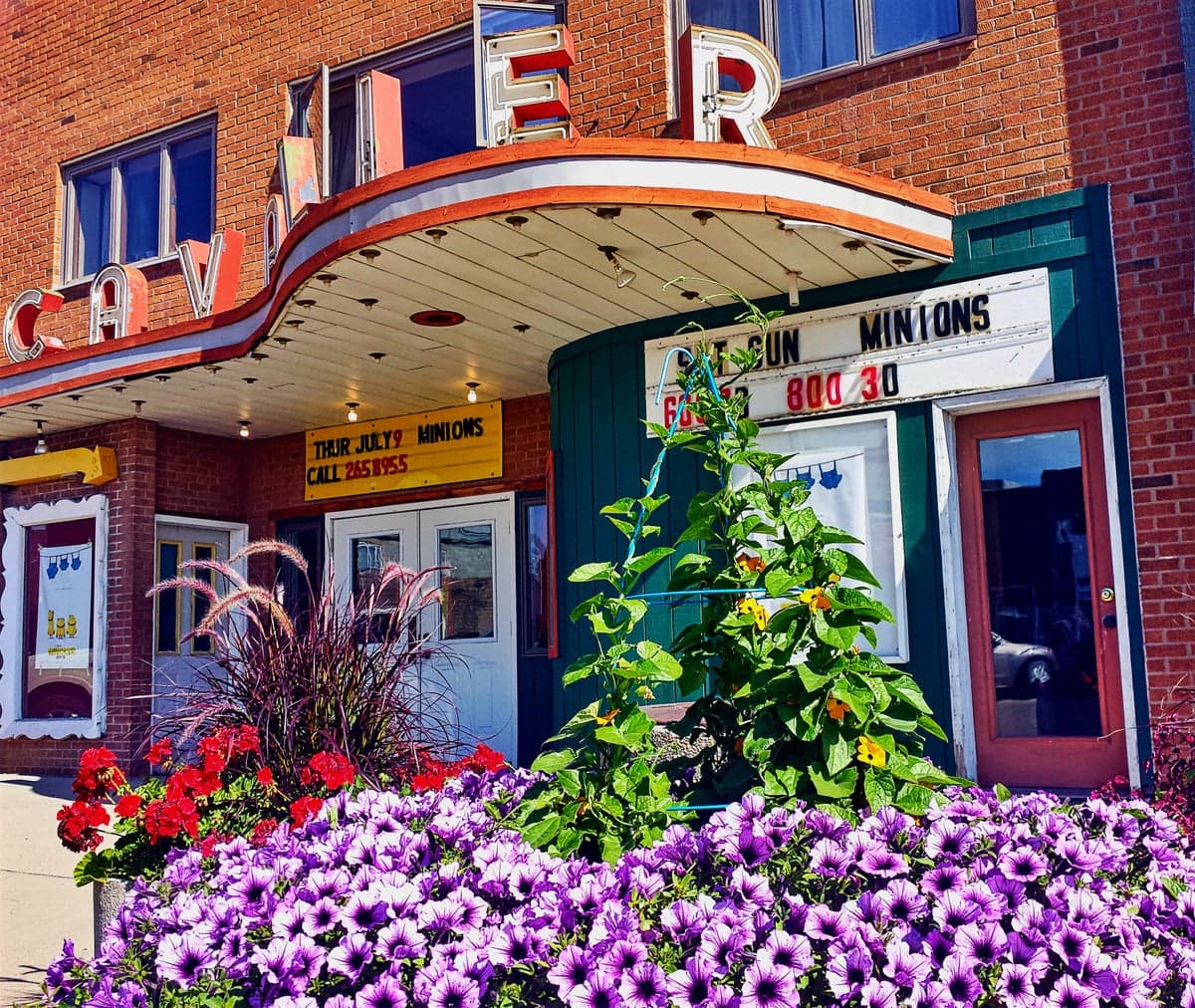
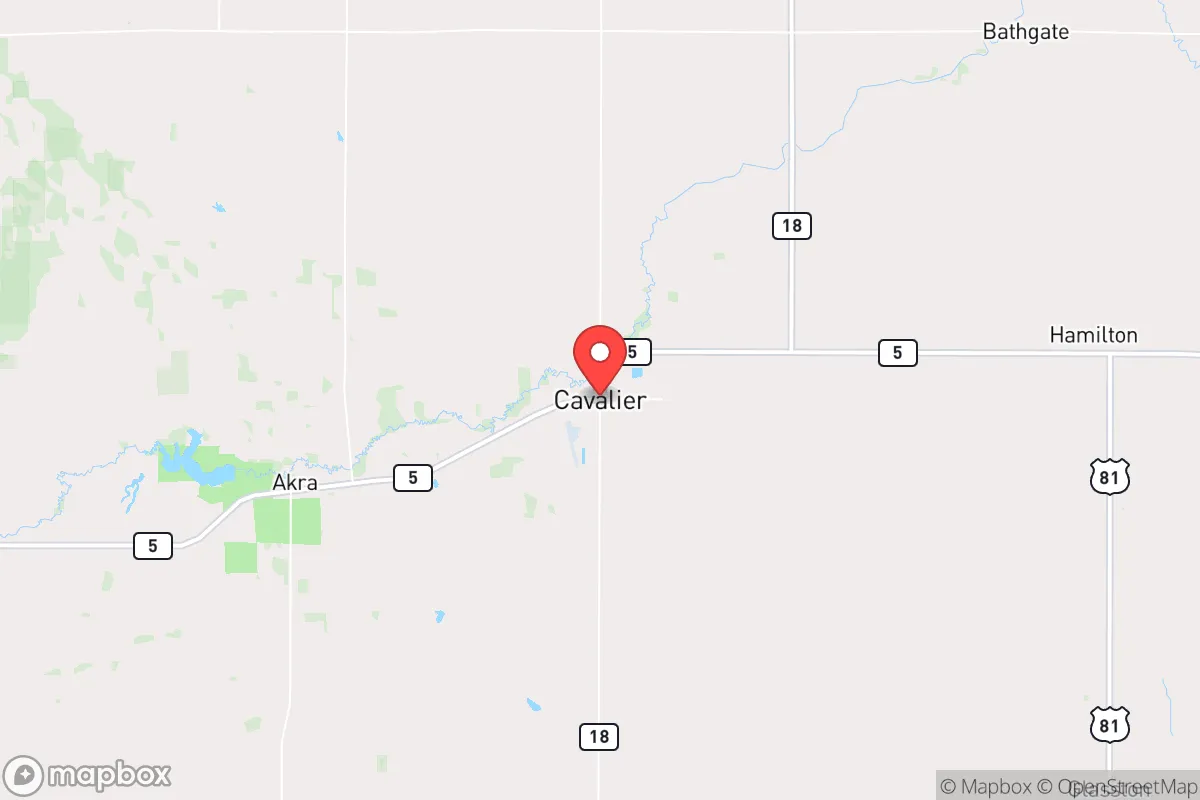
Photo: Wikipedia
Political ClimatePolitical Climate in Cavalier, ND
District shown is the primary district for this city’s centroid. Cities may span multiple districts.
Inherited from parent state — no local data available.
Local Political AnalysisPolitical Analysis of Cavalier, ND
Cavalier, North Dakota, is about as reliably conservative as it gets, with a Cook PVI of R+18 that tells you the area leans hard Republican in just about every election. That number isn't just a statistic—it reflects a community where traditional values and limited government are still the default, not something you have to defend at the dinner table. But like a lot of small towns in the northern plains, you can feel the political winds shifting, even if it's just a breeze compared to the gales in bigger cities. The real question is whether Cavalier can hold the line as outside pressures and demographic changes start to creep in.
How it compares
If you drive an hour south to Grand Forks, you'll find a different political animal—a college town with a younger, more transient population that leans noticeably more moderate, even liberal in some precincts. Cavalier, by contrast, sits in Pembina County, where the rural economy and family farms keep things grounded in fiscal conservatism and a healthy skepticism of federal overreach. The contrast is stark: while Grand Forks might debate bike lanes and diversity initiatives, folks here are more worried about property taxes, grain prices, and whether the EPA is going to regulate another puddle. Even smaller towns like Langdon or Grafton, while still conservative, have seen a few more progressive council members slip in over the years—something Cavalier has largely avoided so far. That R+18 rating isn't just a number; it's a buffer against the kind of ideological drift that's reshaping other parts of the state.
What this means for residents
For the people who live here, that conservative tilt means a government that mostly stays out of your business—low taxes, minimal zoning fuss, and a school board that isn't trying to reinvent the wheel on curriculum. You can hunt, fish, and run a small business without a stack of permits that would choke a horse. But there's a growing unease, especially among longtime residents, about what happens when the next generation moves away and new folks move in from places where government overreach is seen as normal. The concern isn't about losing an election—it's about losing the culture of self-reliance that makes Cavalier work. If you're looking for a place where your rights aren't up for debate every election cycle, this is still a stronghold, but you'd be naive to think it's immune to the trends pushing progressive policies into rural America.
One thing that sets Cavalier apart is how the local politics play out in everyday life—there's no real appetite for the kind of performative activism you see in bigger towns. The county commission meetings are about roads and budgets, not culture war grandstanding. That said, the recent push for renewable energy projects in the region has stirred up some old-school skepticism about federal mandates and corporate land grabs. People here remember when the government promised one thing and delivered another, so there's a healthy distrust of any policy that sounds too good to be true. If you value personal freedom and a community that doesn't try to micromanage your choices, Cavalier is still a solid bet—but keep an eye on the horizon, because the political weather is changing, even if it's slow.

State Political ClimatePolitical Climate in North Dakota
State Political AnalysisPolitical Environment in the State
North Dakota has long been a reliably conservative state, with Republicans holding every statewide office and commanding supermajorities in the legislature for over a decade. The state voted for Donald Trump by a margin of +33 points in 2024, a slight dip from the +36 point margin in 2020 but still among the most Republican-leaning states in the nation. However, beneath this solid red veneer, a quiet but real shift is underway: the state’s political center of gravity is slowly moving from the rural, agrarian east toward the oil-rich western counties, while the capital city of Bismarck and the state’s largest city, Fargo, are becoming more politically distinct from one another.
Urban vs. rural divide
The political map of North Dakota is defined by a stark contrast between its handful of urban centers and the vast, sparsely populated rural expanse. The western oil patch counties—McKenzie, Williams, and Dunn—are the most conservative in the state, often voting 80-90% Republican. These areas have seen explosive population growth since the Bakken oil boom, attracting a wave of young, blue-collar workers who are deeply skeptical of federal regulation and government overreach. In contrast, Cass County, home to Fargo, is the state’s most politically competitive region. Fargo itself has a noticeable progressive tilt, driven by the presence of North Dakota State University and a growing professional class. In 2024, Fargo’s precincts voted roughly 55-45 for Trump, a far cry from the 75-25 margins seen in rural Cass County towns like Kindred or Mapleton. Grand Forks, home to the University of North Dakota, is similarly split: the city’s core leans left, while the surrounding Grand Forks County remains reliably red. The real outlier is the Standing Rock Reservation, which spans Sioux County and parts of Morton County; it consistently votes over 90% Democratic, a reminder that the state’s Native American population remains a politically distinct and often ignored bloc.
Policy environment
North Dakota’s policy environment is a model of conservative governance, but it’s not without its own internal tensions. The state has no state income tax (a flat 2.9% rate was eliminated in 2023), and property taxes are among the lowest in the nation, though local levies can vary significantly. The regulatory posture is generally business-friendly, with the state’s oil and gas industry enjoying light oversight compared to neighboring Montana or Colorado. Education policy is a mixed bag: the state has a robust school choice program through the North Dakota Choice Ready Scholarship, but there is no voucher system, and the state’s rural districts often struggle with declining enrollment. Healthcare is a flashpoint—North Dakota expanded Medicaid under the Affordable Care Act in 2013, a decision that remains controversial among conservatives who see it as federal overreach. Election laws are solid: the state requires voter ID, has no same-day registration, and has resisted mail-in ballot expansions. However, the state’s legislative session is biennial, meaning major policy changes only happen every two years, which can frustrate those who want faster action on issues like parental rights or gun laws.
Trajectory & freedom
North Dakota is generally trending in the right direction on personal freedom, but there are warning signs. On the positive side, the state passed Constitutional Carry in 2021, allowing law-abiding citizens to carry a concealed firearm without a permit. The legislature also passed a Parental Rights in Education bill in 2023, requiring schools to notify parents of any curriculum involving sexual orientation or gender identity—a direct response to the kind of progressive overreach seen in states like California. Property rights remain strong, with the state’s Stand Your Ground law intact and no serious efforts to weaken it. However, the state’s medical marijuana program, approved by voters in 2016, has been slow to expand, and recreational cannabis remains illegal—a point of frustration for libertarian-leaning conservatives who see prohibition as a violation of personal autonomy. More concerning is the growing influence of federal funding: North Dakota receives more federal dollars per capita than almost any other state, which creates a dependency that could be used to impose federal mandates in the future. The state’s sovereignty resolution (HCR 3011), passed in 2023, asserts the state’s right to nullify federal overreach, but it remains largely symbolic.
Civil unrest & political movements
North Dakota has seen its share of political flashpoints, most notably the Standing Rock protests in 2016-2017, which drew thousands of activists from across the country to oppose the Dakota Access Pipeline. The protests were a rare moment of large-scale civil unrest in the state, and they left a lasting scar on local politics—Morton County, where the protests were centered, saw a surge in conservative activism in response. On the right, the North Dakota Republican Party has been increasingly split between establishment figures and a more populist, anti-establishment wing aligned with the state’s oil and agriculture interests. The Bismarck-based “North Dakota Freedom Caucus” has pushed for stricter immigration enforcement, even though the state’s undocumented population is tiny. Immigration politics are relatively quiet, but there is a growing concern among conservatives about the state’s refugee resettlement program, which has brought small numbers of refugees to Fargo and Grand Forks. Election integrity remains a hot-button issue: the state’s voter ID law was strengthened in 2023, requiring a photo ID with a current address, but critics on the left claim it suppresses Native American turnout. So far, there have been no major election fraud scandals, but the issue remains a rallying cry for grassroots activists.
Projection
Over the next 5-10 years, North Dakota’s political trajectory is likely to be one of slow, steady conservatism with a growing urban-rural divide. The western oil counties will continue to drive the state’s Republican lean, but Fargo and Grand Forks will become more progressive as they attract younger, more educated transplants. The state’s population is aging and declining in rural areas, which could lead to a political realignment if the urban centers grow fast enough to shift legislative districts. However, the state’s constitutional requirement for a balanced budget and its reliance on oil revenue mean that any major policy shifts will be constrained by fiscal reality. The biggest wildcard is the federal government: if the Biden administration or a future progressive administration tries to impose stricter environmental regulations on the oil industry, North Dakota’s economy and political identity could be fundamentally challenged. For now, the state remains a safe haven for conservatives who value low taxes, gun rights, and local control, but the seeds of change are being planted in its growing cities.
For a new resident, the bottom line is this: North Dakota is still one of the most free states in the union, but that freedom requires active defense. If you’re moving here, expect a place where your vote actually counts, where your property rights are respected, and where your children’s education is still largely under local control. But don’t assume it will stay that way forever—pay attention to what happens in Fargo and Bismarck, because that’s where the future of the state is being decided.
* Values derived from national, state, county, city and local statistics and may differ in a specific area. Last updated: 2026-10-10T16:27:06.000Z
Narrative content on this page is AI-generated and may contain mistakes. Verify any details that matter before acting on them.
ReloMaps may earn a commission from affiliate links at no extra cost to you.

