Photo: Wikipedia
Demographics of Chadron, NE
Affluence Level in Chadron, NE
A middle-class area roughly in line with national averages across income, home values, education, and employment.
People of Chadron, NE
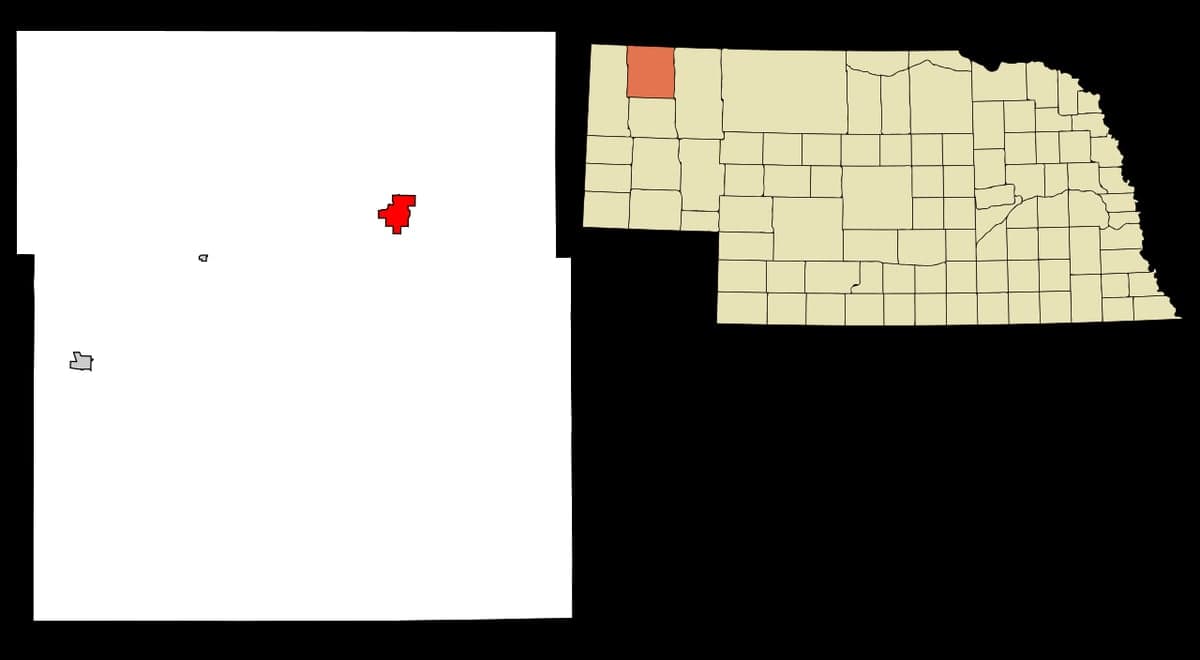
Chadron, Nebraska, is a small, tight-knit community of 5,207 residents that remains overwhelmingly white (86.3%) with a minuscule foreign-born population of just 0.1%. The city’s identity is shaped by its role as a regional hub for education, healthcare, and agriculture, anchored by Chadron State College and the Pine Ridge region’s ranching economy. With 41.4% of adults holding a college degree—well above the national average for a town its size—Chadron’s population is notably educated, stable, and rooted in generational family ties. This is a place where nearly everyone knows their neighbors, and newcomers are often drawn by affordable living, outdoor recreation, and a slower pace of life.
How the city was settled and grew
Chadron’s human history begins with the arrival of the railroad in the 1880s. The Fremont, Elkhorn & Missouri Valley Railroad pushed through the region, and the town was officially platted in 1884 as a supply center for the surrounding cattle ranches and the nearby Pine Ridge Indian Reservation. The earliest settlers were predominantly of Northern European stock—German, Irish, and Scandinavian homesteaders—who took advantage of the 1862 Homestead Act to claim 160-acre parcels. These families built the first homes in what is now the Downtown Historic District, centered around Second and Main Streets, where brick storefronts and grain elevators still stand. A second wave arrived in the 1910s and 1920s, drawn by the establishment of Chadron State Normal School (now Chadron State College) in 1911. This brought a mix of educators, merchants, and professionals who settled in the College Heights neighborhood, a residential area of early-20th-century homes just north of campus. The city’s population peaked at around 5,500 in the 1930s, then stabilized as the agricultural economy mechanized and younger generations began leaving for larger cities.
Modern era (post-1965)
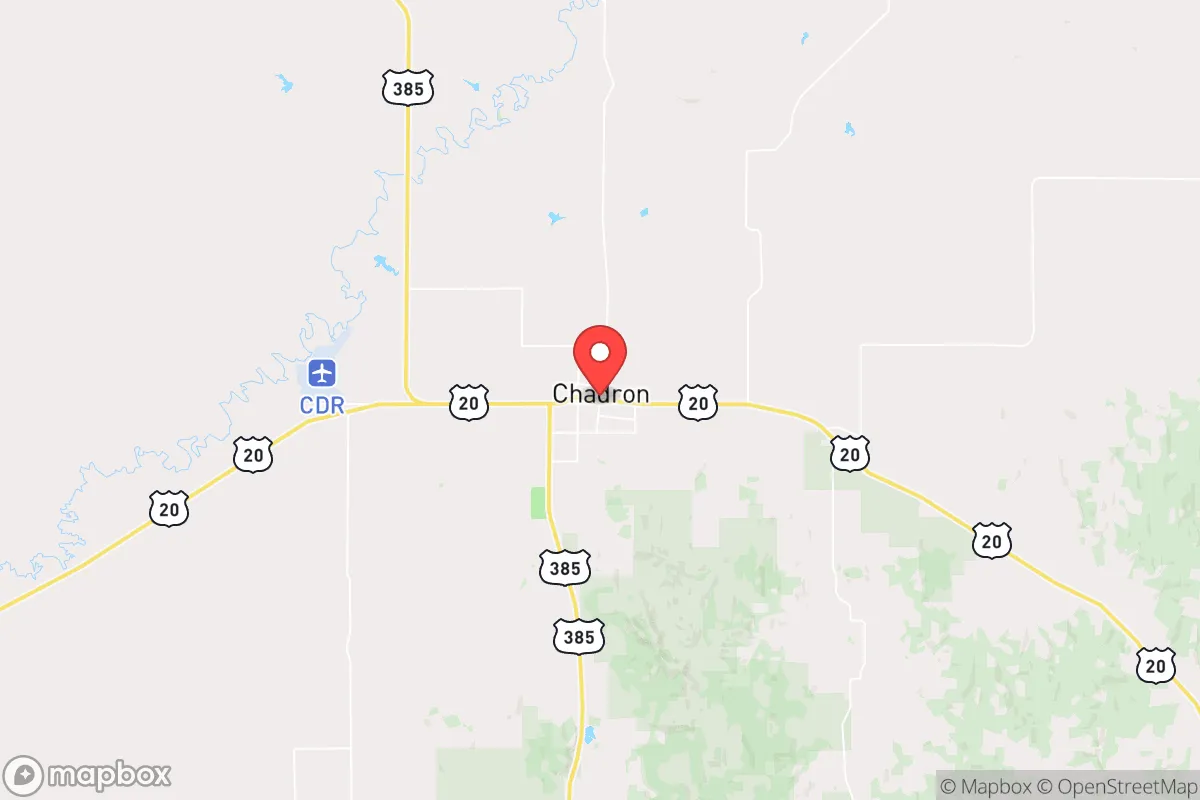
After the 1965 Immigration and Nationality Act, Chadron saw virtually no new international immigration. The foreign-born share has remained at or near zero for decades, and the city’s racial composition has changed only modestly. The Hispanic population grew from negligible levels to 2.8% by 2020, largely through domestic migration of families from the Southwest and Mexico who found work in the region’s meatpacking and agricultural sectors. These households are concentrated in the West Side area, near the industrial park and along Highway 20. The Black population (2.1%) and East/Southeast Asian population (1.5%) are small but present, primarily tied to Chadron State College’s faculty and student body. These groups tend to live in rental housing near campus, particularly in the Briarwood and Pine Ridge Addition subdivisions, which were developed in the 1970s and 1980s to accommodate college growth. The Indian subcontinent population is effectively zero, reflecting the absence of tech or medical sectors that typically draw South Asian professionals. Overall, Chadron has remained a predominantly white, native-born community, with most demographic change coming from internal U.S. migration rather than international flows.
The future
Chadron’s population is projected to remain stable or decline slightly over the next decade, mirroring trends across rural Nebraska. The city’s aging demographic—a median age near 40—means natural increase (births minus deaths) is barely positive. In-migration is driven almost entirely by Chadron State College, which enrolls about 2,500 students, many of whom leave after graduation. The Hispanic share is likely to grow gradually, perhaps reaching 5-6% by 2040, as younger families move in for affordable housing and jobs in healthcare and education. The white population will continue to dominate, but the city is not homogenizing in the sense of becoming more diverse; rather, it is slowly diversifying at the margins while the core remains overwhelmingly white. The East Chadron area, near the airport and new housing developments, is where most new construction is occurring, attracting a mix of retirees and young families. The city is not tribalizing into distinct ethnic enclaves—there simply aren’t enough people of any minority group to form a concentrated neighborhood. Instead, Chadron is becoming a quieter, older version of itself, with a stable college-town character and a strong sense of community.
For someone moving in now, Chadron offers a safe, affordable, and education-focused environment where the population is predictable and the pace is slow. The lack of ethnic diversity and near-zero foreign-born presence means newcomers will find a culturally homogeneous setting, but one that is welcoming to those who share the region’s values of self-reliance, neighborliness, and respect for tradition. This is a place where roots run deep, and new arrivals are expected to put down their own.

* Values derived from national, state, county, city and local statistics and may differ in a specific area. Last updated: 2026-05-03T20:31:57.000Z
Narrative content on this page is AI-generated and may contain mistakes. Verify any details that matter before acting on them.
ReloMaps may earn a commission from affiliate links at no extra cost to you.

