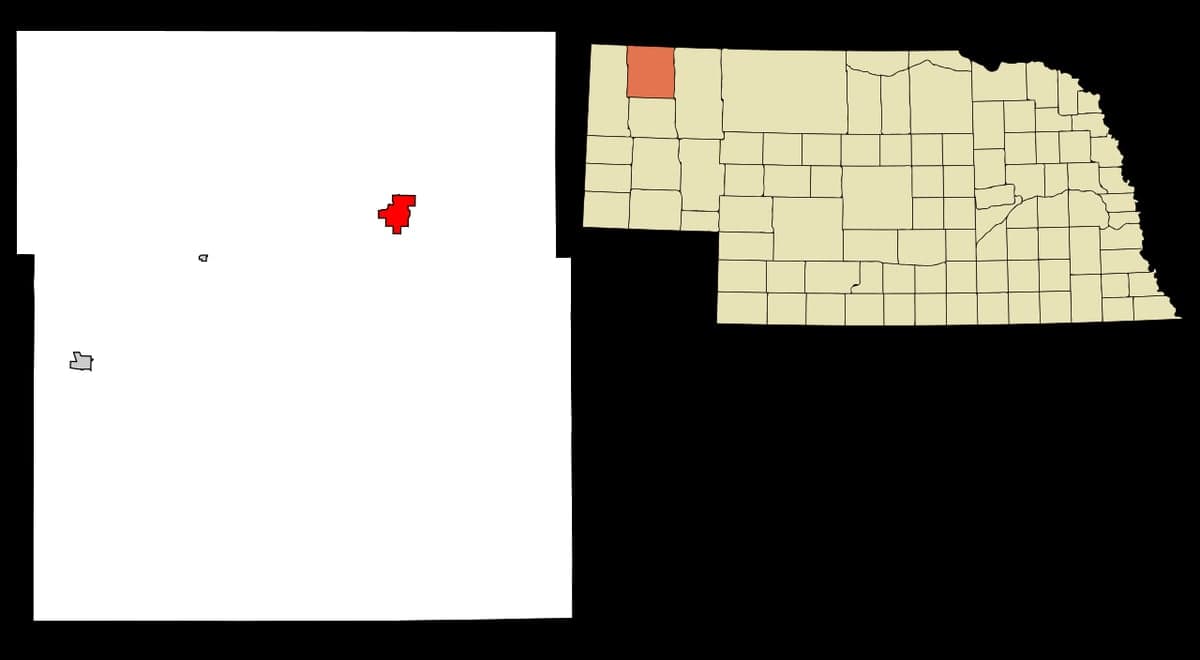
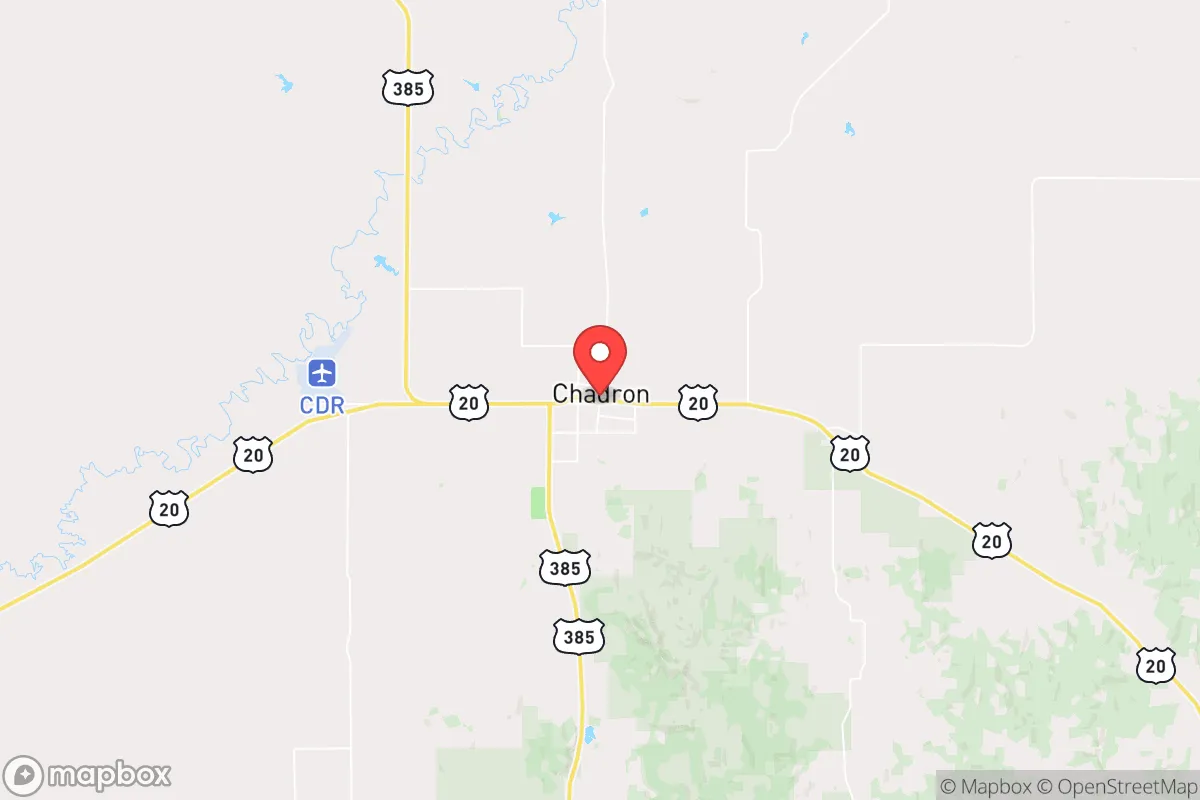
Photo: Wikipedia
Political ClimatePolitical Climate in Chadron, NE
District shown is the primary district for this city’s centroid. Cities may span multiple districts.
Local Political AnalysisPolitical Analysis of Chadron, NE
Chadron, Nebraska, is about as rock-ribbed conservative as it gets, and that’s not changing anytime soon. The Cook PVI of R+27 tells you everything you need to know: this is a place where the Republican primary is the real election, and Democrats are a rare sight. The political trajectory here has been steady, not radical—folks in Dawes County have voted the same way for decades, and the recent national shifts toward progressive ideology have only hardened local resolve. You won’t find the kind of political whiplash you see in Omaha or Lincoln; Chadron’s lean is baked into the soil, and it’s holding firm.
How it compares
Drive an hour east to Alliance, and you’ll find a similar conservative bent, though it’s a bit more blue-collar and less tied to the college crowd. Head south to Scottsbluff, and the politics get a little more mixed—still red, but with a stronger Hispanic influence and a few more moderate voices. The real contrast is with the Front Range cities in Colorado, like Fort Collins or Boulder, which are just a couple hours west. Those places have swung hard left in the last decade, and Chadron locals see that as a cautionary tale: government overreach on everything from land use to school curriculum is a red flag they’re determined to avoid. Compared to the rest of Nebraska’s Panhandle, Chadron is actually a bit more conservative than the state average, thanks to its rural character and lack of major industry that might attract outside influence.
What this means for residents
For the people living here, the political climate means a lot of personal freedom and very little bureaucratic hassle. You won’t see the kind of zoning fights or tax hikes that plague bigger cities—property taxes are low, and the county commission keeps a tight lid on spending. The local schools, like Chadron Public Schools, still emphasize traditional values, and there’s no push for the kind of progressive curriculum changes you hear about in Omaha. That said, there’s a quiet concern among longtime residents that the state government in Lincoln is starting to drift left on certain issues, like property tax relief and land-use regulations. If that trend continues, Chadron could feel more pressure from above, but for now, the local culture is one of self-reliance: people here solve their own problems and don’t look to the government for much beyond basic services.
One cultural distinction worth noting is Chadron’s strong sense of community, which is tied to its political identity. The annual Fur Trade Days and the presence of Chadron State College bring in some outside perspectives, but the town’s core remains deeply rooted in ranching and small business. There’s a palpable resistance to any policy that feels like an infringement on personal rights—whether it’s mask mandates, gun laws, or environmental restrictions. The long-term outlook is stable, but there’s a wariness: if the progressive wave that’s hit the coasts and even parts of the Midwest keeps creeping inward, Chadron will be one of the last holdouts, and folks here are fine with that. They’d rather be a quiet, free community than a trendy one.

State Political ClimatePolitical Climate in Nebraska
State Political AnalysisPolitical Environment in the State
Nebraska has long been a reliably conservative state, but its politics are more layered than the simple "red state" label suggests. The state has voted Republican in every presidential election since 1968, and its current partisan lean is roughly R+15, driven by a deeply conservative rural expanse and a growing, increasingly influential conservative suburban base. Over the last 10-20 years, the trajectory has been one of steady rightward movement on cultural and economic issues, though a persistent progressive stronghold in the state's largest metro area creates a sharp and sometimes contentious internal divide.
Urban vs. rural divide
The political map of Nebraska is a textbook case of the urban-rural split. The state’s Second Congressional District, which covers most of Omaha and its immediate suburbs, has become a genuine battleground, splitting its electoral votes in 2020 and 2024. Omaha itself is the engine of the state’s Democratic vote, with its urban core and older inner-ring suburbs like Dundee and Benson reliably blue. However, the real story is the explosion of conservative strength in the outer-ring suburbs. Elkhorn, Gretna, and Bennington have seen massive population growth and vote overwhelmingly Republican, often by margins of 70% or more. These are the areas where families are moving for better schools, lower crime, and a sense of community that feels increasingly rare in the city. Meanwhile, Lincoln, home to the University of Nebraska, is a blue island in a sea of red, but its influence is largely contained to the city limits. Drive 15 minutes outside of Lincoln or Omaha, and you’re in solidly Trump country. The rest of the state—from the Sandhills ranching communities like Valentine to the agricultural powerhouse of Grand Island and the Panhandle hub of Scottsbluff—votes Republican by massive margins. The rural counties, many of which have lost population for decades, have only grown more conservative, often voting 80-90% Republican. This isn't a state that's flipping blue anytime soon; the rural vote is simply too dominant.
Policy environment
Nebraska’s policy environment is generally friendly to conservative priorities, though it’s not without its frustrations. The state has a unicameral, officially nonpartisan legislature, which often leads to messy, unpredictable outcomes but also prevents the kind of rigid party-line gridlock seen elsewhere. On taxes, Nebraska is a mixed bag. There is no state income tax on Social Security benefits, which is a major draw for retirees, but the state’s top individual income tax rate is still around 6.6%, which is higher than many of its neighbors. Property taxes are a perennial complaint, especially in rural areas where school funding relies heavily on them. The regulatory posture is generally light, particularly for agriculture and manufacturing, but the state’s approach to occupational licensing can be burdensome. On education, Nebraska has a robust system of public schools, but school choice is limited. There are no private school voucher programs, and charter schools are essentially nonexistent. This is a major point of contention for conservative parents who want more options. On healthcare, the state did expand Medicaid under the Affordable Care Act, a decision that still rankles many conservatives. Election laws are solid: Nebraska requires voter ID, has no-excuse early voting, and maintains clean voter rolls. The state is also one of only two that splits its electoral votes by congressional district, a quirk that gives the Omaha area outsized national attention every four years.
Trajectory & freedom
On the trajectory of freedom, Nebraska has been a mixed bag, but the recent trend is cautiously positive. The biggest win for personal liberty in recent years was the passage of LB 77 in 2023, which eliminated the requirement for a permit to carry a concealed handgun. Constitutional carry was a major victory for Second Amendment advocates and a clear signal that the state is moving in the right direction on gun rights. On parental rights, the legislature passed LB 574, the "Let Them Grow Act," which bans gender-affirming surgeries and hormone therapies for minors. This was a hard-fought battle that put Nebraska at the forefront of protecting children from irreversible medical procedures. On the other hand, the state’s tax burden remains a concern. While there have been incremental cuts, the overall tax load is still too high for many, and the lack of a meaningful property tax relief mechanism is a persistent drag on economic freedom. The state also maintains a strong hand in regulating alcohol sales through its unique "license" system, which limits competition and keeps prices higher than in neighboring states. On medical autonomy, Nebraska has no broad religious or philosophical exemptions to vaccine mandates for healthcare workers, a point of friction for some. Overall, the state is becoming more free on cultural and Second Amendment issues, but the fight for economic freedom—especially on taxes and school choice—is ongoing.
Civil unrest & political movements
Nebraska is not a hotbed of civil unrest, but it has its flashpoints. The most visible in recent years has been the ongoing battle over abortion. After the Dobbs decision, the legislature passed a 12-week abortion ban, which sparked large, but ultimately ineffective, protests at the state capitol in Lincoln. These protests were organized primarily by groups like the Women’s Fund of Omaha and the ACLU of Nebraska, but they never reached the scale or intensity seen in states like Texas or Ohio. On the right, the most organized movement is the "Nebraska Family Alliance," which has been instrumental in pushing the parental rights and anti-trans legislation. There is also a growing, but still fringe, movement for "county supremacy" in the Panhandle, where some ranchers and local officials have pushed back against federal land management policies, particularly around the U.S. Forest Service and the Bureau of Land Management. Immigration politics are less volatile than in border states, but there is a steady undercurrent of concern in agricultural communities like Lexington and Schuyler, where meatpacking plants have drawn significant immigrant populations. There have been no serious sanctuary city movements; Omaha and Lincoln have both declined to adopt such policies. Election integrity is not a major controversy here; the state’s system is widely seen as secure, and the 2020 and 2022 elections were certified without major incident.
Projection
Looking ahead 5-10 years, Nebraska is likely to remain a reliably conservative state, but the internal dynamics will shift. The most significant trend is the continued growth of the conservative suburbs around Omaha. Places like Elkhorn and Gretna are absorbing tens of thousands of new residents, many of whom are moving from blue states like California and Illinois. These newcomers are often more culturally conservative than the native Nebraska Republicans, and they will push the state further right on issues like school choice, gun rights, and tax cuts. The urban cores of Omaha and Lincoln will likely become more progressive, but their political power will be diluted by the suburban growth. The rural areas will continue to lose population, but their outsized political influence will remain due to the state’s geographic-based legislative districts. The biggest wildcard is the unicameral legislature. If the conservative suburban wave continues, we could see a push to break the nonpartisan tradition and introduce partisan caucuses, which would accelerate the pace of conservative legislation. On taxes, expect continued pressure to lower income and property taxes, but don’t expect a complete elimination of the income tax anytime soon. The state’s fiscal conservatism is real, but it’s tempered by a pragmatic streak that resists radical change.
Bottom line for a new resident: If you’re moving to Nebraska, you’re choosing a state that is fundamentally conservative and getting more so, especially in the growing suburbs. You’ll find a strong culture of personal responsibility, a government that is generally limited but not libertarian, and a community that values stability over upheaval. The biggest practical considerations are the property tax burden and the limited school choice options, both of which are active political battlegrounds. If you’re a parent, you’ll want to pay close attention to the school district boundaries in the Omaha metro, as the quality and philosophy of education can vary dramatically between the city and the suburbs. Overall, Nebraska offers a high degree of personal freedom on cultural issues, a stable and safe environment, and a political climate that is likely to remain friendly to conservative values for the foreseeable future.
* Values derived from national, state, county, city and local statistics and may differ in a specific area. Last updated: 2026-05-03T20:31:57.000Z
Narrative content on this page is AI-generated and may contain mistakes. Verify any details that matter before acting on them.
ReloMaps may earn a commission from affiliate links at no extra cost to you.

