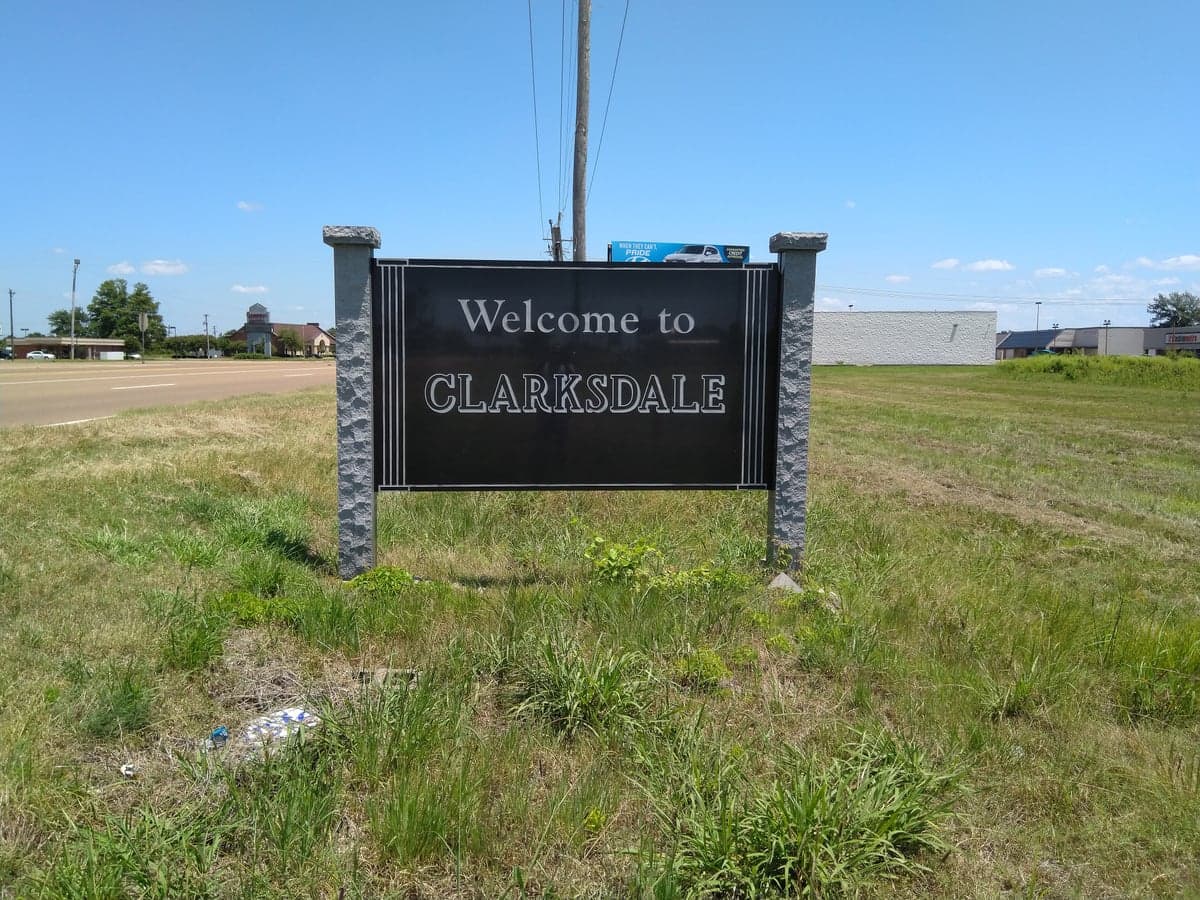
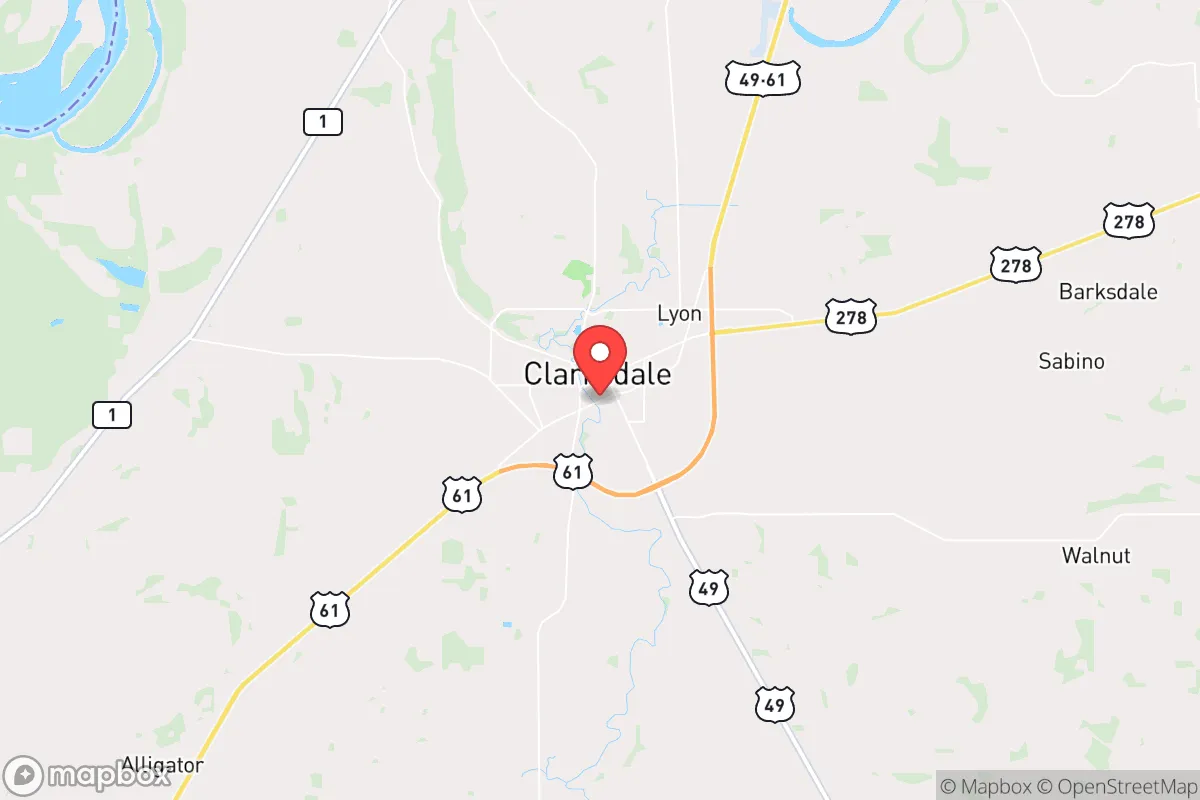
Photo: Wikipedia
Demographics of Clarksdale, MS
Affluence Level in Clarksdale, MS
A low-income area with significant economic hardship. Household wealth and educational attainment are well below national averages.
People of Clarksdale, MS
The people of Clarksdale, Mississippi, today form a deeply rooted community of 14,423 residents, characterized by a strong African American majority at 80.8% of the population. This is a city with a dense, historically layered identity—shaped by the cotton economy, the Great Migration, and the blues—where only 14.9% of residents are white and 2.6% are Hispanic. With a foreign-born population of just 1.5% and a college-educated share of 18.8%, Clarksdale remains a predominantly native-born, working-class city where family and church ties run deep, and where the legacy of the Delta’s plantation past is still visible in its neighborhoods and social fabric.
How the city was settled and grew
Clarksdale’s population history begins with the forced migration of enslaved African Americans to the Mississippi Delta’s cotton plantations in the 19th century. After the Civil War, the city was formally incorporated in 1882 as a railroad and cotton trading hub, drawing white landowners, merchants, and black sharecroppers and tenant farmers. The original white settlers—mostly of Anglo-American and Scots-Irish stock—built homes in the Downtown Clarksdale area and along the Sunflower River, while black laborers and their families settled in what became the New World District (also known as the “New World” neighborhood), a historically African American section that became the epicenter of Delta blues culture. By the early 1900s, the city’s population swelled as black families moved from rural plantations into Clarksdale seeking work in cotton gins, compresses, and rail yards. The Lyon’s Quarters neighborhood, just east of downtown, emerged as a black working-class enclave, while white professionals and business owners clustered in the North Clarksdale area. The Great Migration (1910–1970) saw tens of thousands of black residents leave the Delta for Chicago and Memphis, but Clarksdale itself remained a regional anchor, with its black population actually growing in absolute terms through the mid-20th century as rural-to-urban movement continued within the Delta.
Modern era (post-1965)
After the 1965 Hart-Cellar Act, Clarksdale saw virtually no new international immigration—the foreign-born share remains at just 1.5% today. Instead, the post-1965 era was defined by domestic shifts: white flight accelerated after school desegregation in the 1970s, with many white families moving to unincorporated areas south of town or to neighboring communities like Friars Point and Lula. The Heights neighborhood, once a mixed-race middle-class area, became predominantly black as white homeowners left. Meanwhile, the black population consolidated in the New World District, Lyon’s Quarters, and the Southside area near the Sunflower River. The city’s white population dropped from roughly 40% in 1960 to 14.9% today. Hispanic residents, now 2.6% of the population, began arriving in the 1990s and 2000s, primarily as agricultural laborers in the surrounding cotton and soybean fields, settling in small numbers in the West End and along Highway 61. East/Southeast Asian communities are essentially absent (0.0%), and the Indian-subcontinent population is negligible at 0.4%. The college-educated share (18.8%) is low by national standards, reflecting the area’s limited white-collar job base and the outmigration of educated young adults to Memphis or Jackson.
The future
Clarksdale’s population is slowly declining—down from roughly 20,000 in 1980—and is projected to continue shrinking as younger residents leave for larger cities. The city is not homogenizing into a single enclave; rather, it is tribalizing along race and class lines, with the black majority concentrated in older neighborhoods like the New World District and Lyon’s Quarters, while the small white population clusters in the North Clarksdale area and newer subdivisions near the airport. The Hispanic community, though small, is growing slowly through natural increase and limited immigration, but remains below 3% and is unlikely to reach 5% within a decade. The Indian and East/Southeast Asian populations are negligible and show no signs of growth. The next 10–20 years will likely see continued population loss, an aging demographic, and a persistent racial divide—but also a modest revival driven by blues tourism and historic preservation efforts in the Downtown and New World District areas, which may attract a small number of white retirees and remote workers from outside the Delta.
For someone moving to Clarksdale now, the city offers a deeply authentic, historically rich community with strong social ties and a low cost of living, but also limited economic opportunity, a shrinking population, and a stark racial geography. It is becoming a smaller, older, and more tourism-oriented place—not a growing suburb or a diversifying hub, but a Delta town holding onto its identity while the world around it changes.

* Values derived from national, state, county, city and local statistics and may differ in a specific area. Last updated: 2026-05-01T07:26:57.000Z
Narrative content on this page is AI-generated and may contain mistakes. Verify any details that matter before acting on them.
ReloMaps may earn a commission from affiliate links at no extra cost to you.

