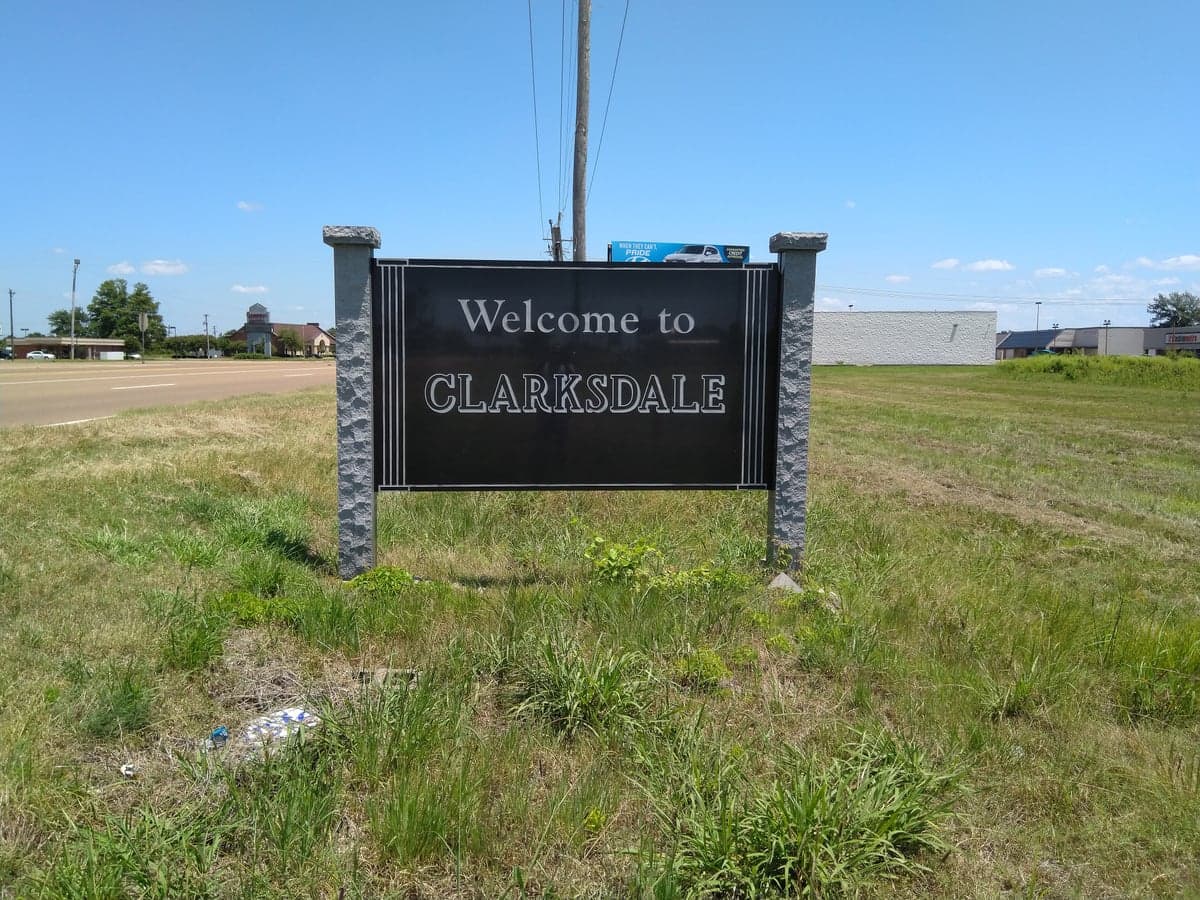
Photo: Wikipedia
Political ClimatePolitical Climate in Clarksdale, MS
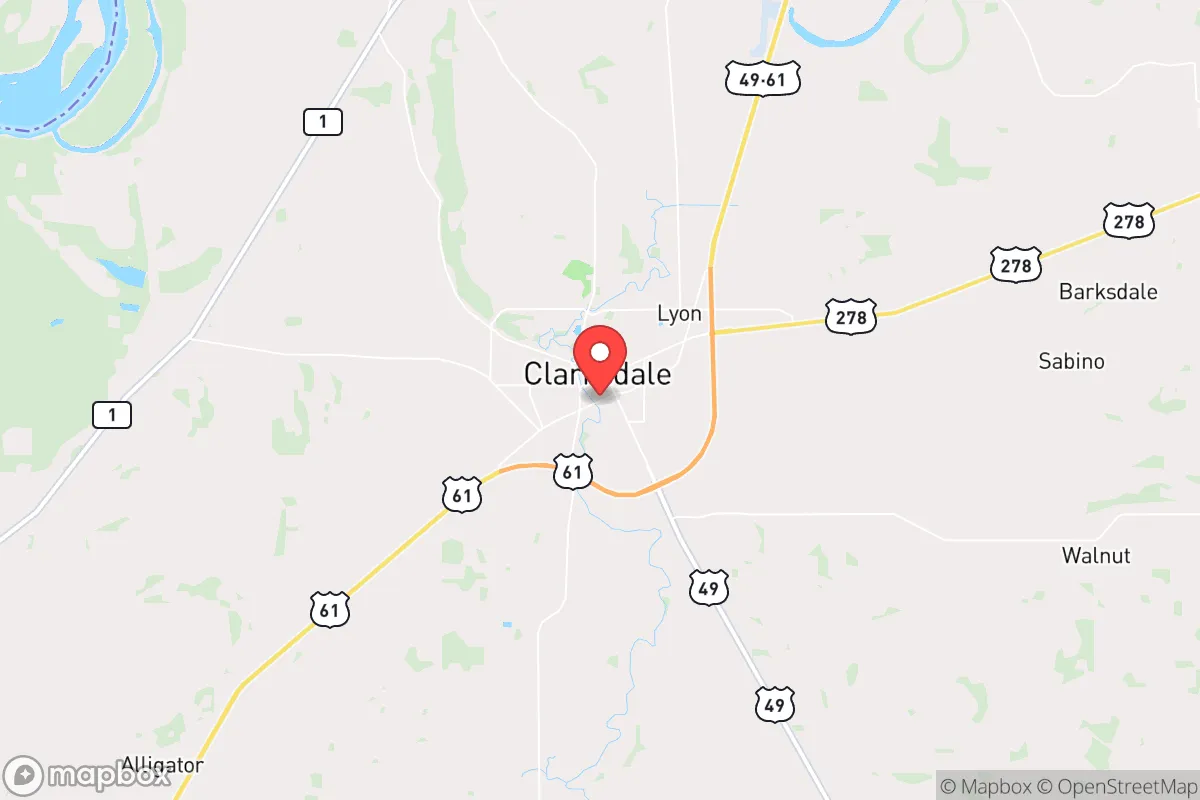
District shown is the primary district for this city’s centroid. Cities may span multiple districts.
Local Political AnalysisPolitical Analysis of Clarksdale, MS
Clarksdale, Mississippi, has long been a Democratic stronghold in a state that leans increasingly Republican, with a Cook PVI of D+11 reflecting its deep-blue voting patterns. But if you’ve lived here as long as I have, you know that label doesn’t tell the whole story—it’s more about tradition and local ties than any embrace of the progressive agenda you see in bigger cities. The real shift I’ve watched over the past decade is a quiet but steady move toward more conservative values among younger families and small business owners, even as the old guard holds on to the party machine. That said, the trajectory feels uncertain: national progressive trends are creeping in through state and federal policies, and that’s got a lot of us worried about what’s coming next for our personal freedoms and local way of life.
How it compares
Drive 30 minutes south to Cleveland, and you’ll find a similar Democratic lean, but with a more moderate, university-town vibe thanks to Delta State. Head west to Helena, Arkansas, and it’s a mirror image—blue on paper, but with a conservative undercurrent that’s stronger than you’d expect. The real contrast is just 45 minutes east to Oxford, where the University of Mississippi pulls the politics leftward, or an hour south to Greenwood, which has swung more Republican in recent cycles. Here in Clarksdale, we’re stuck in the middle: our D+11 rating masks a community that’s wary of government overreach, especially when it comes to property rights, school choice, and Second Amendment protections. I’ve seen neighbors who vote Democrat locally but talk like conservatives at the coffee shop—it’s a split that’s getting harder to ignore as national issues hit closer to home.
What this means for residents
For folks living here, the political climate means you’re constantly navigating a tug-of-war between local traditions and outside pressure. On one hand, you’ve got city council decisions that feel like they’re made by people who’ve been in power for decades, often with a heavy hand on zoning, business permits, and even how you can use your own land. On the other, there’s a growing push from state-level Republicans to limit that local control—which sounds good until you realize it’s just swapping one set of bureaucrats for another. What really gets under my skin is how progressive policies on things like housing regulations and tax incentives are being sold as “community development,” but they end up squeezing small landlords and independent shops. If you value keeping your own money and making your own choices without a dozen permits, you’ll feel the pinch here more than in, say, Senatobia or Batesville, where the county government tends to stay out of your business.
Culturally, Clarksdale still holds onto its blues heritage and a slower pace of life that I love, but there’s a creeping shift in policy that’s hard to ignore. The city’s pushed for more public funding for arts and tourism projects that sound nice but often come with strings attached—like mandates on hiring practices or event permits that favor certain groups over others. I’ve seen longtime residents get priced out of their own neighborhoods as outside developers get tax breaks, while local folks get hit with higher fees for basic services. Looking ahead, I’m concerned that if the progressive tide keeps rising, we’ll lose the very character that makes Clarksdale worth living in—the freedom to run a business your way, to hunt and fish without new restrictions, and to raise your kids without government telling you how. It’s not all bad yet, but you’ve got to keep your eyes open and your voice loud if you want to keep this place from turning into another cookie-cutter town run by distant bureaucrats.

State Political ClimatePolitical Climate in Mississippi
State Political AnalysisPolitical Environment in the State
Mississippi has long been one of the most reliably conservative states in the country, with a Republican lean that has only deepened over the past two decades. The state voted for Donald Trump by 17 points in 2024, and every statewide elected office is held by a Republican. But beneath that solid red surface, the political climate is more layered than the topline numbers suggest — a story of rural traditionalism, suburban shifts, and a growing tension between local control and federal overreach that any new resident should understand before unpacking the moving truck.
Urban vs. rural divide
The political map of Mississippi is a study in contrasts. The rural Delta counties — places like Bolivar, Sunflower, and Washington — are overwhelmingly Democratic, driven by a large African American population that reliably votes blue. But these are also the state's most depopulated regions, losing residents for decades. The real engine of conservative power is the suburban and exurban crescent that arcs from Desoto County (just south of Memphis) down through Madison and Rankin counties outside Jackson, and over to the Gulf Coast. Desoto County alone cast more votes for Trump than the entire city of Jackson. Madison County, home to the affluent suburb of Madison, is a Republican stronghold where school board races are fought over curriculum transparency and parental rights. The Gulf Coast, anchored by Biloxi and Gulfport, leans conservative but with a libertarian streak — military veterans and casino workers who want low taxes and minimal government interference. The only reliably blue metro is Jackson itself, but its political influence is shrinking as the city's population declines and the surrounding suburbs grow. Hattiesburg, home to the University of Southern Mississippi, is a purple pocket where college-town liberalism bumps up against Pine Belt conservatism, but it still votes Republican in statewide races.
Policy environment
Mississippi's policy environment is among the most conservative in the nation, and it's been getting more so. The state has no income tax on Social Security benefits, a flat 4% personal income tax that is being phased down toward elimination, and one of the lowest property tax burdens in the country. There is no state-level rent control, no statewide zoning mandates, and no certificate-of-need laws for new hospitals — meaning healthcare competition is relatively free. On education, Mississippi passed the Mississippi Parental Choice and Transparency Act in 2022, which requires schools to post curriculum materials online and notify parents of any instructional materials involving human sexuality. The state also expanded its school choice program, the Mississippi Education Scholarship Account (ESA), to cover more students, including those with special needs and those in failing districts. On healthcare, Mississippi has not expanded Medicaid under Obamacare, a decision that keeps government out of the insurance market but also leaves many rural hospitals struggling. Election laws are strict: voter ID is required, absentee voting is limited to specific excuses, and same-day voter registration does not exist. The state also passed a constitutional carry law in 2016, allowing permitless carry of firearms, and has a strong Stand Your Ground statute.
Trajectory & freedom
Mississippi is moving in a direction that expands personal freedom in most areas, but not all. The biggest win for liberty in recent years was the Mississippi Medical Marijuana Act (2022), which legalized medical cannabis after a long court battle — a rare instance of the legislature bowing to voter initiative. On gun rights, the state has been a leader: permitless carry, no red flag laws, and a preemption law that prevents cities like Jackson from enacting their own gun restrictions. On parental rights, the Mississippi Religious Freedom Restoration Act (2014) protects individuals and businesses from being forced to participate in activities that violate their religious beliefs. However, the state has also expanded government power in ways that concern liberty-minded residents. The Mississippi Department of Child Protection Services has been criticized for overreach in family investigations, and the state's civil asset forfeiture laws still allow law enforcement to seize property without a criminal conviction, though reforms in 2020 raised the burden of proof. On speech, Mississippi has no hate speech laws that chill expression, and the state passed a campus free speech act in 2019 that prohibits public universities from designating "free speech zones" — a clear win for open debate.
Civil unrest & political movements
Mississippi has seen relatively little civil unrest compared to other states, but there are flashpoints. The Jackson water crisis of 2022-2023 became a political battleground, with the state taking over the city's water system amid accusations of mismanagement by local Democratic leadership. This sparked protests from left-leaning groups who framed it as a racial justice issue, while conservatives pointed to decades of failed governance. The Mississippi State Sovereignty Commission is a historical scar, but modern activism is more focused on school board meetings and county supervisor races. The Mississippi Rising Coalition organizes on the left around voting rights and criminal justice reform, while the Mississippi Conservative Coalition pushes for school choice and lower taxes. Immigration politics are muted — Mississippi has a very small foreign-born population — but the state passed a law in 2023 requiring all businesses to use E-Verify, and there are no sanctuary cities. Election integrity is a live issue: the state's hand-marked paper ballot system is widely trusted, but the 2020 election saw lawsuits over absentee ballot procedures. The Mississippi Freedom Caucus, a group of hardline conservative state legislators, has been the most visible political movement in recent years, pushing for further tax cuts, school choice expansion, and restrictions on government overreach.
Projection
Over the next 5-10 years, Mississippi is likely to become even more conservative, but with a growing libertarian edge. The state is experiencing modest in-migration from California and Illinois, mostly retirees and remote workers drawn by low housing costs and no state income tax. These newcomers tend to be conservative-leaning but less culturally traditional — they want low taxes and minimal regulation but may be more skeptical of government involvement in social issues. The Gulf Coast and Desoto County are the fastest-growing areas, and they are pulling the state's politics toward a more suburban, pro-business conservatism. The Democratic Party's base in the Delta will continue to shrink demographically, while the Republican majority in the legislature will likely grow. The biggest wildcard is the Mississippi Supreme Court, which has become more conservative in recent appointments, and the potential for further school choice expansion, including a universal ESA program. On personal freedom, expect more movement toward tax elimination, further gun rights expansion (suppressor deregulation, for example), and continued resistance to federal mandates on healthcare and education. The state's biggest risk is not a leftward shift, but a complacent government that grows too comfortable with power — the same dynamic that led to the Jackson water crisis.
For a new resident, the bottom line is this: Mississippi offers a high degree of personal freedom in most areas of life — low taxes, strong gun rights, school choice, and minimal government interference in your daily decisions. But that freedom comes with a responsibility to stay engaged locally, because the same government that protects liberty can also overreach if left unchecked. The state is a place where your vote matters more than in most, and where the political climate is shaped more by school board meetings and county supervisor races than by national headlines. If you want a state that respects your right to live your life as you see fit, Mississippi is a strong bet — just keep an eye on the details.
* Values derived from national, state, county, city and local statistics and may differ in a specific area. Last updated: 2026-05-01T07:26:57.000Z
Narrative content on this page is AI-generated and may contain mistakes. Verify any details that matter before acting on them.
ReloMaps may earn a commission from affiliate links at no extra cost to you.

