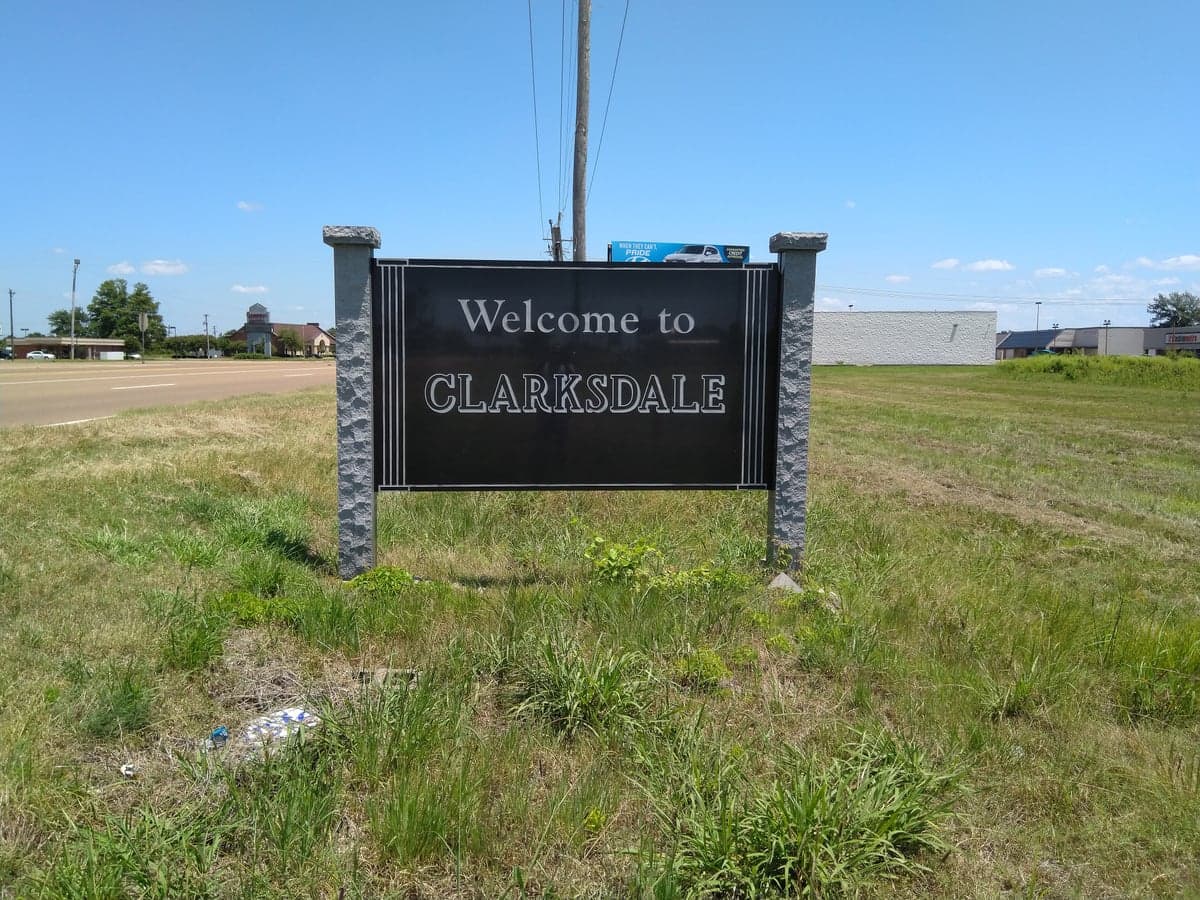
Photo: Wikipedia
Strategic Assessment of Clarksdale, MS
Workable tactical position. Some exposure to population density or targets, but generally defensible in a crisis.
What does the Strategic Assessment tell us?
Our Strategic Assessment grades tactical survivability of an area. Major population centers, military targets, fallout zones, natural disasters, and border exposure all drive risk — lower exposure means a more defensible position in a crisis.
This is heavily inspired by Joel Skousen's Strategic Relocation book. Highly recommended you checkout the book ($)What does this tell us?
Our Strategic Assessment grades tactical survivability of an area. Major population centers, military targets, fallout zones, natural disasters, and border exposure all drive risk — lower exposure means a more defensible position in a crisis.
This is heavily inspired by Joel Skousen's Strategic Relocation book. Highly recommended you checkout the book ($)Strategic Pillars

Key Distances
Regional Safe Places
Below is our recommended "safe zones" in Mississippi and the surrounding area based on our strategic heuristics. For most people, it's unrealistic to live in a “safe zone” full-time due to work, family or other personal reasons. They tend to be more rural. However, many of these areas are perfect for second homes and retreat properties that double as a vacation home or even a short-term rental.
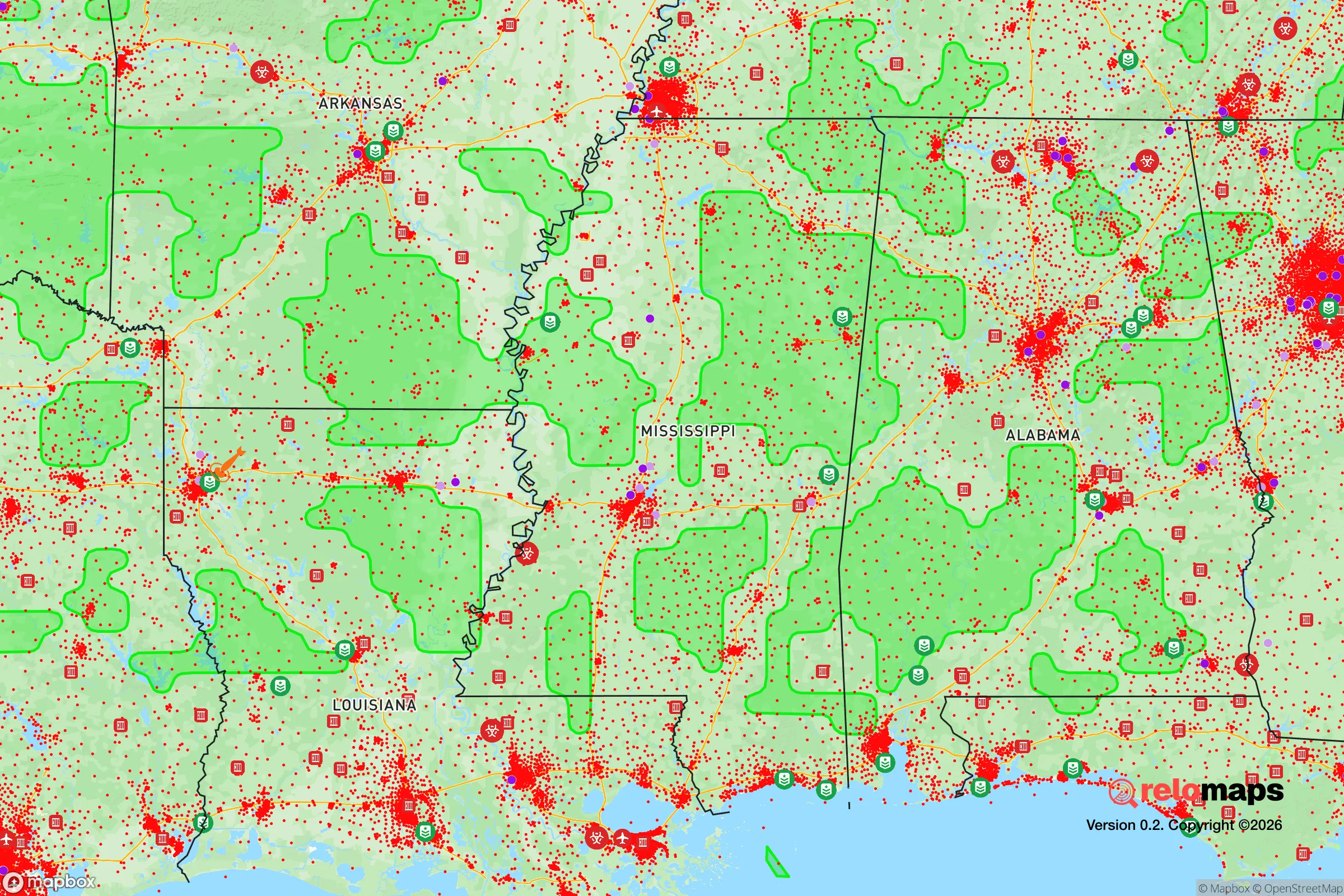
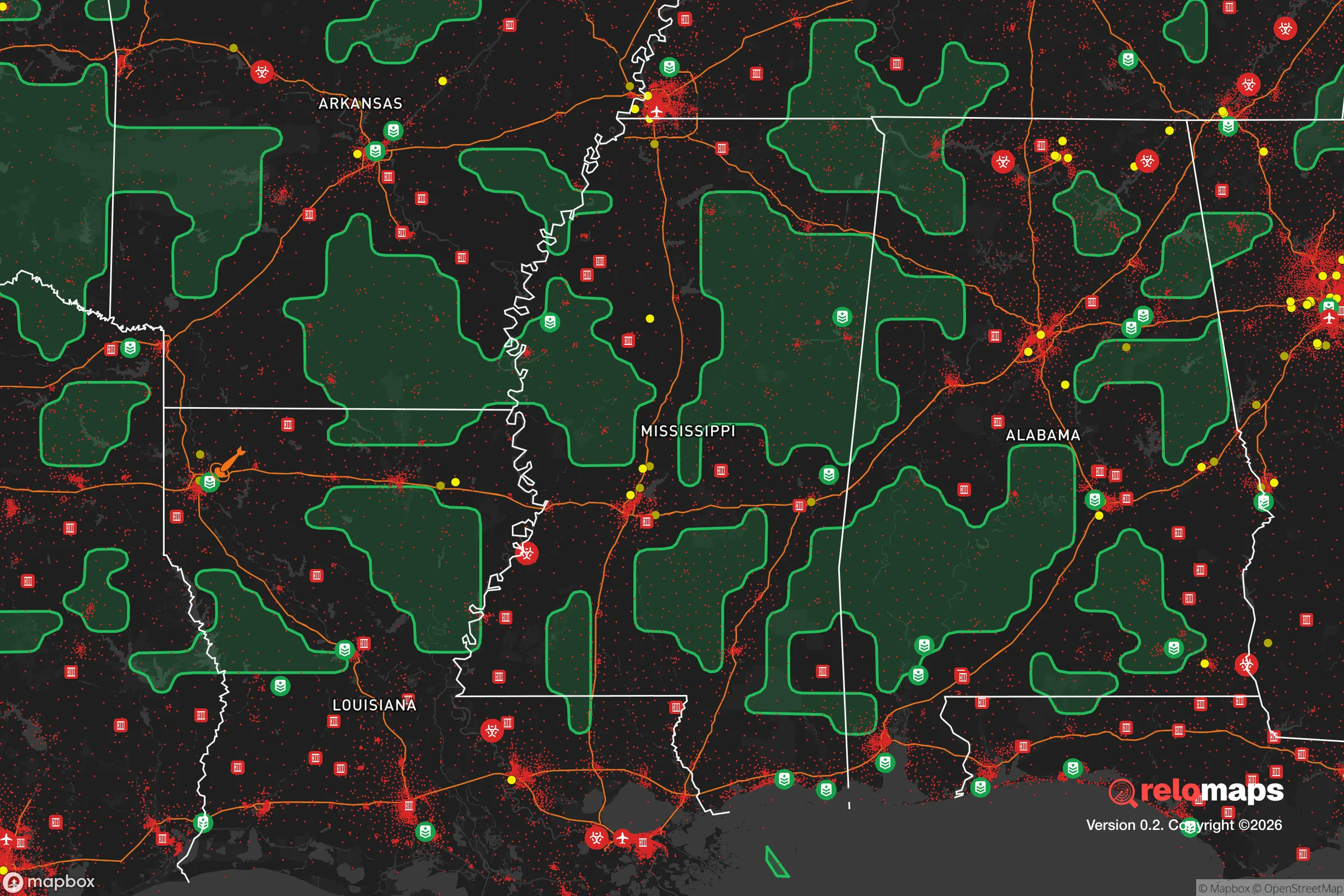


Important Note: For informational purposes only. This does not mean nothing bad ever happens in the green zones. Please use common sense. This is based on public data and modeled with AI. We tried to take a conservative approach but mistakes happen. We update this regularly as new information becomes available.
Solar Generator Recommendations
Backup power matters more here than in safer locations. We've picked three solar generators across budgets and capacity tiers — start with the budget unit if you only need a few essentials, or step up if you want to run a fridge and HVAC for days at a time.

Jackery Portable Power Station Explorer 300
Budget OptionPower on the Go: Weighing only 11 lbs, it's convenient to set up and store with book-sized foldable solar panels

BLUETTI Portable Power Station AC180
Designed for both indoor and outdoor scenarios, AC180 is highly capable as it has a robost capacity and continuous output power.

EF ECOFLOW DELTA Pro Ultra Power Station
Upgraded PickEcoFlow DELTA Pro Ultra is a whole-home energy system designed to grow with your family. Integrated with the Smart Home Panel 2, it scales to meet your evolving energy needs — keeping your home powered, intelligent, and secure through every stage of life.
We earn a commission, at no additional cost to you.
Strategic Assessment Analysis
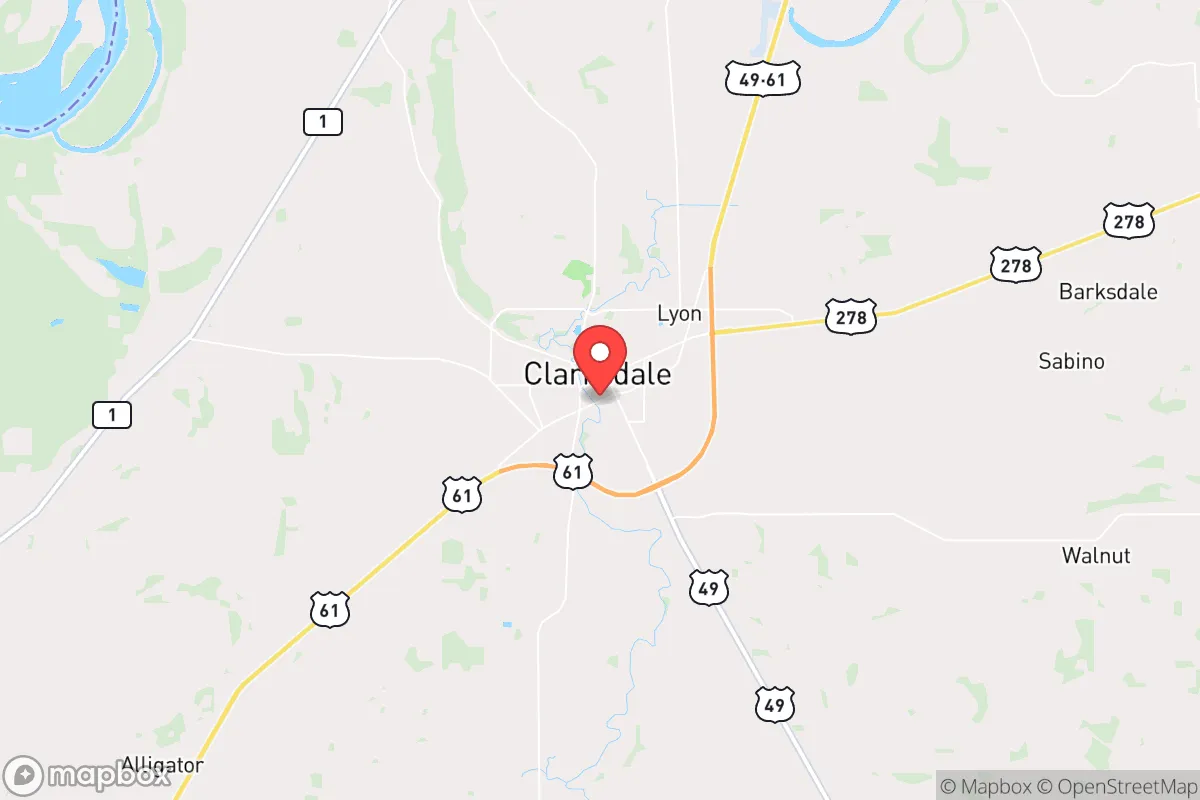
Clarksdale, Mississippi, sits at a strategic crossroads in the Mississippi Delta, offering a unique blend of isolation and accessibility that appeals to those prioritizing resilience over convenience. Its location—roughly 70 miles southwest of Memphis and 130 miles northwest of Jackson—places it far enough from major urban centers to avoid the worst of civil unrest or fallout zones, yet close enough to access critical supply routes via US-61 and US-49. The area’s flat, fertile floodplain and low population density (around 15,000 residents in the city, with Coahoma County under 22,000) create a defensible, low-profile environment where a prepared individual or family can operate with minimal scrutiny. For a conservative-leaning relocator concerned with societal decay, mass casualty events, or federal overreach, Clarksdale offers a hardscrabble but viable base—provided you understand its risks and assets.
Geographic position and natural advantages for long-term survival
Clarksdale’s geography is both a blessing and a burden. The Mississippi River lies just 15 miles west, providing a massive water source and a natural barrier to movement from that direction. The surrounding Delta is some of the richest agricultural soil in North America, meaning local food production is a realistic option—if you can secure land and equipment. The area’s flat terrain makes it easy to survey, but also limits natural defensive cover; you’ll rely on distance and low visibility rather than hills or forests. The Yazoo River and numerous bayous offer secondary water sources and fishing opportunities, but they also bring seasonal flooding—a recurring hazard that demands elevated structures or quick evacuation plans. Winters are mild, summers are brutally humid, and tornadoes are a real threat (the Delta sits in Dixie Alley). For a prepper, the key advantage is low population density and limited strategic value to hostile actors—Clarksdale isn’t a transportation hub, energy center, or government target. That obscurity is your best asset.
Risks, exposures, and proximity to fallout-relevant landmarks
No location is risk-free, and Clarksdale has specific vulnerabilities that a serious relocator must weigh. The most immediate concern is proximity to Memphis, a major urban center with a population over 630,000. In a scenario involving civil unrest, mass casualty events, or a nuclear incident (Memphis is near the New Madrid Seismic Zone and has industrial targets like the TVA’s Allen Fossil Plant), refugees could flow south along US-61. Clarksdale is also within 200 miles of the Grand Gulf Nuclear Station in Port Gibson, MS—a single-unit reactor that, while well-maintained, represents a fallout risk if compromised. The Mississippi River itself is a double-edged sword: it’s a water source, but also a potential contamination vector if upstream chemical or nuclear incidents occur. Additionally, the Delta’s flat, open landscape offers little shielding from fallout or airborne contaminants. You’ll need a basement (rare in the Delta due to high water tables) or a reinforced safe room. Flooding from the Mississippi or Yazoo rivers is the most probable natural disaster, with FEMA flood maps showing large portions of Coahoma County in the 100-year floodplain. For a conservative prepper, the takeaway is that Clarksdale’s isolation is real but not absolute—you must plan for both human and environmental threats from the north and west.
Practical resilience for a relocator: food, water, energy, and defensibility
Self-sufficiency in Clarksdale is achievable but requires upfront investment. Water is abundant but not clean—the Delta’s groundwater is high in iron and sulfur, and municipal supplies in Clarksdale have faced boil-water notices in recent years. A well with a quality filtration system (reverse osmosis or UV) is essential. Rainwater catchment is viable given the region’s 50+ inches of annual rainfall, but you’ll need to account for evaporation and contamination from agricultural runoff. Food production is the area’s strongest suit. The growing season runs from April to October, and you can raise vegetables, poultry, and even small livestock on a few acres. Local farmers’ markets and co-ops exist but are sparse; you’ll likely need to grow or barter for most of your calories. Hunting (deer, waterfowl, wild hog) and fishing (catfish, crappie, bass) are reliable protein sources, but public land access is limited—you’ll need private property or permission. Energy resilience is a weak point. The grid is aging and prone to outages during storms. Solar is feasible (the area gets about 215 sunny days per year), but you’ll need battery storage or a generator for cloudy stretches. Natural gas is available in town but not in rural areas; propane is a common backup. Defensibility is mixed: the flat terrain means any approach is visible, but the lack of cover also means you can see threats coming from miles away. A rural property with a long driveway, perimeter fencing, and a reinforced structure is ideal. Community is your biggest wildcard. Clarksdale has a tight-knit, older population with deep roots—outsiders are viewed with suspicion but can earn trust through consistent, respectful behavior. For a conservative relocator, this means you’ll need to build relationships slowly, avoid political grandstanding, and demonstrate practical value (skills like welding, mechanics, or medical training are highly valued).
The overall strategic picture for Clarksdale is one of trade-offs. It offers genuine advantages—low population, abundant water and fertile soil, distance from major targets—but demands that you accept significant infrastructure gaps and environmental hazards. This is not a location for those seeking comfort or convenience; it’s a location for those willing to work hard, stay low, and think long-term. The Delta’s economic decline (poverty rates above 30%, limited healthcare access, poor schools) means you’ll be largely self-reliant, which aligns with a prepper mindset but also means you can’t count on local services in a crisis. If you can secure a well, solar power, and a defensible property outside the floodplain, Clarksdale provides a resilient base that most Americans overlook. The key is to treat it as a strategic asset, not a retirement destination—and to always keep one eye on the road north from Memphis.

* Values derived from national, state, county, city and local statistics and may differ in a specific area. Last updated: 2026-05-01T07:26:57.000Z
Narrative content on this page is AI-generated and may contain mistakes. Verify any details that matter before acting on them.
ReloMaps may earn a commission from affiliate links at no extra cost to you.

