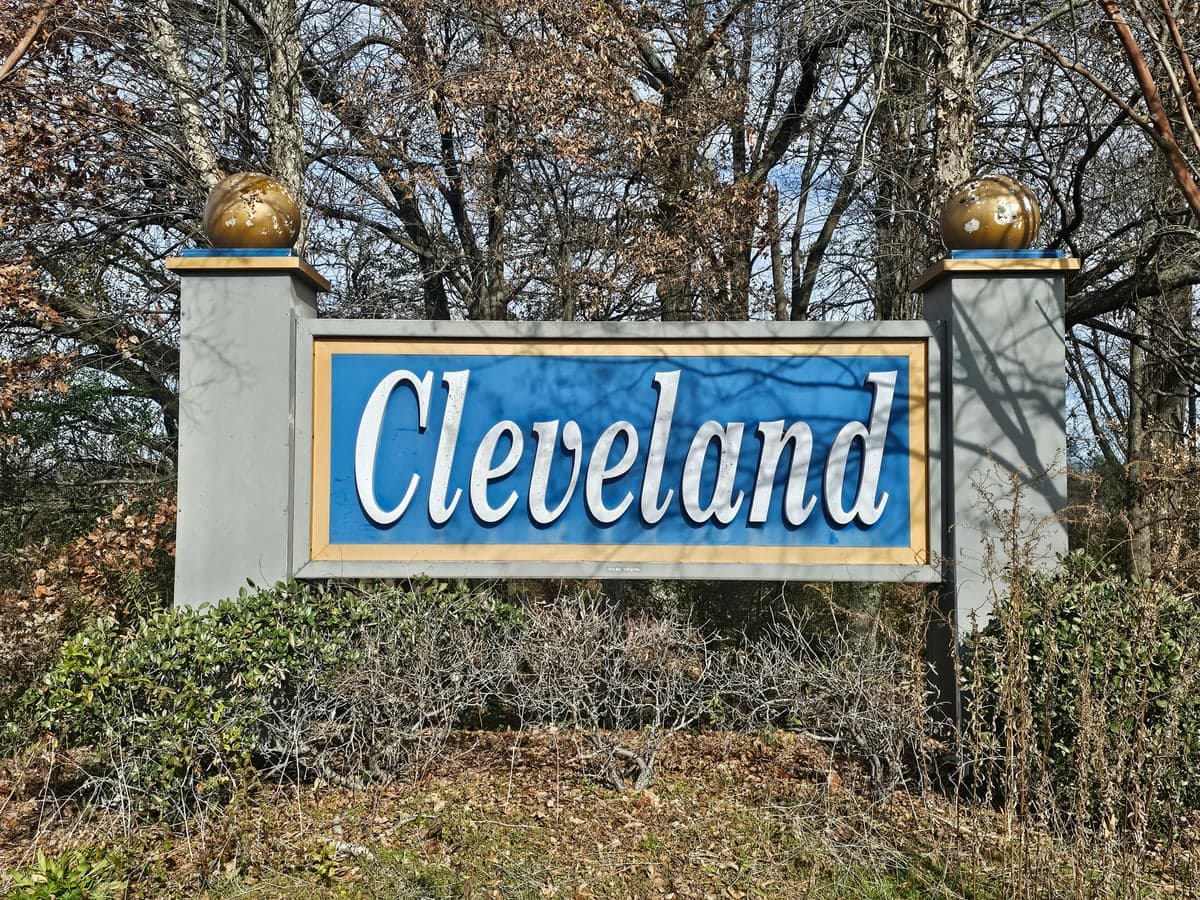
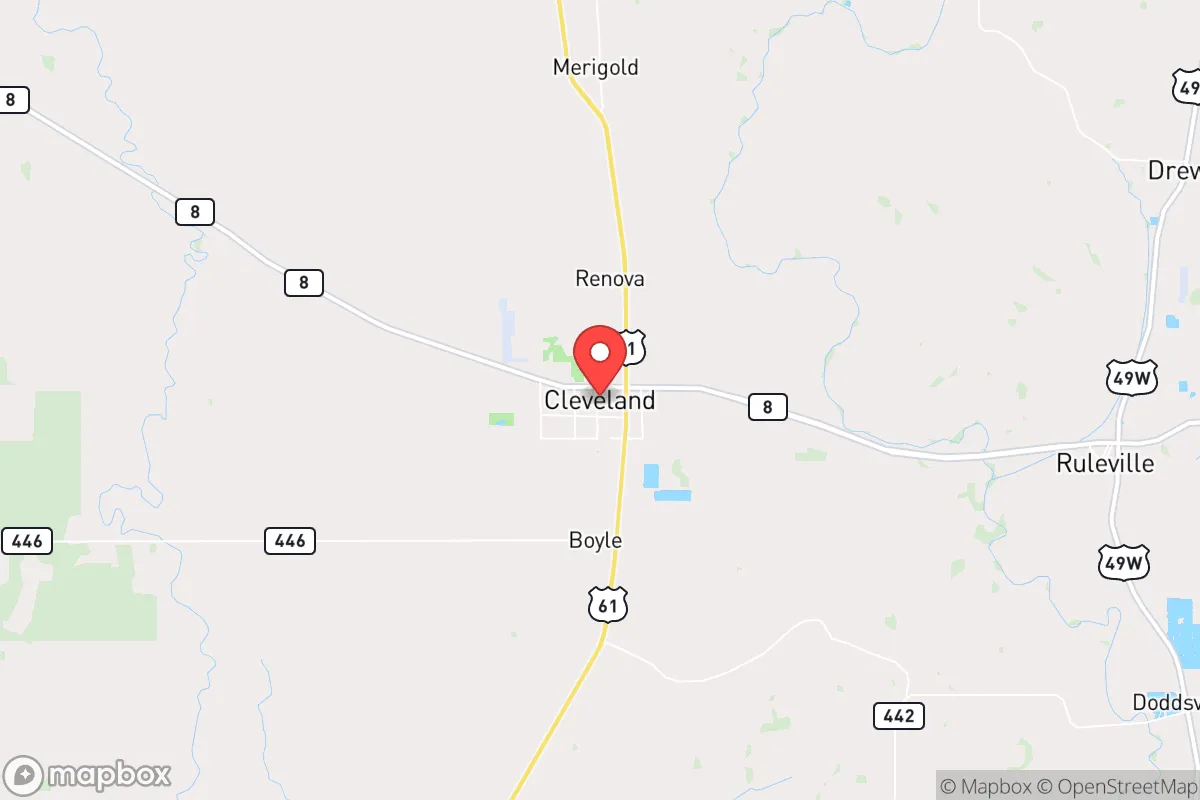
Photo: Wikipedia
Personal Sovereignty in Cleveland, MS
Viable for self-reliance. Generally workable, though some barriers may limit total independence.
What does Personal Sovereignty tell us?
Personal Sovereignty measures your capacity for self-reliance and independence with minimal government friction. Higher scores mean fewer barriers between you and the way you want to live... but it assumes you have the space you need and good neighbors.
What does this tell us?
Personal Sovereignty measures your capacity for self-reliance and independence with minimal government friction. Higher scores mean fewer barriers between you and the way you want to live... but it assumes you have the space you need and good neighbors.
State Policy
Energy independence: Importer (50% of energy produced in-state)
Personal Liberty
Homesteading

Personal Liberty Analysis
Cleveland, Mississippi, offers a level of personal sovereignty that stands out in the modern American landscape, particularly for those who prioritize minimal government interference in daily life. Located in the Mississippi Delta, this small city of roughly 11,000 people operates within a state that consistently ranks among the most liberty-minded in the nation, especially on issues of gun rights, taxation, and parental authority. For the strategic relocator—whether a single individual or a family—Cleveland provides a environment where the default posture is "leave me alone," provided you respect the local culture and don't draw unnecessary attention. The trade-off is clear: you get significant autonomy over your property, family, and self-defense, but you also accept a slower pace, limited economic opportunity, and the reality that some services (like infrastructure and emergency response) are less robust than in higher-tax, higher-regulation states.
Tax burden and regulatory posture: How Mississippi compares to high-control states
Mississippi’s tax structure is a major draw for those fleeing states with aggressive revenue collection. The state has a flat income tax rate of 4.7% (as of 2026), with a phase-down to 4.0% scheduled by 2028, and no tax on Social Security benefits. For a single individual earning $50,000 annually, the state income tax bill is roughly $2,350—significantly less than in California or New York. Property taxes in Bolivar County, where Cleveland sits, are among the lowest in the nation, with an effective rate around 0.8% of assessed value. A $150,000 home would incur about $1,200 in annual property taxes. The regulatory environment is equally light: Mississippi has no state-level occupational licensing for many trades, no universal background checks for private firearm sales, and a "right-to-work" status that keeps union influence minimal. The state also has a homestead exemption that shields up to $75,000 of your home's assessed value from county taxes. For the prepper or survivalist, this means less of your income is siphoned off to fund programs you may not support, and you face fewer bureaucratic hurdles when starting a side business or building on your land. The trade-off is that public services—roads, schools, and emergency services—are funded accordingly, so you'll need to budget for private alternatives if you want higher quality.
Self-defense and gun law specifics: What the Second Sanctuary state allows
Mississippi is a constitutional carry state, meaning no permit is required to carry a concealed firearm for anyone 21 or older who can legally possess a gun. Cleveland sits in Bolivar County, which is a "Second Amendment Sanctuary" county—local law enforcement has formally declared they will not enforce federal gun laws they deem unconstitutional. This is not just symbolic; it means that if federal overreach occurs, local sheriffs have publicly stated they won't be the ones kicking in your door over magazine capacity or barrel length. The state also has a "Stand Your Ground" law with no duty to retreat, and Castle Doctrine protections extend to your vehicle and workplace. For the survivalist, this is critical: you can defend your home, family, and property without fear of prosecution, provided the threat is genuine. There are no state-level restrictions on magazine capacity, no "assault weapon" bans, and no waiting periods for firearm purchases. Private sales between individuals require no paperwork or background checks. The only notable restriction is that you must be 18 to purchase a long gun and 21 for a handgun from a licensed dealer. For those concerned about federal overreach, Mississippi also passed a law in 2024 prohibiting state resources from being used to enforce any future federal firearm bans. This creates a legal buffer that makes Cleveland a strong choice for anyone who views the Second Amendment as a non-negotiable right.
Self-reliance and homesteading viability: Lot sizes, zoning, and off-grid feasibility
Cleveland and its surrounding Bolivar County offer some of the most permissive conditions for homesteading and off-grid living in the South. Zoning in the city limits is minimal—most residential lots are zoned R-1, which allows for gardens, small livestock (chickens, rabbits), and even beekeeping without special permits. Outside city limits, in unincorporated Bolivar County, there is effectively no zoning at all. You can buy a 1- to 5-acre parcel for $5,000 to $15,000 per acre, depending on proximity to the Mississippi River. Lot sizes in the county routinely start at half an acre and go up to 40 acres or more. There are no county-level restrictions on rainwater collection, composting toilets, or solar panel installation. The state has a "Right to Farm" law that protects agricultural activities from nuisance lawsuits, so if your neighbor complains about your chicken coop or compost pile, you have legal protection. Off-grid feasibility is high: the region gets ample sun for solar (about 215 sunny days per year), and well water is accessible at depths of 100-200 feet. The main challenge is that the soil is heavy clay in many areas, so raised beds or amended soil are recommended for gardening. For those serious about self-reliance, Cleveland offers the rare combination of cheap land, lax regulation, and a climate that supports year-round growing seasons (zone 8a). The downside is that the nearest major city for specialized supplies is Memphis, about 90 minutes north, so you'll need to stock up or plan ahead.
Personal liberties: Parental rights, medical autonomy, speech, and property
Mississippi has some of the strongest parental rights laws in the country. The state's "Parents' Bill of Rights" (passed in 2023) guarantees that parents have the fundamental right to direct their child's education, medical care, and moral upbringing. This means no school can provide medical treatment or mental health counseling to your child without your written consent, and you have the right to review all instructional materials. Cleveland's public schools, while underfunded, are subject to these protections. For medical autonomy, Mississippi has no vaccine mandates for adults or children beyond standard school entry requirements (which have religious exemption options). The state also has a "Right to Try" law for terminally ill patients and protects alternative medical practitioners from prosecution for providing treatments not approved by the FDA, as long as they are not fraudulent. Speech protections are robust: Mississippi has no hate speech laws that criminalize political or religious expression, and the state has a "campus free speech" law that applies to Delta State University in Cleveland. Property rights are similarly strong, with no state-level eminent domain for private economic development (post-Kelo reforms). For the prepper, this means you can build a bunker, store supplies, and raise your family according to your values without fear of state intervention—provided you stay within basic building codes and don't create a public nuisance. The only notable limitation is that Mississippi does have a "red flag" law, but it is rarely enforced and requires a court order based on specific threats, not just anonymous tips.
Overall, Cleveland, MS, offers a level of personal sovereignty that is increasingly rare in the United States. Compared to states like California, New York, or Illinois, where taxes, regulations, and mandates constantly encroach on individual decision-making, Mississippi's approach is fundamentally hands-off. The city itself is small and quiet, which means less government presence in your daily life—no HOA overlords, no aggressive code enforcement, and a sheriff's office that prioritizes actual crime over lifestyle enforcement. For the single individual or parent who values the ability to live according to their own conscience, defend their family, and build a self-sufficient life without constant state interference, Cleveland represents a viable sanctuary. The trade-offs—limited economic opportunity, lower-quality public services, and a slower pace—are real, but for those who prioritize freedom over convenience, it's a trade worth making. If the country continues its trajectory toward centralized control, places like Cleveland will become not just attractive, but essential for those who refuse to be managed.

* Values derived from national, state, county, city and local statistics and may differ in a specific area. Last updated: 2026-05-04T02:58:14.000Z
Narrative content on this page is AI-generated and may contain mistakes. Verify any details that matter before acting on them.
ReloMaps may earn a commission from affiliate links at no extra cost to you.

