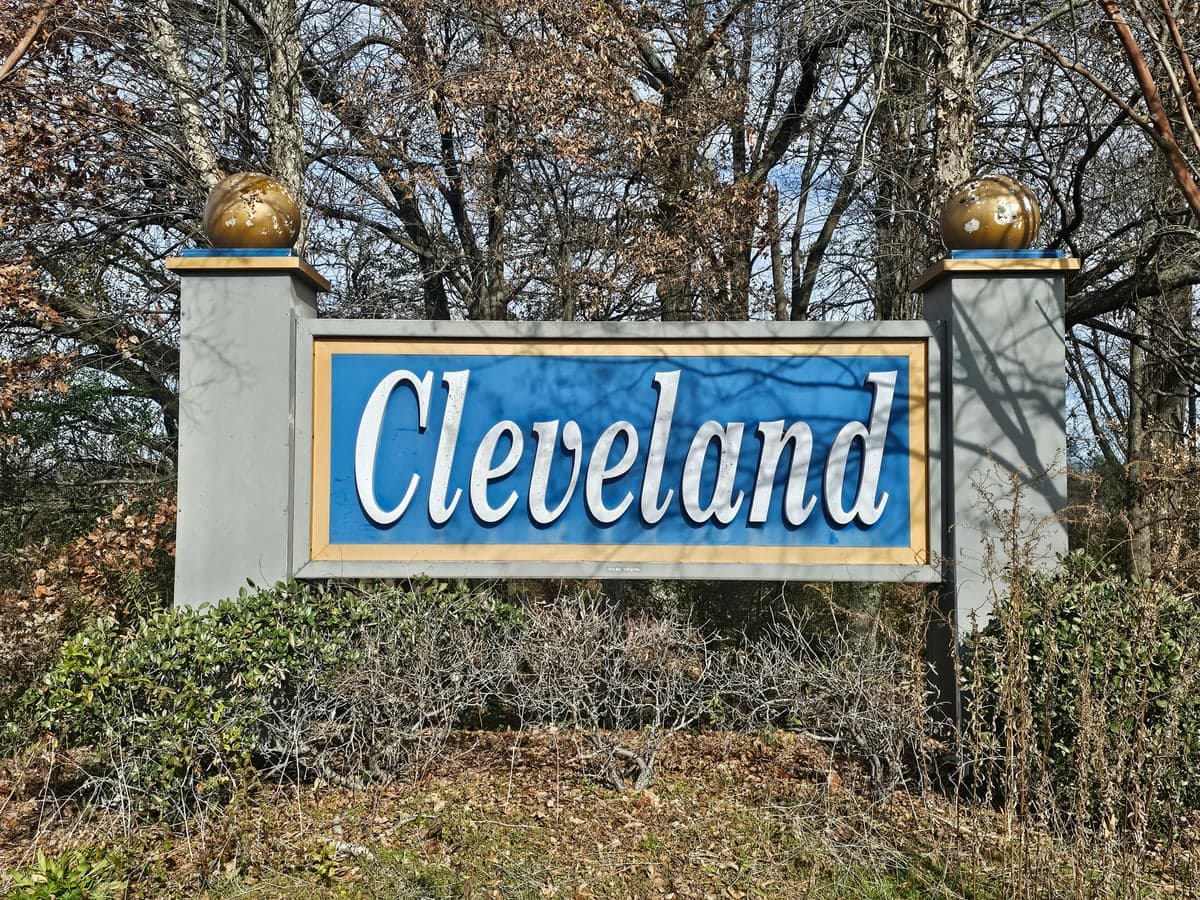
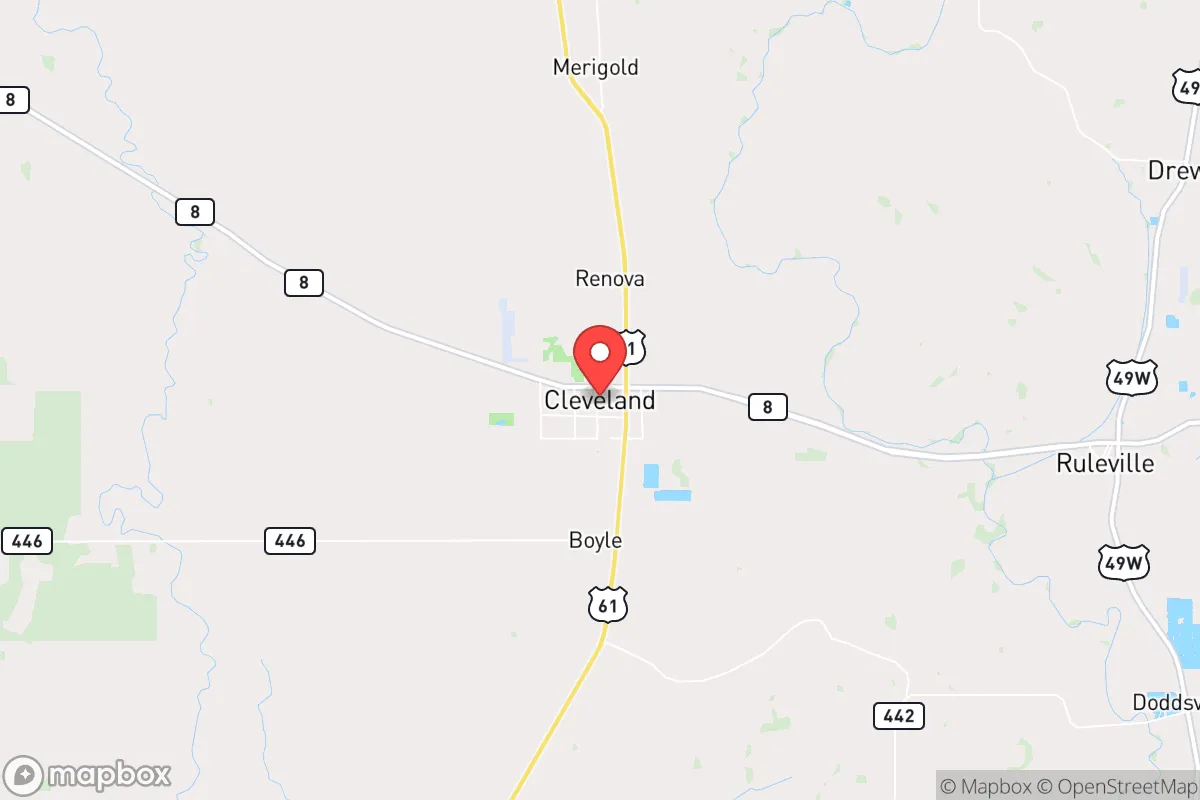
Photo: Wikipedia
Political ClimatePolitical Climate in Cleveland, MS
District shown is the primary district for this city’s centroid. Cities may span multiple districts.
Local Political AnalysisPolitical Analysis of Cleveland, MS
Cleveland, Mississippi, sits in a political bubble that's become more pronounced over the last decade. The city itself leans heavily Democratic, with a Cook PVI of D+11, meaning it votes about 11 points more Democratic than the national average. That's a stark contrast to the surrounding Bolivar County, which is more purple, and a world away from the reliably red towns like Rosedale or Shaw to the west, or even the more conservative parts of the Delta like Greenville. The shift here hasn't been subtle—it's accelerated since the early 2000s, driven largely by the growth of Delta State University and a steady influx of state and federal grant money that's tied to progressive social programs. If you've been here long enough, you remember when the local Democratic party was more about old-school, blue-dog conservatism—fiscally cautious, socially moderate. That's gone. Now, it's a full-on progressive machine, and the consequences are starting to show.
How it compares
Drive 20 minutes north to Clarksdale, and you'll find a similar story—another D+10-ish town with the same university-anchored, grant-dependent economy. But head east to the smaller towns like Boyle or Merigold, and the political landscape flips. Those communities still vote reliably Republican in local races, and you'll hear folks grumbling about the same things: property taxes creeping up, school board decisions that feel disconnected from what parents want, and a growing sense that the city government in Cleveland is more interested in national talking points than local problems. The real contrast is with the unincorporated areas of Bolivar County, where the sheriff's office still runs things with a conservative, hands-off approach. In Cleveland proper, you've got a city council that's passed ordinances on everything from short-term rental regulations to noise complaints that feel like they're written by people who've never actually lived in a small town. It's a different world.
What this means for residents
For someone who values personal freedom and limited government, the trend in Cleveland is a red flag. The city's reliance on federal and state grants—especially for housing and social services—means local officials are often more accountable to bureaucrats in Jackson or Washington than to the folks paying property taxes on Main Street. You see it in the zoning fights, the push for more public housing density in established neighborhoods, and the quiet erosion of Second Amendment protections in city limits. The school board has also become a battleground, with progressive members pushing curriculum changes that prioritize DEI initiatives over core academics. If you're a parent who wants your kid to learn math and history without the political overlay, you're increasingly looking at private options or moving to a nearby county. The long-term worry is that this progressive tilt will accelerate as Delta State continues to attract out-of-state faculty and students who don't share the traditional Delta values of self-reliance and community independence.
On the cultural side, Cleveland still has its charms—the Delta Blues Museum, the annual festivals, the genuine hospitality of the older generation. But the policy direction is unmistakable. The city council has been aggressive on environmental regulations that hit small businesses harder than big chains, and there's a growing push for "equity" initiatives that sound good on paper but often mean more bureaucracy and less local control. If you're considering a move here, understand that the political climate is not neutral. It's actively shifting left, and that shift comes with real consequences for your taxes, your kids' education, and your ability to live your life without the government looking over your shoulder. The old Cleveland—the one where neighbors helped neighbors without a city program—is fading. The new one is being built on a foundation of progressive policy, and it's worth asking if that's the foundation you want for your family.

State Political ClimatePolitical Climate in Mississippi
State Political AnalysisPolitical Environment in the State
Mississippi is one of the most reliably conservative states in the country, with a Republican lean that has only deepened over the past two decades. The state hasn't voted for a Democratic presidential candidate since 1976, and in 2024, Donald Trump carried it by roughly 17 points. The dominant coalition is a mix of rural white evangelicals, suburban families in the Jackson and Gulf Coast exurbs, and a growing number of conservative-leaning retirees and remote workers drawn by low taxes and a slower pace of life. Over the last 10-20 years, the shift has been steady: Democrats once held most statewide offices and legislative seats, but Republicans now control the governorship, both chambers of the legislature, and every statewide elected position. The real story, though, is how that conservative majority is fracturing along cultural and economic lines, with some surprising local exceptions.
Urban vs. rural divide
The political map of Mississippi is a textbook case of the urban-rural split, but with a Southern twist. The state's only major metro, the Jackson area (Hinds, Madison, and Rankin counties), is a microcosm of the national divide. Jackson proper is overwhelmingly Democratic and majority-Black, voting about 85% for Biden in 2020. But drive 15 minutes north to Madison or Ridgeland, and you're in some of the most reliably Republican suburbs in the South — Madison County went +32 for Trump. The Gulf Coast cities of Biloxi and Gulfport lean Republican but have a libertarian streak, with a strong military and fishing industry presence that resists heavy-handed regulation. The Delta region, including Greenville and Clarksdale, is deeply Democratic and impoverished, but its population is shrinking fast. Meanwhile, the northeastern hill country around Tupelo and Oxford is a fascinating battleground: Tupelo is reliably red, but Oxford (home to the University of Mississippi) has been trending purple, with local races often decided by a few hundred votes. The rural counties in the Pine Belt and along the Alabama line — places like Laurel and Meridian — are solidly Republican, driven by timber, manufacturing, and a strong church culture.
Policy environment
Mississippi's policy environment is aggressively conservative by design, but with some notable wrinkles. The state has no personal income tax on wages — a flat 4% rate was phased out in 2022, and the legislature is actively discussing full elimination. Property taxes are among the lowest in the nation, with a median effective rate around 0.7%. Sales tax, however, is high at 7% statewide, with local add-ons pushing it to 8-9% in some cities. Education policy is a mixed bag: the state has a school choice program (the Mississippi Education Scholarship Account) that lets parents use public funds for private or homeschool expenses, but it's capped at a few thousand students and faces annual renewal fights. Healthcare is a flashpoint — Mississippi rejected Medicaid expansion under the ACA, leaving roughly 75,000 working poor in a coverage gap. The state's abortion law is among the strictest in the nation, with a near-total ban that took effect after Dobbs, including no exceptions for rape or incest. Election laws are straightforward: voter ID is required, early voting is limited (no-excuse absentee voting was expanded in 2024 but still requires a reason), and the state uses paper ballots with optical scanners. There's no statewide mail-in voting unless you're over 65 or have a disability.
Trajectory & freedom
On the freedom front, Mississippi has been moving in a decidedly libertarian-conservative direction over the past five years, but it's not a straight line. The biggest win for personal liberty was the 2022 elimination of the income tax, which gave residents more control over their earnings. Gun rights are robust: the state has permitless carry (effective 2016), no red flag law, and a strong castle doctrine. In 2023, the legislature passed a law banning local governments from enforcing federal gun regulations — a direct challenge to federal overreach. Parental rights got a boost with the 2021 "Parents' Bill of Rights," which requires schools to notify parents about curriculum changes and medical services. On the flip side, the state's medical marijuana program (legalized in 2022 after a ballot initiative) is heavily regulated, with a limited number of dispensaries and strict qualifying conditions. The biggest concern for freedom-minded residents is the state's heavy reliance on federal dollars — about 40% of the budget comes from Washington, which creates a vulnerability if federal strings tighten. There's also a growing tension between the legislature and local governments over preemption: Jackson's attempt to raise its minimum wage and mandate paid leave was struck down by the state in 2023, which conservatives cheered as a check on local overreach but some saw as a limit on community self-governance.
Civil unrest & political movements
Mississippi has a quieter political landscape than many states, but it's not without flashpoints. The most visible recent unrest was in Jackson, where a water crisis in 2022-2023 led to protests over infrastructure neglect and racial disparities. Those protests were largely local and didn't spiral into the kind of violence seen in Portland or Seattle, but they did expose deep distrust between the state government (Republican-controlled) and the city government (Democratic). On the right, the "Mississippi Freedom Caucus" — a group of hardline conservative state legislators — has been increasingly vocal, pushing for further tax cuts, school choice expansion, and restrictions on transgender athletes and drag shows. Immigration politics are relatively muted because Mississippi has a small foreign-born population (about 2.5%), but there's a strong undercurrent of concern about border security, with several counties passing symbolic "sanctuary county" resolutions in 2024. Election integrity remains a hot topic: after the 2020 election, the legislature tightened absentee ballot rules and banned private funding of election administration (the "Zuckerbucks" ban). You won't see daily protests or street-level activism like in larger states, but the political energy is real — it just shows up at county GOP meetings and school board hearings rather than in the streets.
Projection
Over the next 5-10 years, Mississippi is likely to become even more conservative, but with a growing libertarian edge. The demographic trends are clear: the state's population is aging, white, and increasingly rural, while the Black population (about 37%) is slowly declining due to out-migration. In-migration is modest but growing, driven by remote workers and retirees from California, Illinois, and New York who are drawn by low housing costs and no income tax. These newcomers tend to be conservative but less culturally traditional — they want low taxes and minimal regulation but may be less enthusiastic about culture war battles. The biggest wildcard is the Delta, which is depopulating rapidly; by 2035, several counties there may have fewer than 5,000 residents, which will further concentrate political power in the suburbs and exurbs. The legislature will likely pass a full income tax repeal within five years, and school choice will expand to near-universal eligibility. The Medicaid expansion debate will continue to simmer, but don't expect a flip unless the federal government offers a deal Mississippi can't refuse. The biggest risk for conservatives is complacency: if the state becomes too one-party, internal factionalism could lead to gridlock on basic governance, as seen in the 2024 budget standoff between the House and Senate.
For a new resident, the bottom line is this: Mississippi offers a high degree of personal freedom on taxes, guns, and parental rights, with a political culture that respects local control and resists federal overreach. You'll find a state that's deeply conservative but not chaotic — the politics are serious but not angry, and the pace of life allows you to engage or disengage as you see fit. The trade-offs are real: low taxes mean underfunded public services, especially in rural areas and Jackson, and the healthcare system has gaps that could affect you if you have a chronic condition. If you value low taxes, strong gun rights, and a community where your vote actually matters, Mississippi is a solid bet. Just understand that the freedom you gain in your wallet and your home comes with a responsibility to be self-reliant — the state won't hold your hand, and that's exactly how most folks here like it.
* Values derived from national, state, county, city and local statistics and may differ in a specific area. Last updated: 2026-05-04T02:58:14.000Z
Narrative content on this page is AI-generated and may contain mistakes. Verify any details that matter before acting on them.
ReloMaps may earn a commission from affiliate links at no extra cost to you.

