Photo: Wikipedia
Demographics of Clinton, MS
Affluence Level in Clinton, MS
A middle-class area roughly in line with national averages across income, home values, education, and employment.
People of Clinton, MS
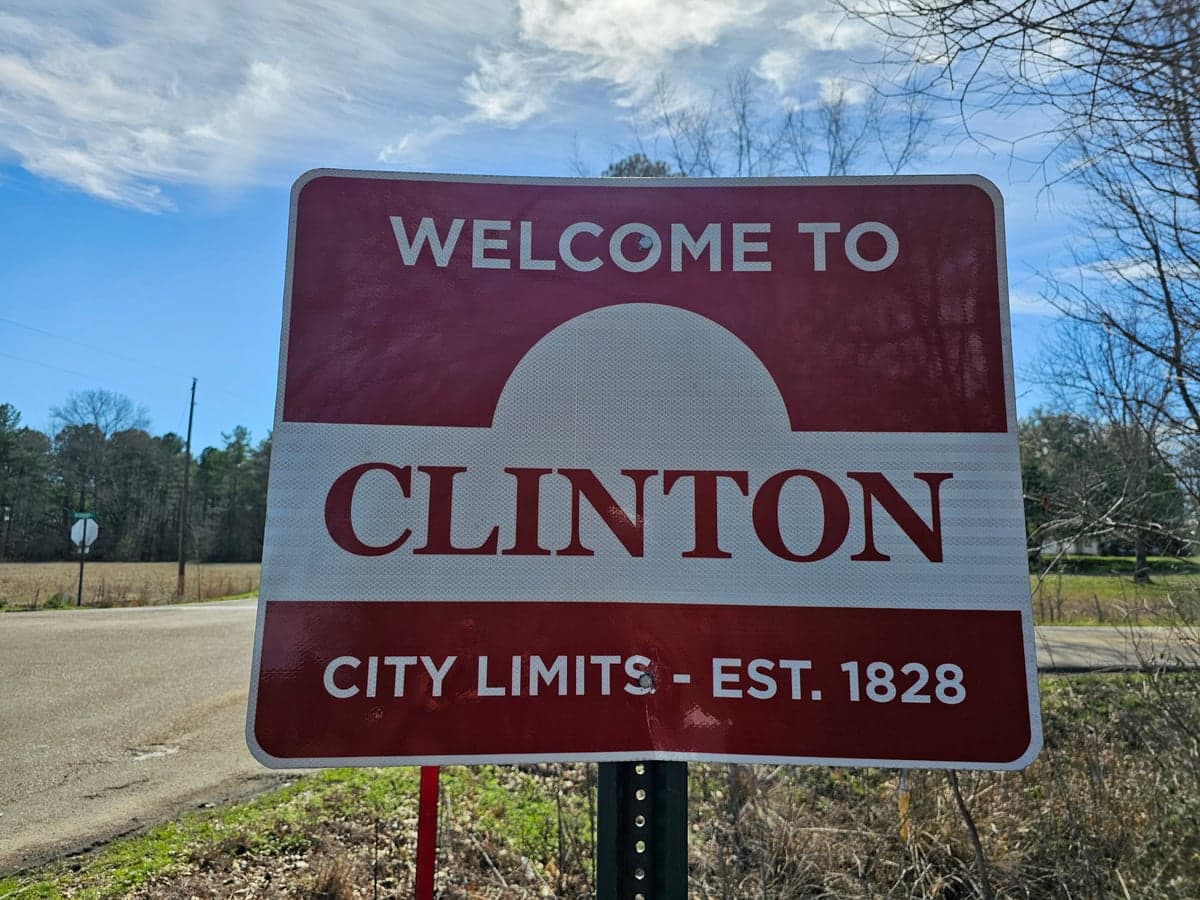
Clinton, Mississippi, is a city of roughly 27,400 residents that blends a historically rooted Black and white population with a growing, highly educated professional class. Its character is defined by a 48.8% white and 41.8% Black demographic split, a 47.5% college-educated rate that far exceeds state averages, and a small but notable 2.5% Indian-subcontinent community. Distinctive markers include a strong sense of local identity tied to Mississippi College, a family-oriented suburban feel, and a population that is more racially balanced and better educated than most Mississippi cities of comparable size.
How the city was settled and grew
Clinton was founded in 1823 as a small agricultural trading post, drawing its earliest white settlers from the Carolinas and Georgia who came for cotton land grants. The arrival of the railroad in the 1830s solidified the town as a regional market center, and the establishment of Mississippi College in 1826—the oldest Christian college in the state—attracted a steady stream of educators, clergy, and their families. The original white settlement clustered around what is now Olde Towne Clinton, the historic downtown core, where antebellum homes and brick storefronts still stand. After the Civil War, freedmen established a separate but parallel community in the Pinehaven and North Clinton areas, building churches, schools, and small businesses that anchored the Black population for generations. Through the early 20th century, the population grew slowly, remaining overwhelmingly white and Black with virtually no foreign-born presence until after 1965.
Modern era (post-1965)
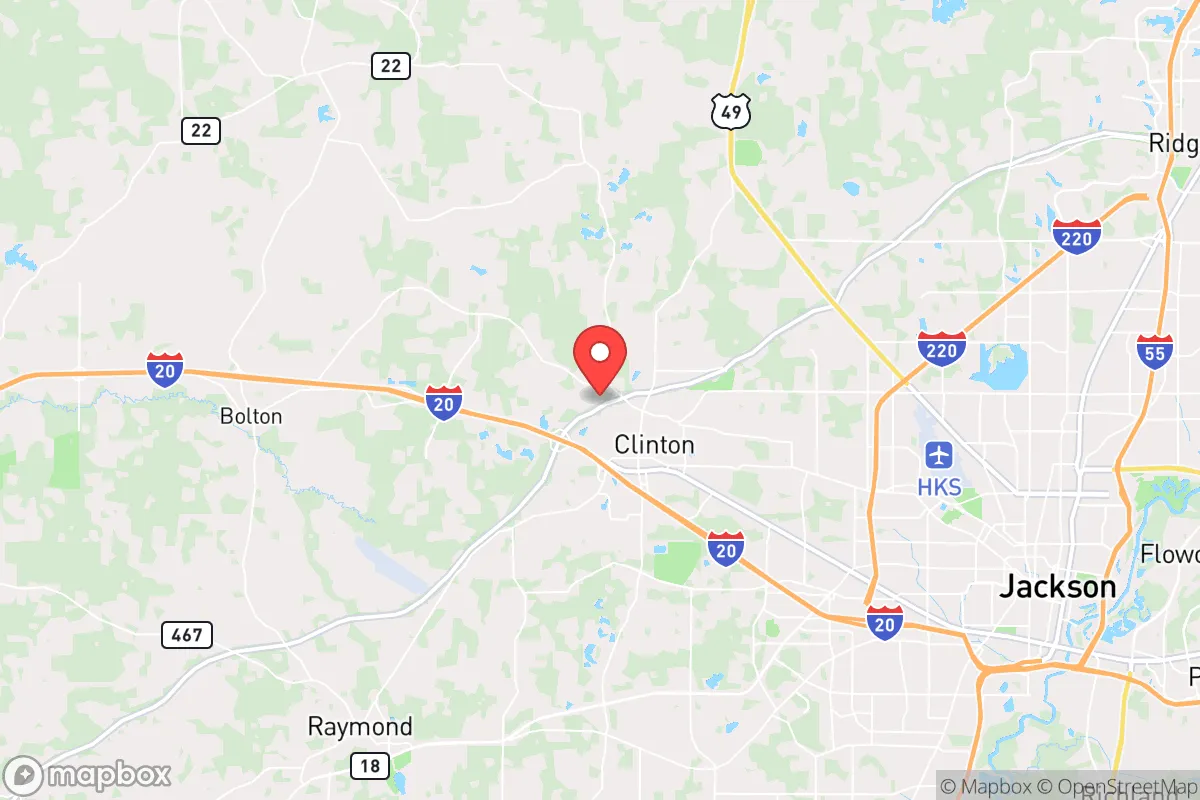
The post-1965 immigration reforms had a modest direct effect on Clinton, but the city’s modern demographic transformation came primarily through domestic suburbanization. As Jackson expanded outward, Clinton became a preferred bedroom community for white and Black professionals seeking better schools and lower crime rates. The 1970s and 1980s saw the development of Lake Caroline, a large master-planned subdivision that attracted upper-middle-class families—initially predominantly white, but increasingly diverse by the 2000s. The Briarwood and Sherwood Forest neighborhoods absorbed much of the Black professional class moving from Jackson, creating stable, middle-class enclaves. The Indian-subcontinent community, now 2.5% of the population, began arriving in the 1990s and 2000s, drawn by medical and tech jobs in the Jackson metro area; they concentrated in newer subdivisions like St. Charles Place and parts of Lake Caroline. The East/Southeast Asian population (2.0%) arrived slightly later, often tied to academic positions at Mississippi College or medical residencies at nearby University of Mississippi Medical Center. The Hispanic share remains low at 2.3%, with no single concentrated neighborhood, while the foreign-born total of 3.5% is modest but growing. The city’s racial balance has stabilized: the white share has declined from roughly 60% in 2000 to 48.8% today, while the Black share has risen from about 35% to 41.8%, reflecting both Black in-migration and white out-migration to more distant exurbs.
The future
Clinton’s population is trending toward further educational and economic stratification rather than racial homogenization. The college-educated share (47.5%) is likely to rise as Mississippi College expands and as remote workers from higher-cost metros discover the city’s affordability. The Indian-subcontinent community is the fastest-growing immigrant group, and its concentration in newer subdivisions suggests continued growth through chain migration and professional recruitment. The East/Southeast Asian population is growing more slowly, plateauing as academic hiring stabilizes. The Black and white populations are not merging into a single integrated fabric; instead, neighborhoods remain largely identifiable by race and class—Lake Caroline and St. Charles Place are more diverse and affluent, while Pinehaven and North Clinton remain predominantly Black and lower-middle-income. The Hispanic share is expected to remain below 5% for the foreseeable future, as Clinton lacks the agricultural or construction job base that drives Hispanic growth in other Mississippi towns. The city is not tribalizing into hostile enclaves, but it is also not rapidly integrating; it is becoming a place where distinct communities coexist with minimal friction but also minimal deep mixing.
For someone moving in now, Clinton offers a stable, safe, and well-educated environment with clear neighborhood choices that align with different preferences and budgets. It is not a melting pot in the classic sense, but a city where a conservative-leaning, family-oriented lifestyle is accessible across racial lines, provided one chooses the right subdivision. The long-term trajectory points toward continued professionalization, modest immigrant growth from South Asia, and a slow decline in the white share—making Clinton a quietly diversifying Southern suburb that remains, at its core, a college town with a strong sense of place.

* Values derived from national, state, county, city and local statistics and may differ in a specific area. Last updated: 2026-04-21T14:22:00.000Z
Narrative content on this page is AI-generated and may contain mistakes. Verify any details that matter before acting on them.
ReloMaps may earn a commission from affiliate links at no extra cost to you.

