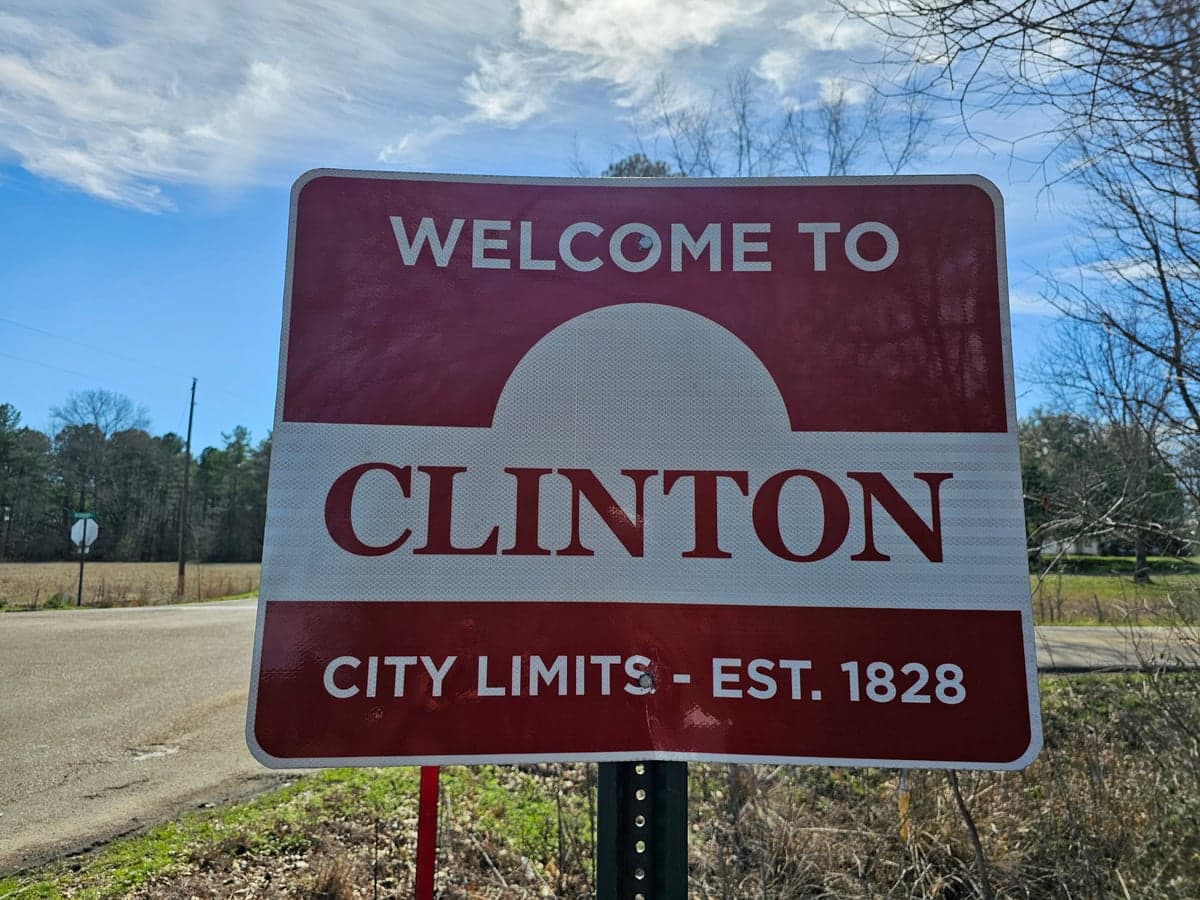
Photo: Wikipedia
Political ClimatePolitical Climate in Clinton, MS
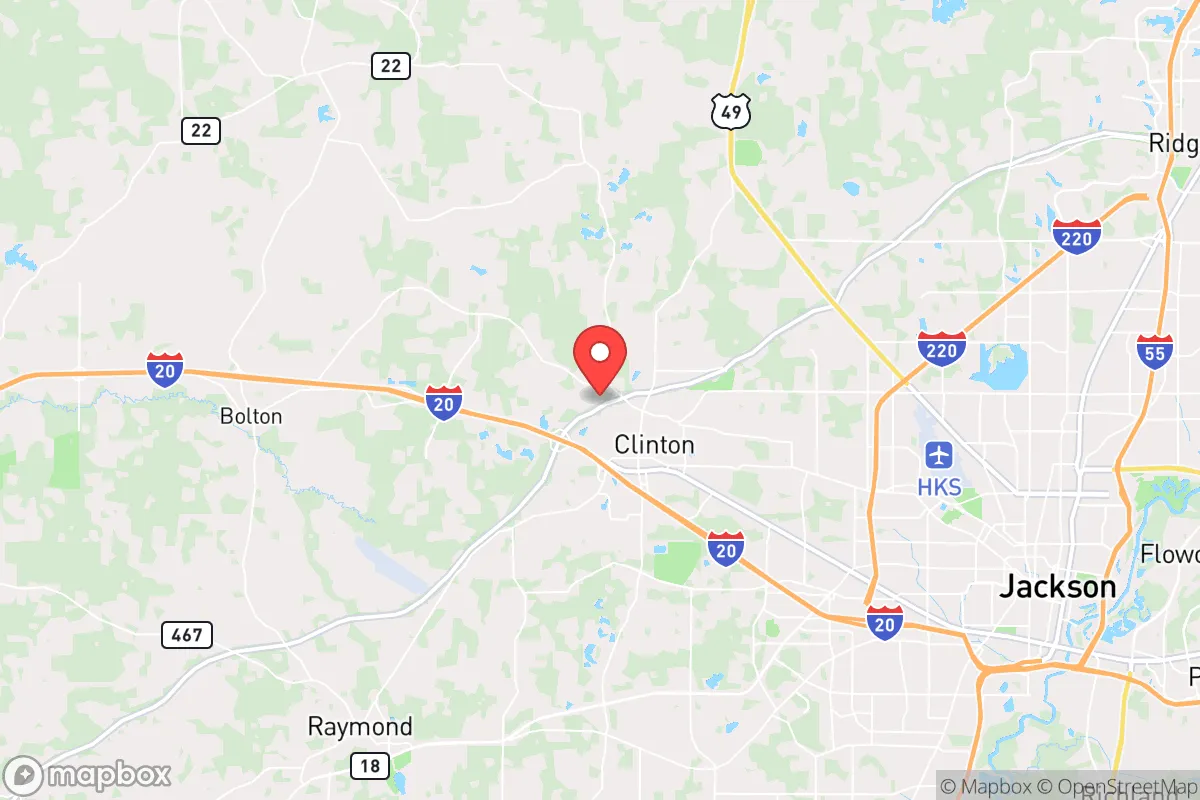
District shown is the primary district for this city’s centroid. Cities may span multiple districts.
Local Political AnalysisPolitical Analysis of Clinton, MS
Clinton, Mississippi, sits in a political bubble that’s become more pronounced over the last decade. With a Cook Partisan Voting Index of D+11, this city leans heavily Democratic, a stark contrast to the surrounding Hinds County suburbs and the reliably red towns like Brandon and Madison just a few miles east. If you’ve been here long enough, you’ve watched the shift happen—what was once a more balanced, moderate community has steadily moved left, especially since the early 2010s. The local elections and voting patterns now reflect a progressive tilt that feels out of step with the rest of central Mississippi, and it’s something that’s hard to ignore if you value personal freedoms and limited government.
How it compares
Drive ten minutes east to Madison or Ridgeland, and you’re in solidly Republican territory—those areas vote R+15 or more in most cycles. Brandon, just across the Pearl River, is even more conservative. Clinton, by contrast, is an outlier. It’s not just the D+11 rating; it’s the way the city council and school board races have trended. Where Madison’s leaders focus on tax cuts and property rights, Clinton’s have pushed for more public spending and progressive social policies. The difference is night and day. If you’re used to the conservative values of Rankin County, Clinton can feel like a different state entirely. The contrast is especially sharp on issues like zoning regulations and local business oversight—Clinton’s government tends to lean into more rules, while its neighbors let folks operate with a lighter touch.
What this means for residents
For someone who’s lived here a while, the biggest concern is how this political climate affects daily life. You’ll see it in the local ordinances—stricter noise rules, more permitting requirements for home projects, and a general sense that the city wants to manage how you use your property. There’s also been a push for more diversity, equity, and inclusion initiatives in the school system, which raises eyebrows for parents who want curriculum focused on fundamentals, not ideology. Property taxes have crept up faster here than in neighboring towns, partly because of increased spending on social programs. If you’re a small business owner, you’ll notice the permitting process is slower and more bureaucratic than in Madison or Flowood. The progressive lean isn’t just a label—it shows up in real ways that affect your wallet and your freedom to make choices without government interference.
Looking ahead, the trajectory is concerning. As younger, more progressive residents move in from Jackson and other urban areas, the political center of gravity keeps shifting left. The long-time moderate Democrats who used to hold the line are being replaced by activists who see government as a tool for social engineering. If you’re considering a move here, understand that Clinton’s politics are not a reflection of Mississippi as a whole. It’s a blue island in a red state, and that comes with trade-offs. The schools are decent, and the community is tight-knit, but you’ll have to keep an eye on local elections and be ready to speak up if you want to preserve the kind of personal liberty that makes Mississippi great. It’s not too late, but the window is closing.

State Political ClimatePolitical Climate in Mississippi
State Political AnalysisPolitical Environment in the State
Mississippi is one of the most reliably conservative states in the nation, with a Republican trifecta that has held the governor’s mansion, both legislative chambers, and the entire statewide judiciary for over a decade. The state voted +17 points for Donald Trump in 2024, and the GOP’s grip has only tightened since the 2010s, when Democrats last held the governorship. The dominant coalition is a mix of rural white evangelicals, suburban families in the Jackson metro’s outer rings, and Gulf Coast retirees, while the state’s Black population—roughly 37%—votes overwhelmingly Democratic, creating a stark racial and geographic partisan divide that has shifted the state rightward as rural areas have bled population and become more Republican.
Urban vs. rural divide
The political map of Mississippi is a textbook case of the urban-rural split. The only reliably blue strongholds are the state’s few majority-Black cities: Jackson (Hinds County, consistently 80%+ Democratic), Greenville (Washington County), and Clarksdale (Coahoma County). These areas are losing population fast—Jackson has shrunk by nearly 20% since 2000—which dilutes Democratic votes. Meanwhile, the fast-growing suburbs of Madison and Ridgeland (Madison County) are deep red, with Madison County voting +35 points Republican in 2024. The Gulf Coast’s Biloxi and Gulfport lean Republican but are more moderate due to tourism and military presence. The northeastern corner around Tupelo (Lee County) is solidly conservative, anchored by the Toyota plant and a strong manufacturing base. The Delta region—Greenville, Indianola, Cleveland—is the only area where Democrats still win local races, but those counties are depopulating, with some losing 10-15% of residents per decade. The rural white counties in the Pine Belt and along the Tennessee border are now +40 to +50 points Republican, a shift that accelerated after the 2010 Tea Party wave.
Policy environment
Mississippi’s policy environment is among the most conservative in the country, with a low-tax, low-regulation posture that attracts businesses but also limits public services. The state has a flat income tax of 4.7% (phasing down to 4% by 2026), no estate tax, and a sales tax of 7% on most goods. Property taxes are among the lowest in the nation, averaging about 0.8% of home value. The legislature passed a major income tax cut in 2022, accelerating the phase-down from 5% to 4%, and there’s talk of eliminating the income tax entirely within a decade. Education policy is a mixed bag: the state has a school choice program (the Mississippi Education Scholarship Account) for special-needs students, but no universal voucher system. Public schools in rural areas are underfunded, while suburban districts like Madison County Schools and Ocean Springs are highly rated. Healthcare is a flashpoint: Mississippi rejected Medicaid expansion under the ACA, leaving roughly 75,000 working poor in a coverage gap. The state has a near-total abortion ban (trigger law after Dobbs) with no exceptions for rape or incest, and a 2024 law banned gender transition procedures for minors. Election laws are strict: voter ID is required, early voting is limited to in-person absentee only (no no-excuse early voting), and the state purged over 100,000 inactive voters from rolls in 2023. Gun laws are among the most permissive in the nation—constitutional carry passed in 2016, no permit needed to carry concealed, and no red flag law.
Trajectory & freedom
Mississippi has been moving more free on most conservative measures over the past decade, but with some worrying exceptions. On the plus side: constitutional carry (2016), the 2022 income tax cut, and the 2023 law banning transgender procedures for minors (SB 2753) all expanded what conservatives would call personal liberty and parental rights. The state also passed a religious freedom restoration act (RFRA) in 2014, protecting individuals from government-compelled speech or actions that violate their faith. However, there are real concerns about government overreach in other areas. The state’s medical marijuana program, passed by ballot initiative in 2020, was gutted by the legislature in 2023 with strict caps on dispensaries and THC limits—a clear case of politicians overriding voter will. The state also has a massive prison system (over 18,000 inmates) with harsh sentencing laws, including mandatory minimums for drug offenses, which many conservatives now view as an overreach of state power. Property rights are generally strong, but the state’s use of eminent domain for economic development projects (like the 2023 land grab for a new Amazon warehouse in DeSoto County) has raised eyebrows. On balance, Mississippi is trending toward more individual freedom on cultural and economic issues, but the legislature’s tendency to micromanage local decisions (like preempting local minimum wage hikes and plastic bag bans) is a red flag for those who value local control.
Civil unrest & political movements
Mississippi has seen relatively little civil unrest compared to other states, but there are notable flashpoints. The 2020 George Floyd protests in Jackson and Oxford (home of Ole Miss) were largely peaceful, though a statue of a Confederate soldier was toppled on the Ole Miss campus. The state’s flag was changed in 2020 from the Confederate battle emblem to a magnolia design—a move that passed with bipartisan support but angered some traditionalists. Immigration politics are muted because Mississippi has a very small foreign-born population (about 2.5%), but there was a 2023 controversy when a Jackson County sheriff’s deputy was fired for refusing to cooperate with ICE—a rare pro-sanctuary stance in a deep-red state. Election integrity has been a hot topic: the 2020 election saw no major fraud in Mississippi, but the legislature passed a 2021 law (SB 2588) that tightened absentee ballot rules and banned ballot drop boxes, citing concerns about chain of custody. The most visible political movement is the rise of the “Mississippi Freedom Caucus,” a group of hardline conservative state legislators who have pushed for further tax cuts, school choice, and restrictions on local government. On the left, the Mississippi Poor People’s Campaign has organized around Medicaid expansion and voting rights, but with limited success. A new resident would notice that political activism is less visible than in neighboring states—no massive rallies, no sanctuary cities, no secession talk—but the undercurrent is a quiet, determined push by both sides to shape the state’s future.
Projection
Over the next 5-10 years, Mississippi will likely become more conservative, not less. The key demographic driver is out-migration: the state lost about 50,000 residents between 2020 and 2024, mostly young Black Mississippians leaving the Delta for Atlanta or Memphis, and white liberals leaving Jackson for Texas or Tennessee. The people moving in are primarily retirees from the Midwest and Gulf Coast, plus remote workers attracted to low housing costs in Ocean Springs and Ridgeland. These newcomers tend to be conservative or libertarian-leaning. The state’s population is aging and becoming whiter in the rural areas, which will further entrench GOP dominance. Expect the income tax to be fully eliminated by 2030, school choice to expand to universal vouchers, and the state to continue resisting Medicaid expansion. The biggest wild card is the Delta: if population loss continues, those Democratic strongholds could become irrelevant, making Mississippi effectively a one-party state. For a conservative moving in now, the trajectory is positive—lower taxes, more school choice, and a cultural environment that respects traditional values. The downside is that the state’s infrastructure and public services will continue to decline as tax revenues shrink, so you’ll need to budget for private schools, private healthcare, and self-reliance.
Bottom line for a new resident: Mississippi offers a high degree of personal freedom on guns, taxes, and cultural issues, but you’ll need to accept that the state government is increasingly assertive in overriding local control and that public services are thin. If you value low taxes, strong gun rights, and a community that shares your values, you’ll find a home in the suburbs of Madison or the Gulf Coast. If you’re looking for a place where government stays out of your life entirely, keep an eye on the legislature’s tendency to meddle—but on balance, Mississippi is one of the few states where the trajectory is still pointing toward more liberty, not less.
* Values derived from national, state, county, city and local statistics and may differ in a specific area. Last updated: 2026-04-21T14:22:00.000Z
Narrative content on this page is AI-generated and may contain mistakes. Verify any details that matter before acting on them.
ReloMaps may earn a commission from affiliate links at no extra cost to you.

