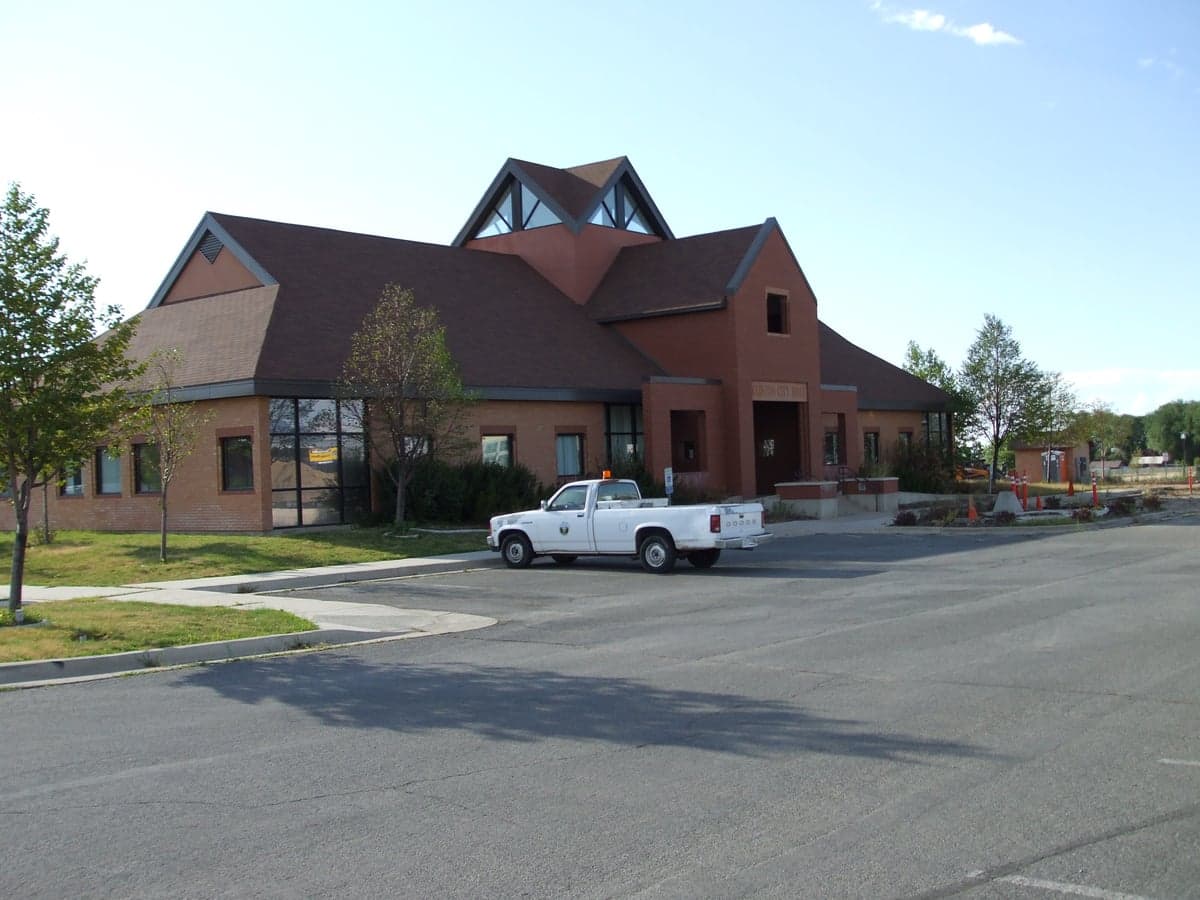
Photo: Wikipedia
Strategic Assessment of Clinton, UT
Workable tactical position. Some exposure to population density or targets, but generally defensible in a crisis.
What does the Strategic Assessment tell us?
Our Strategic Assessment grades tactical survivability of an area. Major population centers, military targets, fallout zones, natural disasters, and border exposure all drive risk — lower exposure means a more defensible position in a crisis.
This is heavily inspired by Joel Skousen's Strategic Relocation book. Highly recommended you checkout the book ($)What does this tell us?
Our Strategic Assessment grades tactical survivability of an area. Major population centers, military targets, fallout zones, natural disasters, and border exposure all drive risk — lower exposure means a more defensible position in a crisis.
This is heavily inspired by Joel Skousen's Strategic Relocation book. Highly recommended you checkout the book ($)Strategic Pillars

Key Distances
Regional Safe Places
Below is our recommended "safe zones" in Utah and the surrounding area based on our strategic heuristics. For most people, it's unrealistic to live in a “safe zone” full-time due to work, family or other personal reasons. They tend to be more rural. However, many of these areas are perfect for second homes and retreat properties that double as a vacation home or even a short-term rental.


Important Note: For informational purposes only. This does not mean nothing bad ever happens in the green zones. Please use common sense. This is based on public data and modeled with AI. We tried to take a conservative approach but mistakes happen. We update this regularly as new information becomes available.
Solar Generator Recommendations
Backup power matters more here than in safer locations. We've picked three solar generators across budgets and capacity tiers — start with the budget unit if you only need a few essentials, or step up if you want to run a fridge and HVAC for days at a time.

Jackery Portable Power Station Explorer 300
Budget OptionPower on the Go: Weighing only 11 lbs, it's convenient to set up and store with book-sized foldable solar panels

BLUETTI Portable Power Station AC180
Designed for both indoor and outdoor scenarios, AC180 is highly capable as it has a robost capacity and continuous output power.

EF ECOFLOW DELTA Pro Ultra Power Station
Upgraded PickEcoFlow DELTA Pro Ultra is a whole-home energy system designed to grow with your family. Integrated with the Smart Home Panel 2, it scales to meet your evolving energy needs — keeping your home powered, intelligent, and secure through every stage of life.
We earn a commission, at no additional cost to you.
Strategic Assessment Analysis
Clinton, Utah, sits in a position that demands a hard look from anyone serious about long-term resilience. Located in Davis County along the Wasatch Front, this town of roughly 23,000 offers a mix of suburban convenience and proximity to critical infrastructure, but its strategic value for a prepper or survivalist is deeply mixed. The area's advantages—access to the Great Salt Lake, a strong local economy, and a conservative community—are real, but they come with significant exposure to risks that could turn a bad day into a catastrophe. For a single individual or parent weighing relocation, the question isn't just whether Clinton is safe today, but whether it can hold up when the system falters.
Geographic position and natural advantages for long-term survival
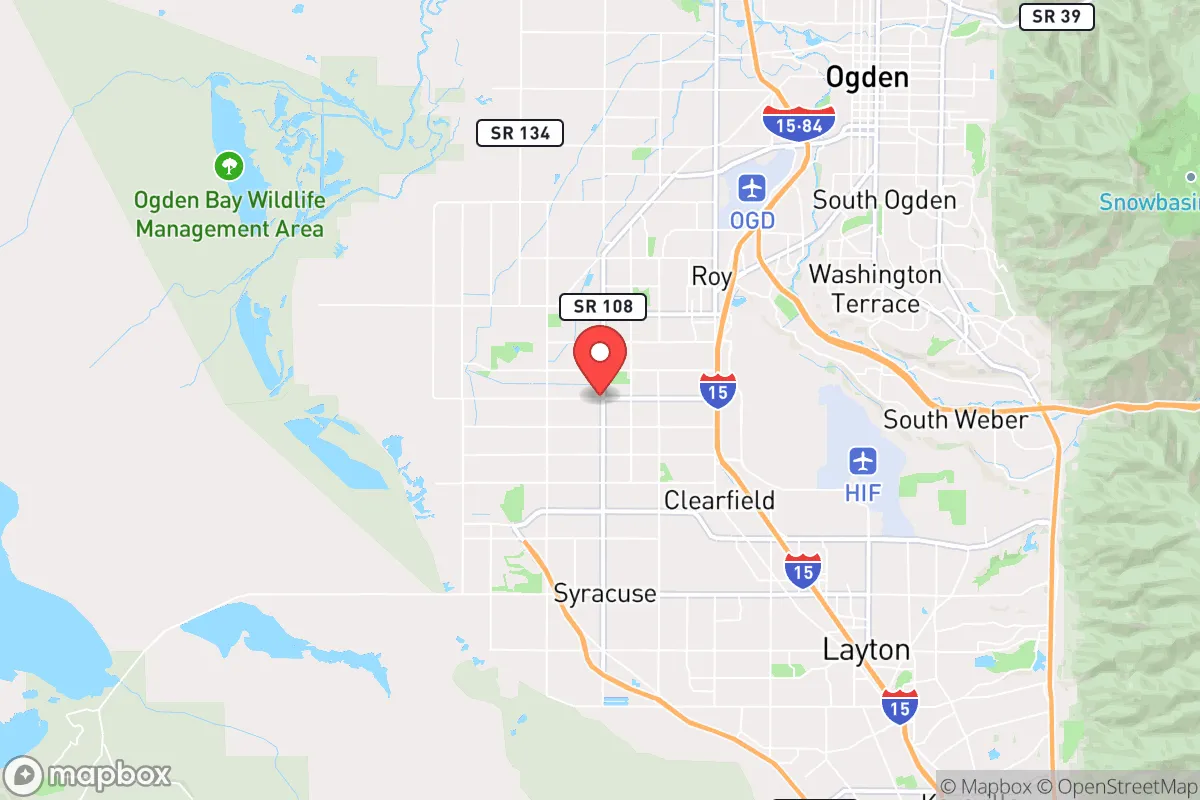
Clinton's location along the I-15 corridor gives it quick access to both Ogden (about 10 miles north) and Salt Lake City (about 30 miles south), which is a double-edged sword. On the plus side, this puts you near major medical facilities, supply chains, and transportation hubs. The area sits on the eastern edge of the Great Salt Lake, offering some natural water resources, though the lake's receding shoreline and salinity issues limit its direct utility for drinking or irrigation. The nearby Wasatch Mountains provide a buffer against some weather extremes and offer potential retreat zones, but they also create a funnel effect for any disaster moving through the valley. The local climate is semi-arid, with cold winters and hot summers, meaning water storage and food production require deliberate planning. The soil in the area is workable for small-scale gardening, but the growing season is short—roughly 150 days—so any serious food independence would need greenhouse or indoor supplementation. For a relocator, the natural advantages here are modest: decent access to mountain water sources (if you know where to look) and a relatively low risk of natural disasters like hurricanes or earthquakes compared to coastal regions, though the Wasatch Fault runs through the valley and poses a real seismic threat.
Risks, exposures, and proximity to fallout-relevant landmarks
This is where Clinton's strategic picture gets concerning. The town is less than 30 miles from Hill Air Force Base, a major military installation that houses F-35s, nuclear-capable aircraft, and critical command-and-control infrastructure. In any scenario involving a mass casualty event, civil unrest, or a broader conflict, Hill AFB is a prime target. The base's proximity means Clinton sits squarely in a potential fallout zone or secondary blast radius, depending on the nature of the attack. Additionally, the I-15 corridor is a choke point that could become impassable during an evacuation or crisis, trapping residents in the valley. The Wasatch Front's population density—over 2.5 million people in the greater Salt Lake City metro area—means that any disruption to supply chains or utilities will trigger rapid resource competition. The nearby Great Salt Lake's shrinking shoreline also raises environmental concerns, including toxic dust exposure from exposed lakebed sediments, which could become a public health issue during a prolonged crisis. For a prepper, the concentration of military, industrial, and population targets within a 50-mile radius makes Clinton a high-risk location for any event that escalates beyond localized disruption. The area's reliance on a single major highway (I-15) for north-south movement is a critical vulnerability, as any blockage—from a natural disaster, civil unrest, or infrastructure failure—would isolate the town from both Ogden and Salt Lake City.
Practical resilience for a relocator: food, water, energy, and defensibility
When you break down the nuts and bolts of surviving here, the picture is mixed. Water is the biggest concern. Clinton gets its municipal water from the Weber River Basin and groundwater wells, but the region is in a long-term drought cycle, and the Great Salt Lake's decline is stressing local aquifers. A private well is possible in some areas, but permits and depth requirements vary, and the water quality can be high in minerals. For a relocator, securing a property with a well or a rainwater catchment system should be a top priority. Food production is feasible but not easy. The local growing season is short, and the soil is alkaline, requiring amendments for decent yields. Community gardens and local farms exist, but they're not enough to sustain the population in a collapse scenario. Energy is a relative strength. Utah has a deregulated energy market, and solar is viable—Clinton gets about 220 sunny days per year. Pairing solar with battery storage and a backup generator (natural gas or propane) is a realistic setup for off-grid capability. Defensibility is a weak point. Clinton is a suburban grid of cul-de-sacs and strip malls, with no natural chokepoints or elevated terrain to control access. The town's layout makes it hard to secure a perimeter, and the density of neighbors means any crisis will involve managing relationships with people who may not share your preparedness mindset. For a single individual or parent, the best approach is to find a property on the outskirts—closer to the foothills or agricultural land—where you have more space and fewer eyes on your operations. The local gun culture is strong, and Utah's constitutional carry laws make it easy to arm yourself, but that also means your neighbors are likely armed, which cuts both ways in a breakdown scenario.
Overall, Clinton offers a decent baseline for a relocator who wants to be near essential services and a like-minded community, but it's not a bug-out location. The town's proximity to Hill AFB and the I-15 corridor creates a real vulnerability that can't be ignored. For a prepper, the strategic calculus comes down to this: if you're looking for a place to ride out a short-term disruption (a few weeks to a few months) with good access to supplies and a supportive local network, Clinton works. But if you're planning for a long-term collapse, a major conflict, or a scenario where the federal government's presence becomes a liability, you'd be better off looking further north into Cache Valley or east into the Uinta Basin. The conservative culture and strong community ties are genuine assets, but they don't outweigh the risks of being within striking distance of a primary military target. For a parent, the schools are solid and the crime rate is low, but the peace of mind that comes with that daily safety evaporates the moment the grid goes down or the sirens start. Clinton is a place to live, not a place to hide—and in a world where the line between those two is getting thinner, that distinction matters.

* Values derived from national, state, county, city and local statistics and may differ in a specific area. Last updated: 2026-05-01T12:55:43.000Z
Narrative content on this page is AI-generated and may contain mistakes. Verify any details that matter before acting on them.
ReloMaps may earn a commission from affiliate links at no extra cost to you.

