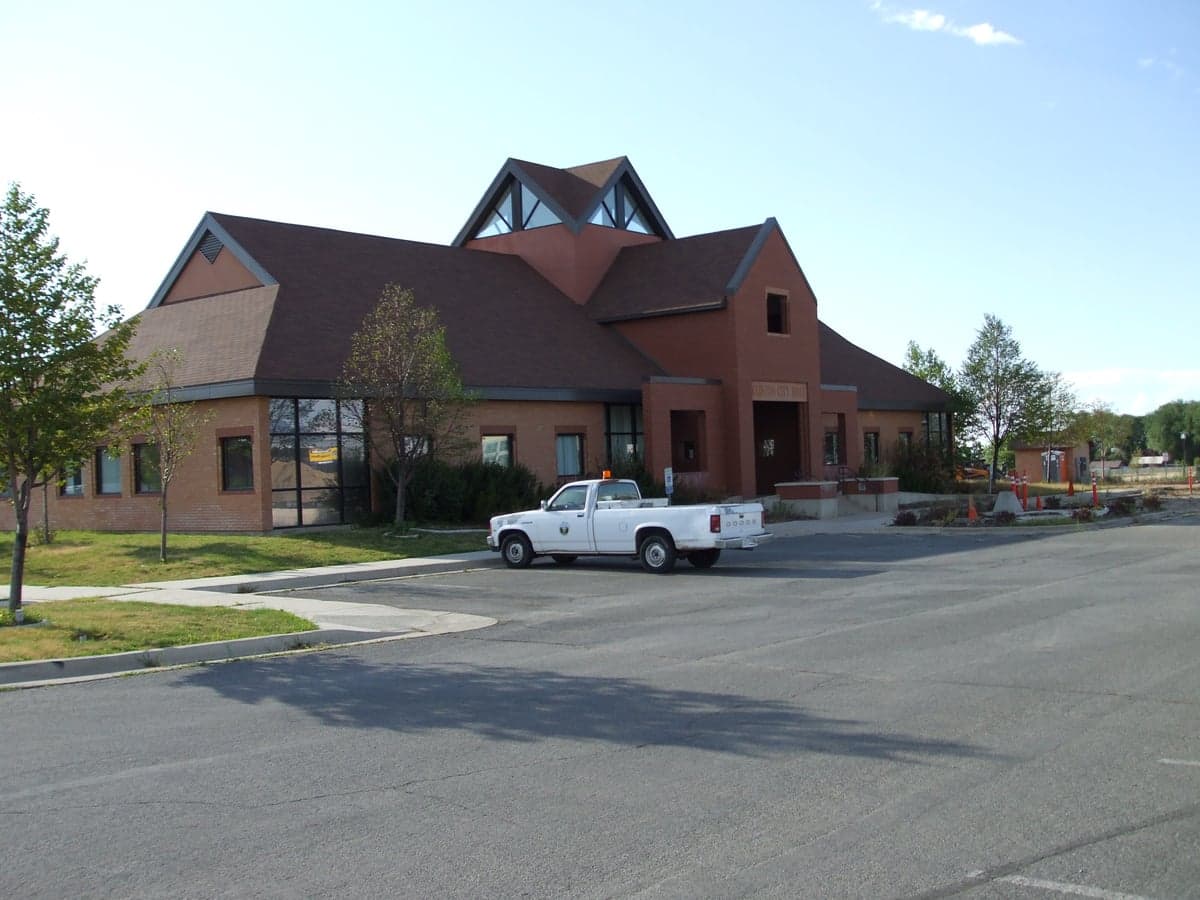
Photo: Wikipedia
Political ClimatePolitical Climate in Clinton, UT
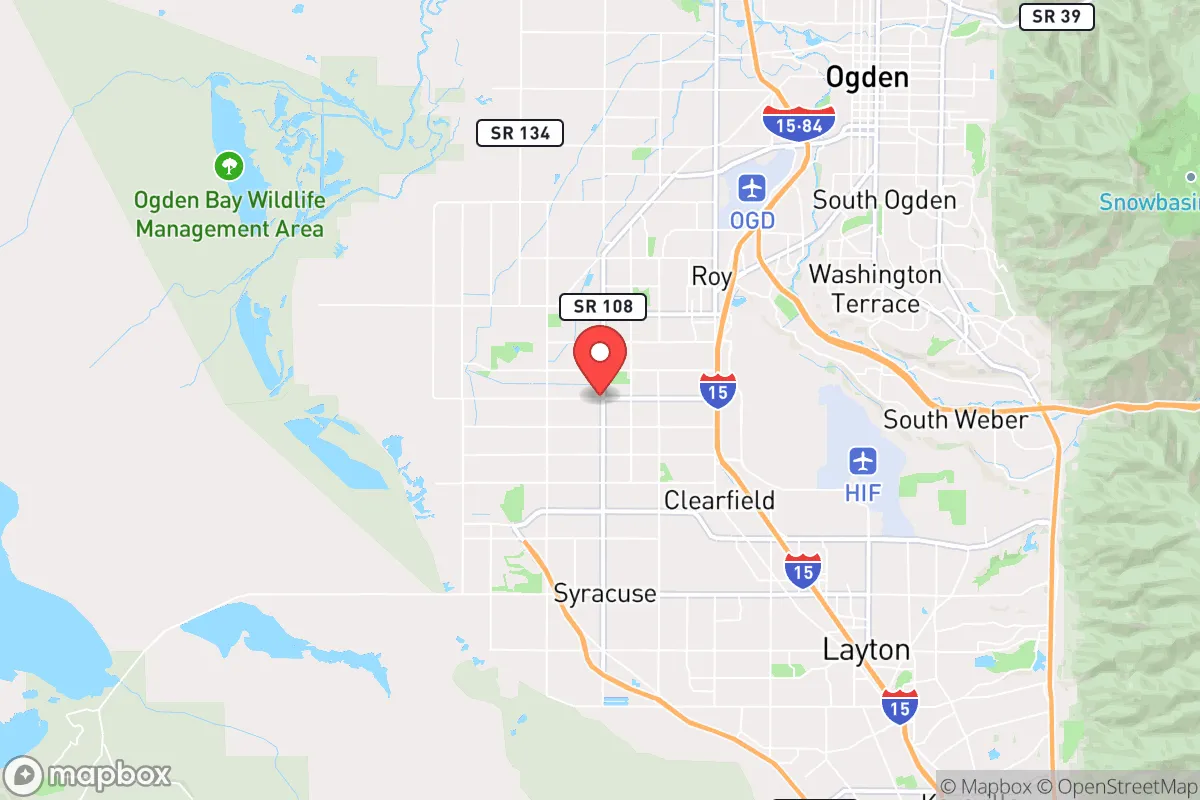
District shown is the primary district for this city’s centroid. Cities may span multiple districts.
Local Political AnalysisPolitical Analysis of Clinton, UT
Clinton, Utah, sits firmly in conservative territory with a Cook PVI of R+10, and honestly, it’s been that way for as long as I can remember. We’re talking deep-red roots that go back generations, where folks here value personal responsibility and don’t take kindly to government telling them how to live their lives. The political lean hasn’t budged much in the last decade, but you can feel the pressure building from the Wasatch Front’s growth—more people moving in from out of state, some bringing ideas that don’t quite fit our way of doing things. The trajectory is still solidly conservative, but it’s a fight to keep it that way, especially as Davis County gets more attention from state planners and developers.
How it compares
Compared to nearby cities, Clinton is a bit of a quiet stronghold. Head south to Layton or Clearfield, and you’ll see more of a mixed bag—some neighborhoods leaning purple, especially around Hill Air Force Base where transient military families bring in outside perspectives. North of us, Roy and Hooper are similar to Clinton, but Ogden to the east is a whole different animal; it’s got that college-town vibe with Weber State and a younger crowd that’s more open to progressive ideas. Even Syracuse, just a few miles away, has seen some zoning and housing debates that feel like they’re testing the limits of local control. Clinton, though, has kept its head down—our city council and mayor’s office have been reliably conservative, pushing back on state mandates that feel like overreach, whether it’s on land use or school curriculum. It’s a relief to have that consistency, but you can’t ignore the creeping influence from Salt Lake City’s policies, which sometimes trickle up through county-level decisions.
What this means for residents
For those of us living here, the political climate means a lot of everyday freedoms are still intact. You don’t get a lot of noise about mask mandates or business closures like you might in more progressive towns—our local leaders tend to err on the side of letting people make their own choices. Property taxes are reasonable, and there’s a general trust that the city won’t meddle in your backyard projects or how you raise your kids. That said, the long-term concern is real: as the state grows, there’s more pressure from federal and state-level programs that try to standardize things like housing density or environmental rules. If you value being left alone to live your life, Clinton is still a good bet, but you’ve got to stay engaged. The school board elections and city council races matter more than ever, because one bad appointment can shift the tone toward more regulation and less personal liberty.
Culturally, Clinton is pretty straightforward—church-going, family-oriented, with a strong sense of neighborly duty. You won’t find a lot of political activism here, which is both a blessing and a curse. The blessing is peace and quiet; the curse is that progressive groups from the larger cities sometimes see us as an easy target for policy changes, like pushing for more public transit or affordable housing mandates that don’t fit our rural-ish character. The biggest distinction is that we still have a local sheriff’s office that respects the Second Amendment and a school district that hasn’t caved to critical theory nonsense. If that starts to shift, you’ll hear about it from me. For now, Clinton is a place where you can still breathe without the government breathing down your neck, but you’ve got to keep your eyes open—because the fight for local control is never really over.

State Political ClimatePolitical Climate in Utah
State Political AnalysisPolitical Environment in the State
Utah has long been one of the most reliably conservative states in the Union, with a deep-rooted Republican dominance that has only solidified over the past two decades. The state’s political DNA is shaped by its majority Latter-day Saint population, which historically aligns with traditional values on family, fiscal responsibility, and limited government. However, the last 10-20 years have seen a subtle but real shift: the Wasatch Front metros—Salt Lake City, Provo, and Ogden—have grown more politically diverse, while rural and suburban areas have doubled down on conservative orthodoxy. The result is a state that remains deeply red, but with emerging fault lines that matter for anyone considering a move here.
Urban vs. rural divide
The political map of Utah is a study in contrasts. The Wasatch Front, home to roughly 80% of the state’s population, is where the action is. Salt Lake City itself is the only reliably blue stronghold, with a Democratic mayor and a city council that leans progressive on social issues. But just 40 miles south, Provo and Orem are among the most conservative cities in America, driven by Brigham Young University and a dense LDS population that votes Republican by margins exceeding 70%. Ogden, to the north, is a purple-ish swing area—historically blue-collar, now seeing an influx of outdoor enthusiasts and remote workers who lean libertarian-leaning conservative. The rural counties—like San Juan, Kane, and Garfield—are overwhelmingly red, often voting 80-90% Republican. The real story is the suburban ring: Utah County (Provo) and Davis County (north of Salt Lake) have become the engine of the state’s conservative majority, while Salt Lake County itself has shifted from solid red to competitive, with Democratic votes concentrated in the city core and a few liberal enclaves like Sugar House.
Policy environment
Utah’s policy environment is a model of conservative governance, but with some notable wrinkles. The state has a flat income tax rate of 4.65%, recently reduced from 4.95% via a 2023 legislative move, and no state-level sales tax on groceries. Property taxes are low by national standards, though they vary by county. The regulatory posture is business-friendly: Utah is a right-to-work state, has no statewide zoning mandates, and permits concealed carry without a permit (constitutional carry since 2021). On education, the state passed a universal school choice voucher program in 2023 (the Utah Fits All Scholarship), allowing parents to redirect public funds to private or homeschool options—a major win for parental rights. Healthcare policy is mixed: the state expanded Medicaid under the Affordable Care Act in 2019 via a voter initiative, but the legislature has since added work requirements and a per-capita cap. Election laws are among the most secure in the nation: Utah requires voter ID, has automatic voter registration tied to driver’s licenses, and uses paper ballots with risk-limiting audits. There is no early voting by mail unless requested, and same-day registration is not allowed—measures that conservatives generally support for integrity.
Trajectory & freedom
On the freedom front, Utah has been moving in a decidedly positive direction over the last five years, but with some cautionary notes. The 2021 passage of constitutional carry (HB 60) was a landmark expansion of Second Amendment rights, removing the permit requirement for concealed firearms. The same year, the legislature passed a parental rights in education bill (HB 331) that requires schools to notify parents of any curriculum involving human sexuality and prohibits instruction on sexual orientation or gender identity in K-3. In 2023, the state enacted a sweeping transgender sports ban (HB 11) and a ban on gender-affirming surgeries for minors (SB 16), both of which have been upheld in court. On property rights, Utah has a strong eminent domain statute that limits government takings, and the state’s “private property rights protection act” (HB 200) requires compensation for any regulation that reduces property value by more than 20%. However, there are concerns: the state’s air quality regulations have led to some overreach, including mandatory emissions testing in urban counties, and the 2023 “social media regulation” bill (SB 152) requires age verification for minors—a well-intentioned move that some see as a slippery slope toward online speech controls. Overall, Utah is trending more free on guns, education, and parental rights, but less free on environmental mandates and digital privacy.
Civil unrest & political movements
Utah is not a hotbed of civil unrest, but there have been notable flashpoints. The most visible was the 2020 Black Lives Matter protests in Salt Lake City, which saw several nights of clashes between demonstrators and police, leading to property damage and a curfew. The state’s response was firm: the legislature passed a bill in 2021 (HB 59) that increased penalties for rioting and blocking highways, which critics called an overreach but supporters saw as necessary for public safety. Immigration politics are a simmering issue: Utah has a “compact” with the federal government that allows local law enforcement to cooperate with ICE, but Salt Lake City has declared itself a “welcoming city” and limits cooperation. This has created tension between the state’s conservative legislature and the liberal city government. There is no serious secession or nullification movement in Utah, though some rural counties have floated the idea of forming a “State of Deseret” in response to federal land management policies—particularly around the Bears Ears and Grand Staircase-Escalante national monuments. Election integrity is a settled issue here: the 2020 and 2022 elections were conducted without major controversy, and the state’s Republican leadership has publicly affirmed the results. The most visible political movement is the “Liberty Caucus” within the state GOP, which pushes for even more aggressive tax cuts, school choice expansion, and a hardline stance on federal overreach.
Projection
Looking ahead 5-10 years, Utah’s political trajectory is likely to remain conservative, but with growing internal tension. The biggest wildcard is demographic change: the state is one of the fastest-growing in the nation, driven by in-migration from California and other blue states. These newcomers tend to be more moderate or libertarian than the native population, and they are concentrated in the Wasatch Front suburbs like Lehi, Saratoga Springs, and Herriman. This could shift the political center of gravity slightly toward a “live and let live” conservatism that is less focused on social issues and more on tax policy and property rights. However, the rural and exurban areas are growing even faster in terms of political influence, as the legislature’s redistricting in 2021 gave more weight to conservative rural counties. Expect continued battles over education funding, with the voucher program likely expanding, and over land use, as the federal government retains control of roughly 65% of Utah’s land. The state’s relationship with the federal government will remain a defining issue, especially around public lands and energy development. A new resident moving in now should expect to find a state that is still deeply conservative, but with a more pragmatic, less ideological flavor than a decade ago—think Texas with mountains and snow.
Bottom line for a new resident: If you value low taxes, strong gun rights, school choice, and a government that generally stays out of your personal life, Utah is one of the best bets in the country. The trade-off is that you’ll be living in a state where the dominant culture is still heavily influenced by the LDS Church, which can feel insular in some rural areas. The urban-rural divide is real, but manageable—pick your county wisely. The political climate is stable, the trajectory is positive for conservatives, and the biggest threats to freedom are federal overreach and the slow creep of progressive ideas in Salt Lake City. Overall, it’s a solid choice for anyone looking to escape the chaos of coastal states.
* Values derived from national, state, county, city and local statistics and may differ in a specific area. Last updated: 2026-05-01T12:55:43.000Z
Narrative content on this page is AI-generated and may contain mistakes. Verify any details that matter before acting on them.
ReloMaps may earn a commission from affiliate links at no extra cost to you.

