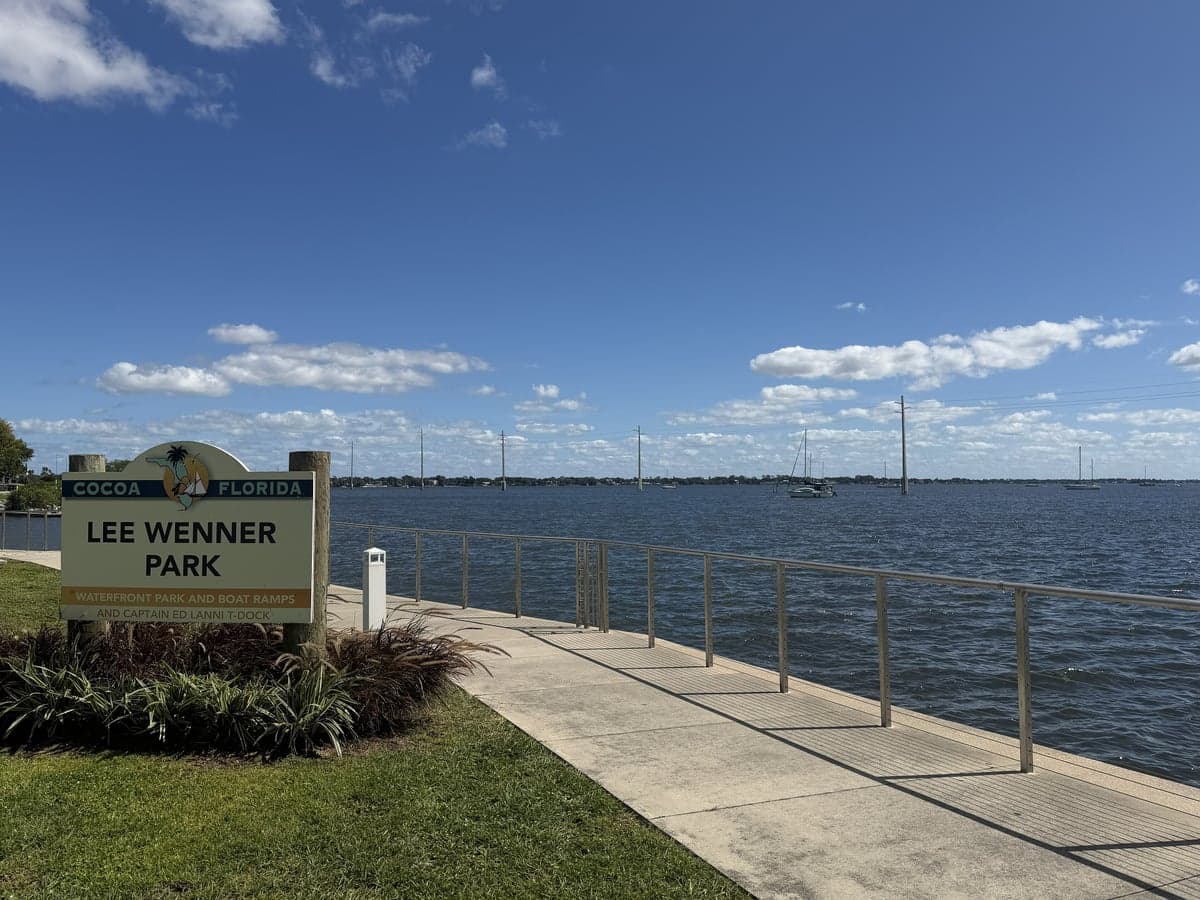
Photo: Wikipedia
Personal Sovereignty in Cocoa, FL
Viable for self-reliance. Generally workable, though some barriers may limit total independence.
What does Personal Sovereignty tell us?
Personal Sovereignty measures your capacity for self-reliance and independence with minimal government friction. Higher scores mean fewer barriers between you and the way you want to live... but it assumes you have the space you need and good neighbors.
What does this tell us?
Personal Sovereignty measures your capacity for self-reliance and independence with minimal government friction. Higher scores mean fewer barriers between you and the way you want to live... but it assumes you have the space you need and good neighbors.
State Policy
Energy independence: Importer (10% of energy produced in-state)
Personal Liberty
Homesteading

Personal Liberty Analysis
Cocoa, Florida, offers a personal sovereignty environment that is heavily shaped by the state's strong preemption laws and a generally light-touch regulatory posture, though it sits within a county that balances rural independence with suburban growth pressures. For individuals and families prioritizing autonomy, the city provides a legal framework that leans toward self-reliance in self-defense, property use, and tax burden, but with some local zoning and HOA constraints that can temper the degree of personal freedom. The overall atmosphere is one where state-level protections for gun rights, parental authority, and property rights create a baseline of sovereignty, while the practical experience of daily life depends on the specific neighborhood and proximity to Cocoa's more urbanized corridors.
Tax burden and regulatory posture in Brevard County
Florida's absence of a state income tax is the single most impactful factor for personal financial sovereignty in Cocoa. Residents keep 100% of their earned income, which directly supports self-directed saving, investing, or homesteading. The sales tax rate in Brevard County is 7%, which includes the state's 6% base plus a 1% local option surtax. Property taxes are governed by the Save Our Homes amendment, which caps annual assessed value increases at 3% for homesteaded properties—a powerful tool for long-term residents to lock in low tax burdens. For new buyers, the effective property tax rate in Cocoa hovers around 0.9% to 1.1% of assessed value, which is moderate by national standards but slightly above the Florida median. Regulatory posture at the state level is decidedly pro-business and anti-red-tape: Florida has right-to-work laws, no state-level minimum wage preemption (though a $12/hour state minimum applies as of 2026), and a streamlined permitting process for construction. Locally, Cocoa's municipal code is not overly burdensome for standard residential uses, but the city does enforce building codes and zoning ordinances that can restrict certain off-grid modifications—such as installing solar panels without HOA approval or keeping livestock on standard residential lots. The county's comprehensive plan encourages growth but does not impose the kind of stringent environmental or land-use regulations found in more coastal or conservation-focused areas like Martin County.
Self-defense and gun law specifics in Cocoa
Florida is a constitutional carry state as of July 2023, meaning no permit is required for the open or concealed carry of a firearm by any person who is legally allowed to possess one. This is a foundational element of personal sovereignty in Cocoa. The state also has a strong Stand Your Ground law, codified in Florida Statute 776.013, which removes any duty to retreat before using deadly force in self-defense when a person is in a place they have a legal right to be. There is no state-level firearm or ammunition registration, no magazine capacity restrictions, and no waiting period for long guns (though a three-day waiting period applies to handgun purchases from licensed dealers). Local governments in Florida, including Cocoa and Brevard County, are explicitly preempted from enacting their own gun control ordinances under Florida Statute 790.33, which carries penalties for officials who violate it. This means that the legal environment for self-defense is uniform and predictable across the area. For those who wish to carry in other states, Florida offers a non-resident concealed weapon license that is recognized in over 30 states. The practical effect for a resident of Cocoa is that the ability to defend oneself, one's family, and one's property is legally maximized, with minimal bureaucratic hurdles.
Self-reliance and homesteading viability: lot sizes, zoning, and off-grid feasibility
Cocoa's zoning code presents a mixed picture for those seeking a self-reliant, homesteading lifestyle. Within the city limits, standard residential lots (R-1 zoning) are typically 6,000 to 10,000 square feet, which is sufficient for a substantial vegetable garden, a small chicken coop (up to 4 hens are allowed without a permit in most residential zones), and rainwater collection for irrigation. However, keeping larger livestock like goats or pigs is generally prohibited on lots under one acre, and even on larger parcels, a special use permit may be required. The city's code does not explicitly prohibit solar panels, but HOA covenants in many subdivisions can restrict their placement or visibility. For true off-grid living—septic systems, private wells, and full energy independence—the most viable areas are the unincorporated parts of Brevard County north and west of Cocoa, such as the areas around State Road 528 and the St. Johns River basin. There, lot sizes of 1 to 5 acres are common, and the county's zoning allows for agricultural uses, including beekeeping, orchards, and small-scale animal husbandry, without the need for a conditional use permit. The county also has relatively permissive rules for accessory dwelling units (ADUs), which can be used for multi-generational living or rental income. The main regulatory hurdle for off-grid systems is the Florida Building Code, which requires permits for structural solar panel installations and electrical work, but does not mandate grid connection. Rainwater harvesting is legal and encouraged, with no state-level restrictions on collection volume.
Personal liberties: parental rights, medical autonomy, speech, and property
Florida has been a national leader in codifying parental rights in education. The Parental Rights in Education Act (HB 1557) and subsequent legislation ensure that parents have the right to review instructional materials, opt their children out of certain lessons, and be notified of any changes to their child's mental or physical health. This creates a strong legal framework for family sovereignty in Cocoa. On medical autonomy, Florida does not have a state-level vaccine mandate for adults, and the state has passed laws prohibiting vaccine passports and employer mandates for COVID-19 vaccines. However, the state does require certain vaccinations for school attendance, with medical and religious exemptions available. For those seeking alternative medical treatments, Florida is relatively permissive with naturopathic and chiropractic care, but the state has a strict regulatory environment for controlled substances, including medical marijuana, which is legal only through licensed dispensaries and with a qualifying condition. Free speech protections are robust, with no state-level hate speech laws that restrict expression, and the Florida Constitution explicitly protects the right to speak, write, and publish freely. Property rights are strongly defended through the Bert J. Harris Jr. Private Property Rights Protection Act, which allows landowners to seek compensation if a government regulation reduces the value of their property by more than 50%. This acts as a check on local overreach in zoning or environmental regulations.
Compared to other areas in the Southeast, Cocoa and its surrounding Brevard County offer a high degree of personal sovereignty, particularly in the realms of self-defense, taxation, and parental rights. The absence of income tax, constitutional carry, and strong preemption laws create a baseline of autonomy that is not found in states like California, New York, or even neighboring Georgia. The main limitations come from local zoning and HOA restrictions, which can constrain homesteading and off-grid modifications within city limits. For a family or individual who values independence and is willing to choose a lot in the unincorporated county or a less restrictive neighborhood, Cocoa provides a legal environment that supports self-reliance without the heavy hand of state or local bureaucracy. The trade-off is that this freedom comes with the responsibility of navigating a patchwork of local rules, but the overall trajectory of state policy is clearly toward maximizing individual sovereignty.

* Values derived from national, state, county, city and local statistics and may differ in a specific area. Last updated: 2026-08-22T17:11:04.000Z
Narrative content on this page is AI-generated and may contain mistakes. Verify any details that matter before acting on them.
ReloMaps may earn a commission from affiliate links at no extra cost to you.

