 Popular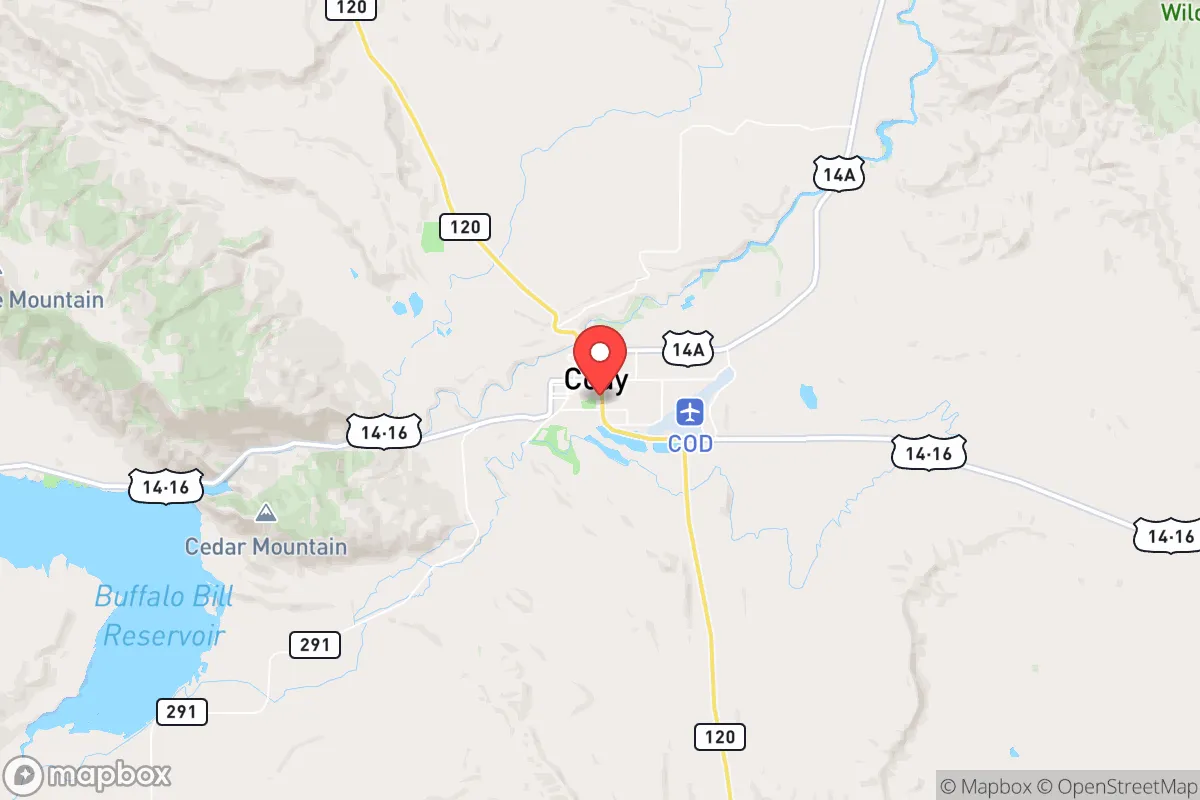
Strategic Assessment of Cody, WY
Workable tactical position. Some exposure to population density or targets, but generally defensible in a crisis.
What does the Strategic Assessment tell us?
Our Strategic Assessment grades tactical survivability of an area. Major population centers, military targets, fallout zones, natural disasters, and border exposure all drive risk — lower exposure means a more defensible position in a crisis.
This is heavily inspired by Joel Skousen's Strategic Relocation book. Highly recommended you checkout the book ($)What does this tell us?
Our Strategic Assessment grades tactical survivability of an area. Major population centers, military targets, fallout zones, natural disasters, and border exposure all drive risk — lower exposure means a more defensible position in a crisis.
This is heavily inspired by Joel Skousen's Strategic Relocation book. Highly recommended you checkout the book ($)Strategic Pillars

Key Distances
Regional Safe Places
Below is our recommended "safe zones" in Wyoming and the surrounding area based on our strategic heuristics. For most people, it's unrealistic to live in a “safe zone” full-time due to work, family or other personal reasons. They tend to be more rural. However, many of these areas are perfect for second homes and retreat properties that double as a vacation home or even a short-term rental.
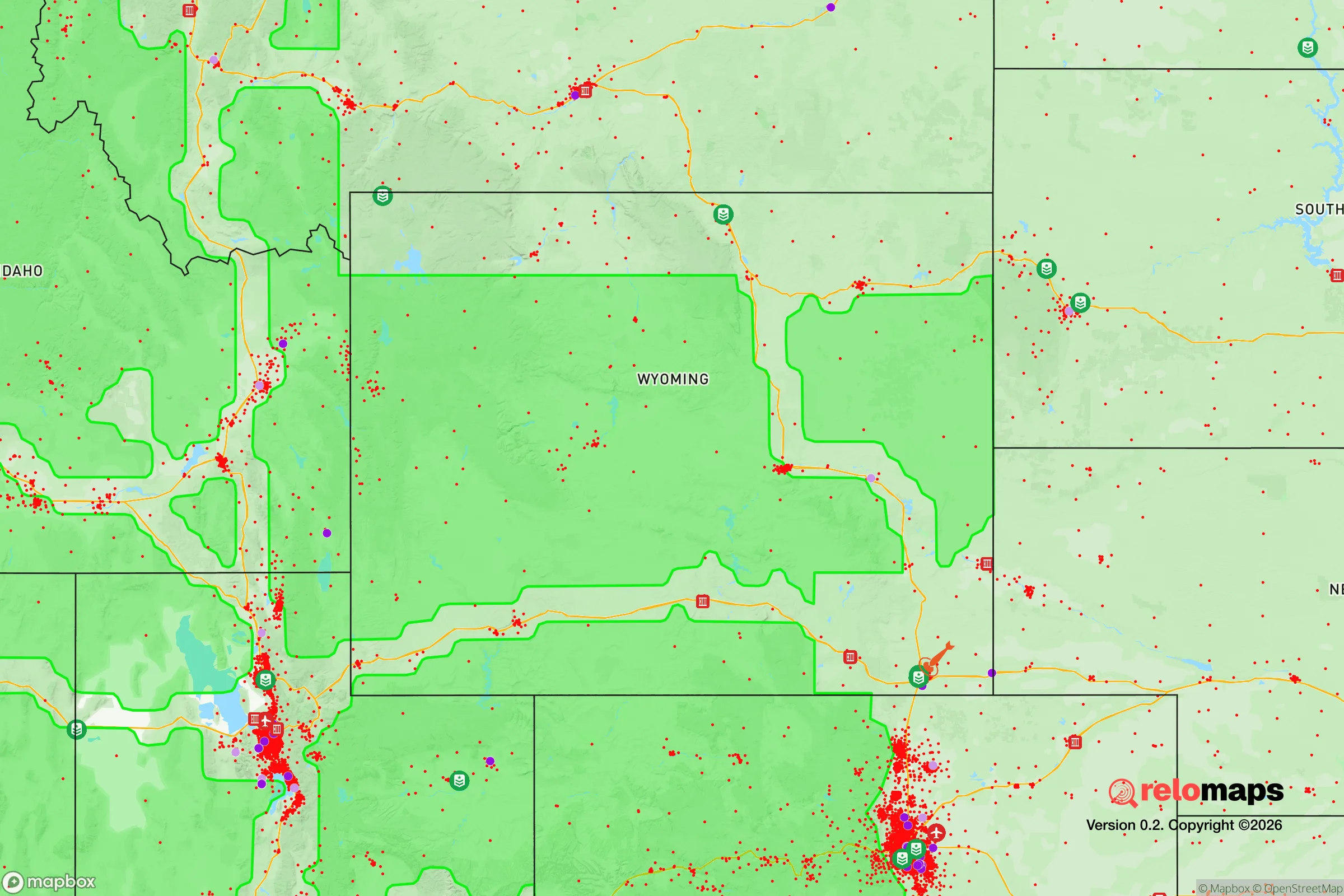
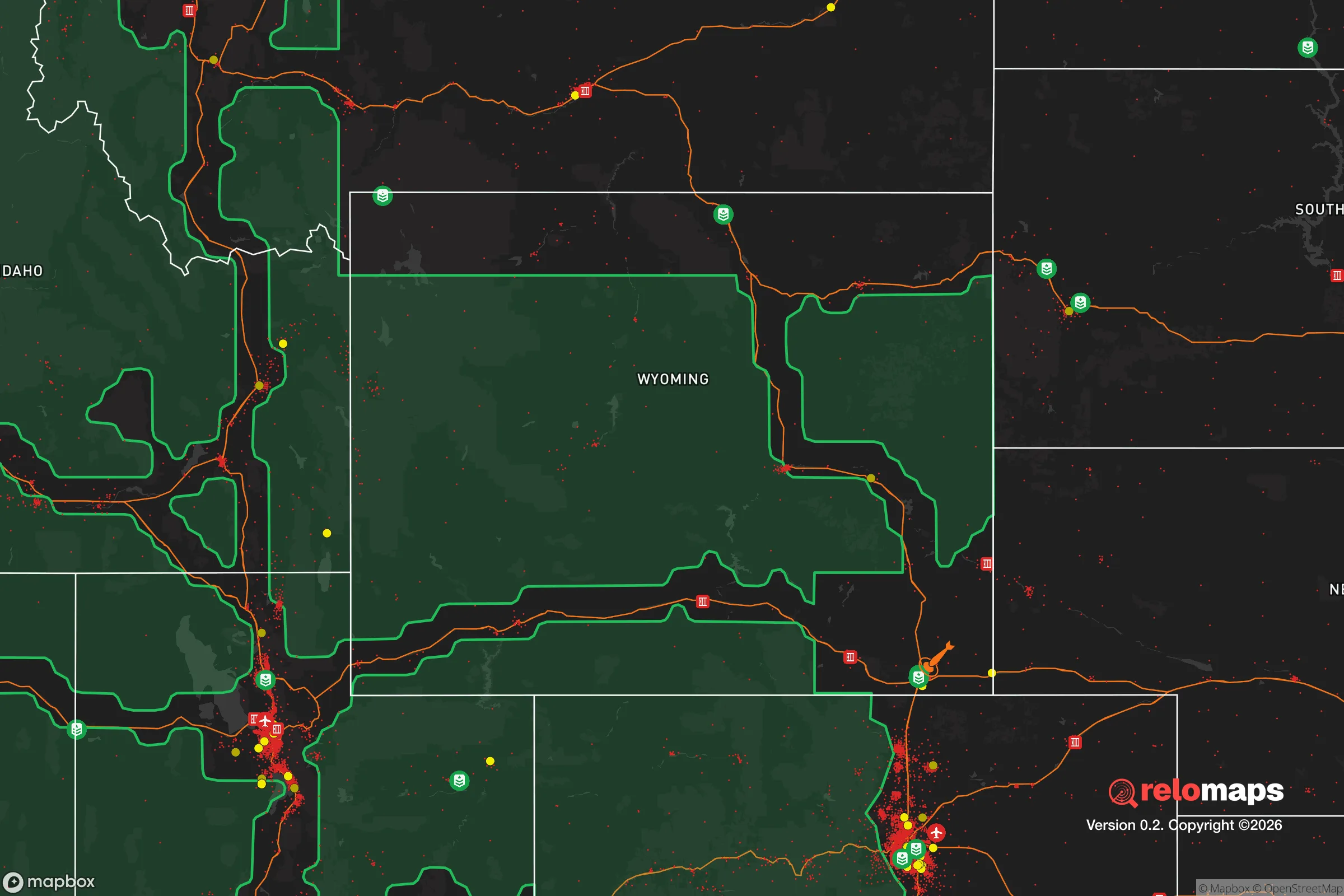


Important Note: For informational purposes only. This does not mean nothing bad ever happens in the green zones. Please use common sense. This is based on public data and modeled with AI. We tried to take a conservative approach but mistakes happen. We update this regularly as new information becomes available.
Solar Generator Recommendations
Backup power matters more here than in safer locations. We've picked three solar generators across budgets and capacity tiers — start with the budget unit if you only need a few essentials, or step up if you want to run a fridge and HVAC for days at a time.

Jackery Portable Power Station Explorer 300
Budget OptionPower on the Go: Weighing only 11 lbs, it's convenient to set up and store with book-sized foldable solar panels

BLUETTI Portable Power Station AC180
Designed for both indoor and outdoor scenarios, AC180 is highly capable as it has a robost capacity and continuous output power.

EF ECOFLOW DELTA Pro Ultra Power Station
Upgraded PickEcoFlow DELTA Pro Ultra is a whole-home energy system designed to grow with your family. Integrated with the Smart Home Panel 2, it scales to meet your evolving energy needs — keeping your home powered, intelligent, and secure through every stage of life.
We earn a commission, at no additional cost to you.
Strategic Assessment Analysis
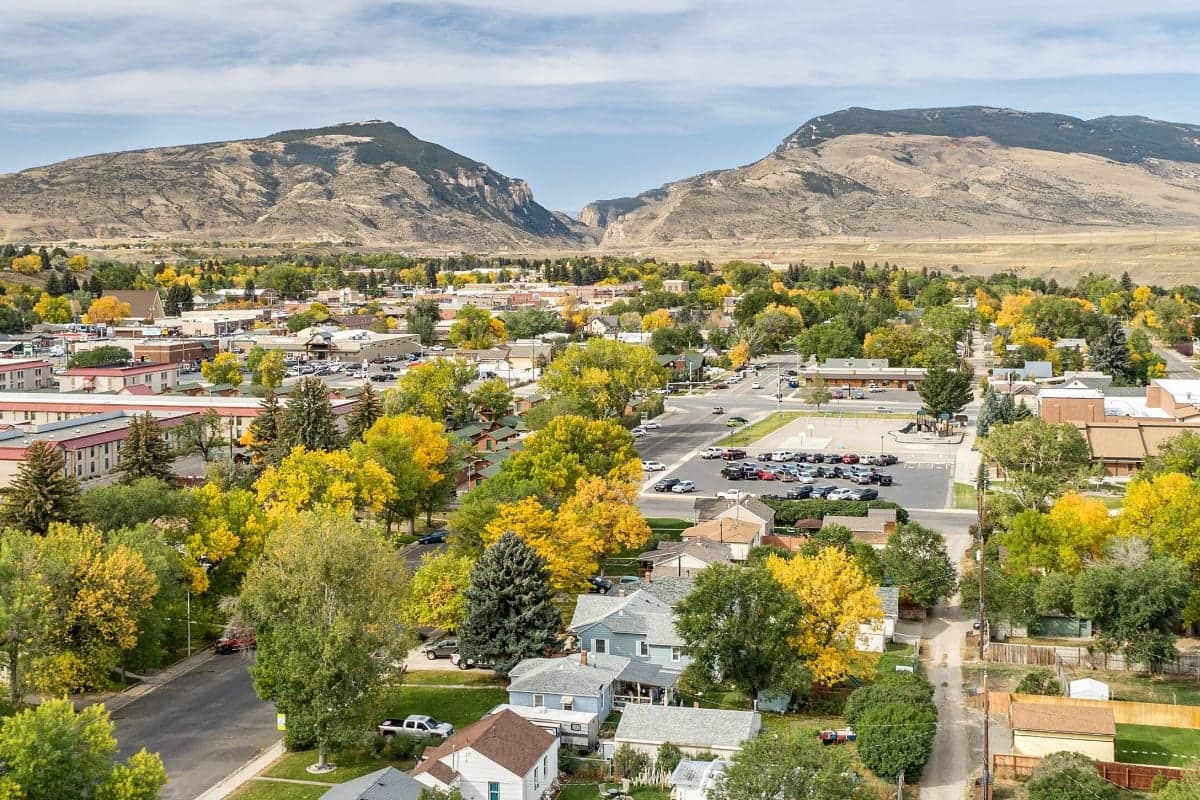
Cody, Wyoming, occupies a unique position in the resilience landscape, blending the remoteness of the Rocky Mountain West with the practical infrastructure of a small city. Its location at the eastern gateway to Yellowstone National Park, in the Bighorn Basin, provides a natural buffer against many of the cascading failures that threaten more densely populated regions. For a relocator prioritizing disaster readiness and self-sufficiency, Cody offers a compelling mix of geographic isolation, access to critical natural resources, and a community culture that still values preparedness—though it is not without its own strategic vulnerabilities.
Geographic position and natural advantages for long-term stability
Cody’s primary strategic asset is its position in a high-altitude valley (approximately 5,000 feet) surrounded by the Absaroka and Beartooth mountain ranges. This topography creates a natural defensive perimeter, making the area difficult to approach from the west and north without crossing significant mountain passes, which are often impassable in winter. The town sits roughly 50 miles east of Yellowstone’s east entrance, placing it far from the immediate blast and fallout zones of any major metropolitan target—the nearest city of significant size is Billings, Montana, about 100 miles north, and the Intermountain West’s major population centers (Salt Lake City, Denver) are over 400 miles away. This distance from high-value targets (military installations, major transportation hubs, nuclear facilities) is a critical advantage in a scenario involving electromagnetic pulse (EMP) or nuclear exchange. The surrounding Shoshone National Forest and vast tracts of Bureau of Land Management (BLM) land provide a buffer against suburban sprawl and offer abundant hunting, fishing, and foraging opportunities. The region’s semi-arid climate, with low humidity and over 300 days of sunshine per year, reduces the risk of mold, crop blight, and many communicable diseases that thrive in wetter environments. However, the high altitude and cold winters (average January lows around 10°F) impose a serious energy and shelter requirement that cannot be overlooked.
Risks, exposures, and proximity to fallout-relevant landmarks
While Cody is far from coastal threats and major population centers, it is not immune to risk. The most significant natural hazard is wildfire. The surrounding forests and grasslands are fire-adapted ecosystems, and the region has seen increasing fire activity in recent decades, with the 2022 Pack Trail Fire burning over 60,000 acres within 30 miles of town. A major fire in the Wapiti Valley or along the North Fork Highway could threaten power lines and force evacuations. Seismic risk is moderate—the Yellowstone Caldera, about 50 miles west, is a constant low-level concern, but the probability of a catastrophic super-eruption in any given century is extremely low (estimated at 1 in 730,000). More relevant are the frequent earthquake swarms (hundreds per year) that could disrupt infrastructure, particularly the roads and bridges that serve as Cody’s only reliable egress routes. The town’s single main artery, US Highway 14/16/20 (the Cody Road), is vulnerable to landslides and rockfalls in the canyon sections. In terms of man-made risks, Cody is not near any nuclear power plants or major military bases, but it lies within the fallout plume zone of potential strikes on Minot Air Force Base in North Dakota (about 350 miles northeast) or the Idaho National Laboratory (about 250 miles southwest). Prevailing winds in the region are generally west-to-east, meaning fallout from a western target would be carried away from Cody, but a strike on Minot could deposit particulate matter in the area depending on weather patterns. The town’s isolation also means that in a national emergency, it could become a destination for refugees from Billings or even Denver, overwhelming local resources.
Practical resilience for a relocator: food, water, energy, and defensibility
Cody’s practical resilience is a mixed bag. On the positive side, the Bighorn Basin is an agricultural area, with irrigated hay fields, alfalfa, and some small-scale grain production within a 30-mile radius. The Shoshone River runs through town, providing a reliable surface water source that is less prone to contamination than groundwater in many areas. The municipal water system draws from the river and is treated, but a well with a hand pump on a property outside city limits would be a significant advantage. The local energy grid is served by Rocky Mountain Power, with transmission lines that run through mountainous terrain and are vulnerable to both winter storms and wildfire. Natural gas is available in town, but many rural properties rely on propane or heating oil. Solar potential is excellent—Cody averages over 5.5 peak sun hours per day—but battery storage is essential given the grid’s vulnerability. The community has a strong hunting culture, with elk, mule deer, and antelope abundant in the surrounding national forests. Fishing in the Shoshone and North Fork is productive. However, the growing season is short (about 100 days), making large-scale home gardening challenging without a greenhouse. Defensibility is a key strength: the town’s layout, with the river as a natural barrier on the south and the mountains rising to the north and west, means that only a few roads provide access. A small, organized group could effectively control the choke points at the canyon entrances. The local culture is generally self-reliant and firearm-friendly, which is a practical advantage for security in a prolonged disruption. The Park County Sheriff’s Office and Cody Police Department are professional and well-equipped, but response times in rural areas can exceed 30 minutes.
The overall strategic picture for Cody is one of a high-altitude redoubt with genuine natural defenses and resource access, but with real constraints that require advance preparation. It is not a survivalist fantasy—winter is a serious threat, the local economy is heavily dependent on tourism and energy extraction, and the town’s small population (about 10,000) means limited medical and industrial capacity. For a relocator who is serious about self-sufficiency, Cody offers a realistic base of operations: good water, decent agricultural potential, strong community networks, and a location that is far enough from major targets to avoid the worst of a national crisis. The key is to arrive with a plan for winter heating, food storage, and water treatment, and to integrate into the local community rather than remaining an outsider. Cody is not a place to ride out a short-term emergency—it is a place to build a long-term, resilient life in a region that has historically weathered hardship with a pragmatic, no-nonsense attitude.

* Values derived from national, state, county, city and local statistics and may differ in a specific area. Last updated: 2026-10-02T20:49:12.000Z
Narrative content on this page is AI-generated and may contain mistakes. Verify any details that matter before acting on them.
ReloMaps may earn a commission from affiliate links at no extra cost to you.

