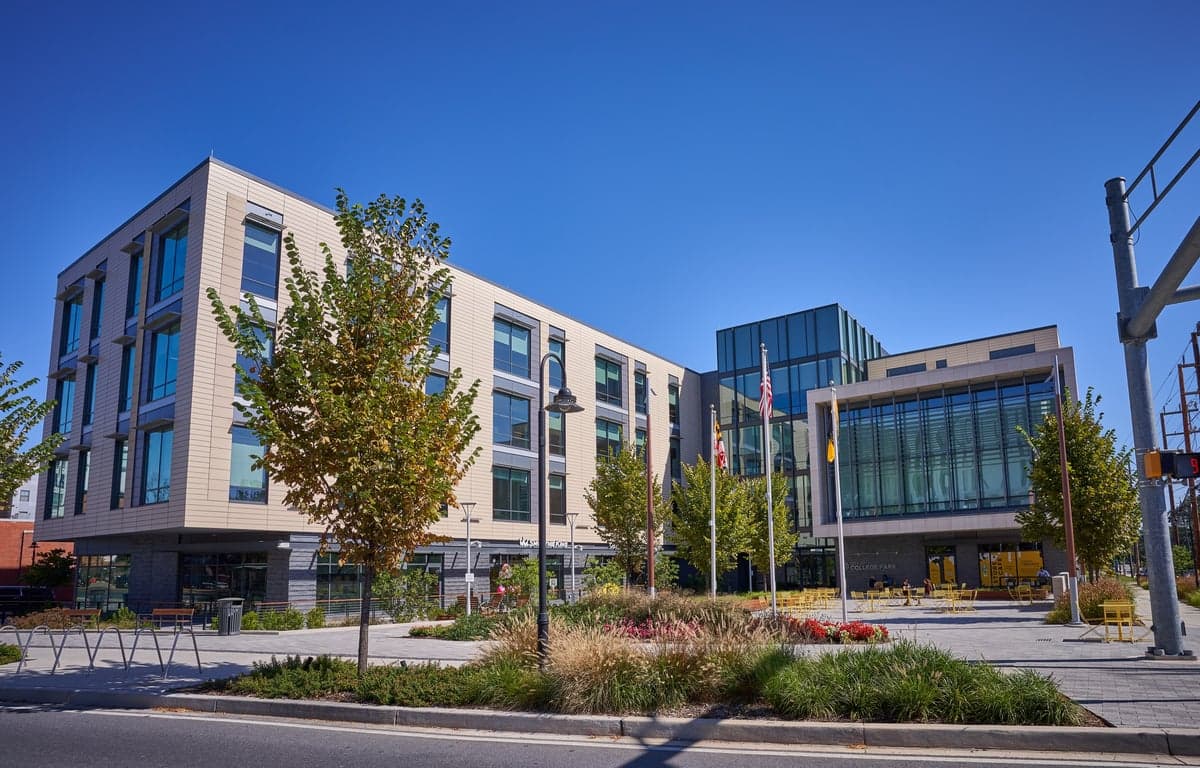
Photo: Wikipedia
Personal Sovereignty in College Park, MD
Viable for self-reliance. Generally workable, though some barriers may limit total independence.
What does Personal Sovereignty tell us?
Personal Sovereignty measures your capacity for self-reliance and independence with minimal government friction. Higher scores mean fewer barriers between you and the way you want to live... but it assumes you have the space you need and good neighbors.
What does this tell us?
Personal Sovereignty measures your capacity for self-reliance and independence with minimal government friction. Higher scores mean fewer barriers between you and the way you want to live... but it assumes you have the space you need and good neighbors.
State Policy
Energy independence: Importer (8% of energy produced in-state)
Personal Liberty
Homesteading

Personal Liberty Analysis
College Park, Maryland, presents a challenging environment for personal sovereignty, where state-level overreach significantly constrains individual autonomy despite the city’s own progressive leanings. For a conservative or survivalist-minded individual, the calculus here is heavily weighted toward restrictions on self-defense, high taxation, and limited homesteading viability, making it a location where personal freedoms are systematically eroded by government mandates. The city’s proximity to Washington, D.C., amplifies a regulatory culture that prioritizes collective compliance over individual liberty, creating a landscape where self-reliance is often met with bureaucratic hurdles rather than support.
Tax burden and regulatory posture in College Park
Maryland’s tax burden is among the highest in the nation, and College Park residents feel this acutely. The state’s progressive income tax rates range from 2% to 5.75%, with local income taxes in Prince George’s County adding another 3.2%, effectively pushing the combined rate near 9% for many earners. Property taxes in College Park are also steep, with a county rate of roughly 1.1% of assessed value, and the city itself levies an additional property tax. This double-layered taxation means a $400,000 home could incur annual property taxes exceeding $5,000. Sales tax is 6%, applied broadly, including to many preparedness supplies. The regulatory posture is equally burdensome: Maryland has a state-level estate tax, a digital advertising tax (the first in the nation), and strict environmental regulations that can complicate property modifications. For a prepper, this means every dollar saved for supplies or land is subject to aggressive state and local extraction, reducing the capital available for self-reliance investments. The state’s business climate is also hostile to small-scale enterprises, with high licensing fees and complex zoning laws that discourage independent contracting or home-based businesses.
Self-defense and gun law specifics in College Park
Maryland’s gun laws are among the most restrictive in the country, and College Park offers no local relief. The state requires a Handgun Qualification License (HQL) to purchase a handgun, which involves a training course, fingerprinting, and a background check that can take weeks. The “good and substantial reason” standard for concealed carry was struck down in 2022 following the Bruen decision, but the state still imposes a 7-day waiting period for handgun purchases and bans “assault weapons” by name, including popular AR-15 platforms. Magazine capacity is capped at 10 rounds for long guns and 10 rounds for handguns, severely limiting defensive capability. Private firearm sales must go through a licensed dealer, and there is no state preemption for local gun laws, meaning College Park could theoretically enact its own restrictions, though it currently relies on state statutes. For a survivalist, this means building a defensive arsenal is legally constrained, and any attempt to stockpile ammunition or components is subject to state oversight. The state’s red flag law allows for temporary seizure of firearms without a criminal conviction, a tool that can be abused in disputes. Self-defense with a firearm in public is effectively impossible due to the carry restrictions, and even home defense is complicated by safe storage laws that mandate locking firearms away from children, potentially slowing access in an emergency.
Self-reliance and homesteading viability in College Park
Homesteading in College Park is a non-starter for most serious preppers. The city is densely developed, with typical residential lot sizes ranging from 5,000 to 10,000 square feet, leaving little room for significant food production. Zoning regulations in Prince George’s County restrict keeping livestock—chickens are allowed only with a permit and strict coop requirements, while goats, pigs, or larger animals are prohibited in most residential zones. Off-grid living is effectively illegal: Maryland’s building codes require connection to municipal water and sewer systems in urban areas, and solar panel installations must comply with utility interconnection standards that discourage true energy independence. Rainwater harvesting is permitted but limited to 2,500 gallons of storage without a permit, and the state’s environmental regulations can complicate composting or greywater systems. For a survivalist seeking to reduce dependency on supply chains, College Park offers little room for gardening beyond small vegetable plots, and the soil quality in this urbanized area often requires remediation. The city’s tree canopy and shade further limit solar viability. Any serious homesteading effort would require moving to rural areas of the state, such as Garrett County or the Eastern Shore, where zoning is more permissive and land is cheaper—but even there, state-level restrictions on firearms and taxes persist.
Personal liberties in College Park: parental rights, medical autonomy, speech, and property
Parental rights in Maryland are under consistent pressure. The state mandates comprehensive sex education in public schools, with an opt-out rather than opt-in policy, and has passed laws requiring school districts to adopt policies that affirm LGBTQ+ identities, which can conflict with conservative family values. Medical autonomy is severely limited: Maryland has strict vaccine mandates for school attendance, with only narrow religious exemptions, and during the COVID-19 pandemic, the state imposed some of the nation’s longest-lasting mask and vaccine mandates for healthcare workers. The state’s medical aid-in-dying law is a rare positive for autonomy, but it’s overshadowed by the general regulatory approach. Free speech is constitutionally protected, but College Park’s university environment can create a chilling effect on conservative viewpoints, with campus speech codes and social pressure that discourage open discussion of certain topics. Property rights are constrained by Maryland’s strong eminent domain powers and environmental regulations that can restrict land use. The state’s “Smart Growth” policies funnel development into designated areas, limiting the ability to build or modify structures on rural land. For a prepper, this means even owning land doesn’t guarantee the freedom to use it as you see fit—building a bunker, installing a wind turbine, or clearing land for agriculture may require permits and face opposition from neighbors or environmental agencies.
Overall, College Park ranks poorly for personal sovereignty compared to states like Texas, Idaho, or Montana, where tax burdens are lower, gun laws are more permissive, and homesteading is feasible. Even within Maryland, rural counties offer more breathing room, though state-level restrictions remain. For a conservative individual or family prioritizing autonomy, College Park is a location to avoid unless career or family ties are non-negotiable. The combination of high taxes, restrictive gun laws, limited homesteading potential, and eroded parental rights creates an environment where the state is a constant presence in daily life, leaving little room for the self-reliance that survivalist and prepper mindsets demand. If relocation is possible, look to states with constitutional carry, no income tax, and permissive zoning—places where the government’s role is minimized and individual sovereignty is respected.

* Values derived from national, state, county, city and local statistics and may differ in a specific area. Last updated: 2026-04-22T03:18:32.000Z
Narrative content on this page is AI-generated and may contain mistakes. Verify any details that matter before acting on them.
ReloMaps may earn a commission from affiliate links at no extra cost to you.

