Photo: Wikipedia
Quality of Life in College Park, MD
A high quality of life with strong walkability, manageable living costs, healthy neighborhood signals, and solid amenity access.
What does Quality of Life tell us?
Quality of Life blends cost of living, nearby amenities, socioeconomic signals, and neighborhood character. City-level scores represent the whole municipality; individual neighborhoods can differ.
What does this tell us?
Quality of Life blends cost of living, nearby amenities, socioeconomic signals, and neighborhood character. City-level scores represent the whole municipality; individual neighborhoods can differ.
Cost of Living
56% above national average
The Real Cost of Living in College Park, MD for 2026
| Tier | Individual | Family (4) |
|---|---|---|
| Survival | $29k | $55k |
| Comfortable | $83k | $123k |
| Luxury | $126k+ | $196k+ |
| Elite (Top 5%) | $148k+ | $230k+ |
61%
The Area Signal
A metric tracking the socioeconomic signals of the area.
Hobbies
Explore the areaGroceries
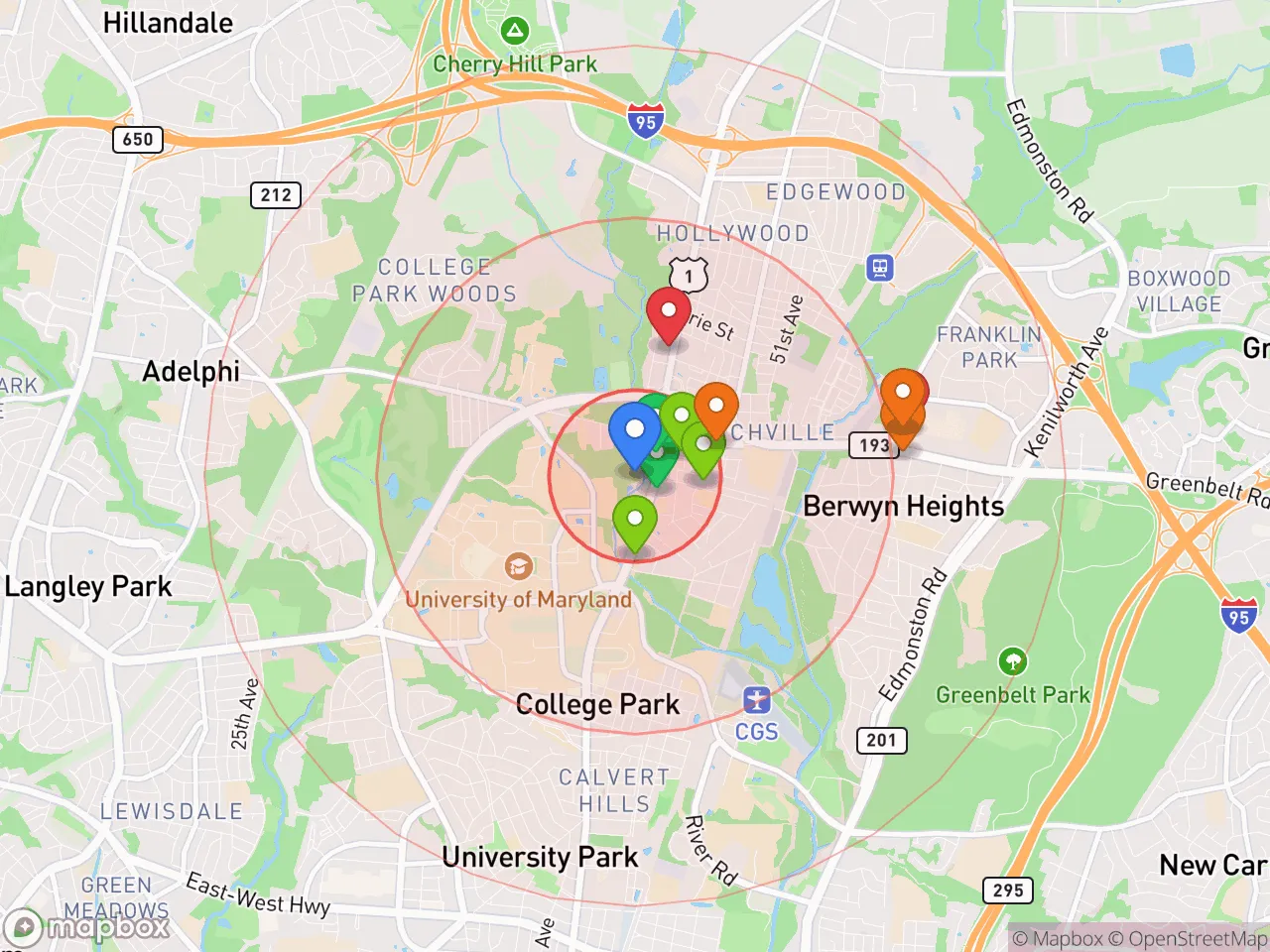
7 within 10 miles
Gas
20 within 10 miles
Hospital
20 within 20 miles
Airport
DCA — Ronald Reagan Washington National
Post Office
USPS — College Park, MD
Critical Amenities
Quality-of-Life Analysis
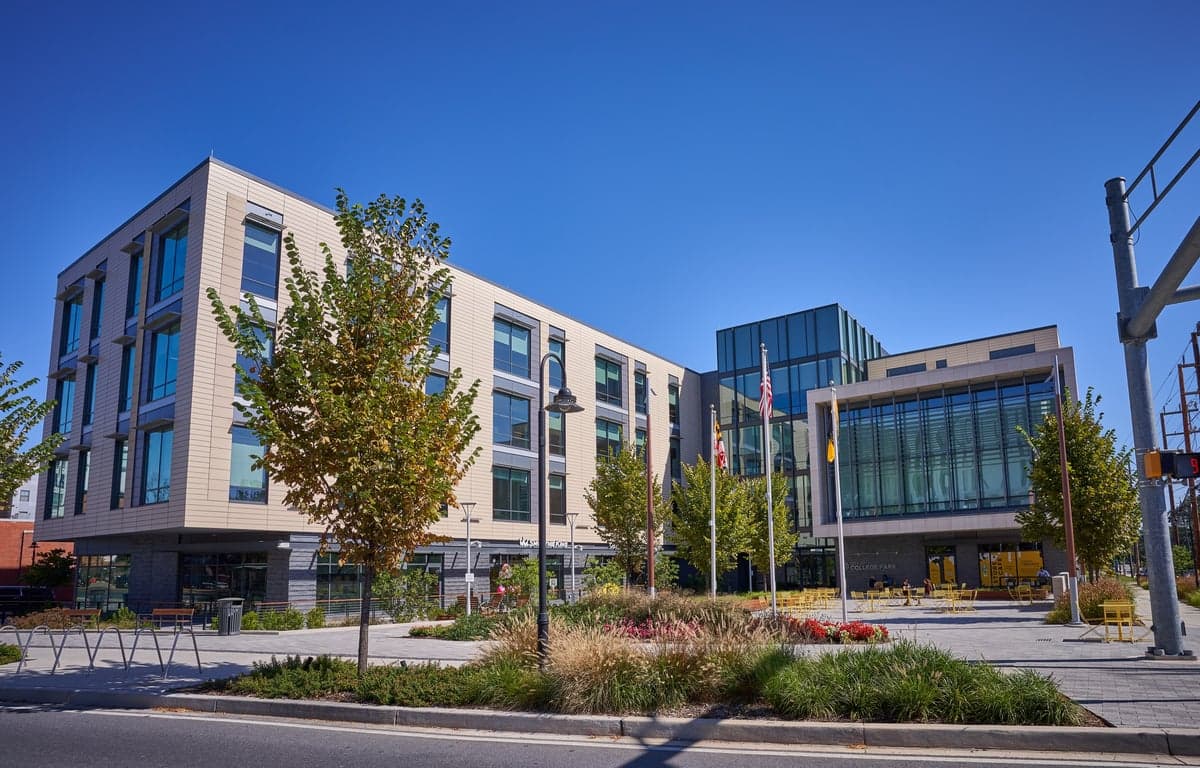
College Park, Maryland, is an affluent, highly educated college town anchored by the University of Maryland, College Park (UMD). The population skews young and transient—over 40% of residents are enrolled in higher education—but the city also hosts a growing base of professionals working in federal research, tech, and government contracting. With a cost-of-living index of 156 (56% above the U.S. average), the area commands a premium for its proximity to Washington, D.C., and its dense, walkable campus core.
Cost of living, housing, and affordability compared to D.C. and nearby suburbs
College Park’s cost of living is significantly higher than the national average but remains a relative bargain compared to central Washington, D.C., and close-in suburbs like Bethesda or Arlington. The median home value sits at $429,000, roughly $100,000 less than the D.C. metro median, while the median rent of $1,846 is about 15% below the regional average. However, housing costs have risen sharply since 2020, driven by UMD enrollment growth and new transit-oriented developments near the College Park Metro station. The average commute time of 24.4 minutes is shorter than the D.C. metro average of 34 minutes, thanks to the MARC train and Metro’s Green Line, which connect residents to downtown D.C. in under 30 minutes. Property taxes in Prince George’s County are moderate—around 1.1% of assessed value—but state income taxes (up to 5.75%) and sales tax (6%) add to the overall expense. For renters, the market is tight: vacancy rates hover near 3%, and newer luxury apartments near campus command rents above $2,200 for a one-bedroom.
What daily life is like for families, students, and professionals
Daily life in College Park revolves around the university, which shapes both the calendar and the culture. The city’s public schools are part of Prince George’s County Public Schools, with Paint Branch Elementary and High Point High School serving most neighborhoods; both have seen improved test scores but still lag behind Montgomery County averages. For families, the College Park Woods and Berwyn neighborhoods offer quieter, tree-lined streets with single-family homes, while students and young professionals cluster near Route 1 and the campus edge. Amenities include the College Park Aviation Museum, the Lake Artemesia Natural Area for hiking and fishing, and the College Park Farmers Market (Saturdays year-round). Dining is dominated by student-friendly options—Korean barbecue, pizza, and fast-casual chains—but higher-end spots like The Hall CP and Busboys and Poets have opened in recent years. The city’s walkability is limited to the campus core and the downtown area around the Metro; most errands require a car. Crime is a concern: property crime rates are above the national average, though violent crime has declined 12% since 2022, per city police data.
College Park is best suited for university affiliates, federal employees, and professionals who value a short commute to D.C. over suburban sprawl. Families should weigh the school quality and housing costs against the convenience of transit and university resources. The city’s energy is distinctly collegiate—lively during the academic year, quieter in summer—and its affordability relative to D.C. makes it a pragmatic choice for those who want urban access without the premium price tag of the District itself.

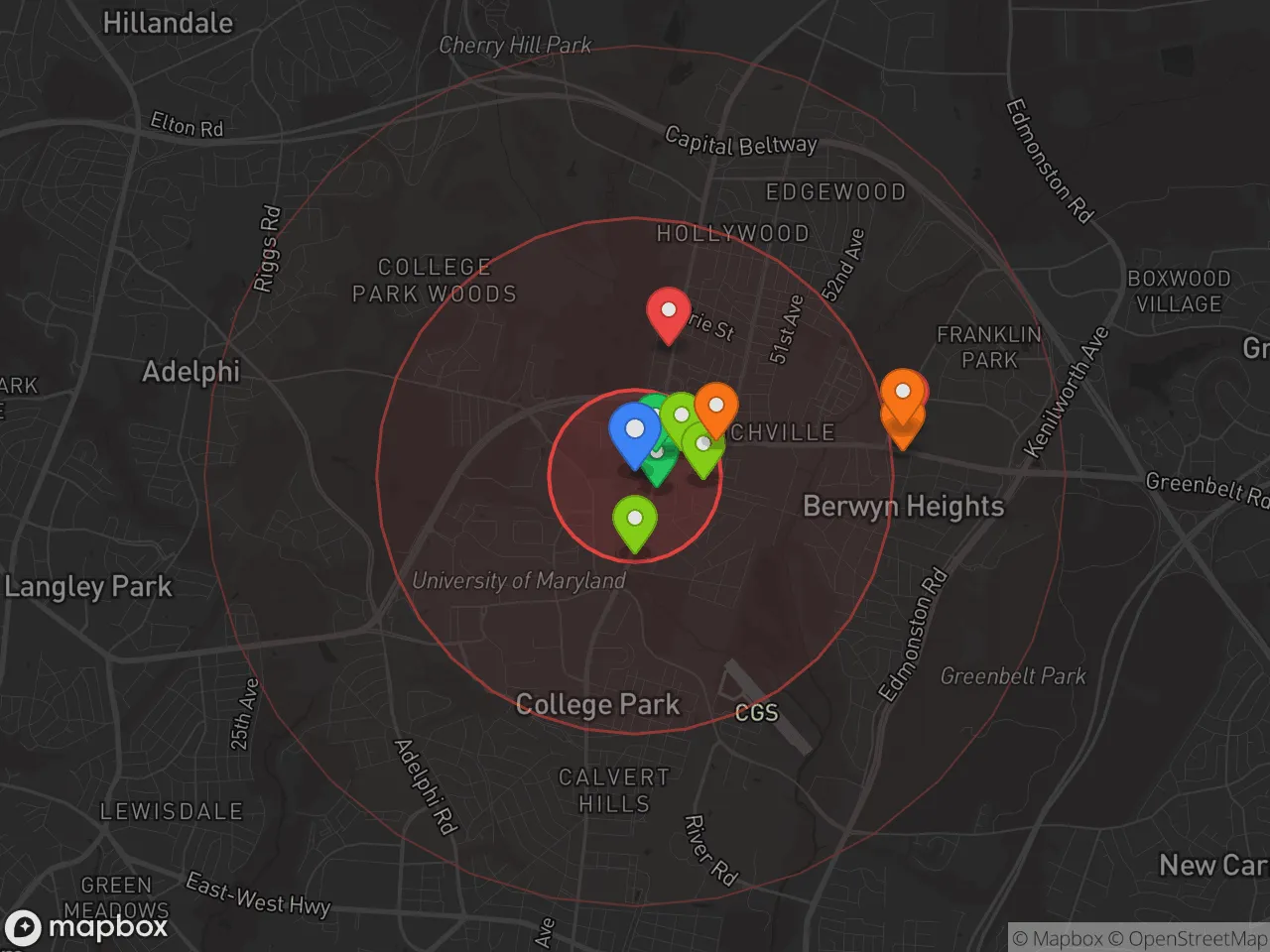
Crime in College Park, MD
Higher crime rates than 57% of comparable U.S. locations.
Violent CrimeViolent Crime Analysis
Property CrimeProperty Crime Analysis
Crime Analysis
College Park, Maryland, reports a violent crime rate of 351.4 incidents per 100,000 residents and a property crime rate of 1,814.9 per 100,000, placing it above national averages for both categories. While the city benefits from the presence of the University of Maryland police force, the broader crime picture is shaped by its location within the Washington, D.C. metropolitan area and the policies of Prince George’s County’s justice system. Prospective residents should weigh these statistics against the local context, particularly the county’s progressive prosecutorial approach, which has drawn criticism for prioritizing offender rehabilitation over public safety outcomes.
Crime in context
College Park’s violent crime rate of 351.4 per 100,000 is roughly 1.5 times the national average of 230 per 100,000, while its property crime rate of 1,814.9 per 100,000 exceeds the U.S. average of 1,954 per 100,000 but remains below the Maryland state average of 2,100 per 100,000. These figures place College Park in a middle tier among Prince George’s County municipalities—safer than high-crime areas like Langley Park but riskier than suburban enclaves such as Berwyn Heights. The city’s proximity to a major metro area amplifies certain crime types, including vehicle theft and larceny, which are common near transit hubs like the College Park Metro station. However, the most significant contextual factor is the county’s criminal justice philosophy: Prince George’s County State’s Attorney Aisha Braveboy, a progressive Democrat, has implemented policies that reduce cash bail, divert nonviolent offenders from prosecution, and limit sentencing enhancements. Critics argue these measures contribute to higher recidivism and embolden property criminals, as offenders face minimal consequences for repeat offenses.
What residents experience
Daily life for College Park residents involves navigating a mix of university-area safety and off-campus vulnerability. The University of Maryland campus itself is well-policed, with blue-light emergency phones and a dedicated force that responds quickly to incidents. Off-campus neighborhoods, particularly those near Route 1 and the Calvert Hills area, report higher rates of package theft, car break-ins, and occasional armed robberies. Property crime is the most common concern, with residents frequently reporting stolen bicycles, mail theft, and vandalism. Violent crime, while less frequent, includes aggravated assaults and robberies that often occur late at night near commercial corridors. The progressive justice system’s emphasis on diversion means that many property crime arrests do not lead to jail time, frustrating residents who see repeat offenders cycling through the area. For families and long-term renters, the lack of deterrent effect in the local court system is a recurring point of anxiety.
Neighborhood-level variation is pronounced. The historic Old Town College Park and the area around the Hollywood Shopping Center experience higher crime density, while the more affluent University Hills and Lakeland neighborhoods report lower incident rates. Areas immediately adjacent to the Metro station see elevated theft and auto crime due to commuter traffic. Residents in these zones often invest in security cameras, steering wheel locks, and neighborhood watch programs as practical countermeasures. Overall, College Park offers a mixed safety profile where proactive personal security measures are advisable, and the local justice system’s leniency toward property offenders remains a persistent concern for those considering relocation.
* Values derived from national, state, county, city and local statistics and may differ in a specific area. Last updated: 2026-04-22T03:18:32.000Z
Narrative content on this page is AI-generated and may contain mistakes. Verify any details that matter before acting on them.
ReloMaps may earn a commission from affiliate links at no extra cost to you.

