Photo: Wikipedia
Demographics of Collierville, TN
Affluence Level in Collierville, TN
An upper-middle-class area. Household wealth, education levels, and homeownership run ahead of national benchmarks.
People of Collierville, TN
Collierville, Tennessee, is a fast-growing, affluent Memphis suburb of 51,212 residents that has transformed from a rural railroad town into a magnet for highly educated professionals and families. The city is notably diverse, with a White population of 68.0%, a substantial Indian-subcontinent community at 11.2%, and a Black population of 10.9%, alongside smaller Hispanic (4.2%) and East/Southeast Asian (1.9%) groups. Over 60% of adults hold a college degree, and the foreign-born share stands at 7.8%, reflecting a population that is both economically upwardly mobile and increasingly multicultural. The city’s identity today is defined by top-rated public schools, master-planned subdivisions, and a historic town square that anchors a community where newcomers from across the U.S. and the world have rapidly reshaped the demographic landscape.
How the city was settled and grew
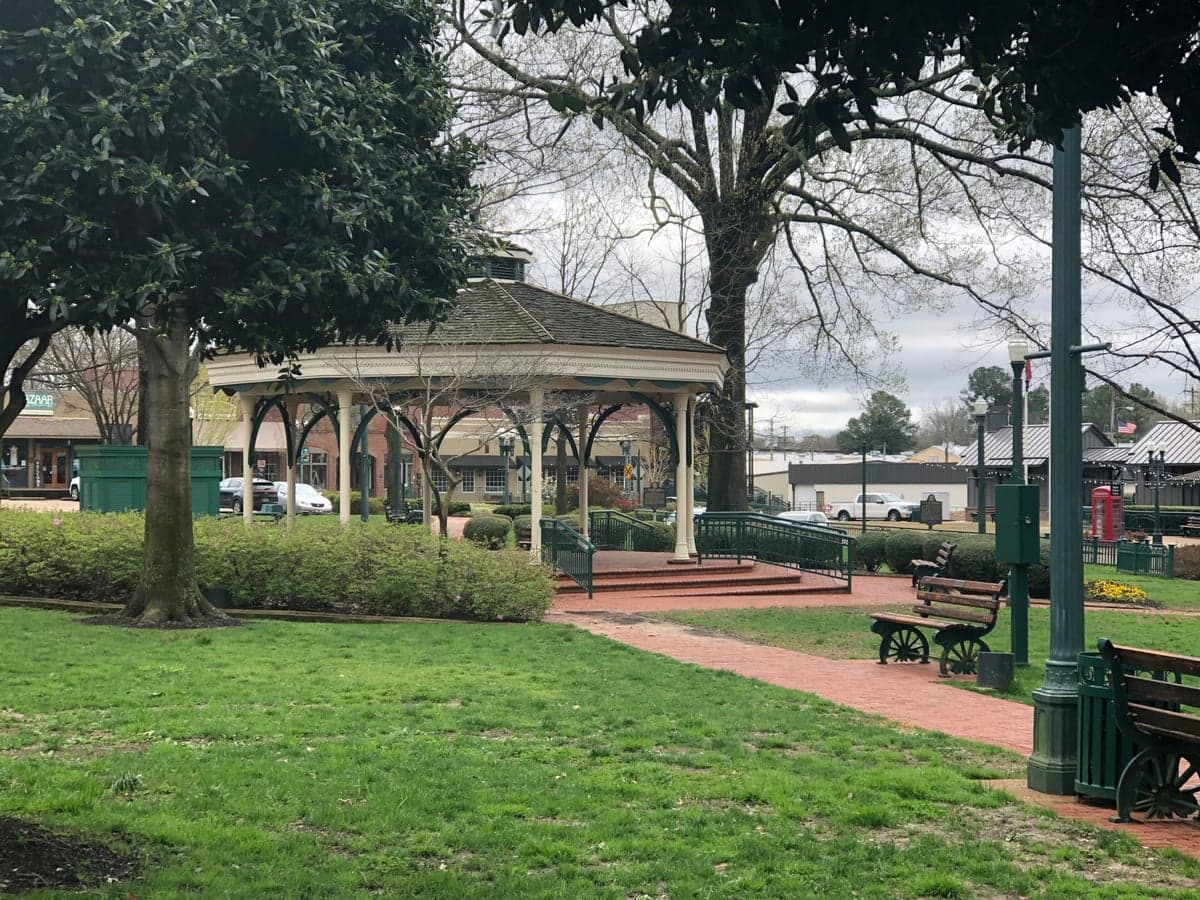
Collierville’s original population was drawn by the Memphis and Charleston Railroad, which arrived in the 1850s and turned a small farming crossroads into a cotton-shipping depot. The town was incorporated in 1870, and its early residents were predominantly White Anglo-Saxon Protestants of English and Scots-Irish descent who built the Historic Town Square and the surrounding grid of homes along Main Street and Washington Street. These families operated cotton gins, general stores, and the railroad depot, establishing a tight-knit, agrarian community that remained small—barely 1,000 people—through the early 1900s. The East End Historic District, with its Victorian and Craftsman homes, still preserves the footprint of this original population, while the West End area housed railroad workers and smaller farming families. No significant immigrant waves arrived during this period; the population was almost entirely native-born White, with a small Black population working as sharecroppers and domestic laborers, concentrated in the North Collierville area near the railroad tracks.
Modern era (post-1965)
The post-1965 transformation of Collierville began with the expansion of Memphis’s suburban frontier, accelerated by the construction of Interstate 385 (the Bill Morris Parkway) in the 1990s, which connected the town directly to Memphis and its corporate employers. The first major wave of domestic in-migration came from White middle-class families fleeing Memphis city schools and crime, settling in new subdivisions like Schilling Farms—a 1,200-acre mixed-use development that became the city’s demographic anchor—and Hickory Ridge, a large single-family-home neighborhood built in the 1990s. These areas remain predominantly White and upper-middle-class, with home values well above the county median. The second major wave, beginning around 2000, was the arrival of Indian-subcontinent professionals, drawn by jobs in healthcare, IT, and logistics at companies like FedEx (headquartered in Memphis) and St. Jude Children’s Research Hospital. This community concentrated in newer subdivisions such as Carriage Crossing (the area around the retail district) and Briarcrest, where large homes and proximity to top-rated schools like Collierville High School made the city attractive. The Indian population now accounts for 11.2% of residents, making it one of the largest such communities in the Memphis suburbs. The Black population, at 10.9%, grew more slowly, with many families moving from Memphis into established neighborhoods like North Collierville and newer developments near the Shelby Farms corridor. East/Southeast Asian residents (1.9%) and Hispanic residents (4.2%) are smaller but growing, with Hispanic families often settling in the West Collierville area near industrial and service-sector jobs.
The future
Collierville’s population is heading toward greater diversity and continued affluence, but with distinct enclaves rather than full integration. The Indian-subcontinent community is likely to grow further, driven by chain migration and the city’s reputation for excellent schools—Collierville Schools consistently rank among Tennessee’s top districts—and will likely expand into newer developments like Briarcrest Estates and the East Shelby Drive corridor. The White population, while still the majority at 68%, is aging in place in older neighborhoods like the Historic Town Square and Hickory Ridge, while younger White families are increasingly choosing newer subdivisions further east. The Black and Hispanic populations are expected to grow modestly, but the city’s high housing costs (median home price above $450,000) will limit significant influx from lower-income groups. The foreign-born share, currently 7.8%, may rise to 10-12% within a decade, driven almost entirely by Indian and East/Southeast Asian professionals. Collierville is not homogenizing; rather, it is tribalizing into distinct geographic and cultural zones—the historic core, the Indian-subcontinent enclaves in the south, and the White-dominated subdivisions in the north and east—while the town square and schools serve as rare mixing grounds.
For someone moving in now, Collierville offers a stable, high-opportunity environment where diversity is real but stratified by income and neighborhood. The city is becoming a classic American suburb of the 2020s: affluent, highly educated, and multicultural in a segmented way, with excellent public services and a strong sense of local identity. The bottom line is that Collierville is a place where newcomers—especially professionals and families—can find a welcoming community, but they should expect to live in a neighborhood that reflects their own demographic group, with the town square as the one space where all residents converge.

* Values derived from national, state, county, city and local statistics and may differ in a specific area. Last updated: 2026-05-01T18:45:38.000Z
Narrative content on this page is AI-generated and may contain mistakes. Verify any details that matter before acting on them.
ReloMaps may earn a commission from affiliate links at no extra cost to you.

