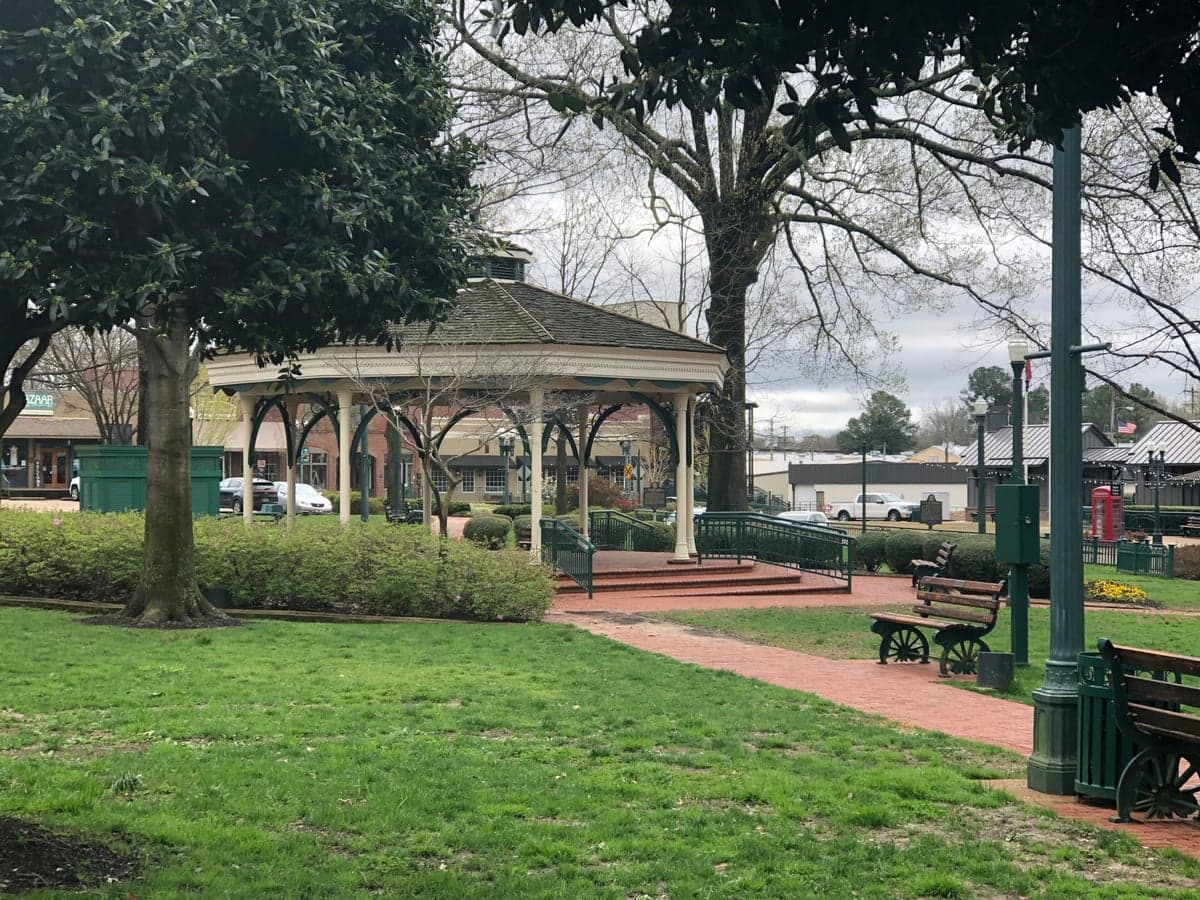
Photo: Wikipedia
Political ClimatePolitical Climate in Collierville, TN
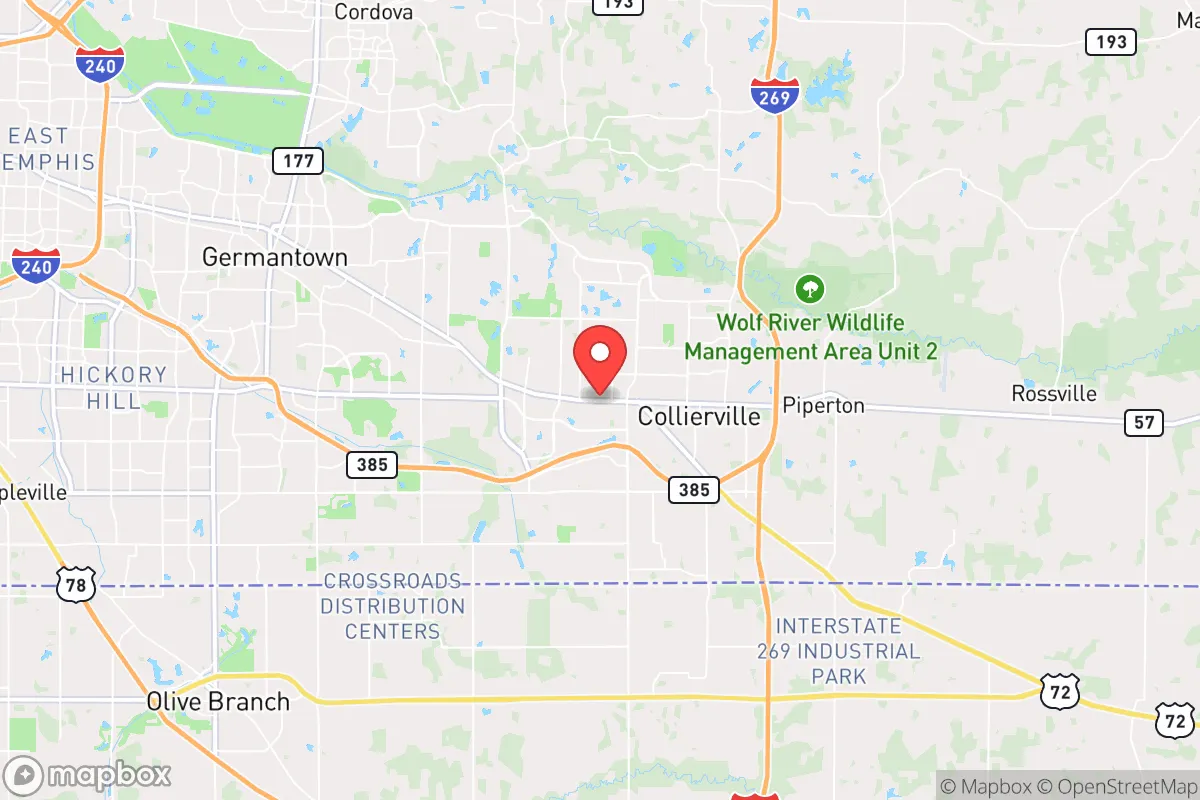
District shown is the primary district for this city’s centroid. Cities may span multiple districts.
Local Political AnalysisPolitical Analysis of Collierville, TN
Collierville is about as solidly conservative as it gets in Tennessee, and that's a fact that's held true for as long as I can remember. The Cook PVI sits at R+21, which means the town votes about 21 points more Republican than the national average. That's not just a number—it's a reflection of the community's deep-rooted belief in limited government, personal responsibility, and keeping the feds out of local decisions. You see it in the school board meetings, the county commission votes, and the way folks talk about property rights and taxes. It's a place where the default assumption is that the government that governs least governs best, and that's not changing anytime soon.
How it compares
Drive 15 minutes north to Memphis, and you're in a completely different political universe. Memphis is reliably Democratic, with a Cook PVI of D+28, and the contrast is stark. You'll see more progressive policies on zoning, policing, and public spending there. Collierville, by contrast, has kept its distance from that kind of thinking. Germantown and Bartlett lean conservative too, but Collierville is arguably the most reliably red of the eastern Shelby County suburbs. The difference isn't just in voting patterns—it's in the culture. In Collierville, the local government still respects the idea that your home is your castle, and they're not quick to impose new regulations on businesses or homeowners. That's a big reason why families keep moving here from places where they felt the government was getting too heavy-handed.
What this means for residents
For the people who live here, the political climate means a few concrete things. First, property taxes are kept in check—the town has a reputation for fiscal discipline, and there's no appetite for the kind of runaway spending you see in some neighboring areas. Second, there's a strong presumption against government overreach. When the state or county tries to push mandates on local schools or businesses, you'll hear about it at the coffee shop and at the town hall. The school system, for example, has resisted the kind of progressive curriculum changes that have stirred up controversy elsewhere. Third, the Second Amendment is taken seriously here. You won't find the kind of restrictive gun ordinances that have popped up in some Tennessee cities. It's a place where personal freedoms are still the default, and the burden of proof is on the government to justify any new restriction.
That said, I've seen some subtle shifts over the past five or six years that give me pause. A few younger families moving in from out of state bring with them ideas about "equity" and "inclusion" that sound nice in theory but often lead to more government control. The town's planning commission has seen a few more debates about affordable housing mandates and density bonuses—things that sound like they're about helping people but really just give bureaucrats more say over private property. So far, the conservative majority has held the line, but it's something to watch. If you're looking for a place where you can still live your life without the government breathing down your neck, Collierville is still one of the best bets in the Mid-South. Just keep an eye on the local elections, because that's where the real fight for the town's character will play out.

State Political ClimatePolitical Climate in Tennessee
State Political AnalysisPolitical Environment in the State
Tennessee has been a reliably red state for decades, but the political climate here is more layered than a simple partisan label suggests. The state leans solidly Republican at the statewide level — Donald Trump won it by 30 points in 2024 — and the GOP holds supermajorities in both legislative chambers. Over the past 10-20 years, the shift has been dramatic: as recently as the 2000s, Democrats still held the governor’s mansion and a U.S. Senate seat, but a combination of rural realignment, suburban migration, and cultural conservatism has turned Tennessee into one of the most reliably conservative states in the country. That said, the political energy isn’t uniform — Nashville and Memphis are blue islands, while the rest of the state is deeply red, and the tension between those worlds shapes everything from policy to daily life.
Urban vs. rural divide
The political map of Tennessee is a study in contrasts. Nashville (Davidson County) and Memphis (Shelby County) are the two Democratic strongholds, consistently voting 60-70% for Democratic presidential candidates. Nashville’s growth as a tech and healthcare hub has attracted a younger, more diverse population that leans left, while Memphis remains a majority-Black city with deep Democratic roots. Knoxville (Knox County) and Chattanooga (Hamilton County) are more competitive but trending red — Knox County voted +22 for Trump in 2024, while Hamilton County was closer at +12. The real engine of Republican dominance is the vast rural and exurban expanse: counties like Lincoln, Giles, and Marshall in Middle Tennessee, and Carter, Johnson, and Unicoi in the east, routinely deliver 75-80% Republican margins. The suburbs around Nashville — Williamson County (Franklin, Brentwood) — are among the wealthiest and most conservative in the nation, voting +35 for Trump in 2024. The divide isn’t just about party; it’s about worldview. Rural Tennesseans see Nashville’s growth as a cultural and political threat, while urbanites view rural areas as backward. This tension plays out in every legislative session.
Policy environment
Tennessee’s policy environment is aggressively conservative, with a focus on low taxes, limited regulation, and cultural traditionalism. There is no state income tax on wages — only a 6.5% flat tax on interest and dividends, which is being phased out by 2029. Sales tax is high at 7% state rate (plus local add-ons up to 2.75%), but the lack of income tax is a major draw for relocators. The regulatory posture is business-friendly: Tennessee is a right-to-work state, and tort reform has capped non-economic damages in medical malpractice cases at $750,000. On education, the state has expanded school choice significantly: the Education Savings Account (ESA) program, passed in 2019 and expanded in 2023, allows families in certain counties to use public funds for private school tuition. The state also passed a ban on critical race theory in K-12 classrooms in 2021 and a Parental Bill of Rights in 2022, giving parents explicit authority over their children’s education and medical decisions. On healthcare, Tennessee did not expand Medicaid under the Affordable Care Act, and the state operates a block grant waiver for its TennCare program, giving it more flexibility than traditional Medicaid. Election laws are strict: voter ID is required, early voting is available but limited to 14 days, and the state purged over 100,000 inactive voters from rolls in 2023. There is no no-excuse absentee voting — you need a specific reason to vote by mail.
Trajectory & freedom
Tennessee is moving in a decidedly more conservative direction on most measures of personal liberty, but the picture is nuanced. On gun rights, the state became a constitutional carry state in 2021 — permitless carry for anyone 21 or older who can legally possess a firearm. That same year, the legislature passed a law allowing teachers to carry firearms on school grounds with approval from local law enforcement. On parental rights, the 2022 Parental Bill of Rights was a landmark: it requires schools to notify parents before discussing sexual orientation or gender identity in K-8 classrooms (the “Don’t Say Gay” law) and gives parents the right to opt their children out of any curriculum they find objectionable. On medical autonomy, the state banned nearly all abortions in 2020 with a trigger law that took effect after Dobbs, and in 2023 passed a law restricting gender-affirming care for minors, including puberty blockers and hormone therapy. On property rights, the state has a strong eminent domain law, but a 2023 law limited local governments’ ability to impose rent control. On taxation, the phase-out of the Hall income tax is a clear expansion of freedom. The only area where freedom has arguably contracted is in speech: a 2023 law made it a crime to “camp” on public property, which critics say targets homeless individuals, and the state has increased penalties for rioting and blocking highways. Overall, the trajectory is toward more individual liberty in the traditional conservative sense — less government in your wallet, your home, and your school, but more government in cultural and medical matters.
Civil unrest & political movements
Tennessee has seen its share of political flashpoints, but they’re concentrated in the urban centers. Nashville experienced significant protests in 2020 following the death of George Floyd, including a march that turned into a standoff with police at the state capitol. In 2023, the Covenant School shooting in Nashville sparked a massive gun control protest at the capitol, leading to the expulsion of two Democratic state representatives (Justin Jones and Justin Pearson) for violating decorum rules — they were later reinstated. This event became a national symbol of the urban-rural divide. On the right, the Tennessee Firearms Association and Moms for Liberty are highly active, with the latter successfully pushing for school board candidates in Williamson and Rutherford counties. Immigration politics are a growing issue: the state passed a law in 2024 requiring local law enforcement to cooperate with ICE, and there are no sanctuary cities in Tennessee. Election integrity remains a hot topic: the state created a Division of Election Integrity in 2023 to investigate voter fraud, though no widespread fraud has been found. Secession or nullification rhetoric is rare but not absent — a 2021 resolution calling for a convention of states to propose amendments to the U.S. Constitution passed the legislature. A new resident in a rural area would notice little political friction; in Nashville or Memphis, they’d see a more visible activist presence on both sides.
Projection
Over the next 5-10 years, Tennessee will likely become more conservative in policy but more politically contested in its urban centers. The state is growing fast — about 80,000 new residents per year — and most are moving to the Nashville and Knoxville suburbs, not the rural counties. These newcomers are often from blue states like California and New York, and while they tend to be conservative on taxes and crime, they are less culturally conservative than native Tennesseans. This could create a suburban shift similar to what happened in Texas: Williamson County may become less reliably red over time, while rural counties stay deeply Republican. The legislature is likely to continue passing culturally conservative bills — further restrictions on transgender rights, expanded school choice, and maybe a school voucher program for all counties. The biggest wild card is Nashville’s growth: if the city continues to attract left-leaning professionals, it could eventually flip the state in a presidential race, but that’s a decade or more away. For now, expect the GOP supermajority to hold, with occasional high-profile fights over guns, education, and medical freedom. Anyone moving in now should expect a state that is stable, predictable, and conservative — but with a growing urban undercurrent that will keep things interesting.
For a new resident, the bottom line is this: Tennessee offers a low-tax, high-freedom environment for those who align with traditional conservative values. You’ll find strong gun rights, parental control over education, and a government that mostly stays out of your business — unless you’re in Nashville or Memphis, where local politics can feel like a different country. If you’re moving here for the politics, you’ll feel at home in the suburbs and rural areas. If you’re moving for the economy or lifestyle, just know that the cultural battles you see on the news are real, but they’re mostly confined to the capitol and the cities. Pick your county wisely, and you’ll find a place that respects your freedom and your values.
* Values derived from national, state, county, city and local statistics and may differ in a specific area. Last updated: 2026-05-01T18:45:38.000Z
Narrative content on this page is AI-generated and may contain mistakes. Verify any details that matter before acting on them.
ReloMaps may earn a commission from affiliate links at no extra cost to you.

