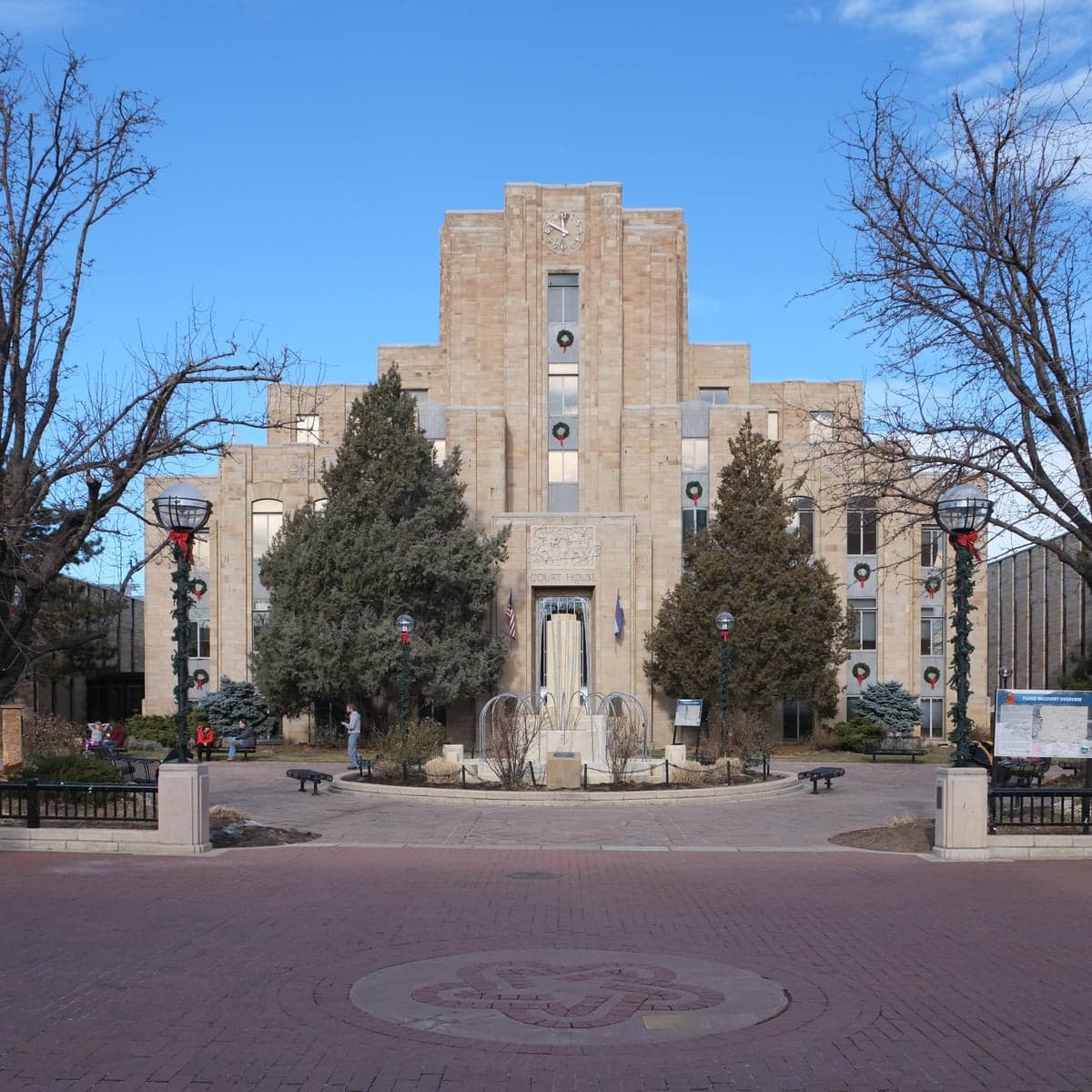
Photo: Wikipedia
Personal Sovereignty in Boulder County
Viable for self-reliance. Generally workable, though some barriers may limit total independence.
What does Personal Sovereignty tell us?
Personal Sovereignty measures your capacity for self-reliance and independence with minimal government friction. Higher scores mean fewer barriers between you and the way you want to live... but it assumes you have the space you need and good neighbors.
What does this tell us?
Personal Sovereignty measures your capacity for self-reliance and independence with minimal government friction. Higher scores mean fewer barriers between you and the way you want to live... but it assumes you have the space you need and good neighbors.
State Policy
Energy independence: Net exporter (110% of energy produced in-state)
Personal Liberty
Homesteading

Personal Liberty Analysis
Boulder County presents a complex and often contradictory environment for personal sovereignty, where state-level protections for individual rights clash with some of Colorado's most assertive local governance. While Colorado law generally supports self-defense, property rights, and parental autonomy, Boulder County's regulatory posture—particularly in its urban centers—creates a noticeably heavier hand on land use, taxation, and personal lifestyle choices than what you'd find in more rural Colorado counties. For a conservative-leaning individual or family prioritizing independence, the county offers a spectrum of experiences: from the highly regulated city of Boulder itself to the comparatively freer unincorporated areas and towns like Lyons, Nederland, and the rural stretches near Allenspark and Ward.
Tax burden and regulatory posture across Boulder County
Boulder County's tax burden is among the highest in Colorado, driven by a combination of state income tax (a flat 4.4% as of 2025) and local property taxes that average roughly 0.55% of assessed value—above the state median. Sales tax rates vary significantly by jurisdiction: the city of Boulder levies a combined rate of 8.845%, while unincorporated areas and towns like Lyons (7.85%) and Nederland (8.85%) are slightly lower but still elevated compared to rural Colorado counties. The regulatory posture is notably heavy in the city of Boulder, which enforces strict land-use codes, energy-efficiency mandates for new construction, and a decades-old growth management ordinance that caps new housing permits. In contrast, unincorporated areas and towns like Ward and Allenspark operate under looser county zoning, though all properties must comply with Boulder County's stringent wildfire mitigation codes—a real constraint on building and landscaping freedom. For a reader comparing tax and regulatory environments, the key takeaway is that Boulder County's urban centers impose a significantly higher regulatory burden than its rural fringe, and the county as a whole is far more interventionist than neighboring Weld or Larimer counties.
Self-defense and gun law specifics in Boulder County
Colorado is a "shall-issue" state for concealed carry permits, and as of 2025, permitless (constitutional) carry is legal for residents 21 and older who can legally possess a firearm. However, Boulder County adds local friction: the city of Boulder has a long-standing ordinance banning assault weapons and large-capacity magazines, though this law has faced legal challenges and is not uniformly enforced. The county sheriff's office processes concealed carry permits without additional local restrictions, but applicants should expect a processing time of 60-90 days. Gun-friendly culture varies sharply across the county: shooting ranges and gun shops are concentrated in the eastern plains near Longmont and Erie, while the city of Boulder itself has no retail gun stores and a vocal anti-gun political climate. For self-defense-minded residents, living in unincorporated Boulder County or towns like Lyons and Hygiene offers more practical freedom—you can legally discharge a firearm on your own property for target practice in most unincorporated areas, subject to county noise and safety ordinances. The western mountain towns like Nederland and Ward have fewer neighbors and more de facto freedom for responsible gun owners, though all county residents must navigate Colorado's red-flag law (Extreme Risk Protection Orders), which allows temporary firearm seizure based on a court petition.
Self-reliance and homesteading viability: lot sizes, zoning, and off-grid feasibility
Homesteading and off-grid living are viable in Boulder County only if you choose your location carefully. The county's zoning code divides land into agricultural (A), rural residential (RR), and suburban residential zones, with minimum lot sizes ranging from 35 acres in agricultural zones to 1 acre in some rural residential areas. Unincorporated areas near Allenspark, Ward, and Gold Hill offer the best prospects for self-reliance, with larger parcels, fewer building restrictions, and a culture of independent living. However, off-grid feasibility is limited: Colorado law requires new homes to connect to the electrical grid unless you can demonstrate a fully self-sufficient renewable energy system, and Boulder County mandates that all dwellings have a permitted water source (well or cistern) and approved wastewater system. Rainwater collection is legal for non-potable uses, but permits are required for larger systems. Composting toilets are allowed with county health department approval, but the process is bureaucratic. For a family seeking true self-reliance, the eastern plains near Erie and Longmont offer more practical homesteading—flatter land, better soil, and fewer wildfire restrictions—but those areas are rapidly suburbanizing. The mountain communities offer solitude and larger parcels but come with higher costs for road maintenance, snow removal, and wildfire mitigation compliance.
Personal liberties: parental rights, medical autonomy, speech, and property
Colorado law generally protects parental rights in education and medical decisions, but Boulder County's school districts—particularly Boulder Valley School District (BVSD) and St. Vrain Valley Schools—are among the most progressive in the state. Parents retain the right to opt their children out of specific curriculum elements, including comprehensive sex education, but the process requires annual written requests. Medical autonomy is mixed: Colorado allows medical aid-in-dying (End of Life Options Act) and has legalized recreational marijuana, but Boulder County enforces strict local licensing for cannabis businesses, limiting their presence to specific zones. Vaccine mandates for school attendance follow state law, with medical and personal belief exemptions available. Free speech is protected under the First Amendment, but the city of Boulder has an ordinance prohibiting "harassing" speech in public forums, which has been criticized as potentially overbroad. Property rights are constrained by Boulder County's stringent land-use regulations, including a transferable development rights (TDR) program that limits density in rural areas. For a property owner, the most significant constraint is the county's wildfire mitigation code, which mandates defensible space, specific roofing materials, and vegetation management on all properties in designated wildfire hazard zones—covering most of the western half of the county. This is a non-negotiable regulatory burden that directly impacts how you can use and maintain your land.
Overall, personal sovereignty in Boulder County is a study in contrasts: the state provides a solid baseline for self-defense, parental rights, and medical choice, but the county and its municipalities layer on some of Colorado's most assertive local regulations, particularly around land use, building, and wildfire mitigation. For a conservative-leaning individual or family, the best path to autonomy is to locate in the unincorporated areas or smaller towns like Lyons, Hygiene, or Allenspark, where regulatory oversight is lighter and the culture of self-reliance is stronger. Compared to rural Colorado counties like Weld, Fremont, or El Paso, Boulder County imposes a heavier hand on property rights and personal lifestyle choices. But compared to the Denver metro core or California's Bay Area, it offers meaningful room for independence—if you know where to look and are willing to navigate the permitting processes that come with living in a high-amenity, high-regulation mountain county.

* Values derived from national, state, county, city and local statistics and may differ in a specific area. Last updated: 2026-06-08T18:37:48.000Z
Narrative content on this page is AI-generated and may contain mistakes. Verify any details that matter before acting on them.
ReloMaps may earn a commission from affiliate links at no extra cost to you.

