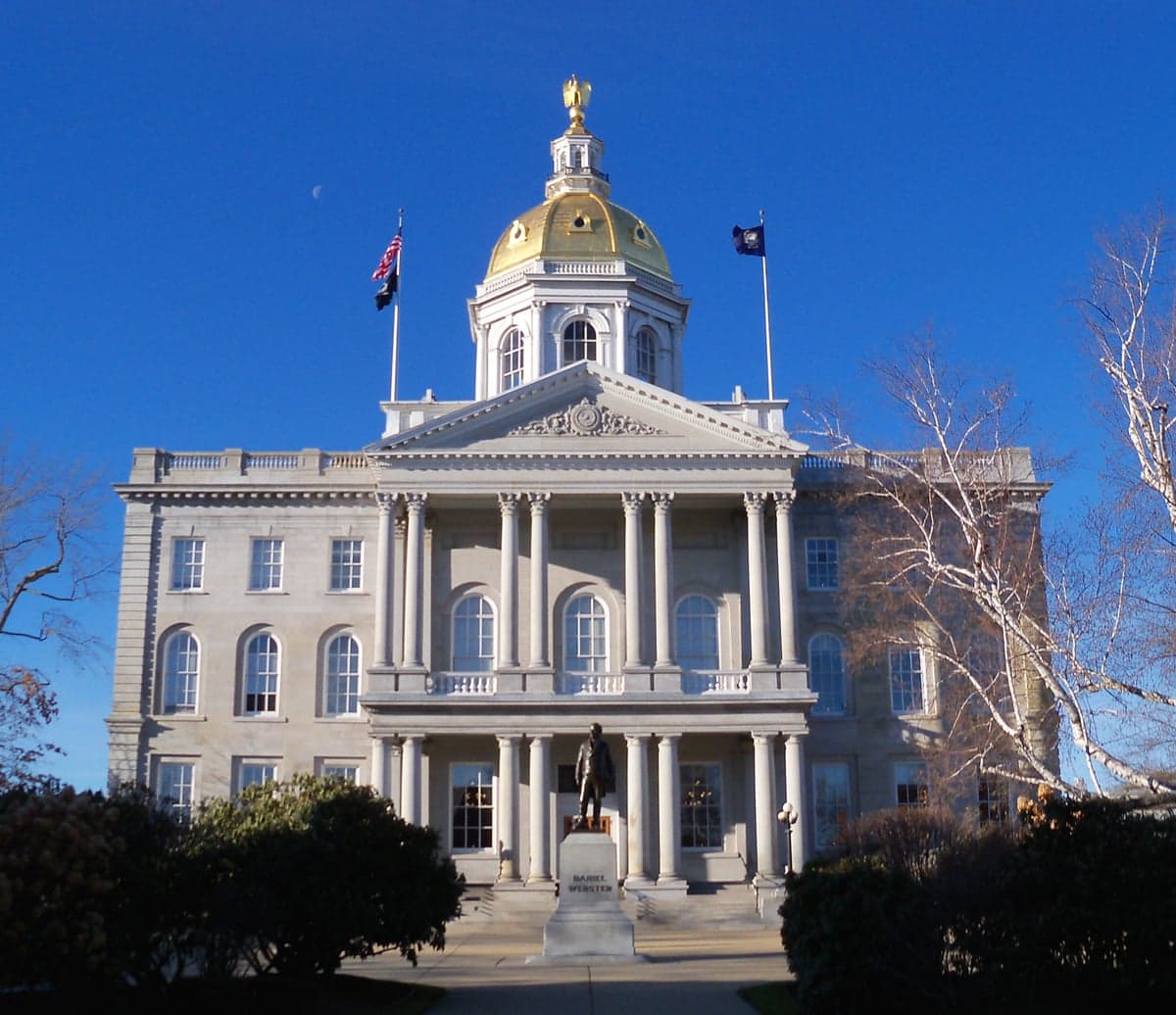
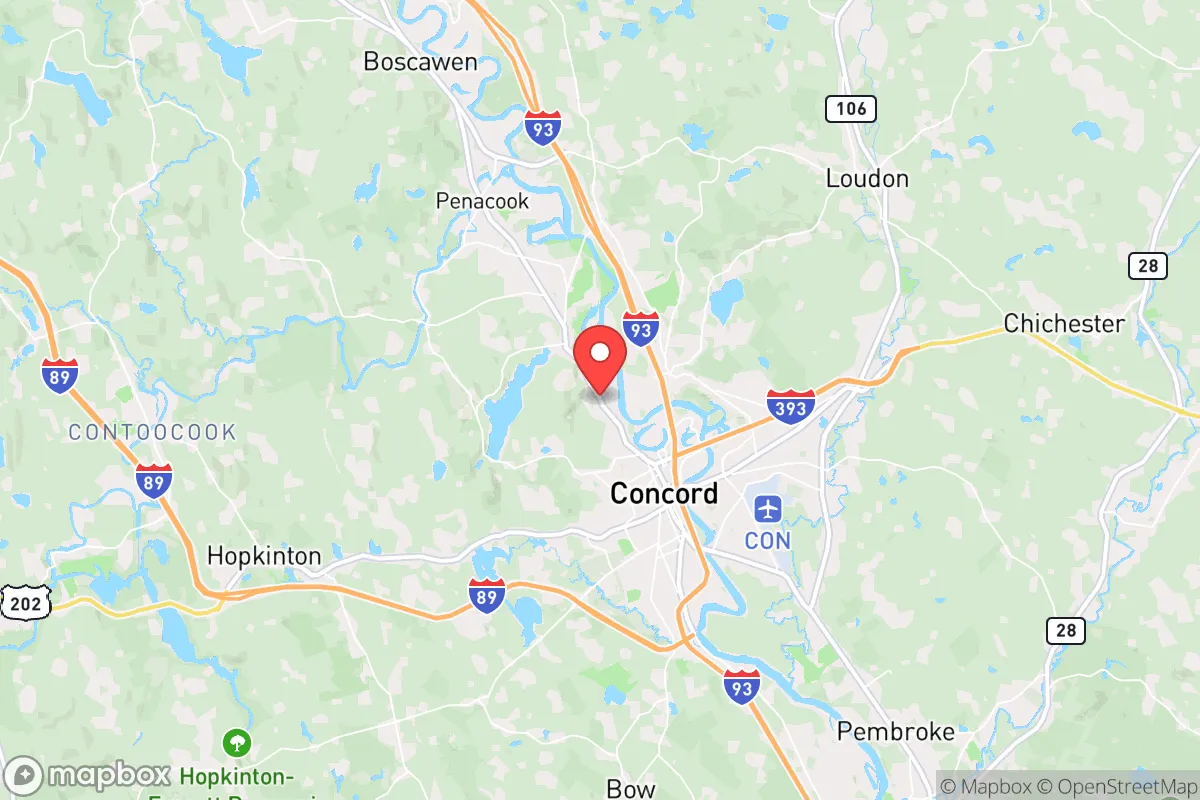
Photo: Wikipedia
Quality of Life in Concord, NH
A high quality of life with strong walkability, manageable living costs, healthy neighborhood signals, and solid amenity access.
What does Quality of Life tell us?
Quality of Life blends cost of living, nearby amenities, socioeconomic signals, and neighborhood character. City-level scores represent the whole municipality; individual neighborhoods can differ.
What does this tell us?
Quality of Life blends cost of living, nearby amenities, socioeconomic signals, and neighborhood character. City-level scores represent the whole municipality; individual neighborhoods can differ.
Cost of Living
16% above national average
The Real Cost of Living in Concord, NH for 2026
| Tier | Individual | Family (4) |
|---|---|---|
| Survival | $22k | $41k |
| Comfortable | $63k | $92k |
| Luxury | $139k+ | $215k+ |
| Elite (Top 5%) | $163k+ | $253k+ |
91%
The Area Signal
A metric tracking the socioeconomic signals of the area.
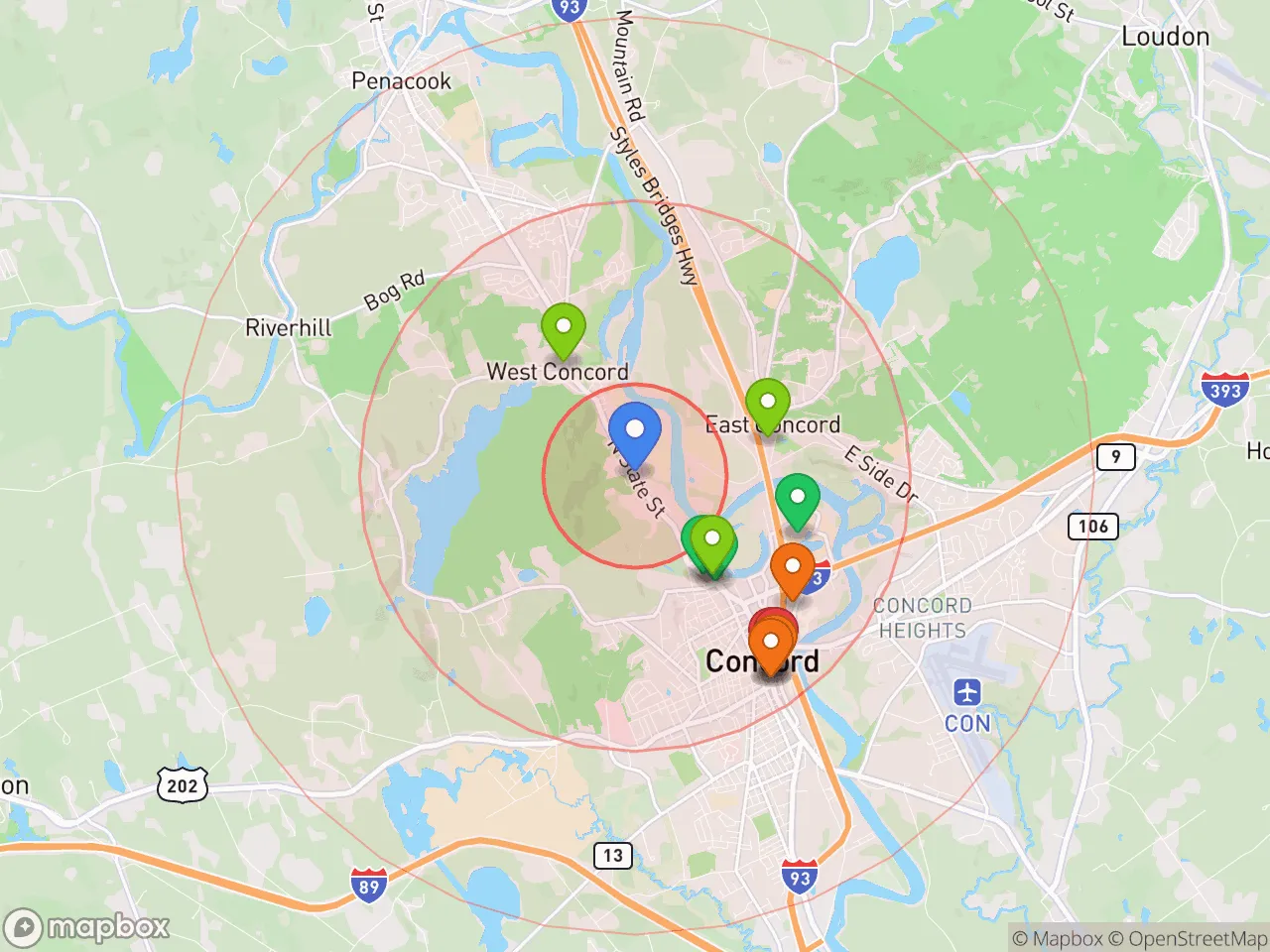
Hobbies
Explore the areaGroceries
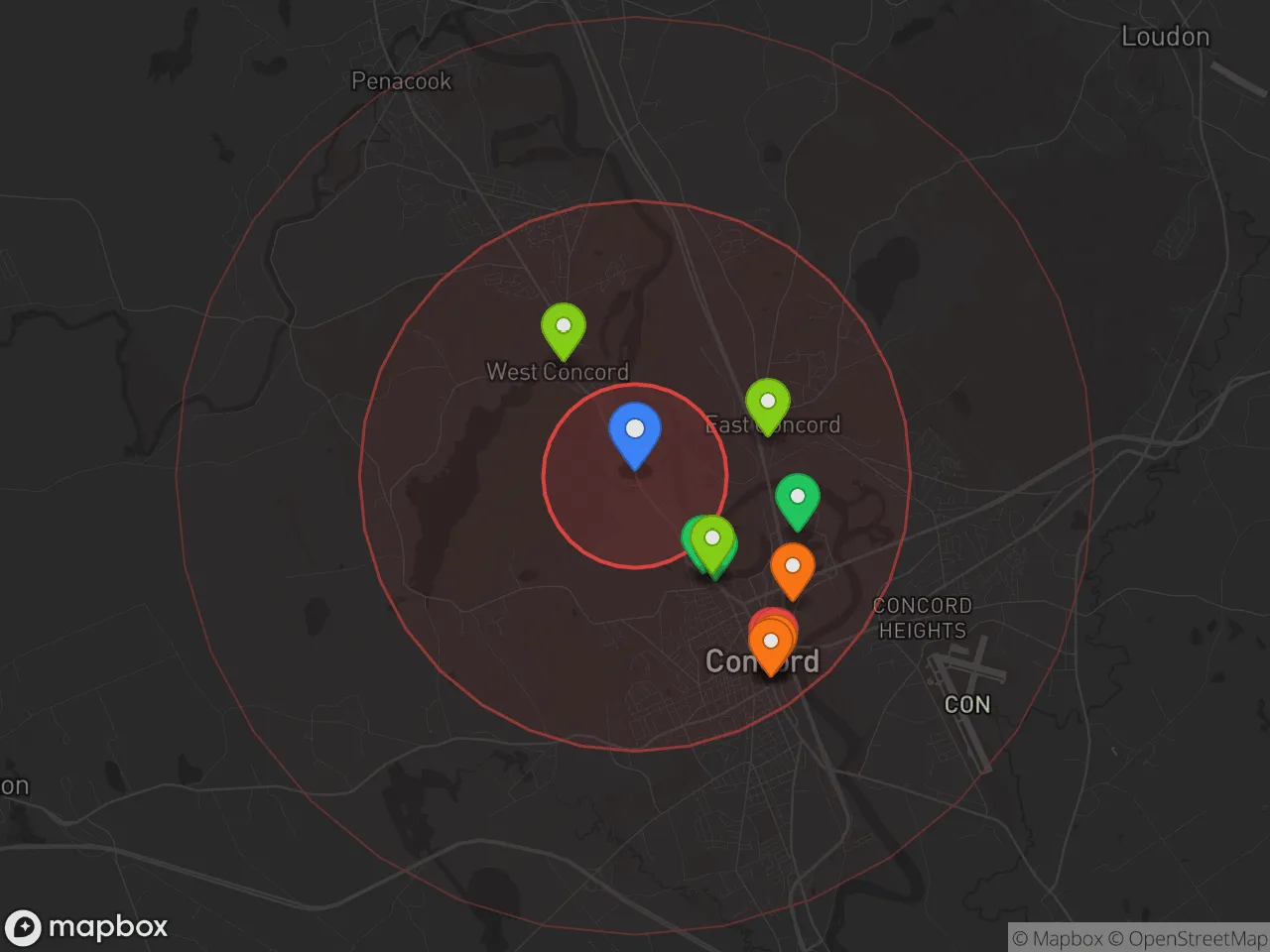
7 within 10 miles
Gas
20 within 10 miles
Hospital
7 within 20 miles
Airport
PDX — Portland International Jetport
Post Office
USPS — Concord, NH
Critical Amenities
Quality-of-Life Analysis
Concord, New Hampshire, presents a quality of life defined by moderate affluence and a stable, family-oriented population. With a cost of living index of 116 (16% above the national average), the city attracts a mix of state government employees, healthcare professionals, and remote workers who value a slower pace than Boston or Manchester but still demand solid public services. The median household income in Concord hovers around $70,000, supporting a community that is predominantly white-collar, well-educated, and civically engaged, with a notable concentration of lawyers, lobbyists, and policy staff tied to the state capitol.
Cost of living, housing affordability, and how Concord compares to nearby cities
Concord's housing market is the primary driver of its above-average cost of living. The median home value of $323,700 is roughly 10% lower than the statewide median of $360,000, making it more affordable than Portsmouth or Nashua but still significantly pricier than rural towns like Franklin or Laconia. Median rent sits at $1,360, which is manageable for a two-income household but can strain single earners making under $50,000 annually. Compared to Manchester (median rent ~$1,450) and Boston (median rent ~$2,400), Concord offers a clear affordability edge for renters. The average commute of 23.2 minutes is notably shorter than the national average of 27 minutes, reflecting the city's compact layout and limited traffic congestion. Property taxes in Merrimack County average 1.8% of assessed value, which is moderate for New Hampshire but high relative to many U.S. states—a key factor for homebuyers to weigh.
Amenities, schools, and what daily life feels like for families and professionals
Daily life in Concord centers on a walkable downtown anchored by the State House, Eagle Square, and the Capitol Center for the Arts. The city's school system is a major draw: Concord High School boasts a 92% graduation rate and strong STEM programs, while elementary schools like Abbot-Downing and Christa McAuliffe are consistently rated above state averages. For outdoor recreation, the 26-mile Concord-Lake Sunapee Rail Trail and nearby Bear Brook State Park provide hiking, biking, and cross-country skiing within a 15-minute drive. Healthcare access is robust, with Concord Hospital—a 295-bed regional medical center—employing over 3,000 people and offering specialized cardiac and cancer care. The city lacks a major university, but NHTI-Concord's Community College serves 4,500 students and feeds directly into local healthcare and IT jobs. Dining and retail are modest but sufficient: the Red River Theatres indie cinema, Granite State Candy Shoppe, and a handful of farm-to-table restaurants like The Works Café define the local flavor. Traffic is rarely a frustration, and parking downtown is free after 5 PM, reinforcing a low-stress daily rhythm.
Concord is best suited for families seeking good public schools and a safe, predictable environment, as well as state government employees and remote workers who value a short commute and access to nature over urban nightlife. Retirees on fixed incomes may find the property tax burden challenging, but professionals earning $70,000 or more will find the housing-to-income ratio comfortable. Those who thrive here are typically people who prioritize civic engagement, outdoor recreation, and a quiet, well-maintained community over the cultural intensity of a larger city.

Crime in Concord, NH
Generally safer than 69% of comparable U.S. locations.
Violent CrimeViolent Crime Analysis
Property CrimeProperty Crime Analysis
Crime Analysis
Concord, New Hampshire, presents a mixed safety profile for potential residents. While the city's violent crime rate of 176.2 incidents per 100,000 people is notably lower than the national average, its property crime rate of 1,423 per 100,000 exceeds both state and national benchmarks. As a state capital and regional employment hub, Concord's crime patterns are shaped by its urban density and proximity to the larger Boston metro area, which introduces challenges common to cities near major metropolitan centers.
Crime in context
Concord's violent crime rate sits well below the U.S. average of roughly 380 per 100,000, but its property crime rate is approximately 20% higher than the national figure. Compared to other New Hampshire cities, Concord reports more property offenses than Manchester or Nashua on a per-capita basis. The city's location within the Boston commuting zone means it experiences some spillover crime from the broader metro region, including auto theft and package theft rings that operate across state lines. New Hampshire's judicial system, while not as progressive as neighboring Massachusetts, has seen increasing calls for reform that some residents worry could lead to lighter sentences for repeat property offenders.
What residents experience
Most Concord residents describe feeling safe in their daily routines, particularly during daylight hours in the downtown and South End neighborhoods. However, property crime is a tangible concern: vehicle break-ins, bicycle theft, and porch piracy are the most frequently reported incidents. The city's police department has responded with targeted patrols and a public awareness campaign urging residents to lock vehicles and secure packages. Violent crime is rare but not absent—incidents typically involve domestic disputes or isolated altercations rather than random attacks. Residents should be aware that New Hampshire's progressive bail reform laws, passed in 2018, have been criticized for releasing some property crime defendants without cash bail, potentially contributing to repeat offenses in the downtown corridor.
Neighborhood-level variation
Safety conditions vary noticeably across Concord's neighborhoods. The West End and Penacook areas generally report lower crime rates, while the downtown core and areas near the Interstate 93 exits see higher property crime volumes. The North End, particularly around the Heights neighborhood, has experienced a rise in car burglaries since 2022. East Concord, near the Merrimack River, maintains a quieter residential feel with fewer incidents. For those considering a move, homes on tree-lined streets west of State Street or in the rural outskirts toward Bow offer the lowest crime exposure, while apartments near the Capitol Center for the Arts or the Loudon Road commercial strip warrant extra caution with vehicle security.
* Values derived from national, state, county, city and local statistics and may differ in a specific area. Last updated: 2026-04-23T07:26:41.000Z
Narrative content on this page is AI-generated and may contain mistakes. Verify any details that matter before acting on them.
ReloMaps may earn a commission from affiliate links at no extra cost to you.

