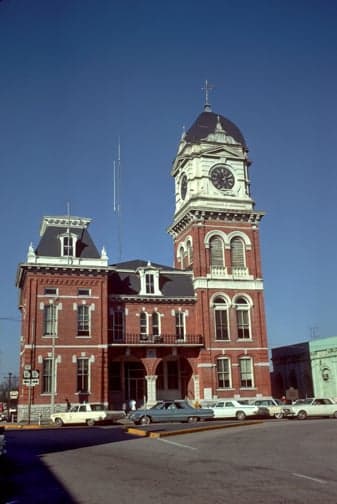
Photo: Wikipedia
Demographics of Covington, GA
Affluence Level in Covington, GA
A low-income area with significant economic hardship. Household wealth and educational attainment are well below national averages.
People of Covington, GA
The people of Covington, Georgia, today form a predominantly Black-majority community of 14,334 residents, where 51.9% identify as Black or African American, 38.9% as White, and 6.4% as Hispanic. The city’s foreign-born population is notably low at just 2.4%, and the college-educated share stands at 23.9%, reflecting a working-to-middle-class character rooted in manufacturing and service industries. Covington’s identity is shaped by a deep Southern heritage, a strong sense of local place, and a population that is both historically grounded and gradually diversifying.
How the city was settled and grew
Covington was founded in 1822 as the seat of Newton County, drawing its earliest white settlers from the Piedmont regions of Virginia and the Carolinas. These families arrived via land grants and the expanding cotton frontier, establishing a plantation economy that relied on enslaved Black labor. By the 1840s, the town’s core—around the historic Courthouse Square—was built by enslaved and free Black craftsmen, whose descendants formed the foundation of Covington’s Black community. After the Civil War, freedmen established their own neighborhoods, most notably Legion Drive and the Washington Street corridor, where churches, schools, and small businesses anchored Black life through the Jim Crow era. The arrival of the railroad in the 1880s brought a modest wave of white merchants and tradesmen, but Covington remained a small, agrarian county seat into the early 20th century. The Great Migration saw many Black residents leave for Northern industrial cities, but those who stayed maintained tight-knit communities around East Street and Clark Street.
Modern era (post-1965)
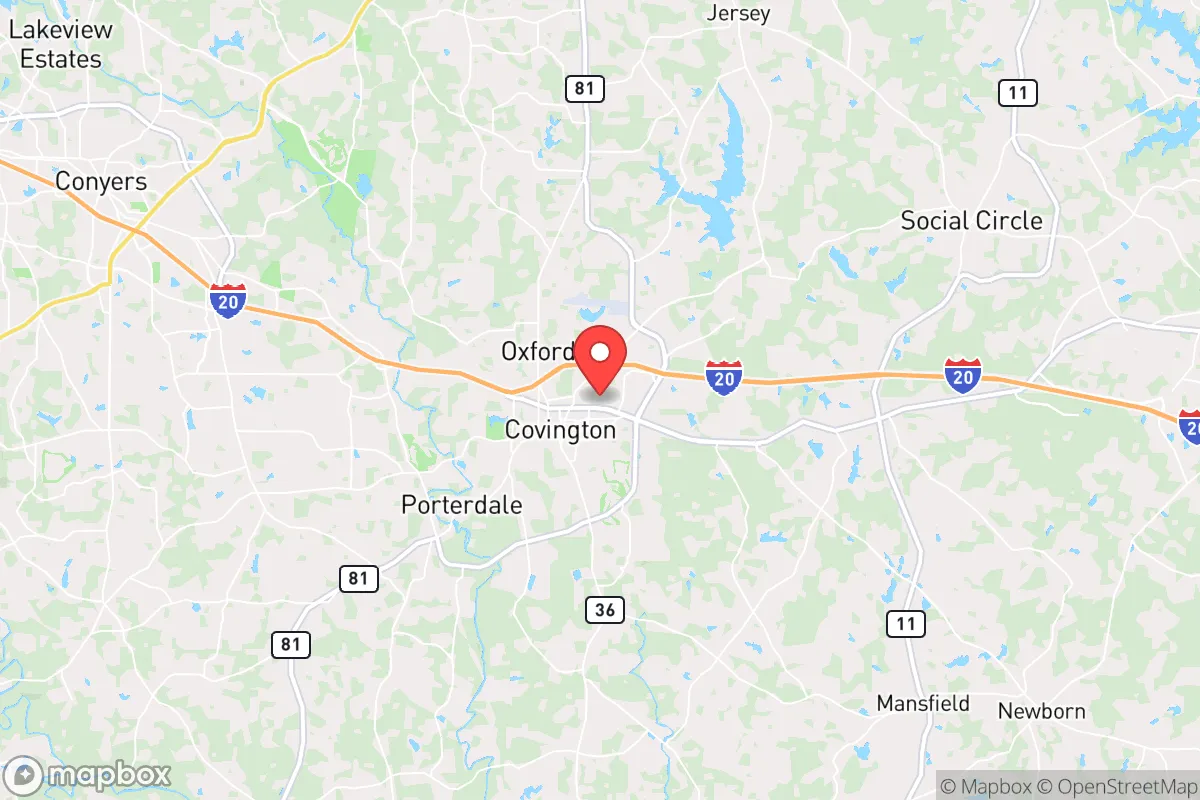
The post-1965 period brought significant demographic change. The Immigration and Nationality Act of 1965 had little direct effect on Covington—its foreign-born population remains minimal—but domestic migration reshaped the city. The expansion of the Atlanta metropolitan area, particularly after the 1996 Olympics, spurred suburban growth eastward along I-20. Covington became a more affordable alternative to Atlanta’s closer-in suburbs, attracting a wave of Black middle-class families from DeKalb and Fulton counties. These new residents concentrated in subdivisions like Oak Hill and Meadowbrook, built in the 1990s and 2000s, which shifted the city’s racial balance from majority-white to majority-Black by the 2010 census. The white population, which had dominated since the 1820s, declined steadily as older families aged out or moved to more rural parts of Newton County. The Hispanic share grew from negligible to 6.4% by 2020, driven by construction and service-sector jobs, with families settling primarily in the Browns Bridge Road area and along Highway 278. East/Southeast Asian and Indian populations remain statistically nonexistent (0.0% and 0.2%, respectively), making Covington far less diverse in Asian and immigrant terms than the Atlanta region as a whole.
The future
Covington’s population is projected to continue growing, driven by Atlanta’s eastward sprawl and the city’s relatively affordable housing stock. The Black majority is likely to persist, though the share of white residents may stabilize as new subdivisions—such as those near Alcovy Road—attract a mix of white and Black families seeking lower taxes and larger lots. The Hispanic population is expected to grow modestly, potentially reaching 10-12% by 2040, as service and logistics jobs expand along the I-20 corridor. The foreign-born share will likely remain low, as Covington lacks the ethnic enclaves and employer-sponsored visa pipelines that drive immigration in larger metro areas. The college-educated share, currently 23.9%, may rise slowly as remote workers and Atlanta commuters discover the area, but Covington is unlikely to become a knowledge-economy hub. Culturally, the city is evolving from a historically white Southern town into a Black-majority community with a growing Hispanic presence, while retaining a strong sense of local identity centered on the courthouse square, faith communities, and high school football.
For someone moving in now, Covington offers an affordable, family-oriented environment with a clear demographic identity: majority-Black, low-immigration, and increasingly suburban. The city is becoming more diverse in racial terms but remains culturally Southern and economically modest. New residents should expect a community where neighborly ties are strong, growth is steady but not explosive, and the pace of life is slower than Atlanta’s—a place where the past and future coexist on the same quiet streets.

* Values derived from national, state, county, city and local statistics and may differ in a specific area. Last updated: 2026-08-26T02:47:53.000Z
Narrative content on this page is AI-generated and may contain mistakes. Verify any details that matter before acting on them.
ReloMaps may earn a commission from affiliate links at no extra cost to you.

